These casual summer outfits range from matching sets to pieces you likely already own, ordered by how much decision-making each removes from your morning.
The one that works for you depends on whether your day includes public transit, a meeting, or just coffee and groceries: a linen shorts and tee combo is easy on stairs and escalators, while a maxi dress handles 90-degree heat but asks for a hand getting out of a low sedan.
I check the tag for cotton or linen first; polyester only wins if I am packing for a weekend.
1. Linen Shorts and Tee
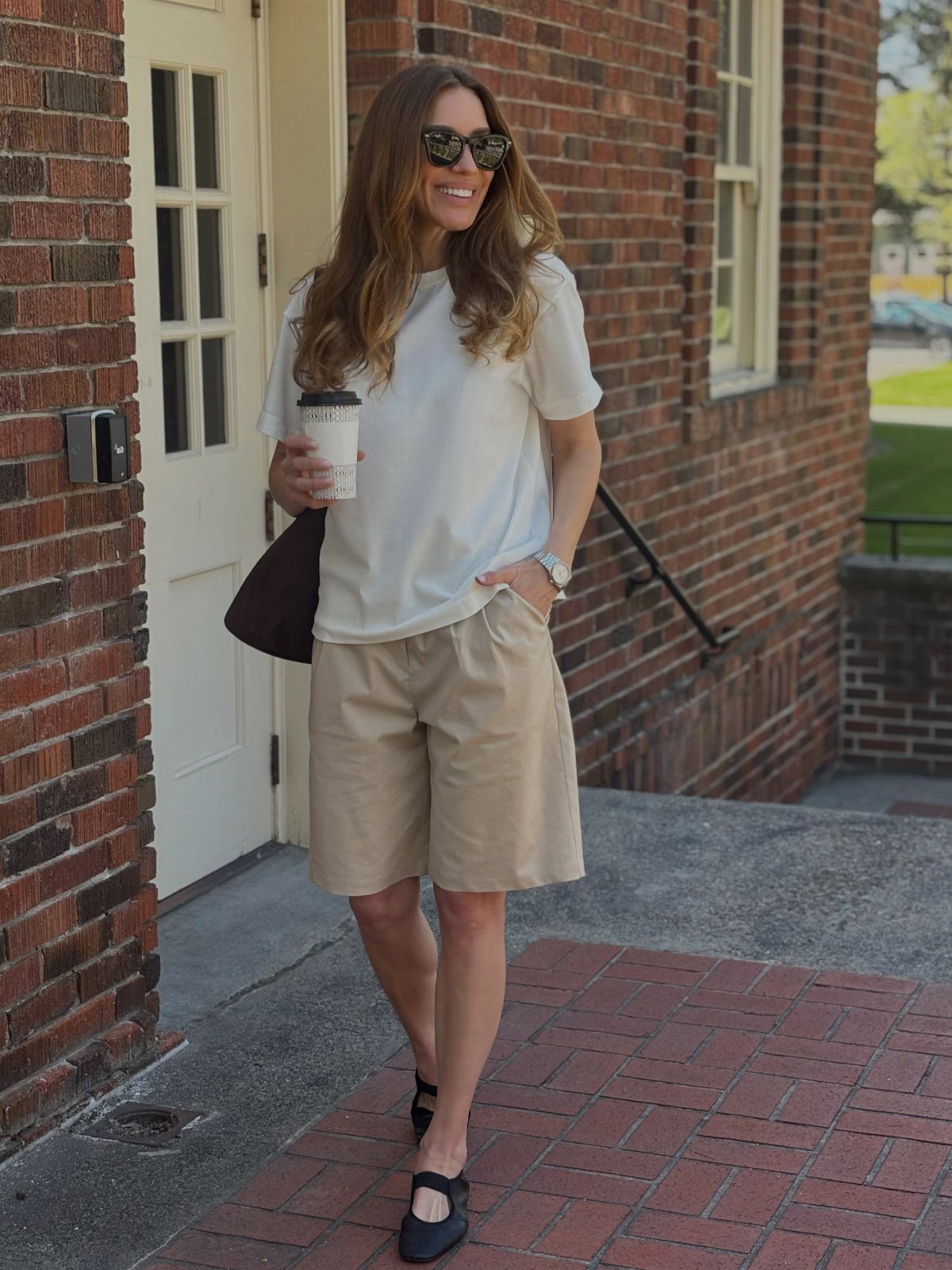
Linen shorts work for summer heat because the fabric actually moves air instead of trapping it against your skin.
I look for bermuda length, since it works for errands and still looks intentional if you walk into a coffee shop. A plain white tee, tucked or half-tucked, keeps the whole thing from looking like you gave up.
Black flats finish it without competing. I would skip anything with a drawstring or cargo pockets; that detail ages fast.
2. Sundresses
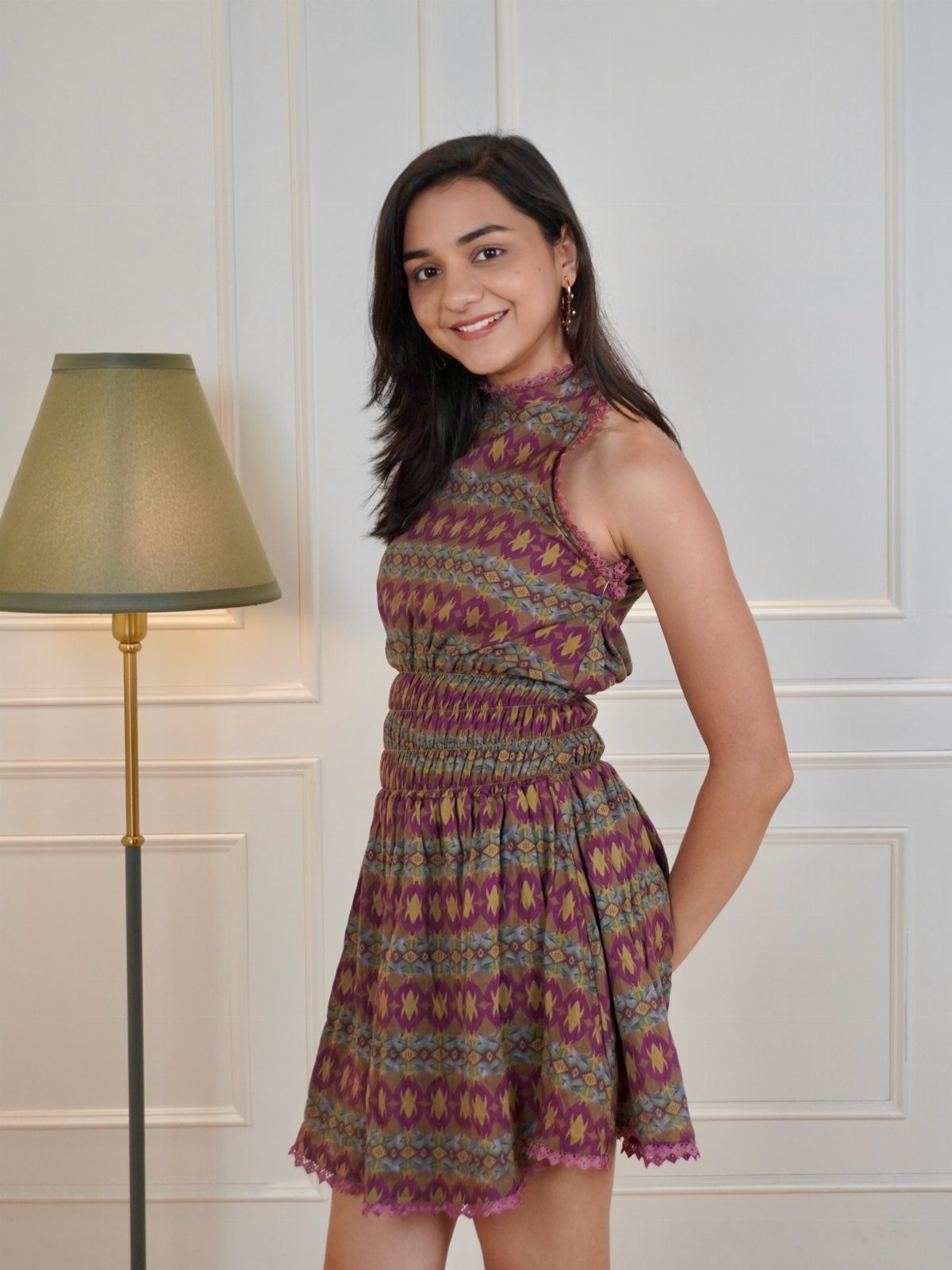
A sundress is the one piece that needs zero coordination before coffee. The sleeveless cut and above-the-knee length handle July humidity, and the pattern does the visual work so you do not have to think about jewelry.
I gravitate toward cotton or a cotton blend over polyester for breathability, though the poly versions travel better if you are packing for a weekend.
One thing to check: whether the armholes gap when you lift your arms. Fixable with a quick alteration, but worth noticing in the fitting room.
3. Maxi Dresses
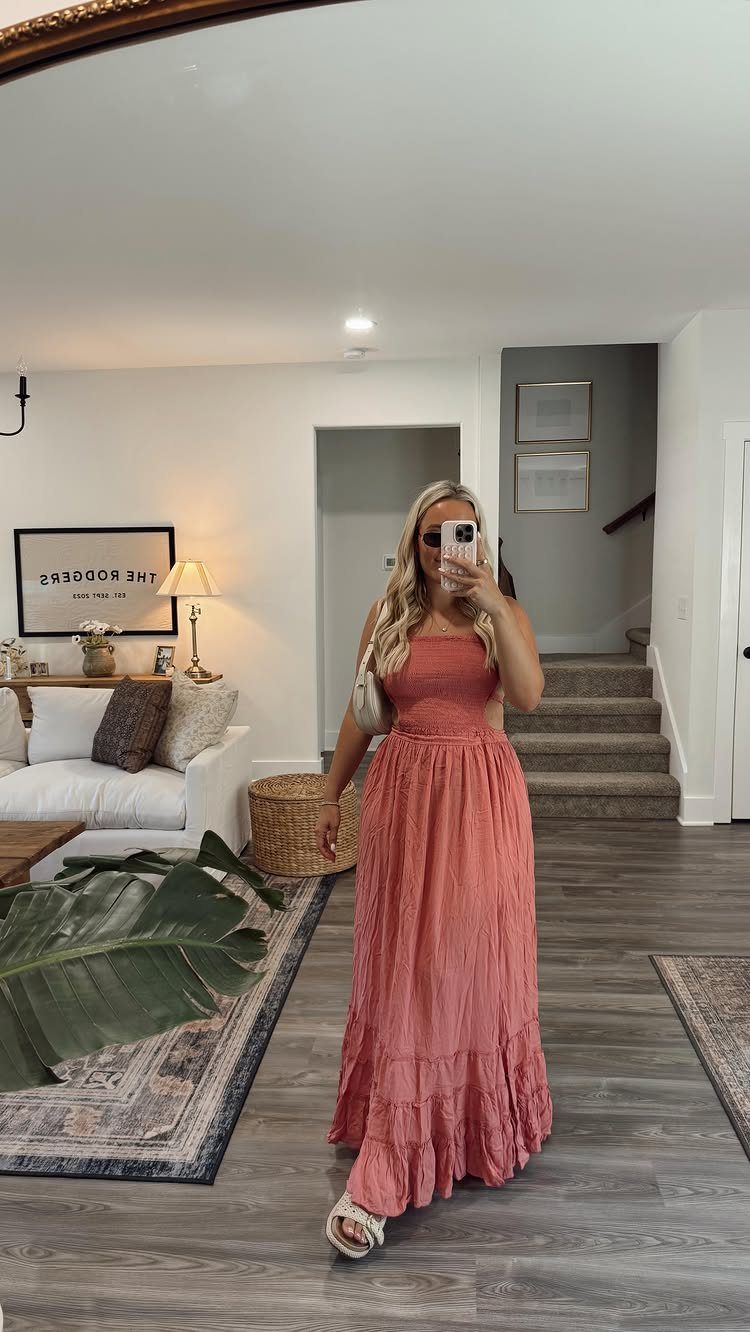
Strapless maxi dresses read as dressed up while feeling like you are wearing a nightgown, which is not a small thing when the temperature passes 90.
The floor-length cut also means you can skip shaving, a practical plus I will not pretend I do not use.
Flat sandals keep it from looking like you are trying too hard; I would choose a thin strap over a platform.
The only catch is the hem on public transit or escalators. Hold it, or accept a little sidewalk grime.
4. Midi Skirts
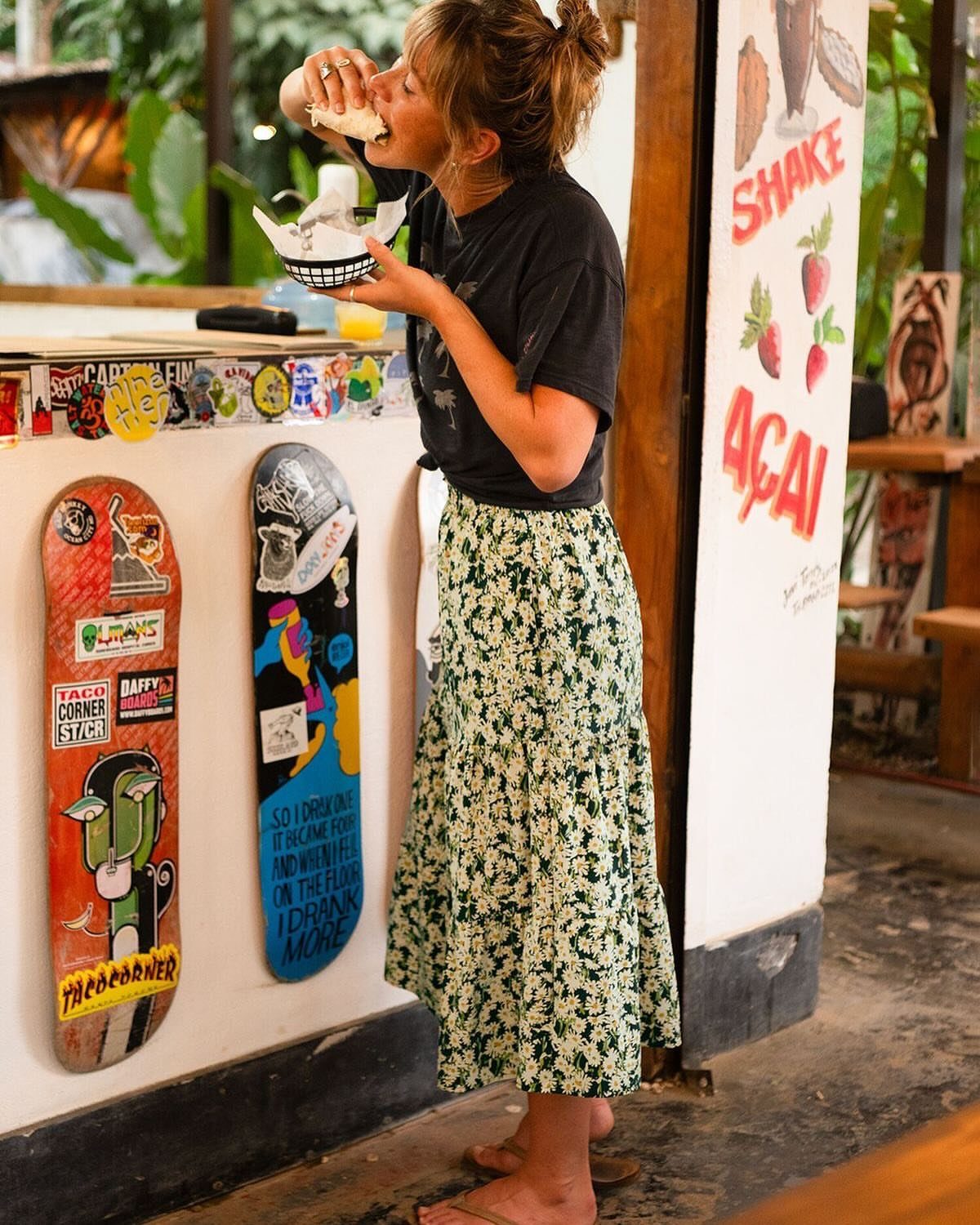
A midi skirt covers what you want covered without the full commitment of a maxi.
The floral print here sits on a dark base, which I prefer; it hides the shape of pockets or a liner underneath and does not go sheer in sunlight.
Pair it with a graphic tee and flip-flops for something as easy as shorts but with more structure.
I would tuck the tee to keep the waist defined, even casually. The skirt’s volume matters: too much and you look like you are playing dress-up, too little and it is just a pencil skirt that ends low.
5. Matching Sets
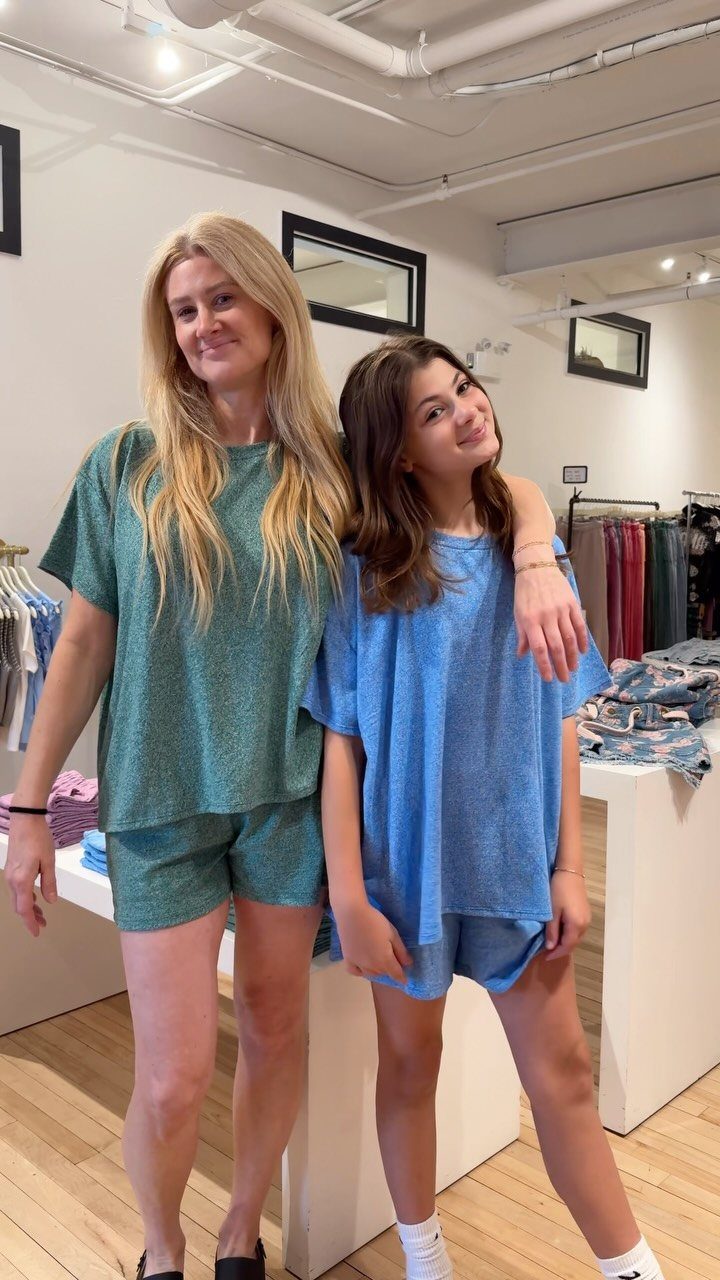
Matching sets solve the morning question of what goes with what by removing the question entirely.
The heathered t-shirt and short combinations here look like upgraded pajamas in the best way; I would wear them to brunch, not to a meeting, but that is a wide slice of summer.
The fit should be intentionally oversized, not accidentally too large. Check that the shorts have a real waistband and not just elastic; it changes whether you can tuck or half-tuck the top.
I would buy the set in one color, not try to mix the pieces across sets. That defeats the point.
6. Summer Outfits with Prints
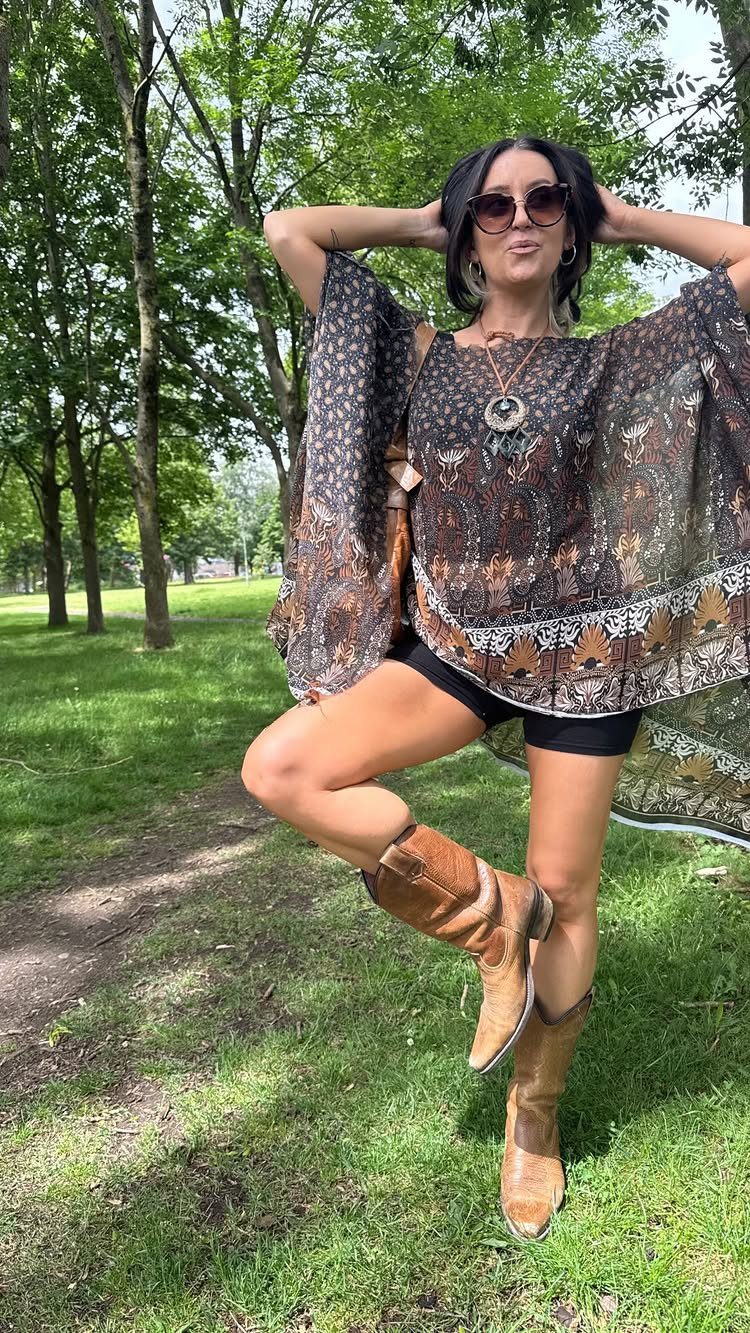
Prints in summer work best when they are doing the only job the outfit needs done.
Busy prints on top work best when your bottom half stays quiet; black biker shorts underneath act as a visual pause, not a second statement.
I would keep the boots in a neutral; brown works because it picks up an earth tone without adding another pattern. The rule I use: one print per outfit, or two if one is stripes and the other is floral.
Never two florals, never two abstracts. Cowboy boots with shorts is a specific choice that shortens the leg line; I would only do it if the shorts are fitted, as they are here.
7. Chambray Shirtdress

A chambray shirtdress is the one summer piece that passes for put-together at a morning meeting and still works for patio dinner.
The button front lets you adjust how much leg shows, and the collar keeps it from looking like you wandered out in a beach cover-up.
I would belt it loosely rather than cinch tight; the shape should read relaxed, not borrowed from workwear.
Sleeves rolled to the elbow hit the right note for July. White sneakers or leather sandals both work, but pick one; the dress is simple enough that mixed messages show.
8. Rompers
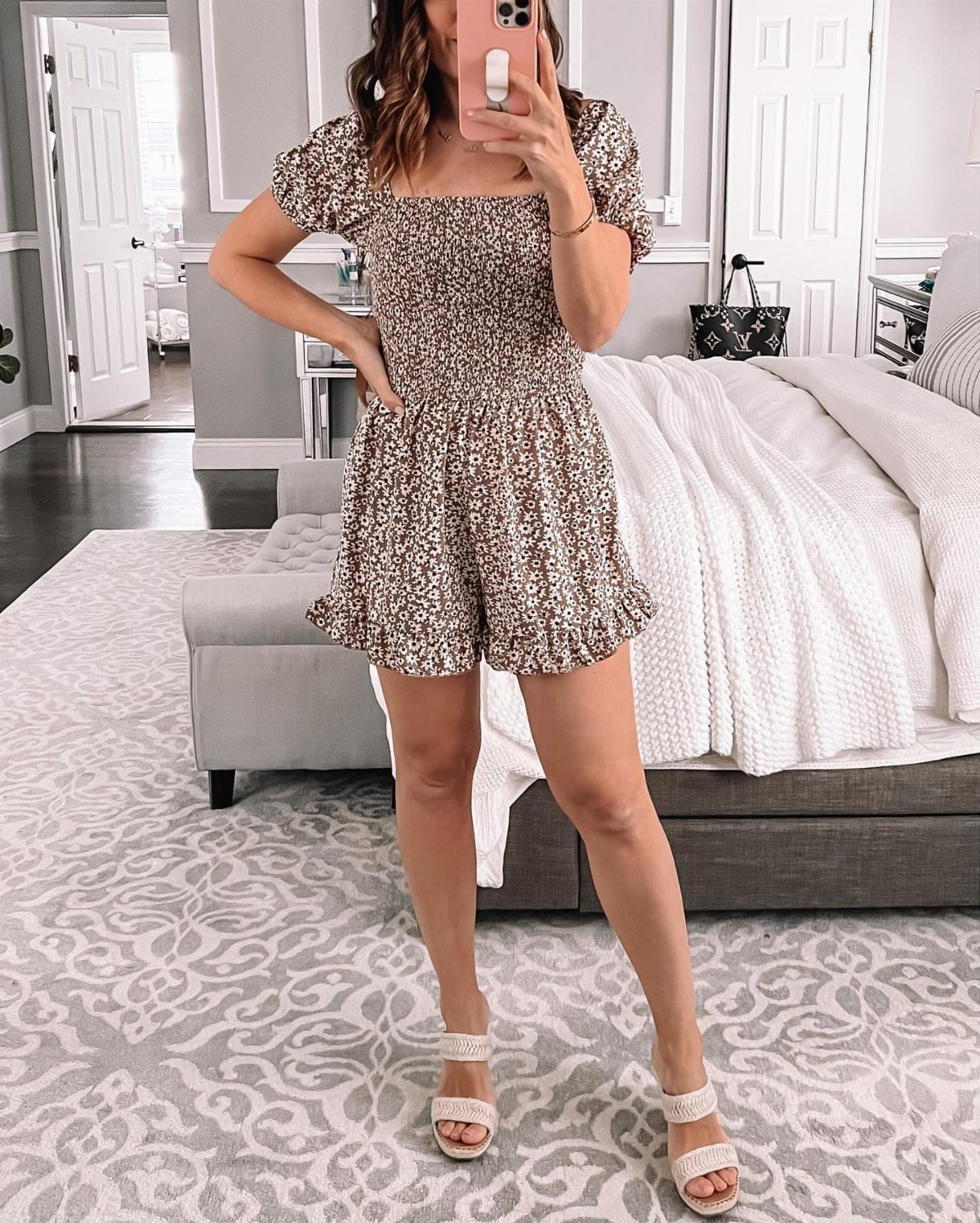
Rompers solve the shorts-and-top problem by sewing them together so you cannot lose either piece. A smocked bodice stretches over a range without needing a precise fit, which is useful if summer bloat is a real factor for you.
Length matters more than print: too short and you are tugging all day, too long and the proportion goes odd. I would check the inseam in a mirror before buying; sitting changes how it lands.
One real limit: bathroom logistics. Accept it or skip the style.
9. Denim Shorts and Crop Top
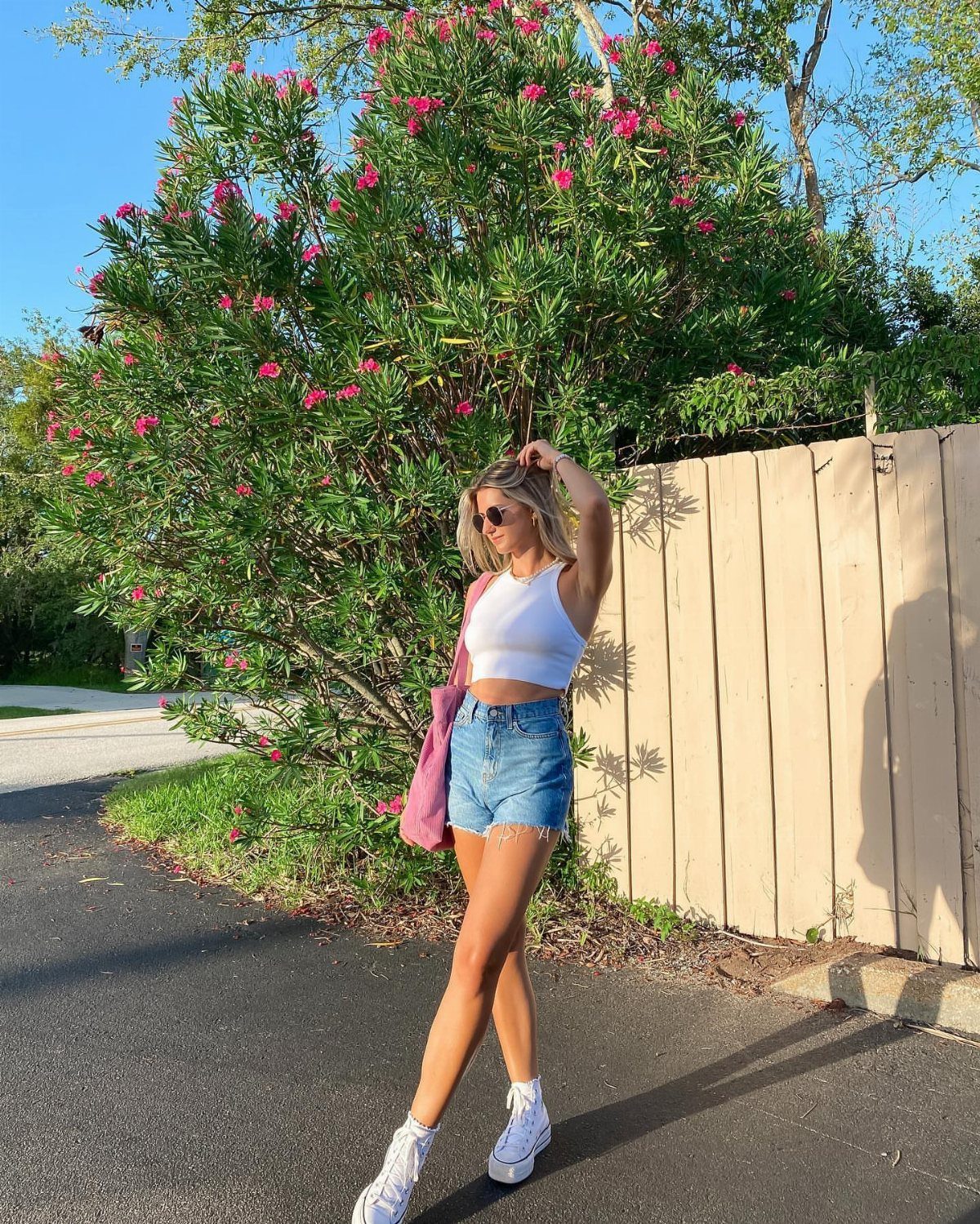
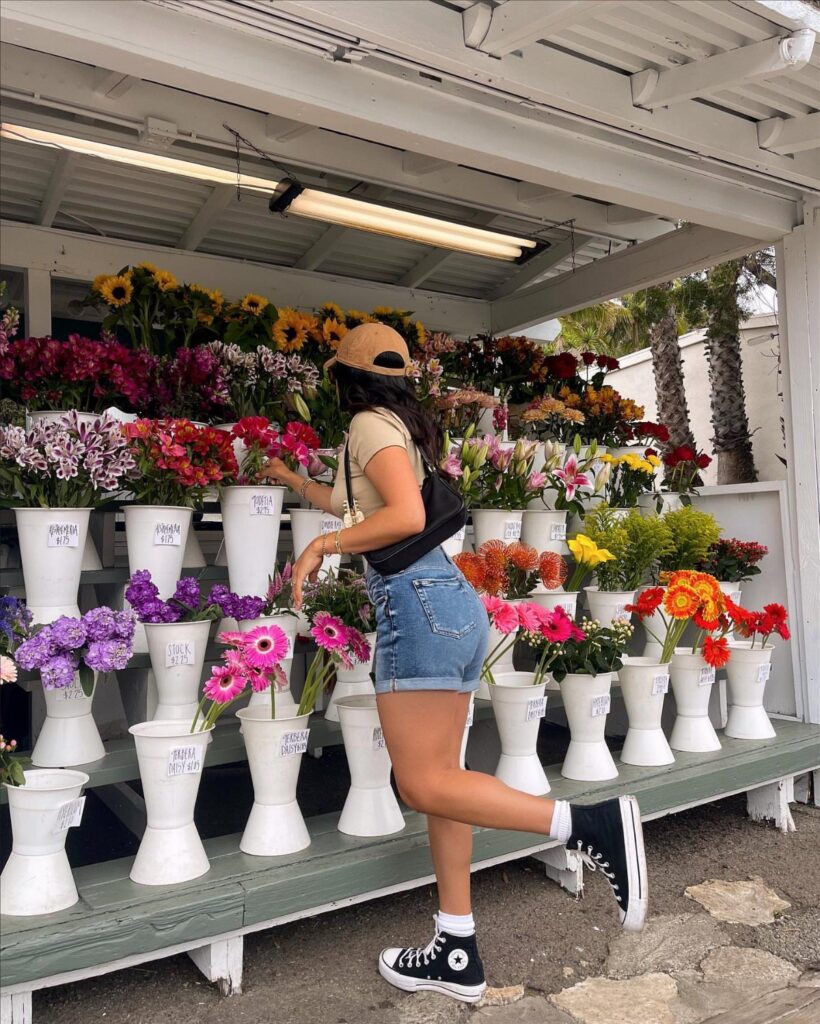
Denim cutoffs and a white crop top is the summer uniform that actually earns its reputation. The cutoff hem keeps thick denim from overheating, and a raw edge ages better than a finished one on casual shorts.
I would keep the crop just at the waistband, not midriff; the outfit reads easy, not club. White sneakers ground it without competing.
The only detail I watch is pocket lining: if it peeks below the hem, the shorts are too short or the pockets too deep. Fixable with scissors, but check before you buy.
10. Casual Summer Footwear
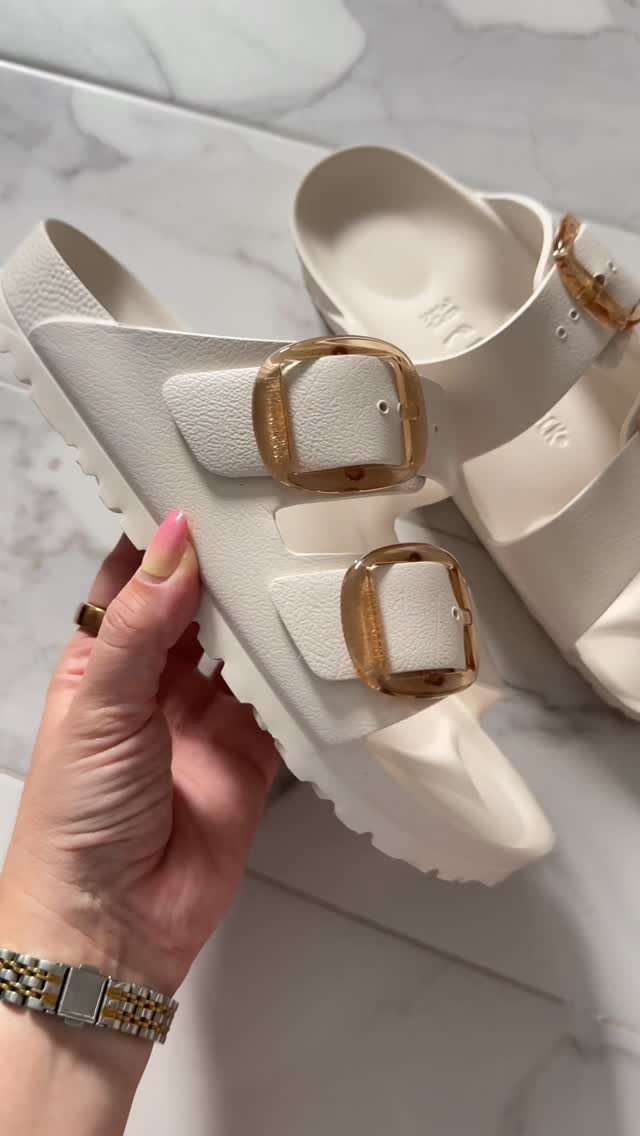
Slide sandals are the summer shoe I reach for when I need to leave the house fast. I would choose leather or a good synthetic over rubber; the footbed shapes to you after a week, and rubber never does.
These are not walking-all-day shoes, but they handle coffee, groceries, and anything seated. Keep a pair by the door and you will wear them more than you plan to.
Choosing Fabrics
Cotton and linen are the 2 natural fabrics worth prioritizing when the temperature climbs.
Linen lets air pass through the weave rather than holding it against you; cotton absorbs sweat and dries slower than synthetics, but it feels familiar and breaks in soft.
I would skip lightweight crepe unless you need something that travels without wrinkling, since it does not breathe at the same level.
A flowy silhouette helps only if the fabric underneath is actually letting heat escape.
A relaxed fit in polyester still traps moisture; a closer cut in linen stays cooler. I check the fiber content tag before buying, even on pieces that look breezy.
Bold prints and tropical patterns work in summer because the season forgives more visual noise.
I would still ground a loud pattern with a solid base: one printed piece, quiet everything else. A bold print carries the outfit, so you can skip the layered necklaces and let it stand alone.
Accessorizing
A straw hat does more than finish a look; it keeps the sun off your face and neck during errands that stretch longer than planned.
A real brim beats a decorative stub, and if you are traveling, check that it folds flat.
Sunglasses are the accessory I replace most often because I buy cheap pairs and lose them.
Gold earrings, by contrast, are the one jewelry buy I do not regret; they work across seasons and do not turn green in humidity. A set of small hoops or studs handles coffee, work, and dinner without a swap.
Crossbody bags free your hands for iced coffee, phone, keys. I prefer leather or a solid synthetic over woven styles for daily use; straw and woven materials look right for vacation but snag and stain with real wear.
A puffer purse is a specific choice that adds volume; I would use it only if the rest of the outfit is slim.
Layered necklaces tangle in heat and sweat. I would wear one chain, or two fine ones of very different lengths, and skip the rest.
Mixing and Matching
A matching set is the fastest way to remove the morning decision, but its real value is in splitting the pieces.
The ribbed knit top works with jeans; the wide-leg pants work with a tucked white tee. I would buy the set in one color and wear the pieces together, not try to mix them across sets.
Versatility depends on color.
A heathered neutral set separates cleanly; a bold print set does not. Pick one color for the set, the same way you would for any base, and confirm it already lives somewhere else in your closet.
A ruffle sleeve set in a shade I own nowhere else becomes a single outfit, not three.
For travel, a sleeveless matching set in linen handles the flight and the first day with a shoe change. The same set at home covers lounging and a quick grocery run.
I would not wear any matching set to a meeting; the relaxed cut reads too intentional in the wrong direction. The test is whether each piece earns its place if the other is in the wash.
Frequently Asked Questions
What is the 3-3-3 rule for clothes?
I don’t use the 3-3-3 rule myself, but the version I hear most often is three tops, three bottoms, and three pairs of shoes for a nine-piece trip wardrobe.
It works if you own pieces that all coordinate, which is harder than it sounds.
What is considered summer casual attire?
Summer casual means natural fabrics that let air pass through, like cotton and linen, in relaxed cuts that still look intentional.
I would choose a sundress, linen shorts with a tee, or a matching set over anything that needs layering. The test is whether you can walk into a coffee shop or casual brunch without looking like you stopped trying.