
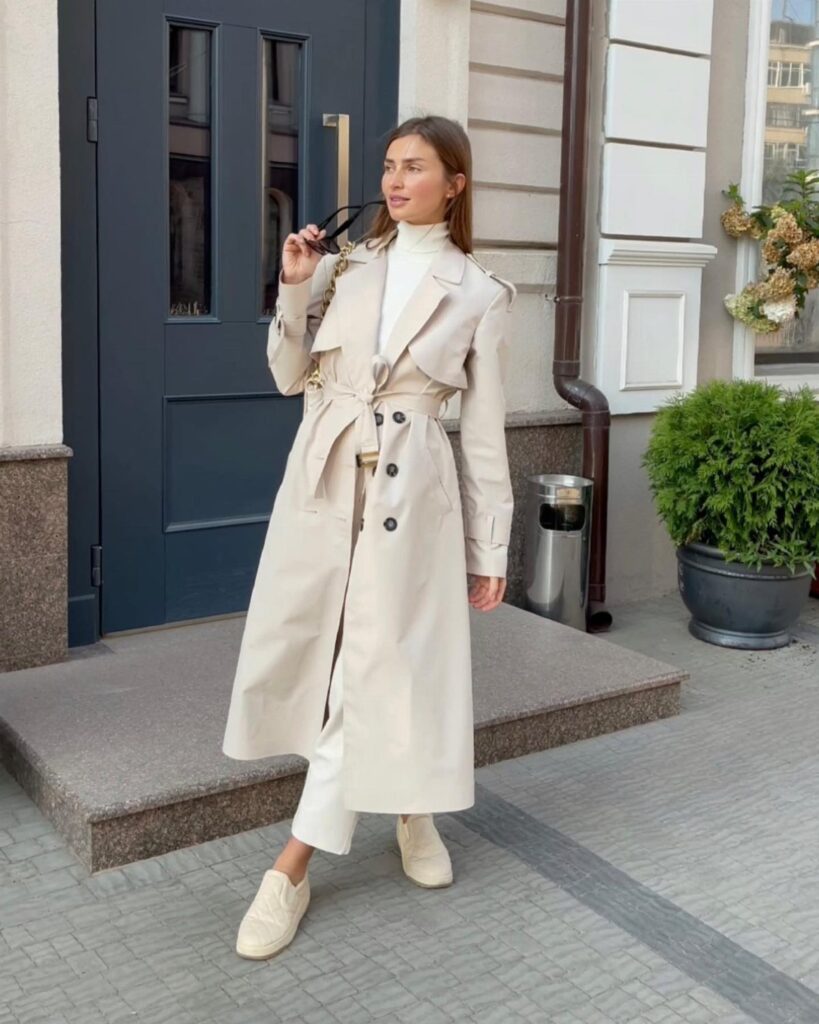
A beige trench over all-white underneath lets the coat come off and the outfit still look whole, which matters when your day starts outside and ends at a desk.
A tailored vest defines the waist over white wide-leg trousers, a satin midi skirt in natural beige gives you movement against a plain white top, and a structured blazer or coat adds weight when the white piece is softer.
1. Beige Coat with All-White Outfit
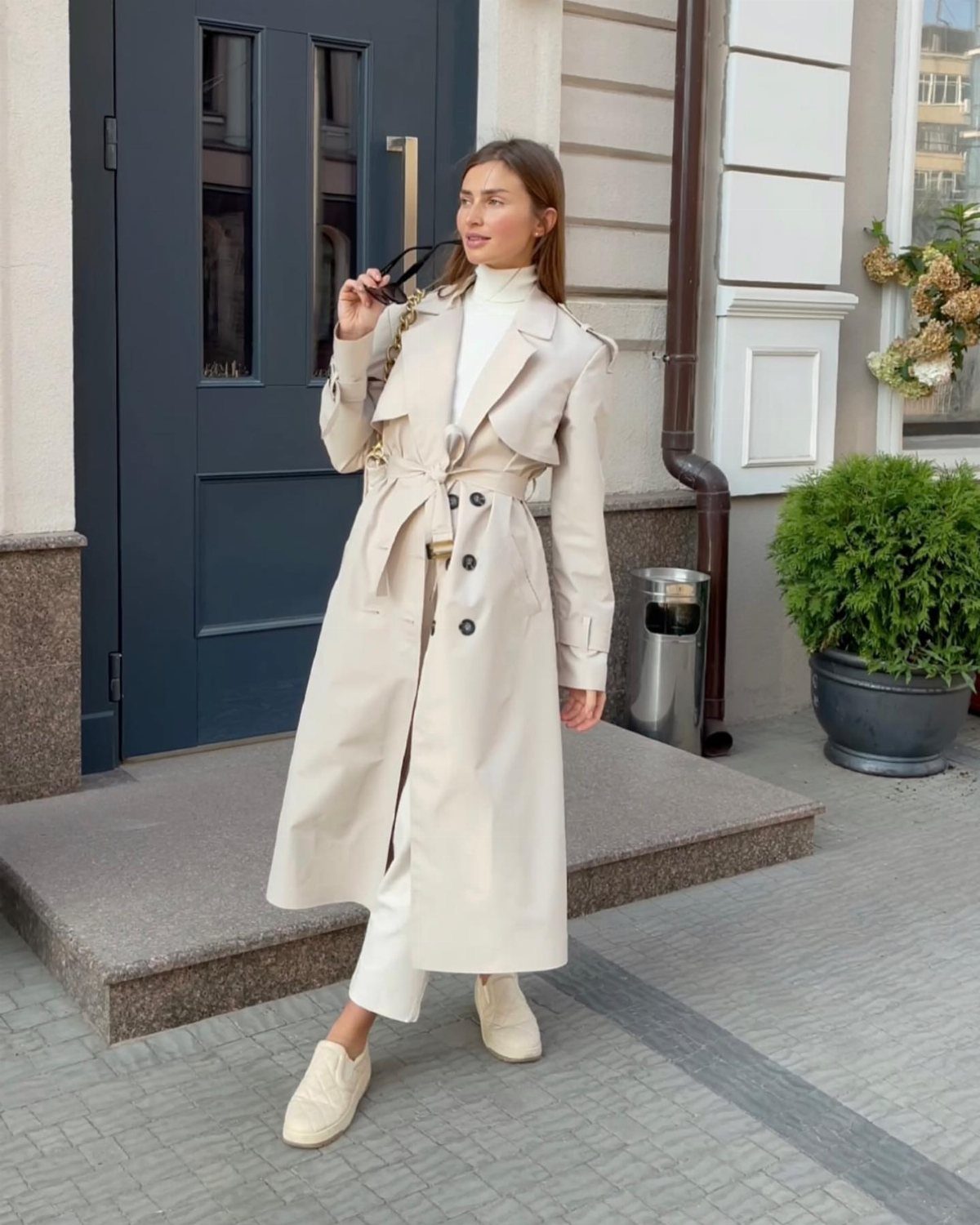
A long beige coat over white pieces puts the color at the edges and leaves the center clean. The coat frames an all-white base without breaking it up, and that continuous white between the lapels stops it from turning muddy.
The length of the coat matters. A trench that hits mid-calf or lower balances white trousers better than a shorter coat would; too short and the white reads choppy rather than sleek.
Beige in a true neutral tone, not tan or camel, sits cleanest against white. A warmer beige can pull yellow next to stark white.
2. Beige Vest with White Trousers
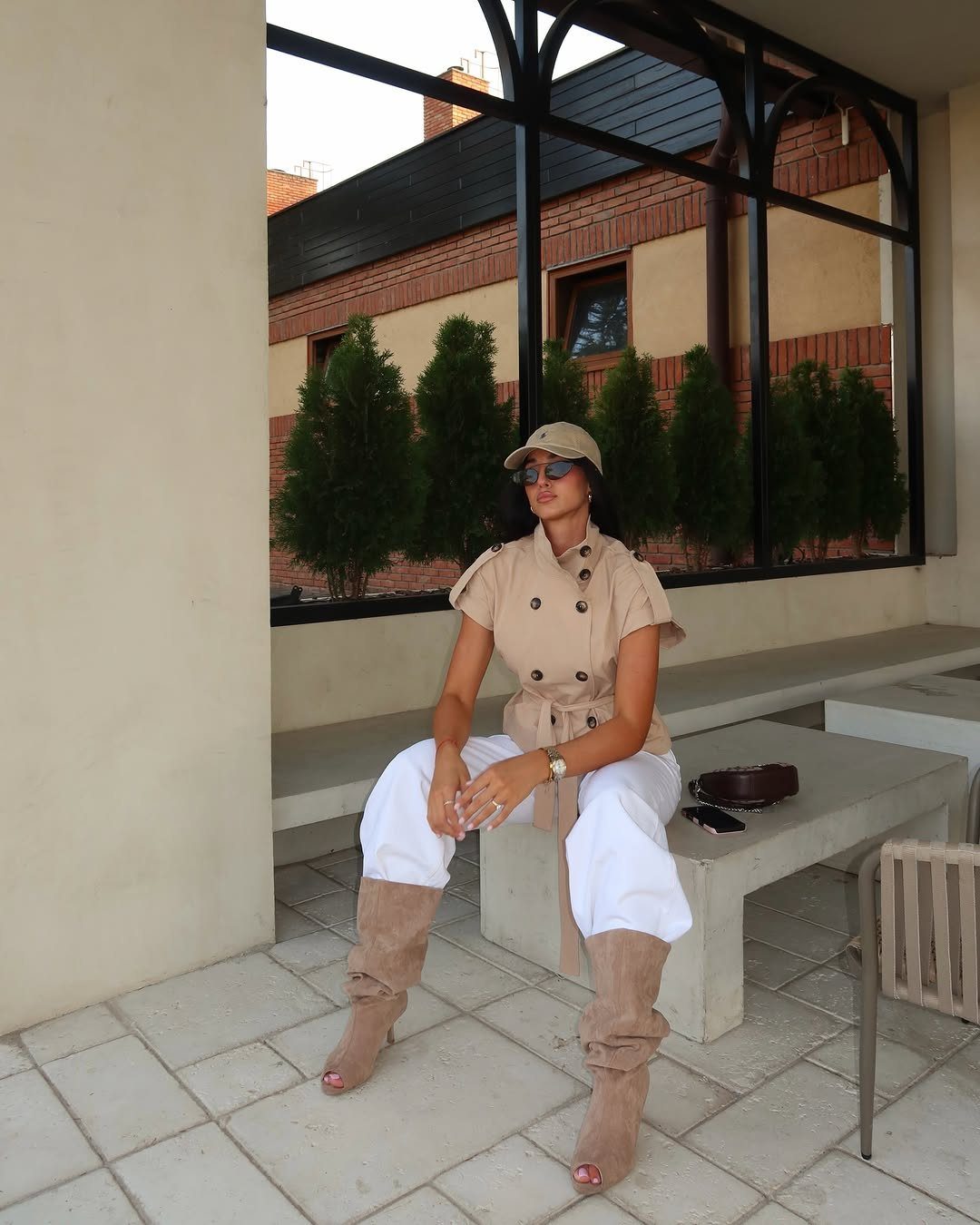
A sleeveless vest over white wide-leg trousers keeps the beige contained at the center, so the white does most of the visual work. The wide leg balances how closely the vest fits through the torso.
White trousers in a full-length cut read cleaner here than cropped ones would. Cropping the hem would chop the line the wide leg is building, and the outfit would lose its length.
Beige accessories, boots and a cap tie the vest to everything else while keeping the palette tight.
3. Beige Puffer Vest with White Jeans
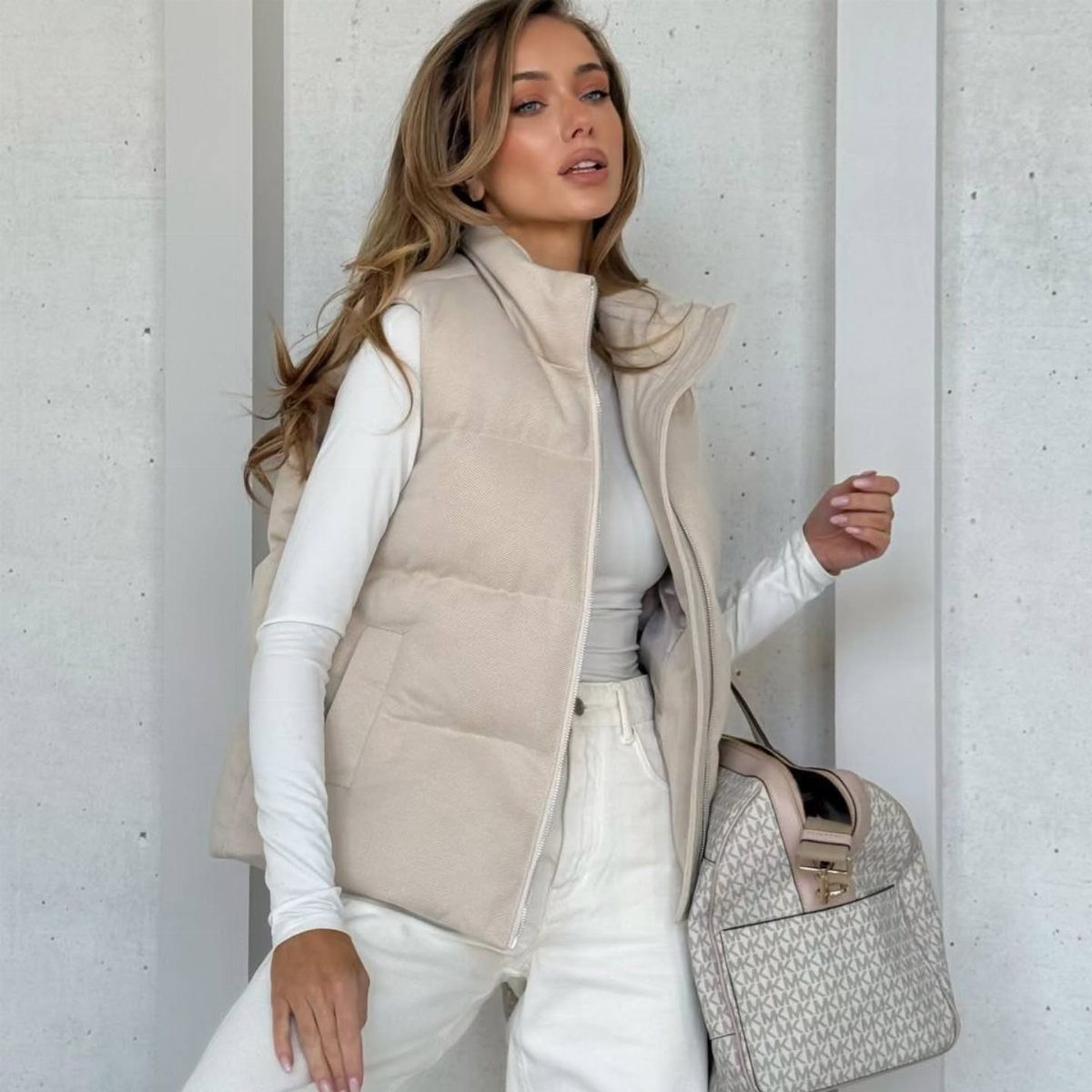
A puffer vest in beige over a white long-sleeve base adds warmth without sleeves, which keeps the outfit from reading too bundled. White jeans carry that lightness through the bottom half.
The vest works best when it stops at the hip or just below. Any longer and it starts to shorten the leg line against white denim.
A structured bag in brown or tan pulls the beige down and adds a second anchor point. Without it, the vest can look like the only deliberate piece in the mix.
4. Flowing Midi Skirt
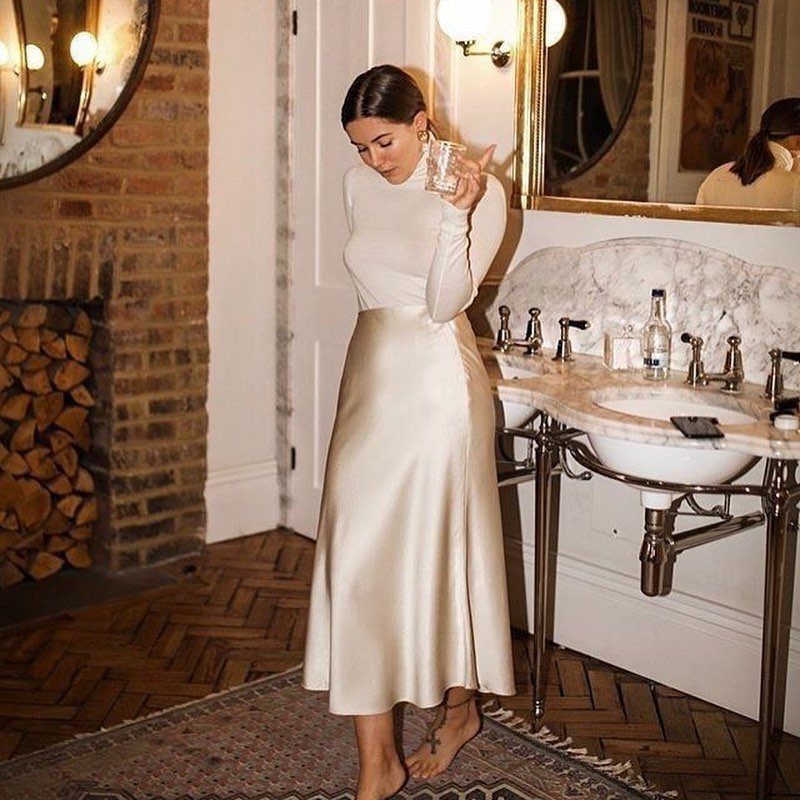
A satin midi skirt in beige moves differently than trousers do, and that drape is what makes the pairing work.
The white top stays simple enough that the skirt can take up space, and the length keeps it from reading too dressy.
Satin catches light, so a matte white top balances it better than anything with sheen. Too much shine and the outfit starts to look like separates from 2 different events.
Barefoot or low sandals suit this best. The skirt already has enough formality on its own; heels would push it past casual.
5. White Button-Down Outfit
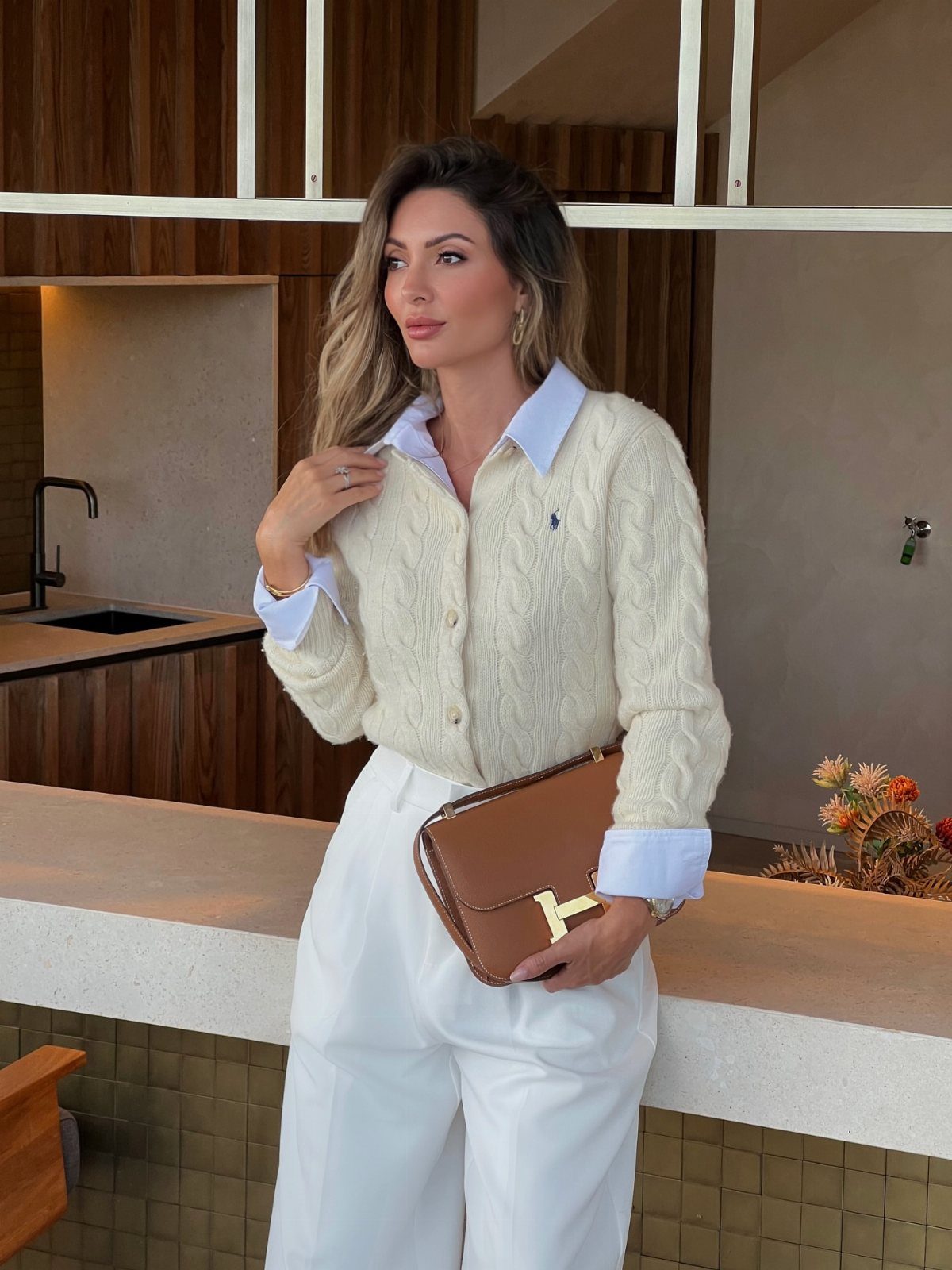
A white button-down with white trousers and a cream cardigan keeps all 3 pieces in the same tonal family, and the cable knit is what gives the outfit texture instead of flatness.
The cardigan stays open, which matters more than it sounds like it should. Buttoning it would cover the shirt and lose the layering that makes this read as three pieces rather than one.
A brown leather clutch pulls in warmth without adding a new color to manage. Against this much white and cream, a black bag would read too stark.
6. Beige Knit Set with White Sneakers
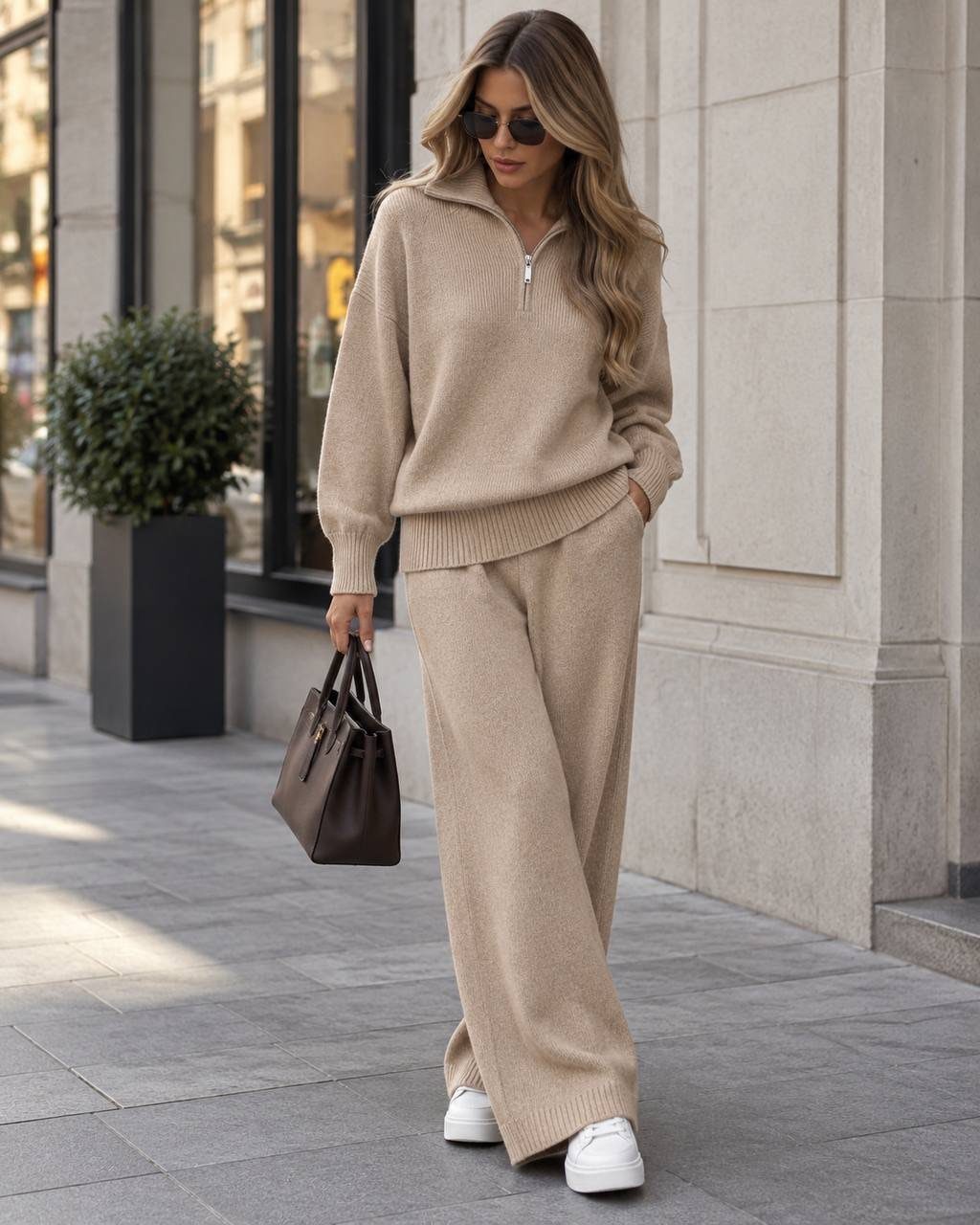
A matching knit set in beige reads polished on its own, and white sneakers pull it back toward casual without losing the put-together feel. The sneakers break up the monochrome enough that the set doesn’t look like loungewear.
The quarter-zip adds a collar line without needing a shirt underneath. Leave it zipped partway; fully zipped reads too athletic, and fully open loses the neckline that separates this from a plain crewneck.
A brown bag ties to the beige without doubling it. Beige-on-beige accessories would flatten the outfit; brown adds warmth and keeps the contrast the white sneakers started.
7. Beige Cardigan with White Slip Dress
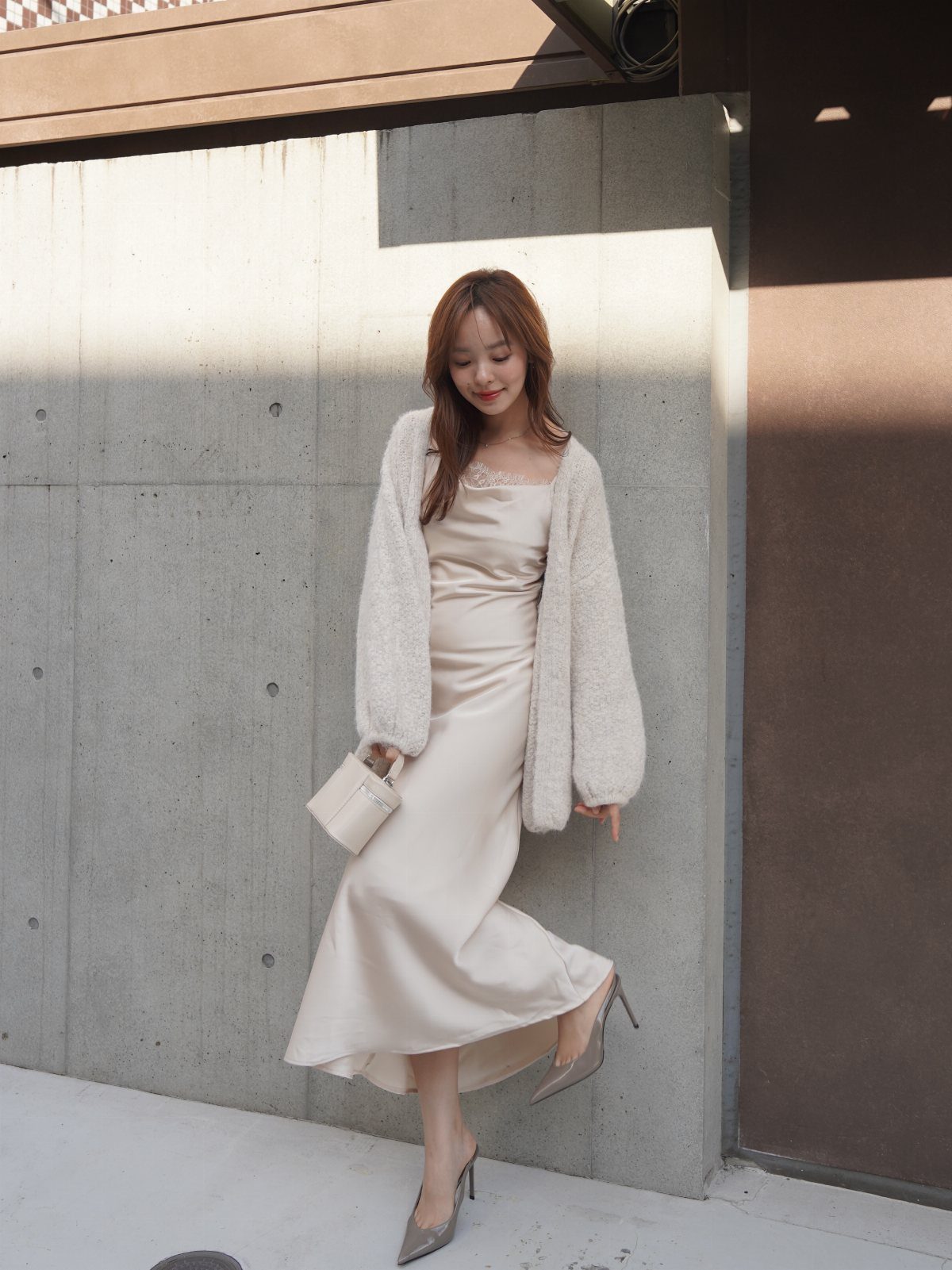
Satin and knitwear read as opposites, which is exactly why this pairing works. The slip dress is sleek and body-skimming; an oversized cardigan thrown over it adds weight and softness without hiding the dress underneath.
Fit matters most in the cardigan.
Oversized is the point, but if it swamps the slip entirely, the dress disappears. The hem of the slip showing below the cardigan hem is what tells the eye there are 2 pieces.
Grey heels keep the palette neutral and let the beige-and-white do all the work.
8. Beige Blazer with White Top

Matching the blazer to the trousers in the same beige turns this into a suit, and that single move is what lifts a white top from basic to put-together.
A white top works here because it reads as a shirt, not a blank filler. Tuck it fully so the waist of the trousers stays visible; leaving it untucked loses the line the blazer is working to create.
A black clutch grounds the look without pulling it away from the beige-and-white palette, and it keeps the accessories from competing with the suiting itself.
9. Beige Jacket with White Trousers

A faux-leather jacket in beige sits differently than a blazer does: the high neck adds structure at the top, and the slight sheen keeps the whole thing from reading like workwear.
White trousers here do most of the balancing. The jacket has enough going on with the texture and the collar that the bottom half is better left clean and simple.
Flat or low shoes read better than heels with this combination. The jacket already has an edge to it, and a chunky sneaker or loafer keeps it grounded rather than dressed up past where it wants to go.
10. Beige Vest Over White Shirt
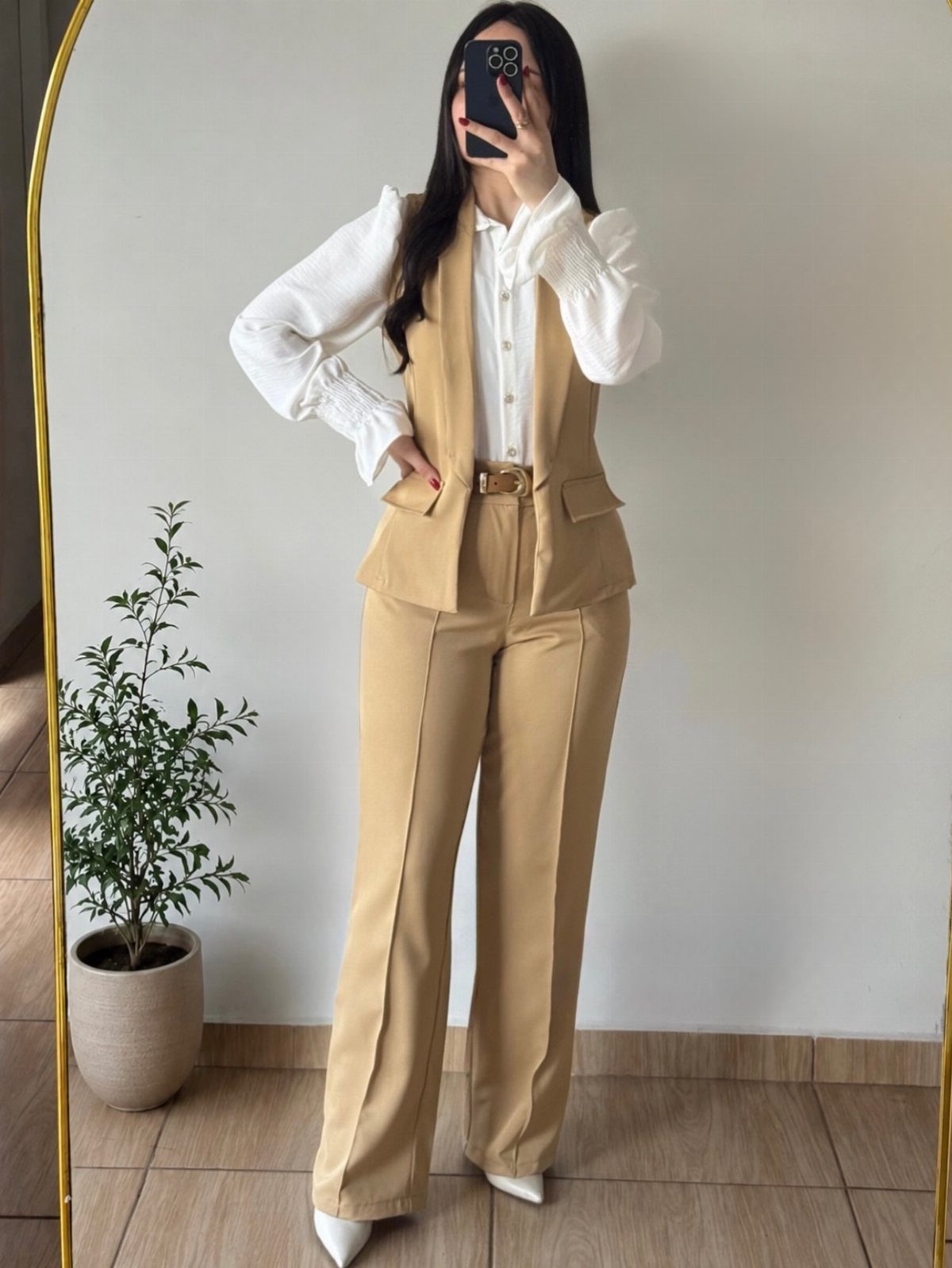
A tailored vest and matching trousers in beige, with a white button-down underneath, gives you the structure of suiting without the weight of a jacket.
The vest defines the waist and keeps the line clean, and the white shirt fills the armholes without bulk.
This version works best when the vest is fitted through the body. Too loose and it reads like borrowed suiting; too tight and the shirt fabric bunches at the sides.
The loose cut of the trousers offsets how closely the vest fits. A slim trouser would make the top half look boxy by comparison.
11. Beige Jacket with White Top
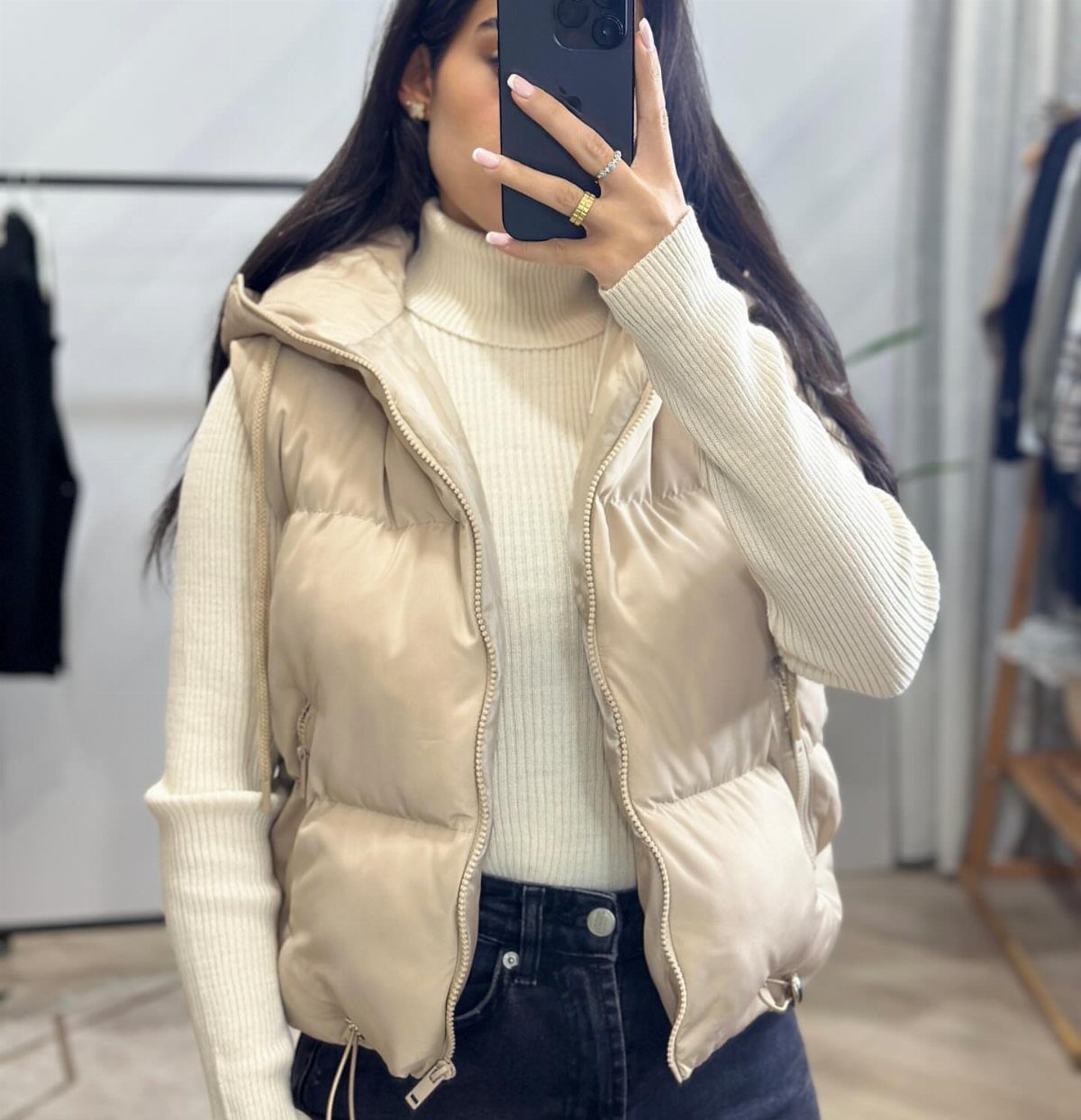
Dark jeans do something the all-white base in earlier entries doesn’t: they give the beige vest a hard edge to push against, so the tonal pairing up top reads sharper.
The ribbed turtleneck under the vest is the right call. Ribbing adds enough texture that the white doesn’t disappear under the beige, and a turtleneck fills the vest’s neckline better than a crewneck would.
Fit matters more here than in a looser outfit. A puffer vest that’s too long past the hip throws off the proportion against slim dark jeans.
Using Fabric Texture and Fit
Fabric is what keeps a beige-and-white outfit from looking flat when color won’t do that job.
Linen, wool, silk, cashmere, and denim each catch light differently, so mixing two or three of them in one outfit gives you dimension a single fabric can’t.
A silk blouse under wool trousers or a knit layer over something with drape adds weight in one place and lightness in another, and that contrast is what makes the outfit feel considered.
Cream or white trousers show fit problems fast.
Quality fabric helps, but so does sizing up when the fabric clings where it shouldn’t. Trial and error matters more here than it does with darker colors that hide tension across the hips or thighs.
Frequently Asked Questions
What color goes with white and beige?
Grey, black, and natural tones work best. Grey heels or a black clutch let the beige and white carry the outfit without competing for attention, and staying neutral keeps the palette from reading busy.
What makes a woman look wealthy?
Matching beige pieces, like a blazer and trousers in the same tone, read as suiting rather than separates, and that single move lifts a white top from basic to intentional.
Fitted tailoring and quality fabric that drapes rather than clings add to the effect.
How can I dress up a white shirt?
Layer a beige blazer and matching trousers over it to turn the white shirt into suiting, or wear a tailored beige vest that defines the waist.
Tucking the shirt fully keeps the waistline visible and makes the outfit read as deliberate rather than casual.