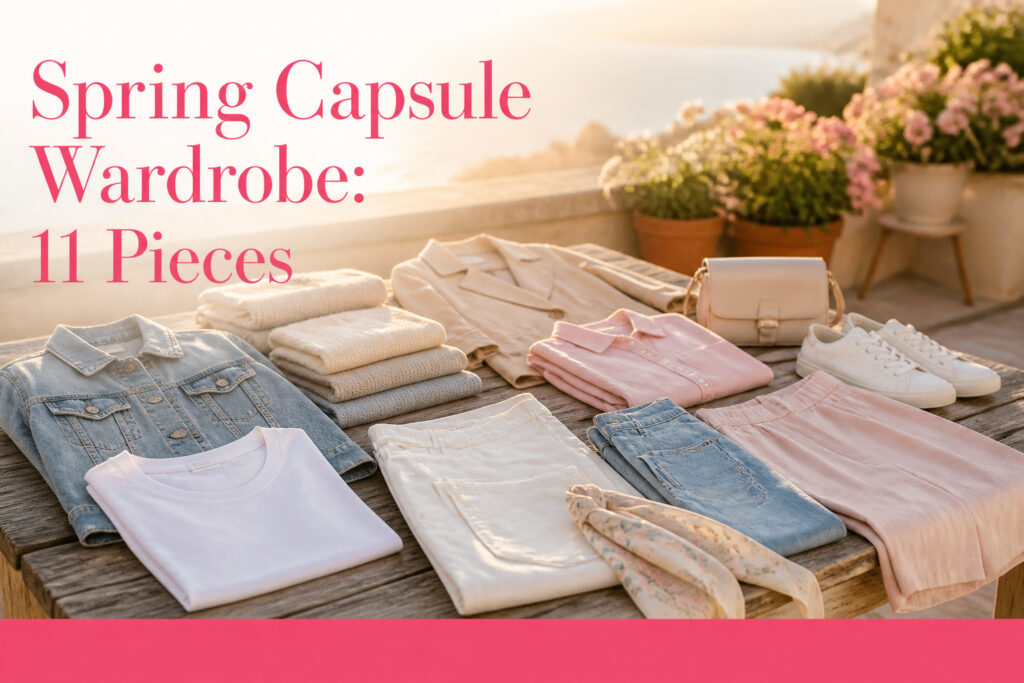
A spring capsule wardrobe is a deliberately small set of clothes built to mix across temperature swings without daily decision fatigue. Most guides pad the count with pieces that only work in one combination, which misses the point entirely.
Eleven items actually cover it if each one earns its place in at least two temperatures and three pairings. The white tee that starts the list, for instance, needs 5–6 oz cotton to survive weekly wear past May.
White T-shirt
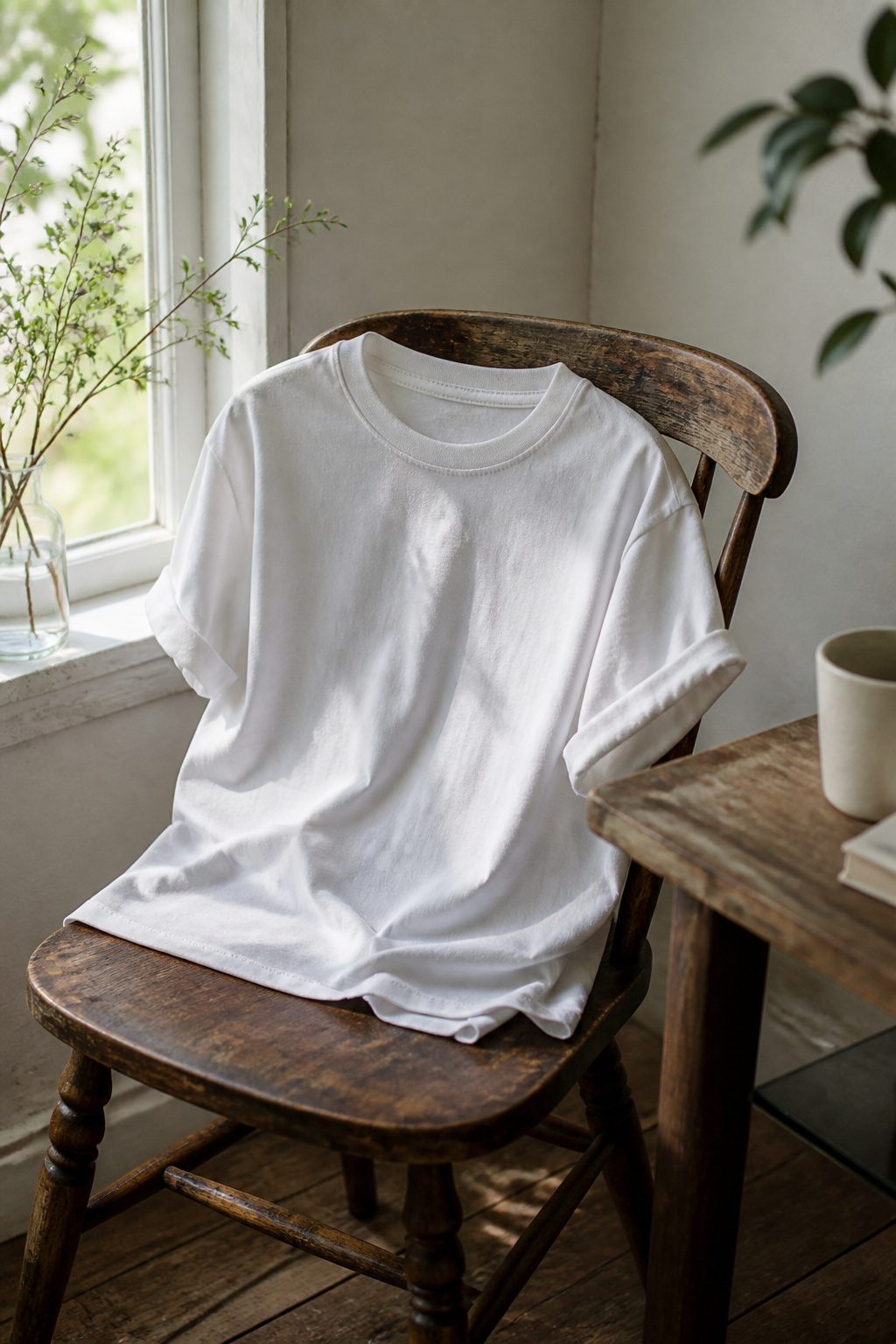
A white tee is the piece that makes every outfit inherently easy, whether paired with a suit, an embellished skirt, or boldly colored trousers.
The best ones have that slightly boxy fit and a substantial feel, which means 5–6 oz cotton — thick enough to hold its shape after washing, but not so heavy it goes stiff against your body.
Thinner versions with stretch or slub textures tend to lose their structure by May.
Neckline changes what layers cleanly over it. Crew necks sit higher and work under blazers with a sharper collar line; scoop necks soften the transition under a cardigan and draw the eye downward if you are broader through the shoulders.
I reach for the crew when the layer on top is tailored, the scoop when it is relaxed.
The math on this one is straightforward: eight of the guides I looked at list a white tee as essential, and most replace theirs every six to nine months from weekly wear.
If your current whites are dulling, a non-bleach refresh can buy another season, but the cotton weight is what determines whether the tee earns its place long enough to matter.
Button-Down Shirt
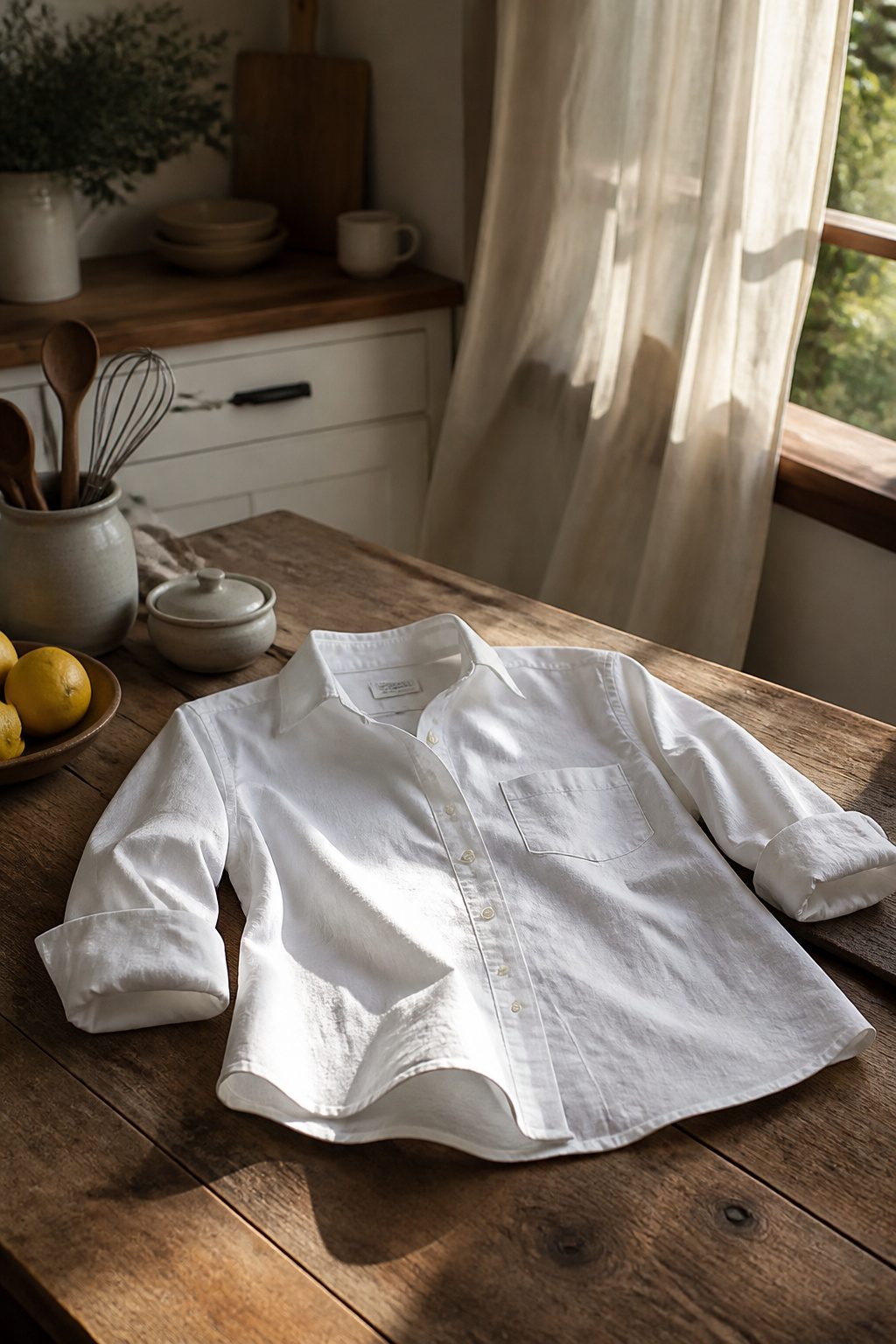
A button-down shirt earns its place as the second foundation piece by doing what a blouse rarely can: moving from a client lunch to Saturday errands without a change.
Cotton poplin at 100–120 grams per square meter keeps the crisp structure that reads as intentional under a blazer. For weekends, linen or cotton voile softens with each wash and breathes better against skin that runs warm as May afternoons stretch.
The $168 Polo Ralph Lauren cotton poplin at Nordstrom, Bloomingdale’s, or Ralph Lauren direct sits at a price point that reflects construction meant to survive weekly rotation.
Long sleeves roll to a cleaner cuff than short sleeves ever look; a rolled sleeve signals "done" where a cap sleeve can read "forgotten."
An oversize cut, slightly borrowed-from-the-boys, layers over a tank, halves over shorts, or substitutes for a cover-up above a swimsuit. White reads fresh for spring, black adds contrast when the occasion needs more polish.
A crisp cotton button-down needs ironing or steaming after every wash, so budget that time or pay for pressing.
Poplin demands ironing; linen arrives wrinkled and stays that way. I keep one of each and reach for the poplin when the day splits between desk and dinner, the linen when the only appointment is a patio.
Denim Jeans
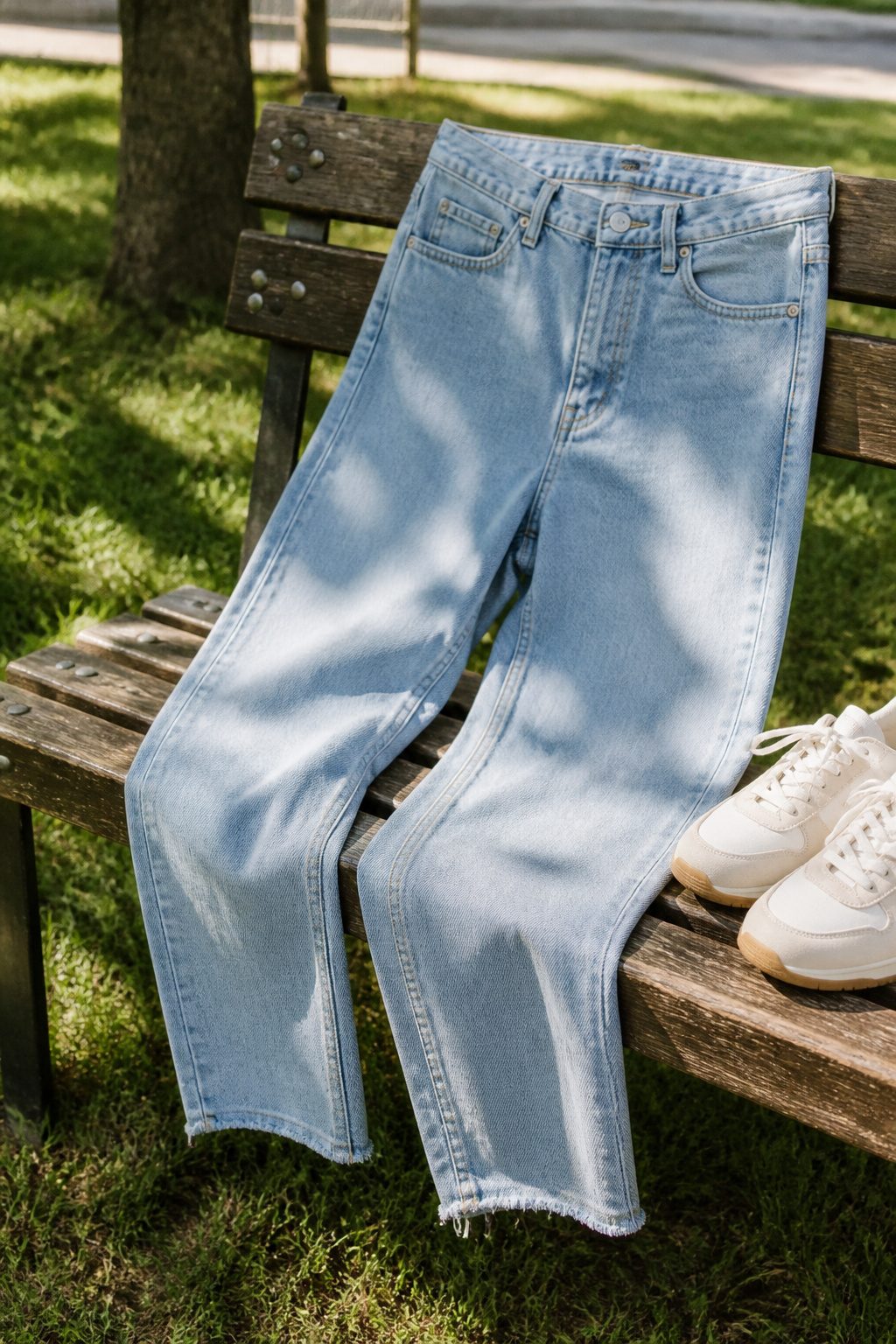
Denim jeans were the single most common item across every spring capsule wardrobe list I reviewed, and with good reason.
The shape that actually earns its place is mid-rise straight-leg or slim-straight, not the ultra-high rise or aggressively baggy cuts that read dated by May.
Straight-leg sits clean over sneakers and sandals alike, and the slim-straight taper keeps the line neat enough for a blazer without looking like you’re trying to make workwear happen on a Saturday.
Raw or once-washed denim ages in your favor; heavy distressing and factory fading look manufactured the moment the trend shifts.
Cotton denim relaxes with wear, so I buy true size for a fit that stays correct through the day rather than starting tight and ending sloppy.
On inseam, I plan for about a half-inch break above the ankle with flats, and a full inch shorter for low-profile sneakers so the cuff doesn’t bunch at the tongue.
Medium wash handles more situations than light, but ecru or black earns its spot if the rest of your capsule leans warm or cool respectively.
Lightweight Sweater
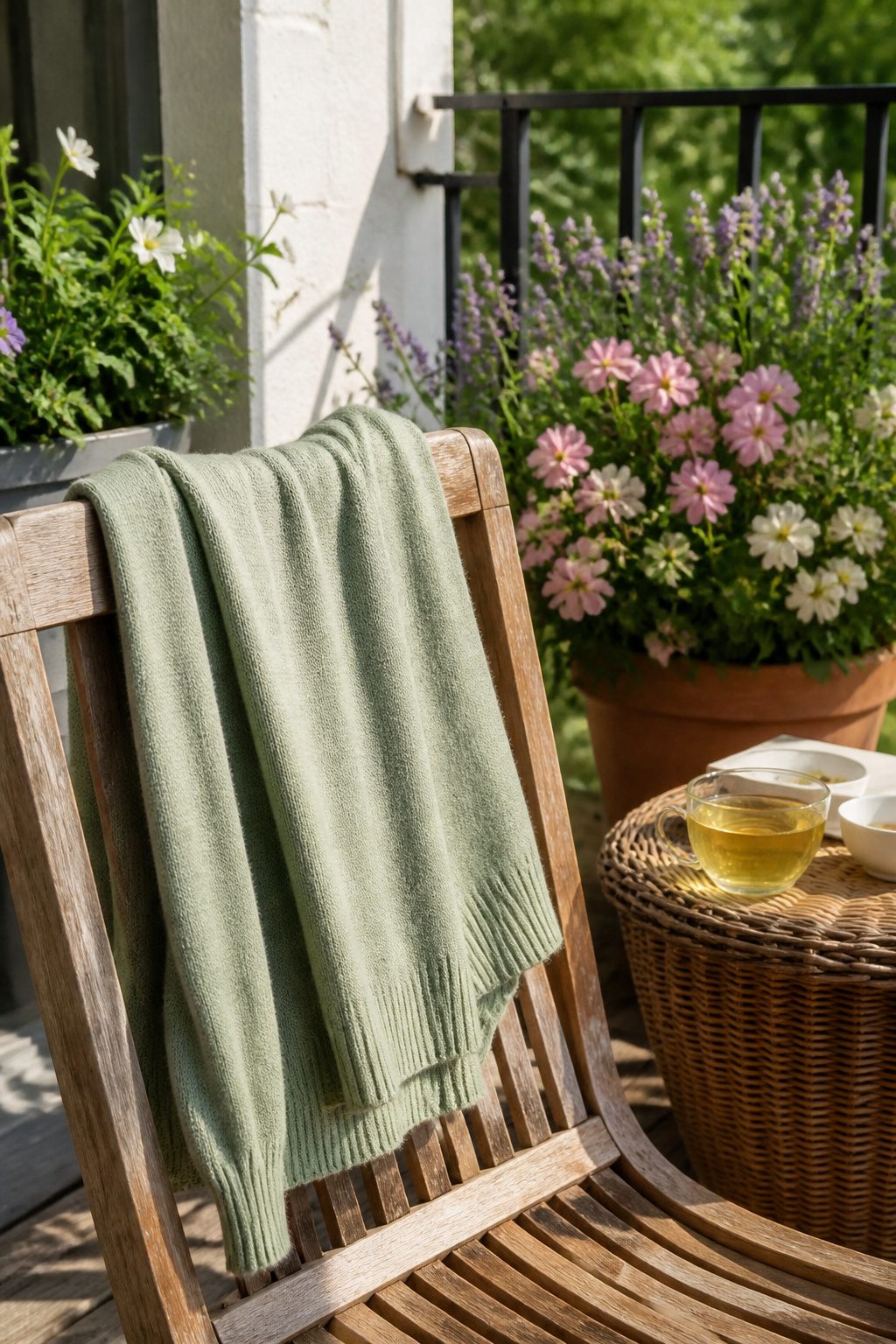
A 12-gauge knit or finer is what separates a spring sweater from the winter kind. Gauge counts the needles per inch: the higher the number, the thinner the yarn and the more air moves through it.
Winter crewnecks usually sit around 7–9 gauge, dense enough to block wind. Spring wants the opposite.
Merino or a cotton-cashmere blend handles the 55-degree morning that becomes a 72-degree afternoon without the damp clamminess of pure cotton.
Merino pulls moisture away from skin; cotton-cashmere gives structure without the full investment of 100% cashmere. Either fiber works under a jacket at 8 a.m. and solo by 2 p.m.
Neckline matters more than most people think. A crew or shallow V-neck keeps the line clean under a collared shirt, which the striped sweater from that Bosnia trip did not.
Horizontal stripes draw the eye upward on triangle shapes, but a solid crew in sage green or pale pink does the same job without the pattern commitment.
For apple shapes, the vertical line of a shallow V elongates the torso better than a high crew.
The piece to look for: something you would throw over a dress at 6 p.m. and not remove until ten minutes past when you should have. That is the test of weight and fiber together.
Cardigan
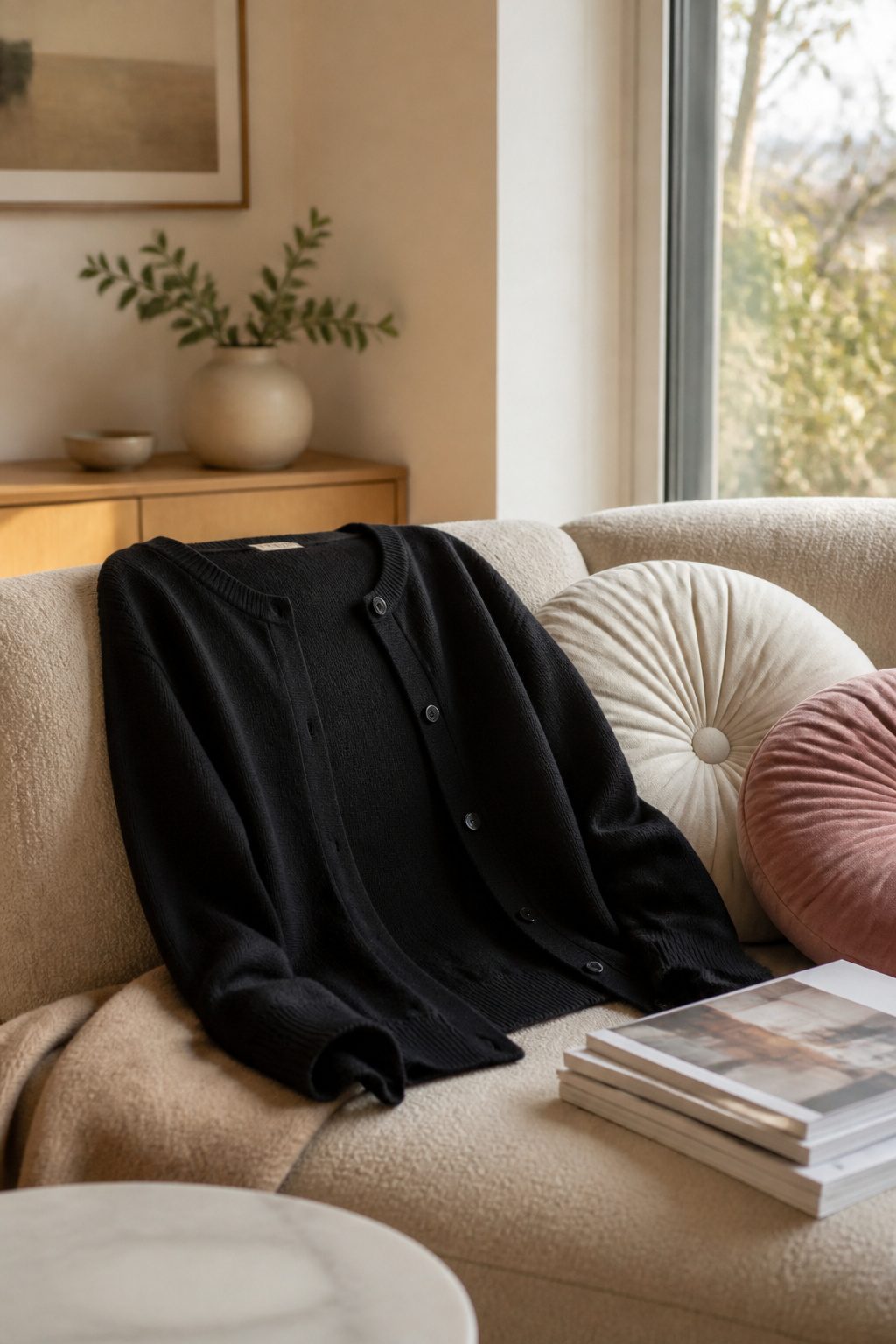
A fine-gauge cardigan layers where a sweater cannot, sliding under a blazer or trench without the bulk that turns a shoulder line square.
Eight of the guides that shaped this list treat it as separate from the crewneck sweater for exactly that reason.
Button-front gives you a neckline to play with: fastened to the top it reads neat enough for the office, opened two buttons lower it breaks a long line the way a necklace would.
Open-front is faster in the morning and reads more off-duty, though it can slip backward on a sloped shoulder. Hip length tucks neatly into a high-waisted trouser; longer cuts need a slimmer pant underneath or the proportions flatten.
For fibers, cotton and merino are the spring choice.
Cotton breathes through a warm April afternoon; merino handles a still-chilly evening and resists the odor that makes you wash after one wear. Save the chunky lambswool for October.
A slim black cardigan from Quince, sized true for a close but not tight fit, is the piece I would pick first: it closes over a tee, opens over a camisole, and disappears under a jacket when the day demands structure.
Midi or Maxi Dress
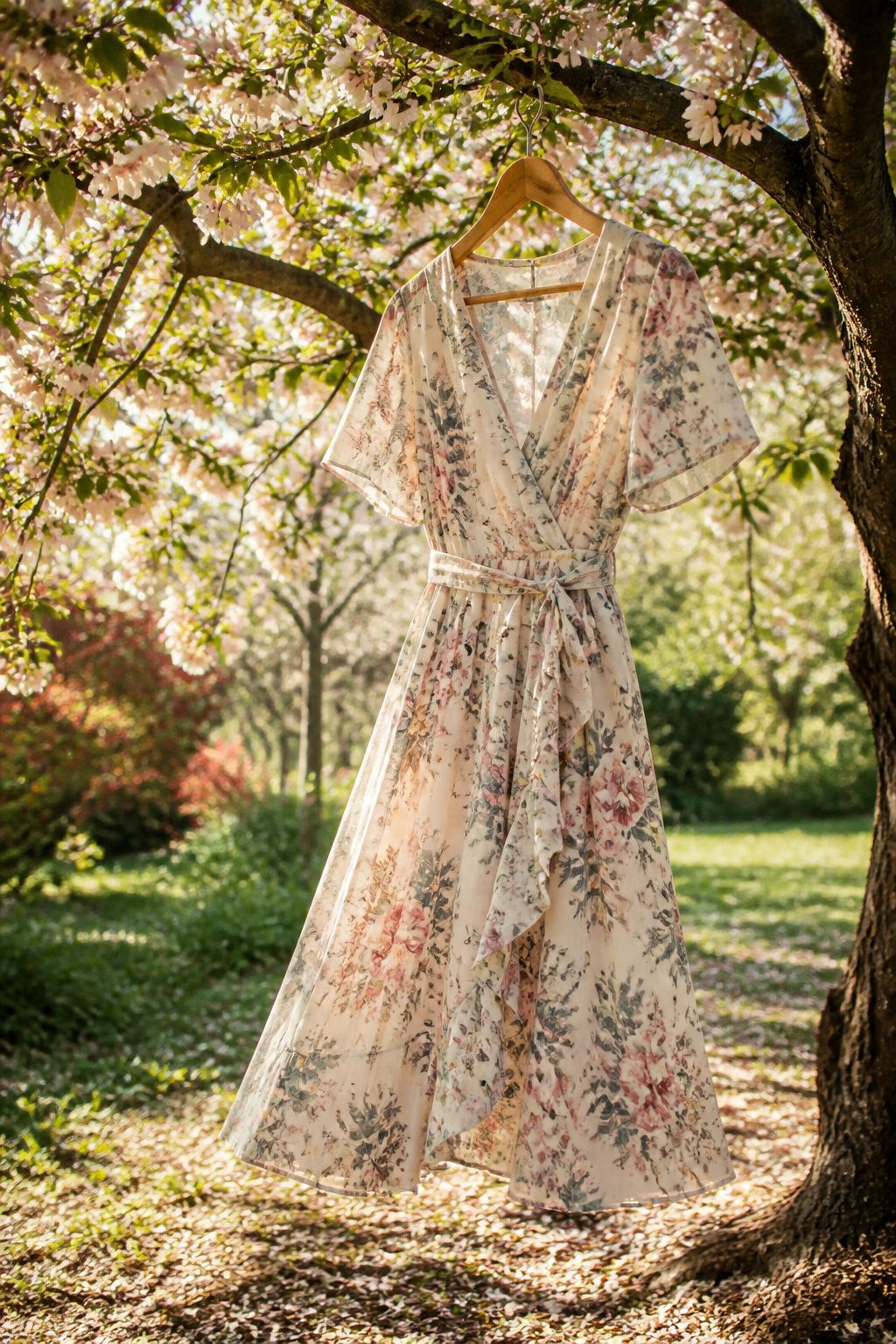
A dress solves the morning question in one pull over the head. Seven capsule guides I reviewed all included one, and the split between midi and maxi is where the choice gets interesting.
Midi hits mid-calf, which is the length that actually works with flats or low sandals without looking like you forgot to change shoes.
Maxi covers the ankle and reads more dramatic, but the hem drags unless you add a slight heel or platform. I would skip the maxi for a capsule meant to travel light; the shoe requirement undermines the point.
Sleeveless with layering potential beats short-sleeve here. A sleeveless woven dress takes a fitted tee underneath for April chill or stands alone at 75 degrees, where short-sleeve jersey just looks like you misjudged the weather.
Woven fabric wins over jersey for a piece meant to stand alone.
Jersey clings and pills, and by June it looks tired. A woven cotton or linen blend holds its shape through a full season of repeat wears, which is the whole argument for capsule dressing in the first place.
Lightweight Jacket
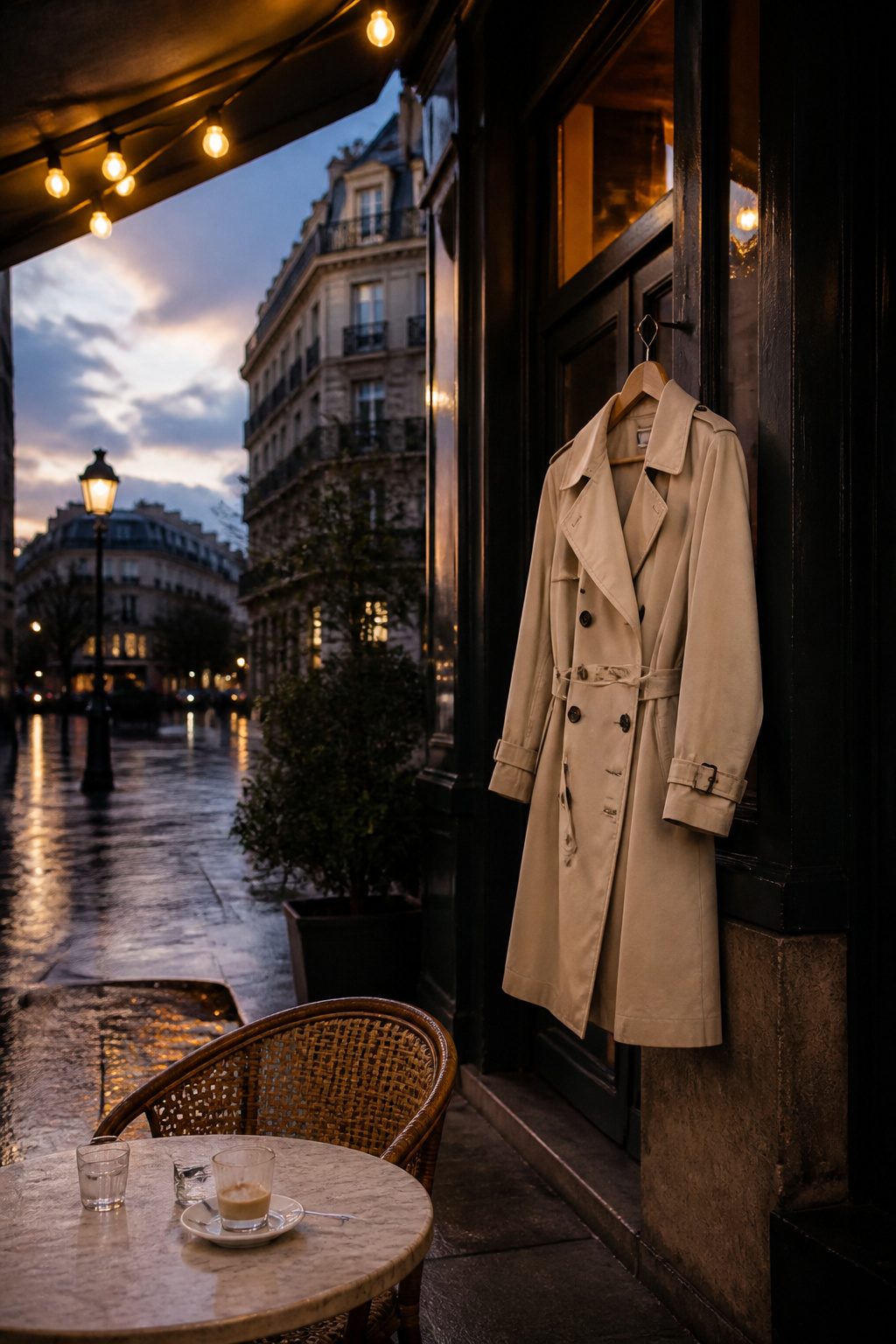
A lightweight jacket is where most spring capsule wardrobes commit their first real error. You need one, not two, and the choice between trench and denim depends on where you spend your mornings.
Cotton gabardine or water-resistant poplin trenches handle rain and commuting. They read as finished outerwear over trousers or a midi dress, and the belted waist gives structure to softer pieces underneath.
Length matters more than most buyers notice: hip length works for petites, knee length for average to tall frames. Anything longer than knee on a shorter frame drags the eye down and fights the proportions you are building.
Denim jackets win on casual days and breathability. They layer over slipdresses, under trenches on cold mornings, or alone with white jeans and a tee.
Blue or black, the material matters more than the color: rigid denim holds its shape through years of washing, stretch blends sag at the hem and elbows by season two.
Spring demands unlined or half-lined construction. A fully lined jacket traps heat you do not need once April arrives and adds bulk that defeats the point of lightweight layering.
The lining also takes longer to dry after a shower, which is the wrong kind of inconvenience in unpredictable weather.
I would take the trench if I walked to work or lived where March means drizzle. The denim jacket wins for dry climates, weekend-heavy schedules, or anyone whose spring look leans more California than London.
Tailored Trousers
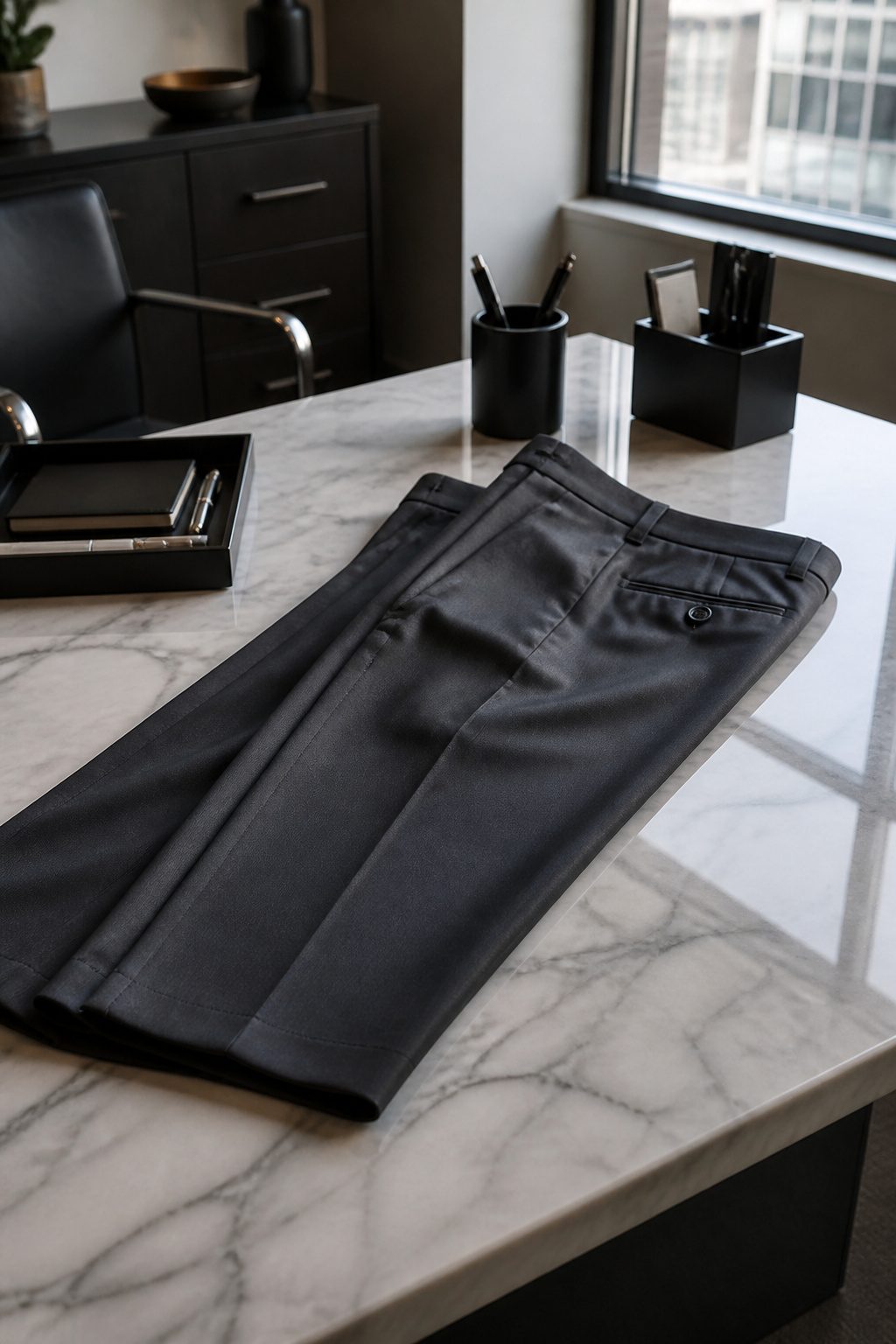
Tailored trousers fill a gap jeans cannot. Where denim reads weekend, a proper waistband with front and back darts or pleats, plus a pressed crease or clean flat front, let you walk into a meeting without changing your shirt.
The construction is what moves them from casual to credible.
Spring fabric matters here. Tropical wool breathes but keeps its line through humidity, linen blend softens the formality without collapsing into wrinkles, and cotton sateen gives a slight luster that reads intentional rather than accidental.
Each handles the season’s temperature swings better than standard suiting wool.
Chinos share some DNA, but the details separate them. Chinos skip the interior construction: no gripper waistband, no structured drape, no crease that holds after sitting.
That freedom works with a polo, yet beside a button-down for work the comparison falls apart. The tailored trouser carries the shirt; the chino merely meets it.
I would limit these to two pairs in a capsule, maybe three if your office demands daily wear.
One in navy or charcoal, one in a warmer neutral like camel or soft gray. Tailored trousers cost more upfront than chinos, but they last longer and pair with more of what you already own.
Shorts
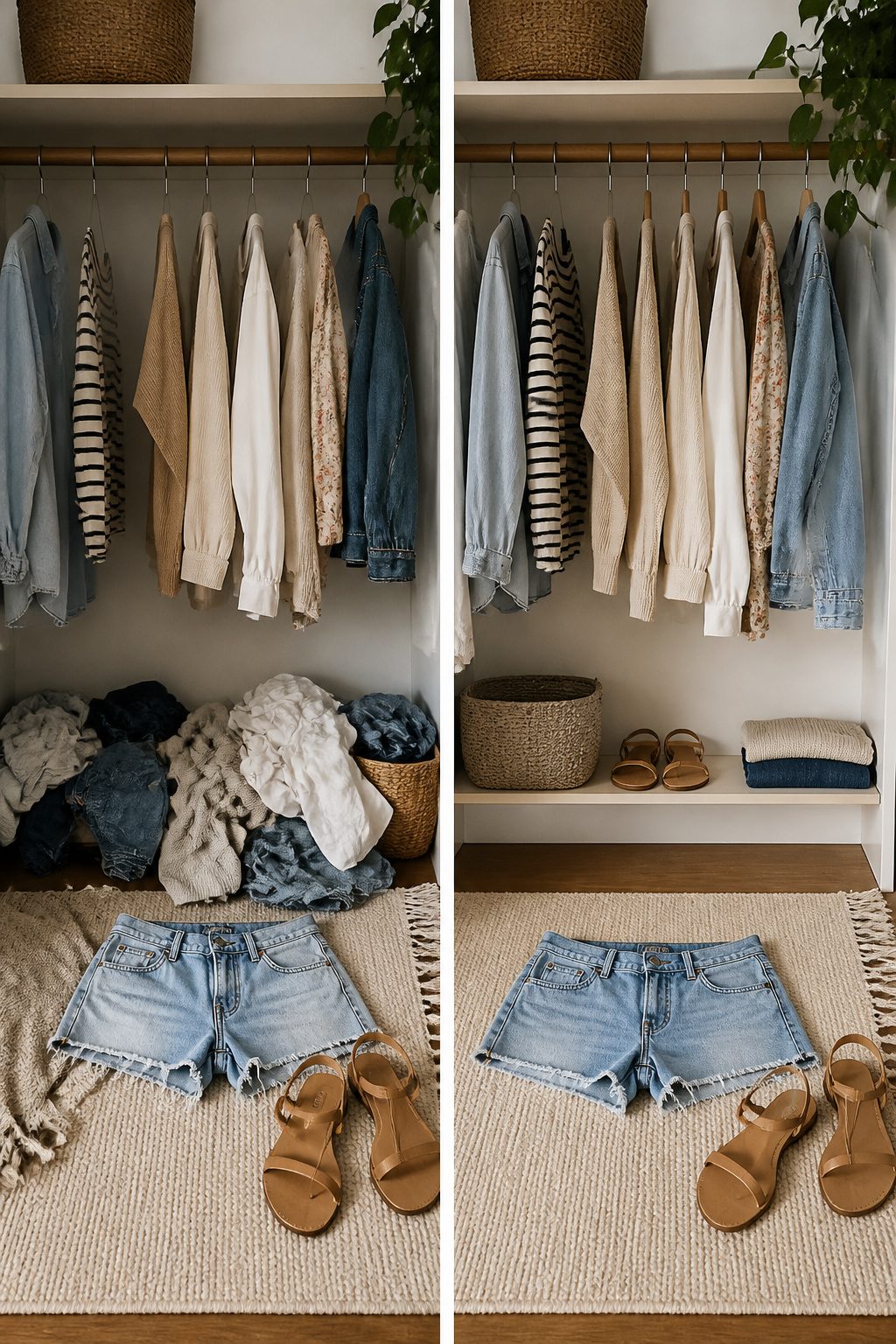
Shorts are the one category where I stop at five pieces, the lowest count in this capsule.
The reason is practical: spring weather across much of the US stays too cool for bare legs through April, and even in May a sudden drop to the 50s makes shorts feel like an optimistic mistake.
When I do include them, the choice is between mid-thigh denim shorts, not cutoffs, and tailored shorts with a 4–7 inch inseam, flat front, and a belt.
The denim option reads casual but finished; the tailored shape, sometimes pleated, works with a blazer and mules or scales down with a tank and sandals. Longer cream denim has the same dress-up, dress-down range.
I skip shorts entirely some springs, and the deciding factor is never trend. A cooler climate or legs that chafe in humid heat make trousers the better call.
The 4–7 inch inseam flatters most shapes, but if your thighs touch at the top, that mid-thigh denim cut can ride and roll. In those years, I wear the trousers and feel no loss.
Comfortable Shoes
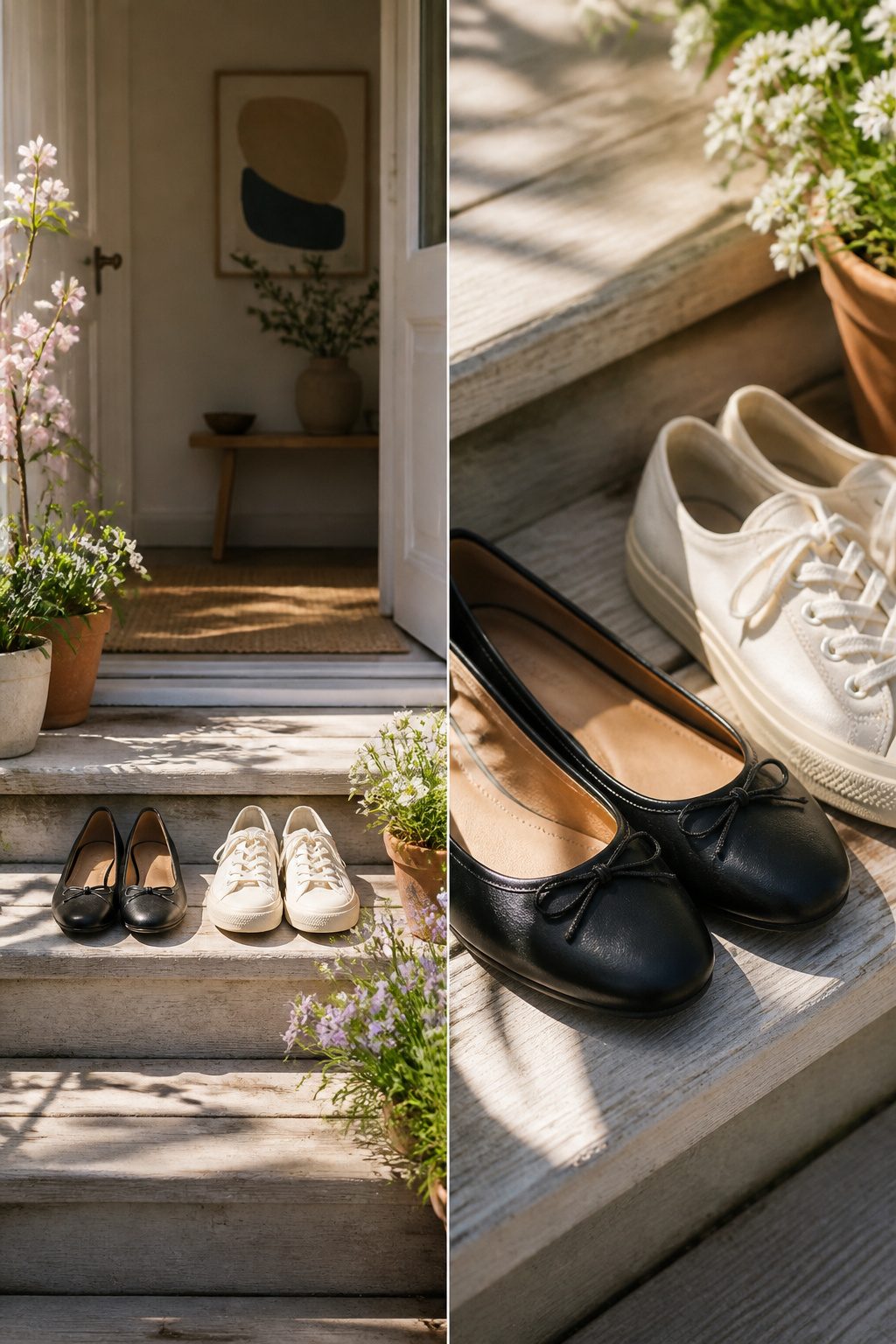
Leather ballet flats or loafers handle the office and polished errands, while white leather or canvas sneakers cover everything else.
I keep the spring capsule to two pairs total, because each shoe needs to work with at least half the wardrobe to earn its spot.
Suede reads as fresh this season, but spring mud makes it a poor bet for a capsule built on repetition. Leather or canvas wipe clean and survive the weather that suede absorbs.
Low-profile sneakers with a slim silhouette pair better with the longer skirts and relaxed trousers already in this wardrobe than bulky running styles.
Canvas gets dirty faster; leather holds up but costs more upfront. Either way, skip the suede entirely.
For the polished pair, glove or high-vamp flats in leather feel current without trending too far toward a single look. Loafers work if your office leans traditional; ballet flats bridge more dress codes.
Accessories
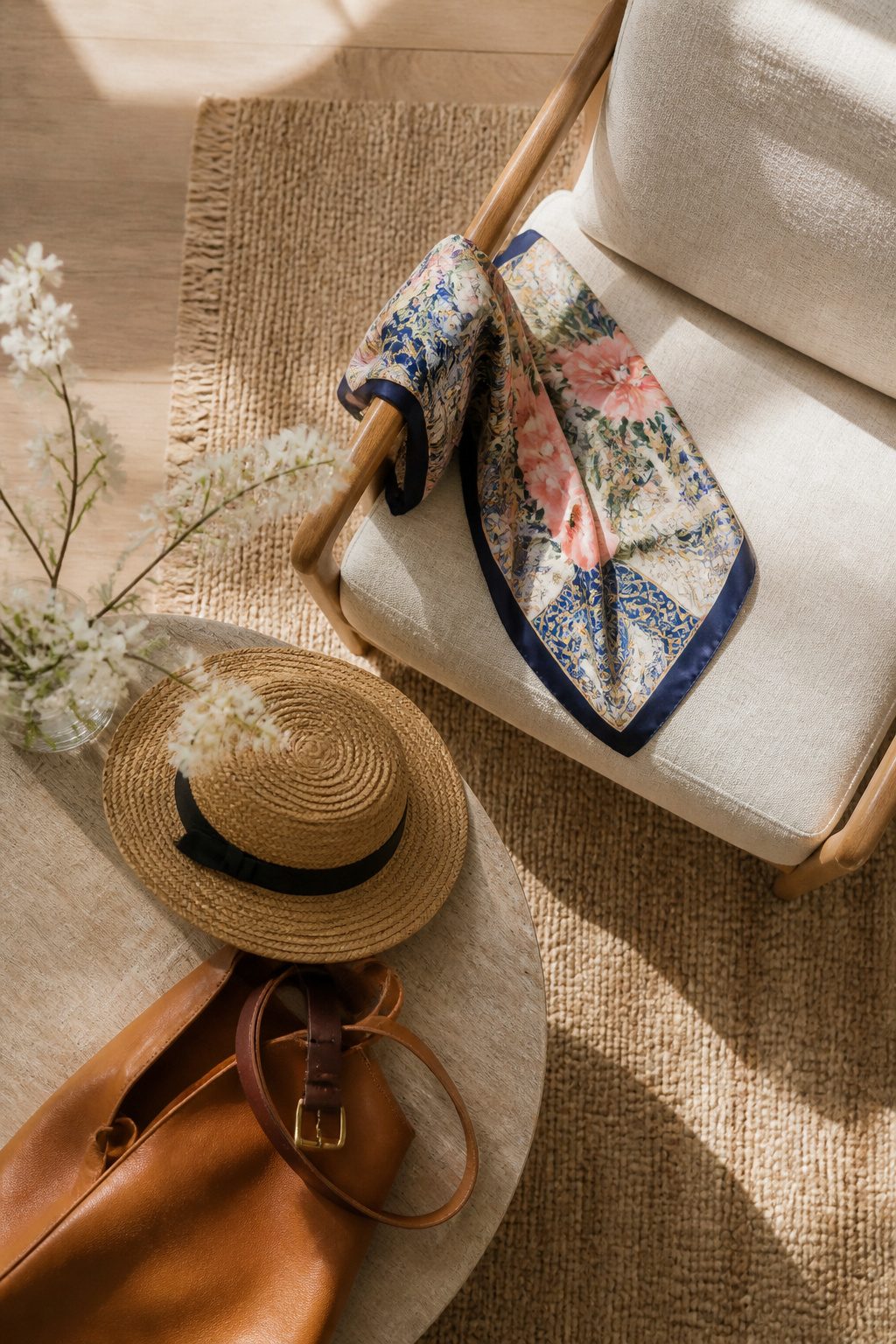
A 36-inch square silk scarf is the one accessory I would add specifically for spring.
Tied at the neck, it turns a white T-shirt and jeans into something deliberate; wrapped twice around the wrist, it reads as jewelry without the cold weight of metal.
The size matters because anything smaller limits you to one or the other, and anything larger becomes a burden on a windy April morning.
For sun, a straw hat with a medium brim.
For chillier springs, felt in the same shape. I switch between the two based on the local climate, not the calendar date, since a felt hat in sixty-degree mist looks correct where a straw one would seem misplaced.
One leather belt, in the same tone as whatever shoe color you chose for the capsule. It does not need to match exactly; it needs to not clash.
I stop at these three because earrings and bags carry across all seasons. A leather tote or gold hoops do not belong on a spring-specific list any more than your winter coat would.
They are wardrobe constants, not seasonal shifts, and adding them here would only pad the count without changing what you wear.
How to Build It
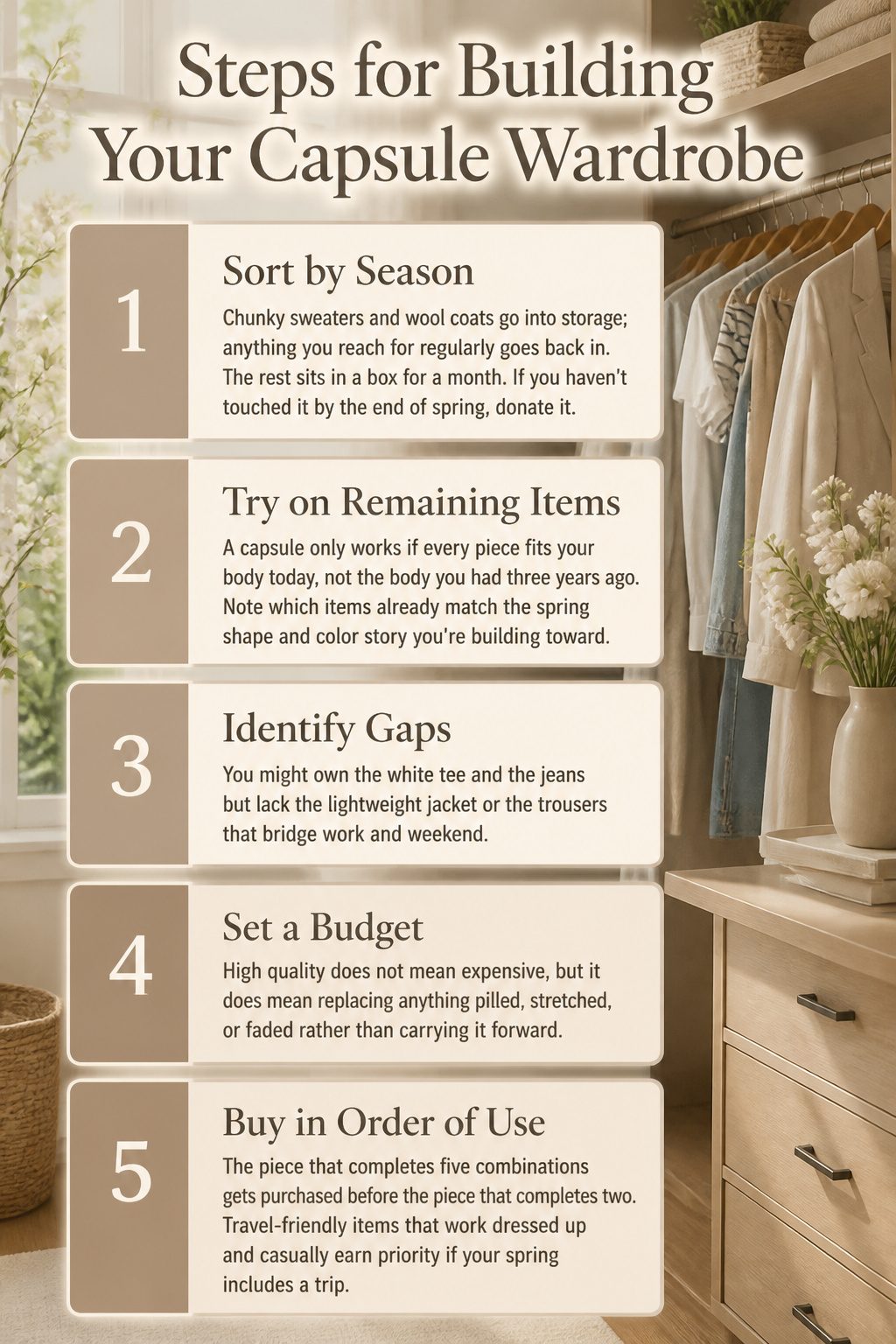
- Pull everything out and sort by season. Chunky sweaters and wool coats go into storage; anything you reach for regularly goes back in. The rest sits in a box for a month. If you haven’t touched it by the end of spring, donate it.
- Try on what remains and be honest about fit. A capsule only works if every piece fits your body today, not the body you had three years ago. Note which items already match the spring shape and color story you’re building toward.
- List the gaps against the eleven pieces. You might own the white tee and the jeans but lack the lightweight jacket or the trousers that bridge work and weekend.
- Set a budget per item or a total ceiling. High quality does not mean expensive, but it does mean replacing anything pilled, stretched, or faded rather than carrying it forward.
- Buy in order of outfit creation. The piece that completes five combinations gets purchased before the piece that completes two. Travel-friendly items that work dressed up and casually earn priority if your spring includes a trip.
Color Palette
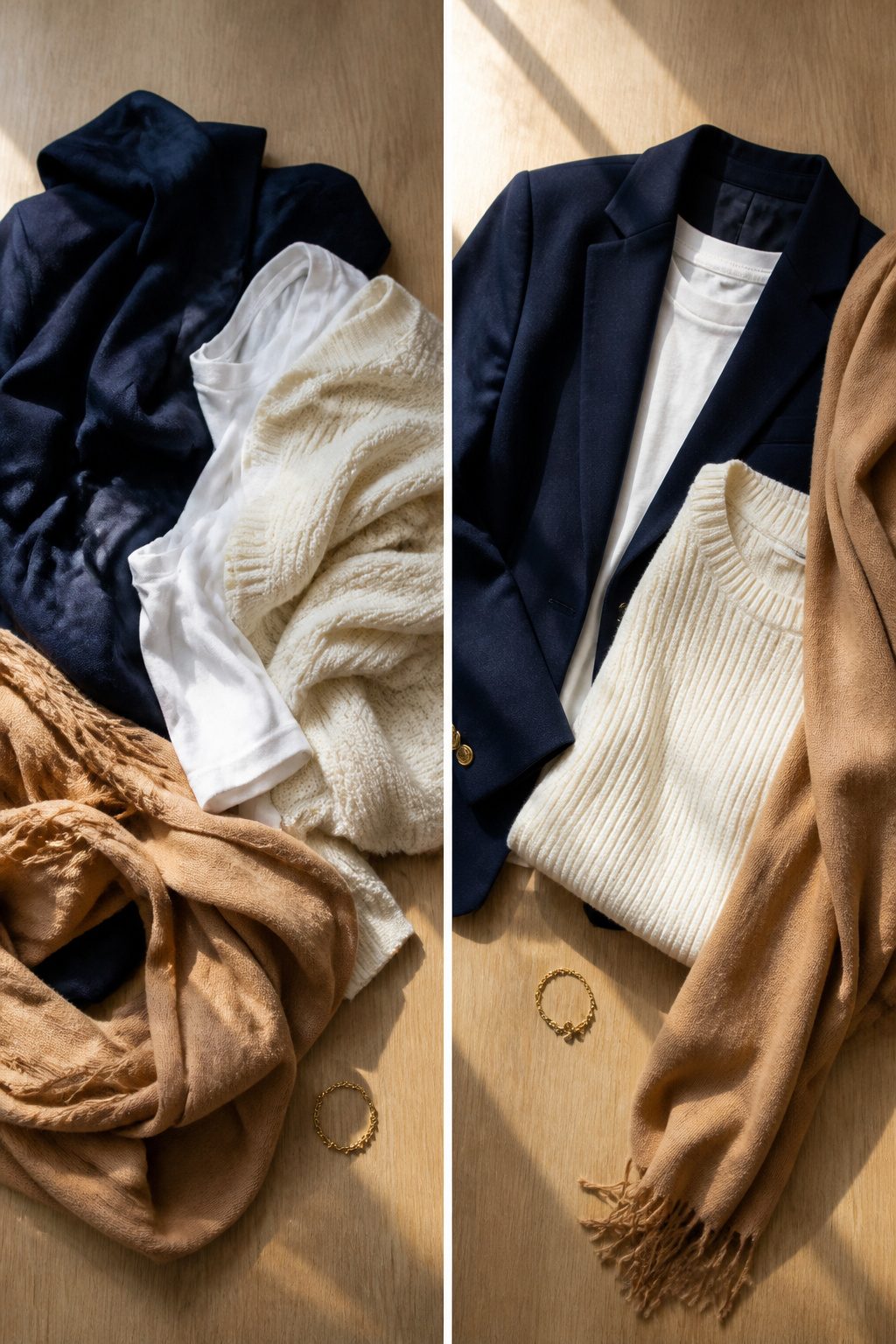
Most guides to a spring capsule wardrobe default to beige, gray, and a single seasonal color.
That works, but it flattens everything into the same register. My base runs navy, white, cream, and camel; four neutrals with actual variation in depth and temperature, not two shades of the same idea.
The accent color changes year to year. Sage, rust, cobalt; I have rotated through all three.
Limit it to two pieces maximum, a scarf and a knit, or a blouse and a belt. Any more and the accent stops punctuating and starts shouting, which defeats the point of a capsule you can wear without thinking.
Testing a color against your own skin is a two-minute move most people skip.
Hold the fabric under your chin in daylight near a window, not under store fluorescents. If the color casts shadows upward, making the jaw look heavier or the neck tired, it is wrong for you.
The right accent lifts without announcing itself. Camel does that work for me; on someone with very cool undertones it can read sallow, and a clean white may substitute better.
White and cream serve different jobs in this palette.
White keeps navy crisp; cream softens camel where the two sit next to each other. Neither is interchangeable with the other, which is why both stay.
Layering for Spring Weather
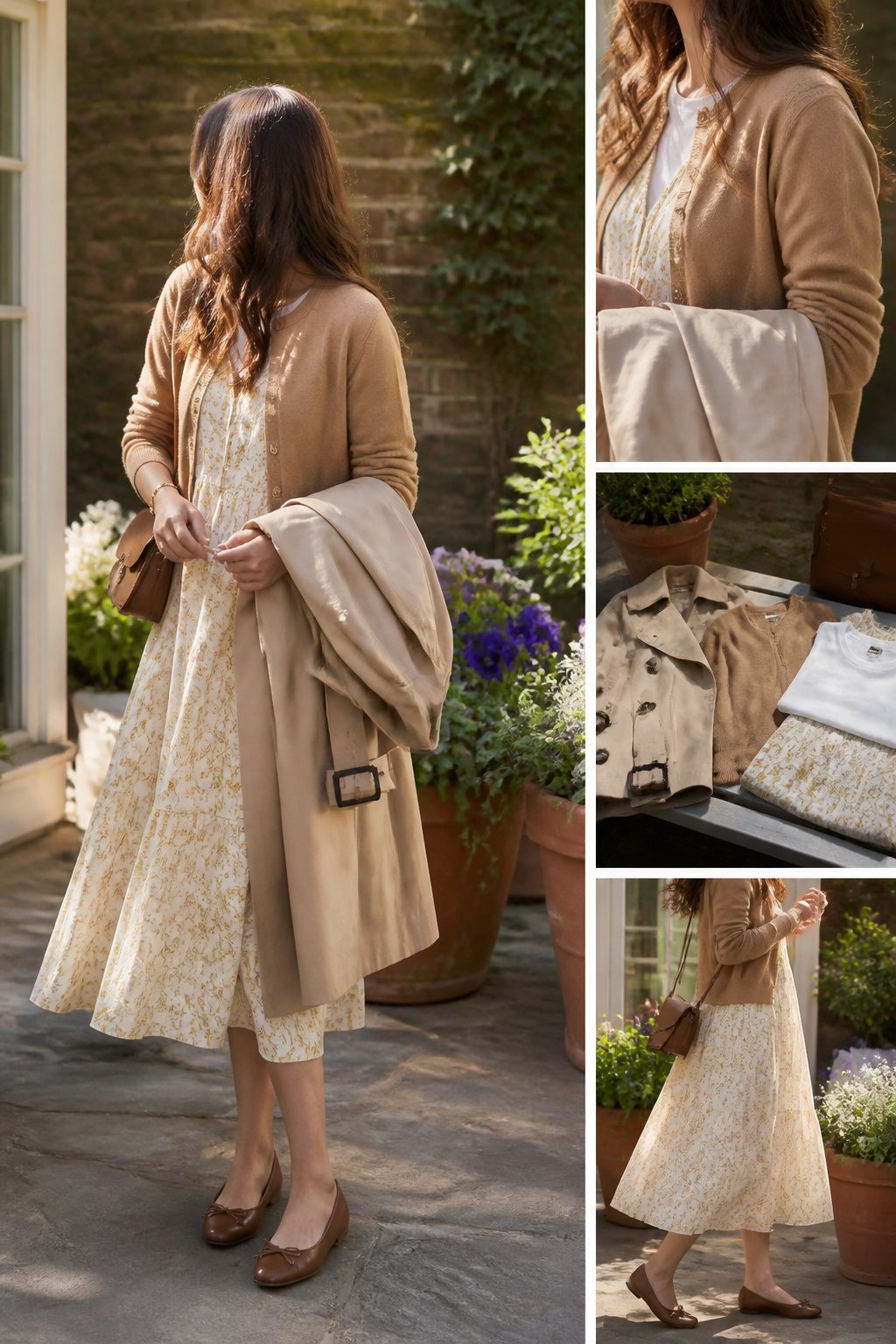
The real test of a spring capsule wardrobe is whether each layer earns its place on its own, not just as part of a stack.
I build around three positions: a base of tee or dress, a mid-layer of sweater or cardigan, and a shell of light jacket or trench.
A white tee with the right weight and fit, something like the substantial cotton Buck Mason makes, works with jeans at 65 degrees and still looks intentional.
A cardigan over that same tee handles 55; thrown over a midi dress it softens the line for dinner out. The shell, a tailored blazer or lightweight trench, pulls the whole stack together for 45-degree mornings and comes off by noon.
Each piece must function in at least two temperature brackets, alone and combined.
The cardigan that only works under a jacket is dead weight in a capsule. The trench that needs a sweater beneath it to be useful is too thin to stand alone.
I look for a 20-degree spread from base to full build, which covers most March-through-May mornings without requiring a dedicated coat you will shed by ten.
Adding Trends Without Breaking the Capsule
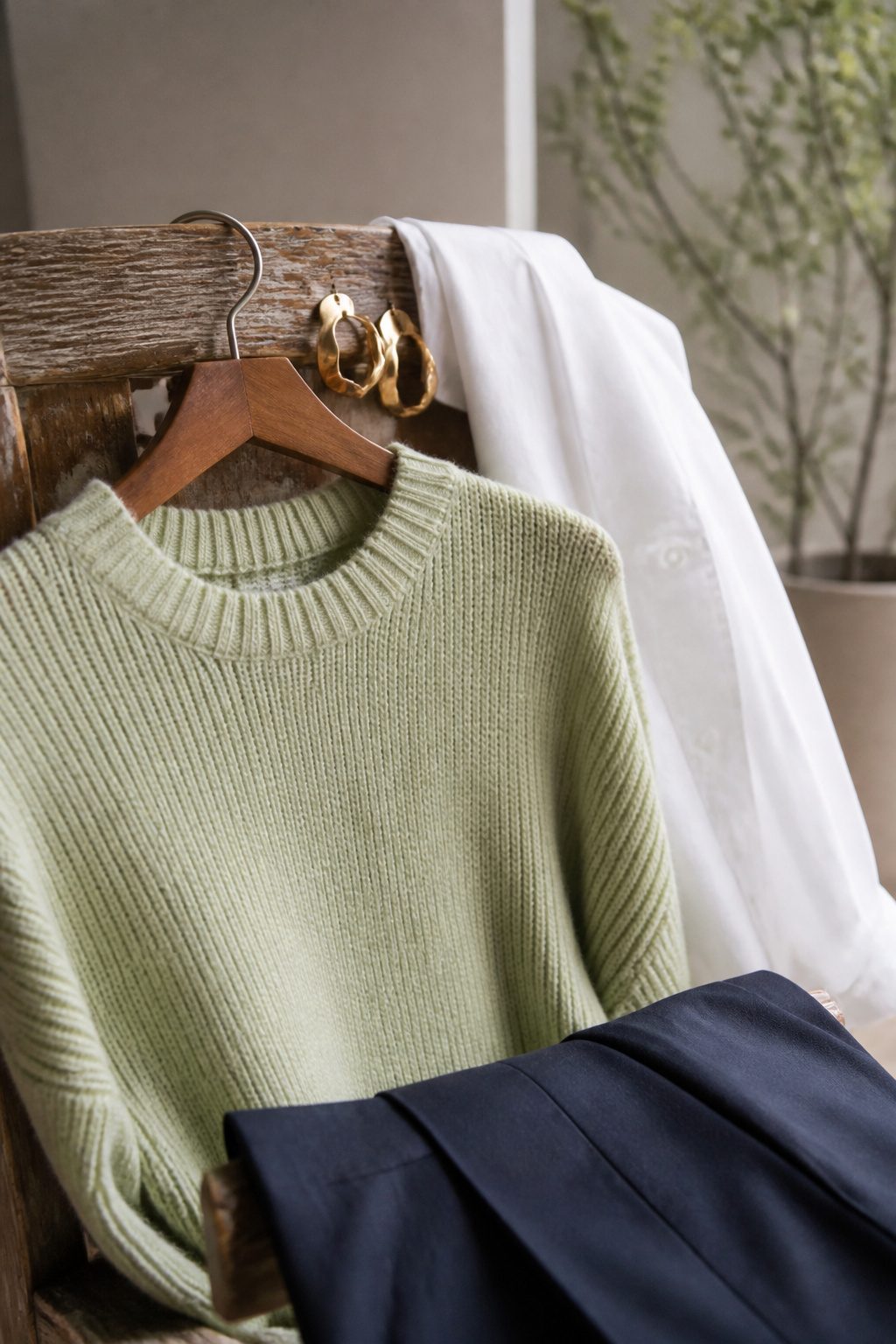
Most capsule guides slot in a trend piece to keep things current.
The rule I have seen work is one trend per season, capped at 15% of the total budget, and it has to pair cleanly with at least three items already hanging in your closet.
A pistachio knit works if sage is already in your palette; a sculptural earring lands if your silhouette is otherwise minimal.
That last condition is where I usually stop. Three pairings sounds easy until you test it against actual mornings, and the piece that needs that much justification is often the one left on the hanger.
I skip the seasonal trend slot more often than not and put that 15% toward replacing something I have already worn thin.
Quality and Sustainability
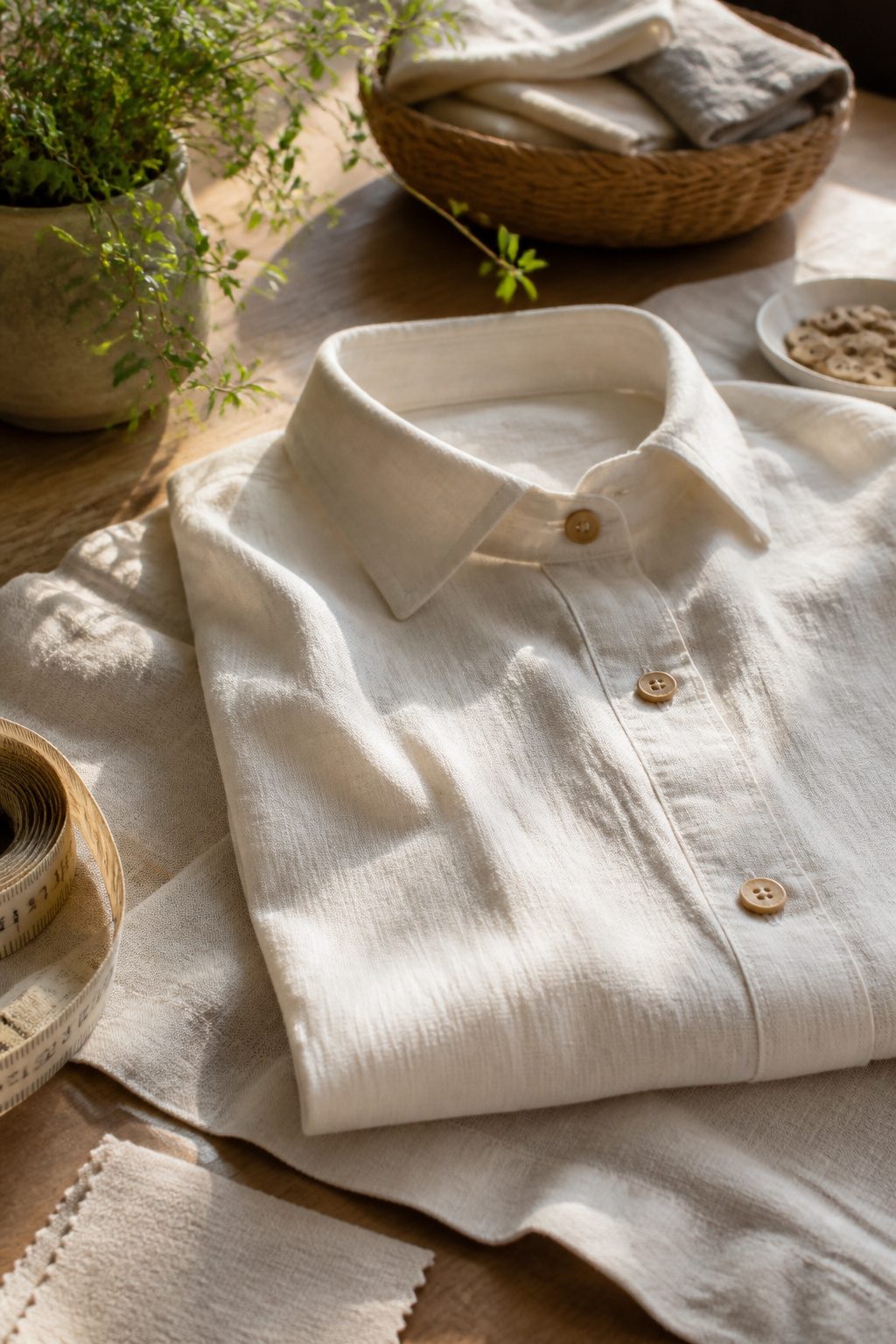
Quality in a spring capsule wardrobe starts where the eye does not go.
Natural fibers, reinforced seams, finished interior edges, and hardware that survives more than one season: these are the details that separate a piece you reach for weekly from one that pills at the collar or loses its shape after the third wash.
I buy less often from brands that publish fabric sourcing and factory locations because that transparency usually means the garment was built to last.
The price jump is real. Expect to pay roughly 40–60% above fast fashion for construction you can verify.
That cost stings once, but it spreads across years of wear instead of months. Finished seams and corozo buttons are worth the markup when your goal is eleven pieces that carry you through April without looking tired.
Frequently Asked Questions
What is a capsule wardrobe?
A capsule wardrobe is a small collection of clothing items that work together to create many different outfits.
The idea is to own fewer pieces that mix and match easily, which cuts down on closet clutter and makes getting dressed faster. Most people build theirs around neutral colors and add one or two seasonal accents.
How do I build a spring capsule wardrobe?
Start by pulling everything out and sorting by season. Store chunky sweaters and wool coats, then try on what remains and be honest about fit.
List any gaps against your target pieces, set a budget per item or a total ceiling, and buy in order of outfit creation. The piece that completes five combinations gets purchased before the piece that completes two.
What are the essential pieces for a spring capsule wardrobe?
The eleven pieces are: a white T-shirt in 5–6 oz cotton, a button-down shirt, mid-rise straight-leg denim jeans, a lightweight 12-gauge or finer sweater, a fine-gauge cardigan, a sleeveless midi or maxi dress in woven fabric, one lightweight jacket such as a trench or denim, tailored trousers, optional shorts, two pairs of comfortable shoes, and a 36-inch square silk scarf.
What is the 3-3-3 rule capsule wardrobe?
The method described instead is an eleven-piece seasonal collection built around a four-neutral base palette with one accent color limited to two pieces maximum.
What should I include in my 2026 spring capsule wardrobe?
For 2026, focus on substantial cotton tees, cotton poplin or linen button-downs, straight-leg denim without heavy distressing, fine-gauge merino or cotton-cashmere knits, a versatile cardigan, a woven midi dress, one unlined lightweight jacket, tropical wool or linen-blend trousers, and two pairs of shoes in leather or canvas.
Add a silk scarf and one seasonal accent color.
What is everyone wearing in spring 2026?
Key directions include mid-rise straight-leg denim, fine-gauge layering knits, unlined trenches or rigid denim jackets, tailored trousers in breathable fabrics, and low-profile white sneakers or leather flats. Sage, rust, and cobalt are mentioned as rotating accent colors.