
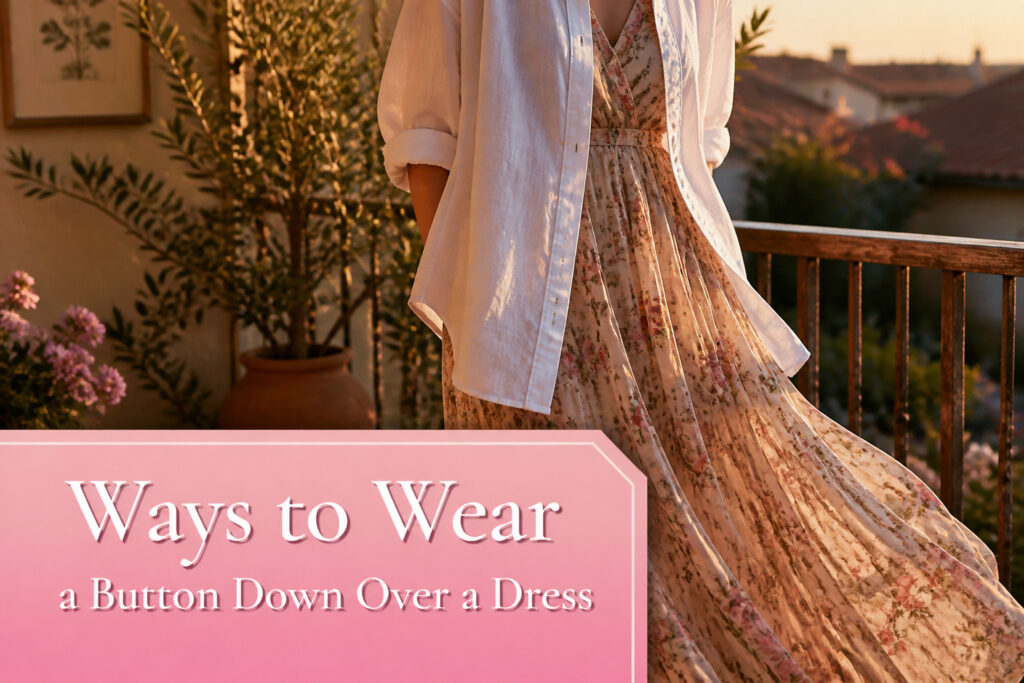
Layering a button down over dress ranges from effortless to deliberately structured, and the difference comes down to whether you let the shirt hang, knot it, or cinch it with a belt.
The same combination reads as a thrown-on weekend look or a polished office outfit depending on fabric weight and where the hem falls.
A stiff oxford holds its shape over a fluid slip dress, while washed linen collapses into a single rumpled layer, and neither approach is interchangeable with the other.
1. Let It Hang Loose
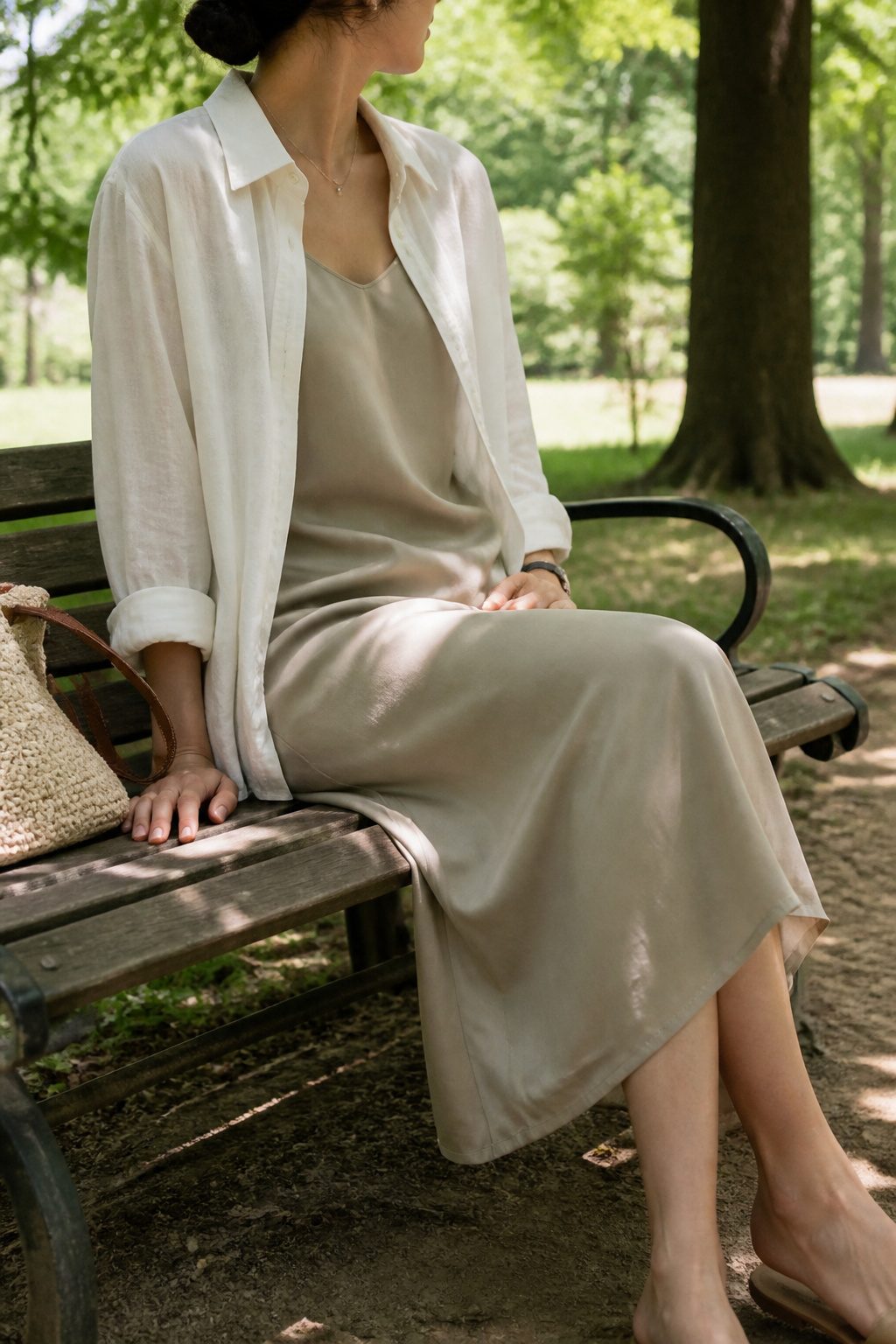
An unbuttoned or lightly buttoned shirt left to hang loose over a dress is the easiest way to make the layering read as casual rather than borrowed from the office.
Proportion matters most here. A shirt that hits mid-thigh or lower gives you that elongated, thrown-on shape; anything shorter starts to feel like a crop layer that fights the dress underneath.
Shift dresses and slip dresses work particularly well here because they run fairly straight and narrow, so the shirt drapes over them instead of ballooning out.
A-line dresses can work too, but the flare adds volume at the hem that the open shirt needs to clear cleanly.
I would skip anything with a full skirt or heavy pleating underneath; the two pieces start to compete and you lose the relaxed silhouette entirely.
Fabric weight matters more than most people expect.
A stiff oxford holds its own shape and can box out over a fluid slip dress in a way that looks intentional, while a soft rayon or washed linen collapses against the dress and reads as one rumpled layer.
Neither is wrong, but they are different moods, and the stiffer option is easier to get right on the first try.
2. Knot It at the Waist
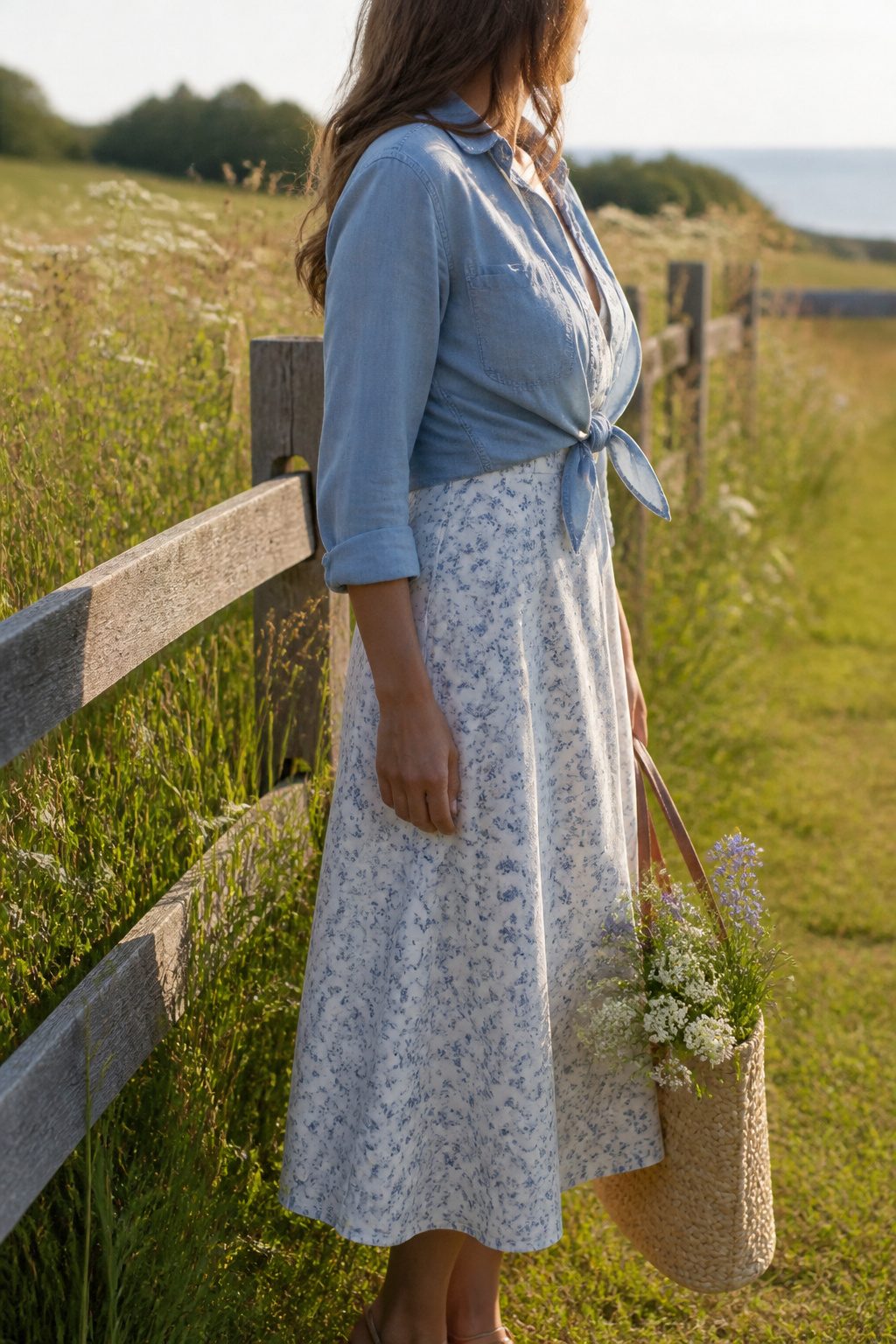
Tying a button-down at the waist turns a loose layer into actual structure. The knot sits at your natural waist or just above it, which breaks the dress line and gives you a clear focal point.
Cotton and linen hold that shape through the day; they grip against themselves and stay put once you’ve tied them.
Silk and rayon are another story. Those fabrics slip, loosen, and end up hanging more than knotting, so I’d skip them for this particular move.
The fit of the shirt matters as much as the fabric. A shirt that already fits close through the torso knots cleanly and sits flat.
Something flowy or oversized bunches at the sides and fights the dress underneath, which ruins the effect. Pair this with a fitted dress, not something equally voluminous, and you get the proportion play that makes the look work.
The result reads casual and slightly boho, but the waist definition keeps it from looking like you just threw something on.
3. Wear It Open as a Layer
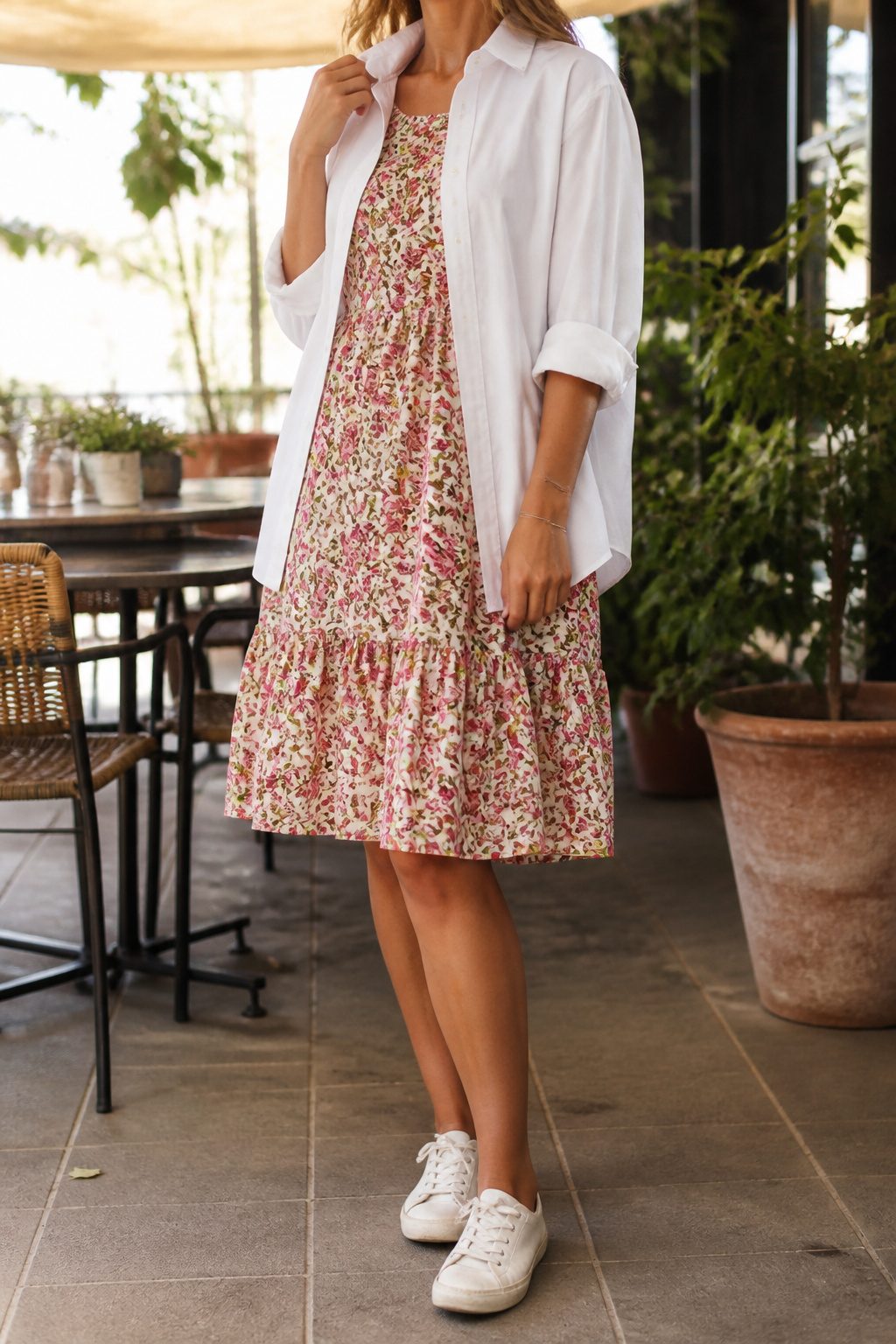
An open button-down functions like a light jacket or cardigan, adding coverage without swallowing the dress underneath.
I roll the sleeves to the forearm, which keeps the line clean and shows I meant to layer rather than just threw something on.
The collar matters here: popped slightly or lying flat changes whether the read is polished or deliberately undone.
A crisp cotton or linen shirt bridges seasons when a sleeveless dress alone is too bare for morning air but a full coat would be absurd by noon.
The dress stays visible through the open front, so the pairing works best when the two pieces share a color relationship, tonal or contrasting, rather than fighting each other.
For cooler evenings, this is the move that lets a summer sundress stay in rotation past Labor Day without looking like you forgot to check the weather.
4. Go Long and Lean
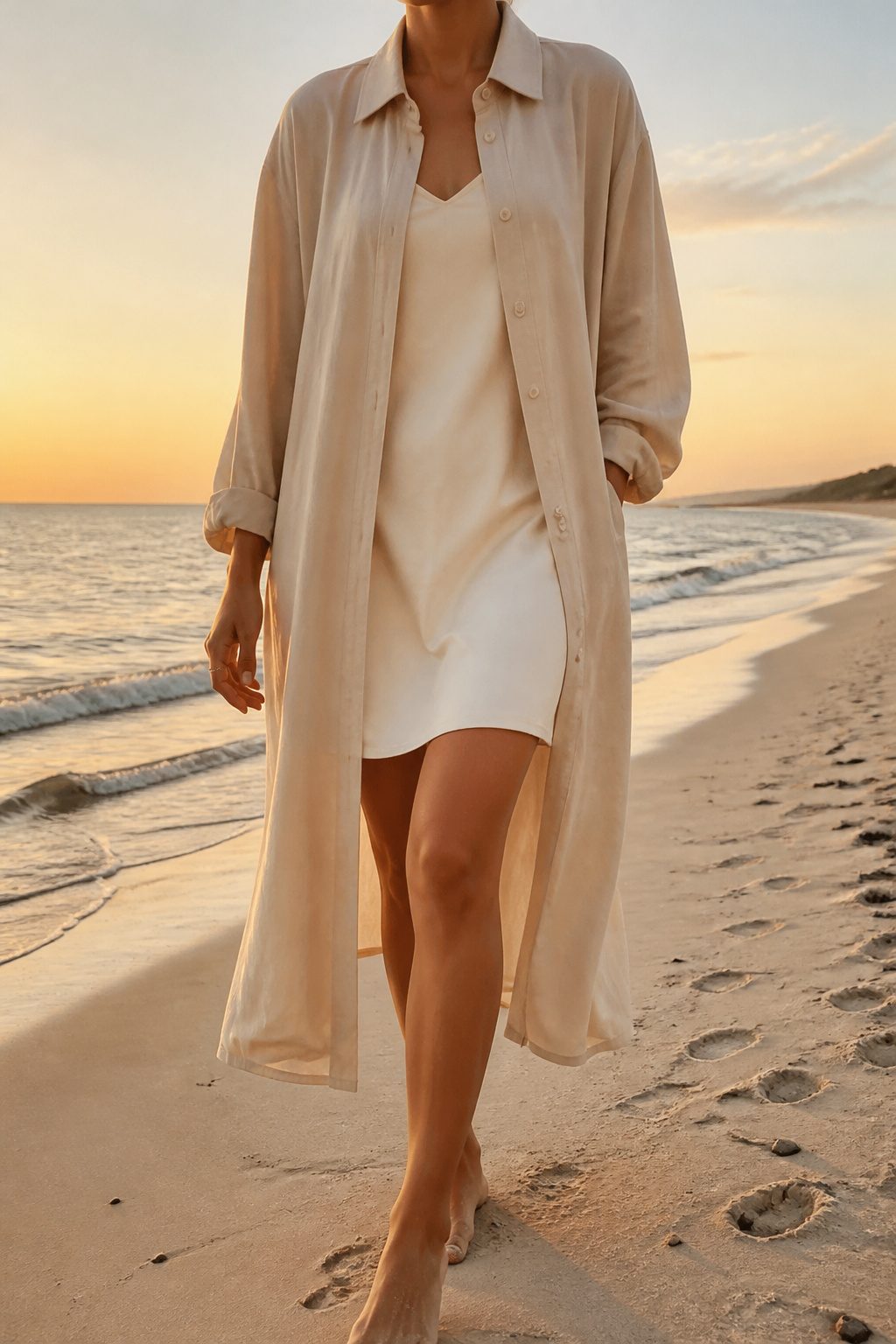
A tunic-length or oversized button-down worn over a shorter dress treats the dress as an underlayer, letting the shirt create one long vertical line.
The eye reads the hem of the shirt as the finish, so the look works when the shirt is long enough to feel deliberate: at least four to six inches past the dress hem, or enough that no one mistakes which piece is meant to dominate.
Proportion is where this fails. A shirt that hits only an inch below the dress reads as an error, like you grabbed the wrong layer and walked out the door.
Color matters too. A shirt in a tone close to the dress keeps the column effect intact; high contrast breaks the line and turns the outfit into two competing blocks.
Flowy fabrics in the shirt help it drape rather than bunch, which is what lets the dress underneath disappear into the shape rather than fight it.
From a distance, a well-chosen long shirt can look like a single piece, which is the point.
5. Belt or Scarf It
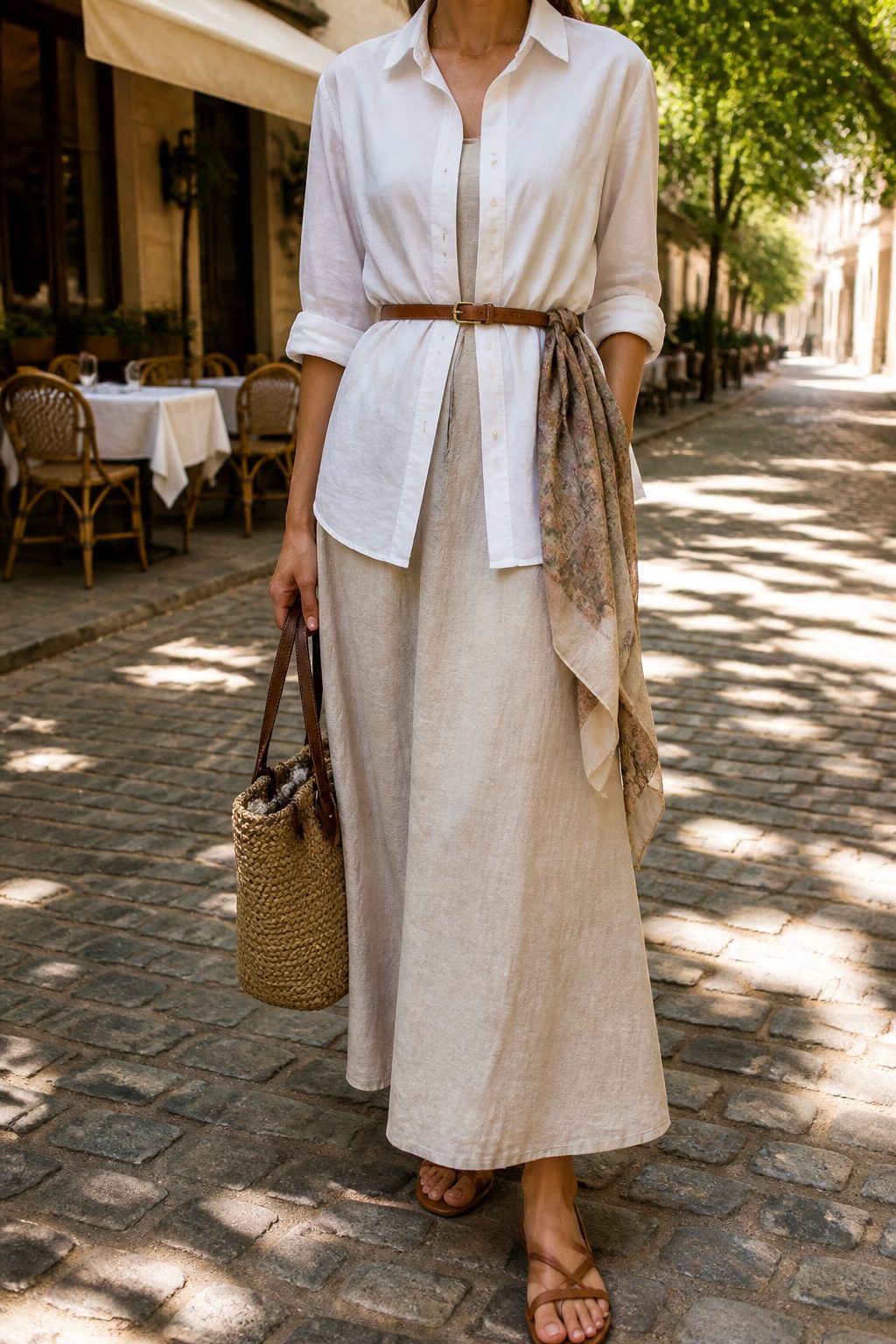
A button down over dress can read as accidental until you add a belt or scarf on top.
That single move shifts the look from "threw this on" to "styled this," because the accessory does the work of carving out a waistline the two pieces alone would blur.
A thin belt, maybe 0.75 to 1 inch, keeps things subtle and office-appropriate. It defines shape without shouting.
Wider belts, 2 inches or more, turn the shirt into a deliberate top layer and the dress into a skirt. The wider the band, the stronger the visual break.
Scarves work similarly but softer. Tie one at the front for a centered focal point, or shift the knot to the side to keep the eye moving.
A side knot especially suits straight or rectangular body shapes, since the asymmetry creates the curve the structure lacks.
Placement matters more than width. A belt or scarf sitting right at the natural waist shortens the torso and lengthens the legs.
Dropped an inch or two lower, it relaxes into weekend territory. Either way, the accessory is doing the styling so the layers don’t have to compete.
6. Reverse It: Dress Over Shirt
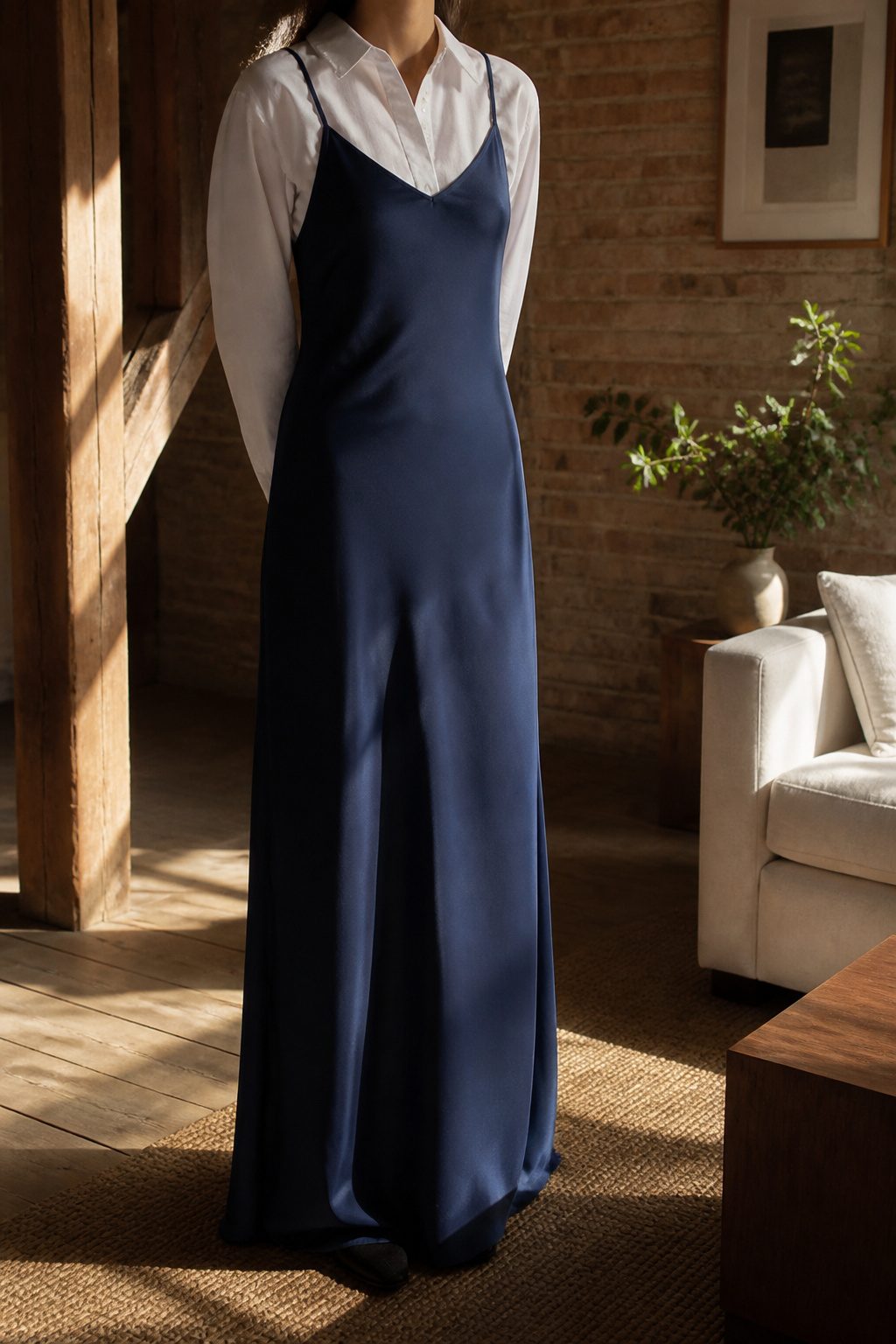
Layering a button down over dress is the expected move, but reversing the order puts the shirt underneath where its details become the focus.
The collar and cuffs frame the neckline and armholes of whatever dress you pull on top, so a plain shirt wastes the effect.
A contrast collar or French cuffs with actual links read strongest here, because they are the only visible punctuation against the dress fabric.
This works best with sleeveless or strappy dresses, since sleeves competing with sleeves turns bulky fast.
The dress needs enough room through the bodice to sit cleanly over the shirt without pulling, which means a slightly relaxed fit or an A-line shape.
A narrow stripe on the shirt grounds the look and keeps it from veering costume, though a solid white or light blue is the safer starting point.
Tees handle this reverse layer more forgivingly than a structured shirt, but the shirt is what gives it the vintage reference sources keep circling back to.
The trade-off is movement: you will feel the shirt beneath more than a tee, and the dress has to stay in place or the collar skews.
For a Saturday night out, this reads intentional; for a rushed morning, it reads like you got dressed in the dark.
Shirt and Dress Pairings That Work
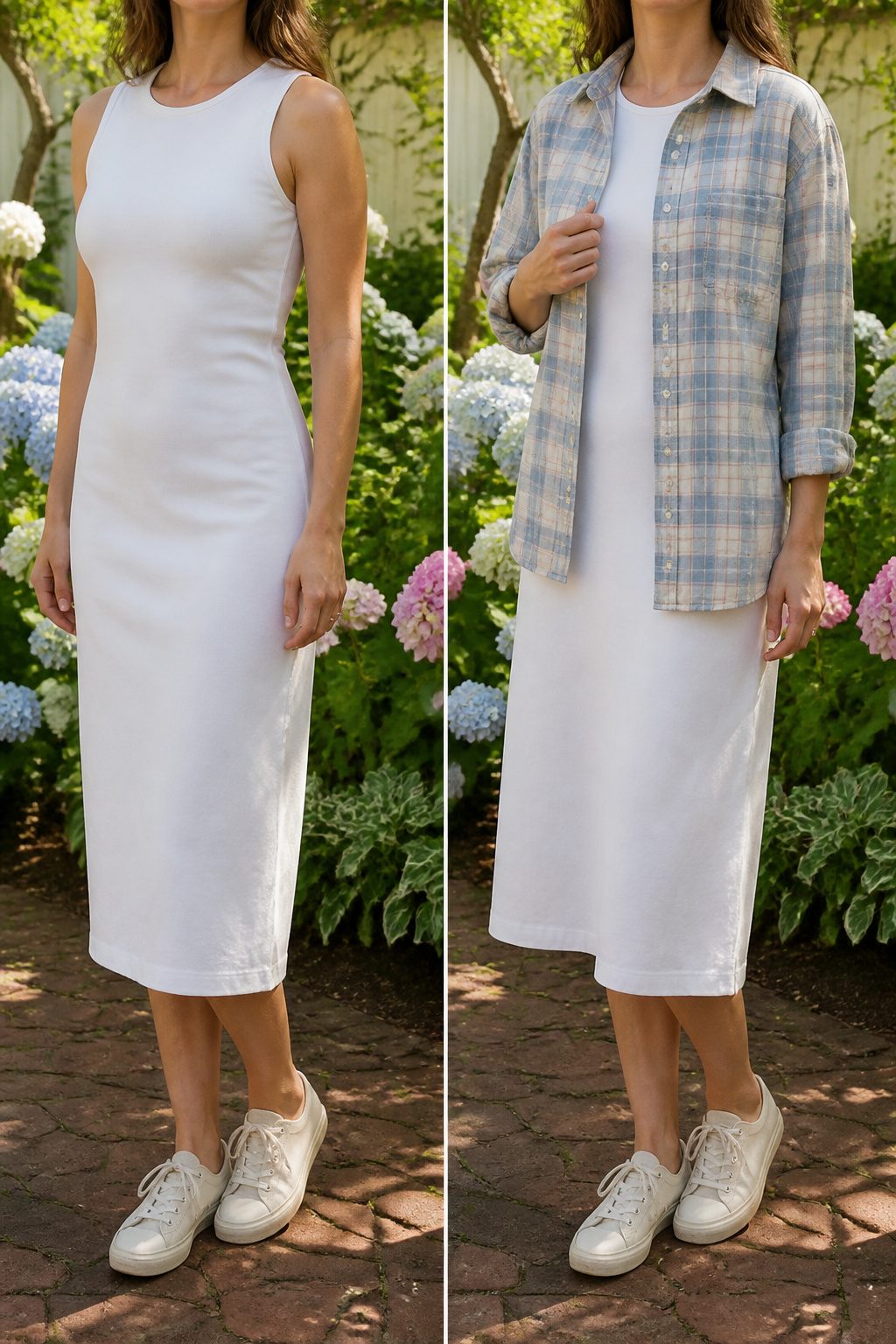
A crew neck dress sits almost too cleanly under a button-down, which is exactly why the pairing works: the collar of the shirt has a clear stage, and the neckline underneath does not fight for attention.
V-necks and square necks can also carry the look, but they introduce a second focal point.
When I layer over a V-neck, I want the shirt unbuttoned enough that the shapes do not stack awkwardly, or I add a camisole to fill the gap.
Slim skirts under an open button-down read as a column with a casual jacket on top.
Full skirts need more intention: the shirt either stays completely open as a true layer, or the volume below turns the combination into something closer to a smock, which is a specific look and not always the intended one.
Length matters in both directions. A shirt that hits at the high hip over a midi dress breaks the line; one that falls to mid-thigh or longer keeps the silhouette continuous.
The shirt should be the same length as or longer than the dress skirt, or the eye stops where the shirt ends and the dress begins, which is rarely flattering.
Accessories That Finish the Look
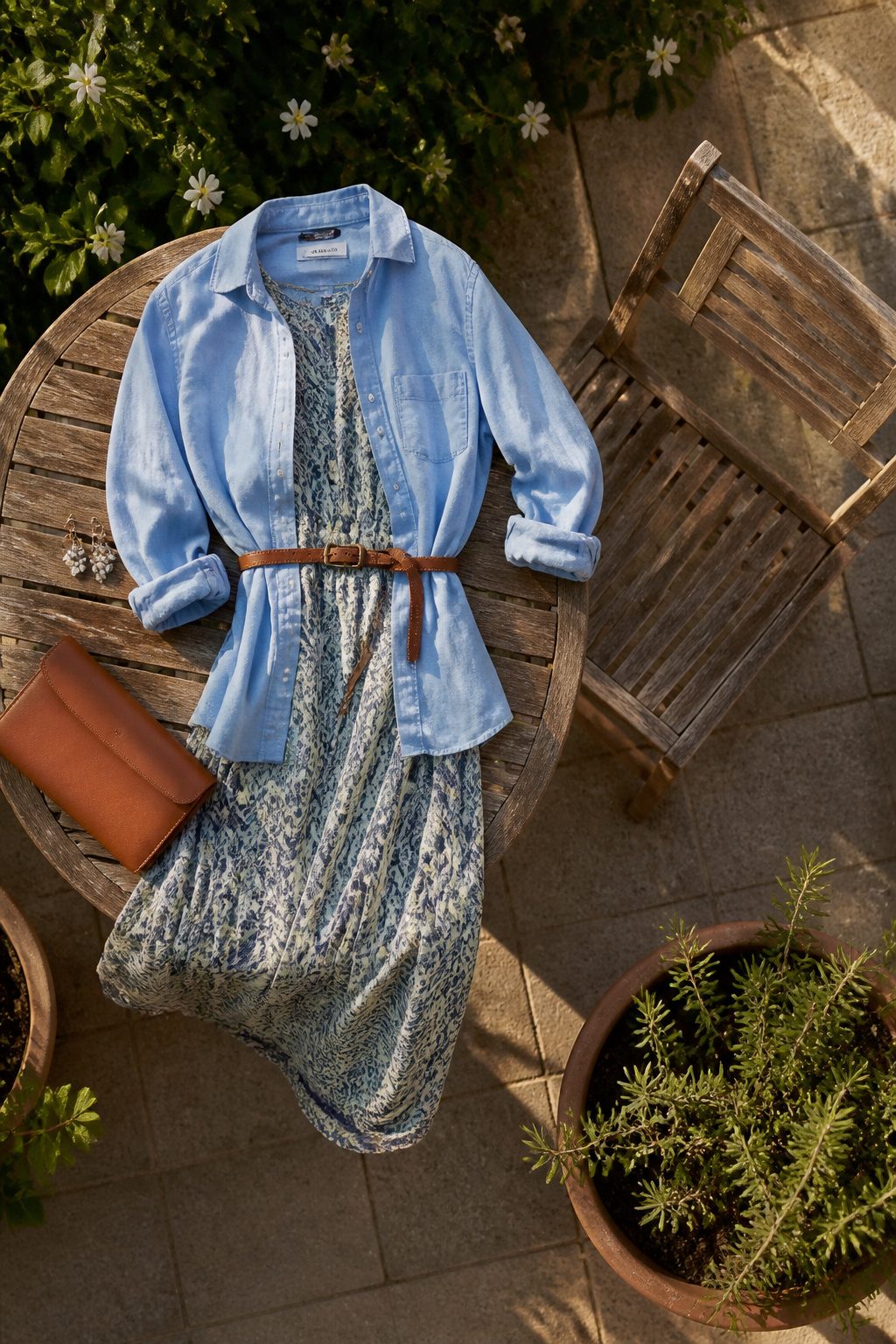
A belt turns the button down over dress pairing from layered into intentional.
I swap the dress’s original belt for a natural leather one or a chain link metal version when I want definition at the waist, and the hardware matters more than you’d think: warm metals read evening, silver reads office.
For daytime events, a straw woven belt with beige heels and a pastel purse softens the whole look without letting it go casual.
Statement jewelry does the heavy lifting on a plain white or striped button down, which functions as a neutral canvas.
A bold pendant necklace or hammered metal bracelet adds texture that competes with nothing underneath. The earring should hit at jawline or below; anything smaller disappears behind the collar.
Chic heels and a purse are the combination that pulls this into dressy territory.
Black heels with a matching black purse against a blue, black, or charcoal base is the safest formula, and it works because the accessories share a temperature rather than fighting for attention.
I skip the cardigan here; the line from shoulder to heel is the point, and breaking it costs the elongation that makes the layer feel sleek rather than bundled.
Season Shifts
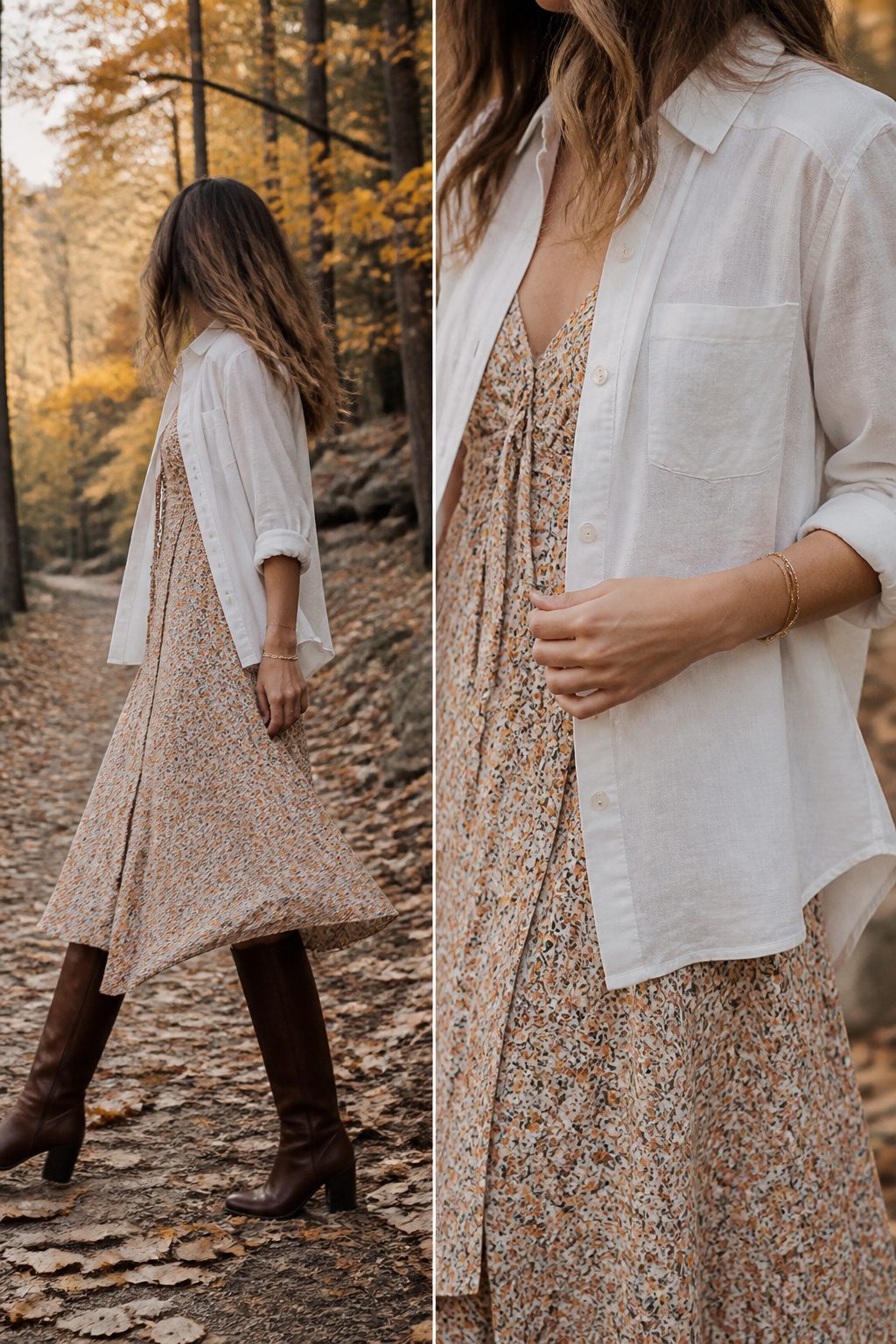
A button down over dress works year-round if you swap the shirt weight.
Linen or cotton voile keeps a summer dress from feeling bare without trapping heat; the open weave lets air move through, so you get arm coverage and sun protection on a 90-degree afternoon.
Come October, the same dress under an oxford or flannel changes the math entirely. The heavier cotton holds warmth, and the structure looks intentional against tights and boots rather than like you grabbed the nearest thing.
I think flannel over a slip dress with knee-high boots is the stronger move for winter; the texture contrast reads as layered, not lazy.
The downside is bulk. A thick flannel can swallow a delicate dress, so the dress needs enough body to compete, or the whole silhouette goes shapeless.
Summer linen has the opposite problem: too sheer and it looks like an afterthought, too crisp and it wrinkles into a distraction by noon.
Mid-weight cotton voile works perfectly for me, but lighter fabrics need a shorter sleeve or rolled cuff to keep the proportions clean.
Frequently Asked Questions
Can I wear a shirt over a dress?
Yes, and it is one of the easiest ways to turn a single dress into a layered outfit.
An unbuttoned or lightly buttoned shirt left loose gives a casual, thrown-on shape; tying it at the waist adds structure; wearing it open functions like a light jacket.
The key is proportion: the shirt should hit mid-thigh or lower for a relaxed look, or at least four to six inches past the dress hem when you want one long vertical line.
What to layer over a fancy dress?
A button-down shirt works as well over a fancy dress as over a casual one. For dressier occasions, keep the shirt crisp and add chic heels with a matching purse in black or another neutral.
A thin belt in leather or chain link metal defines the waist without overpowering the look, and statement jewelry on a plain white or striped shirt adds texture that reads intentional rather than afterthought.
How can I dress up a button-down shirt dress?
A straw woven belt with beige heels and a pastel purse softens the look for daytime events.