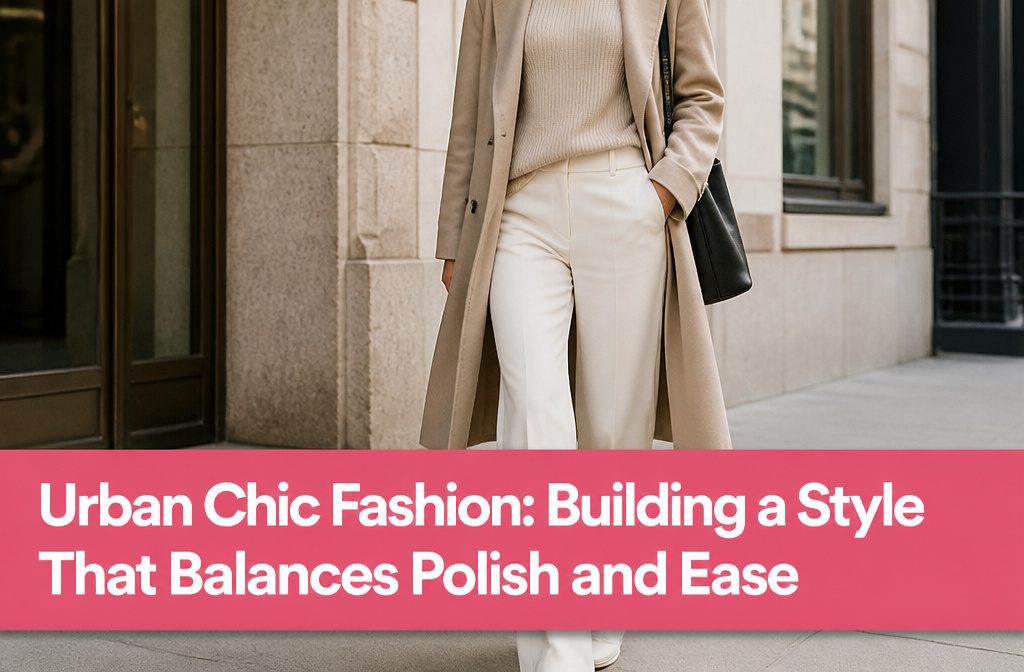
Urban chic fashion is a city-informed approach to dressing that treats polish and ease as one quality rather than competing priorities.
The style works because refined pieces like a ponte blazer or a soft trouser function without restricting movement, which separates it from formal dressing that demands you plan around the clothes.
The 12-piece capsule in this article includes a long wrap coat, straight-fit jeans, and ankle boots that shift between a conference room and evening without a full outfit change.
What Urban Chic Means
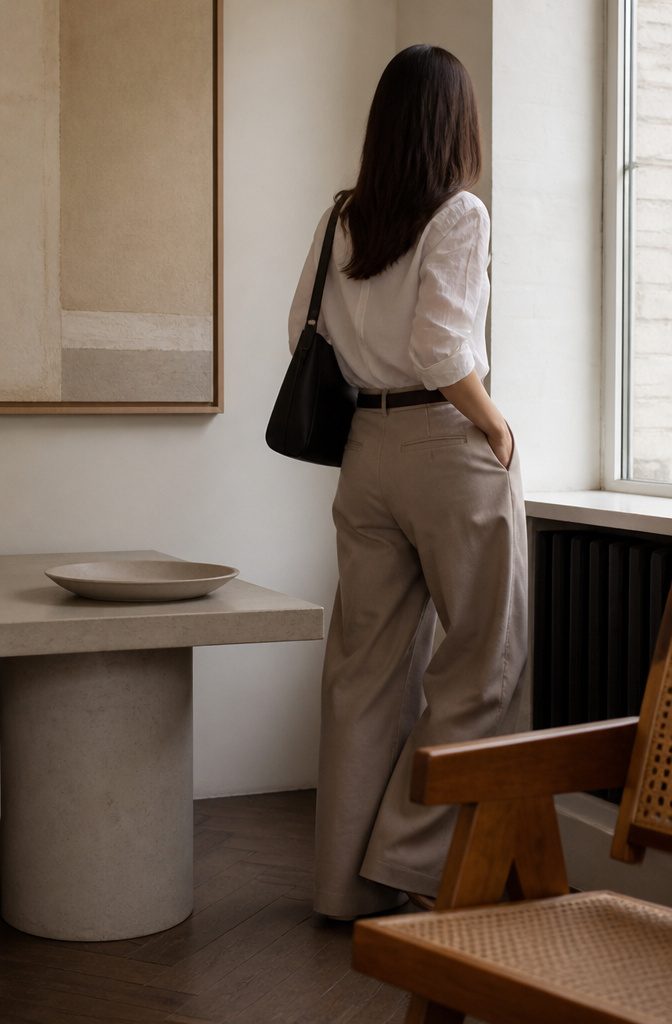
Urban chic is a city-bred way of dressing that treats polish and practicality as the same goal rather than a trade-off.
The style pulls from Scandinavian minimalism’s clean lines, Parisian simplicity’s restraint, and New York’s preference for clothes that function on a long Wednesday.
What results is an aesthetic built for movement: refined enough for a client meeting, unfussy enough for the subway or a walk across campus.
Living in a city has nothing to do with wearing it well.
The sensibility travels. What defines it is an editing instinct, a preference for pieces that work without effort and hold up without fussing.
The Balance of Polish and Ease
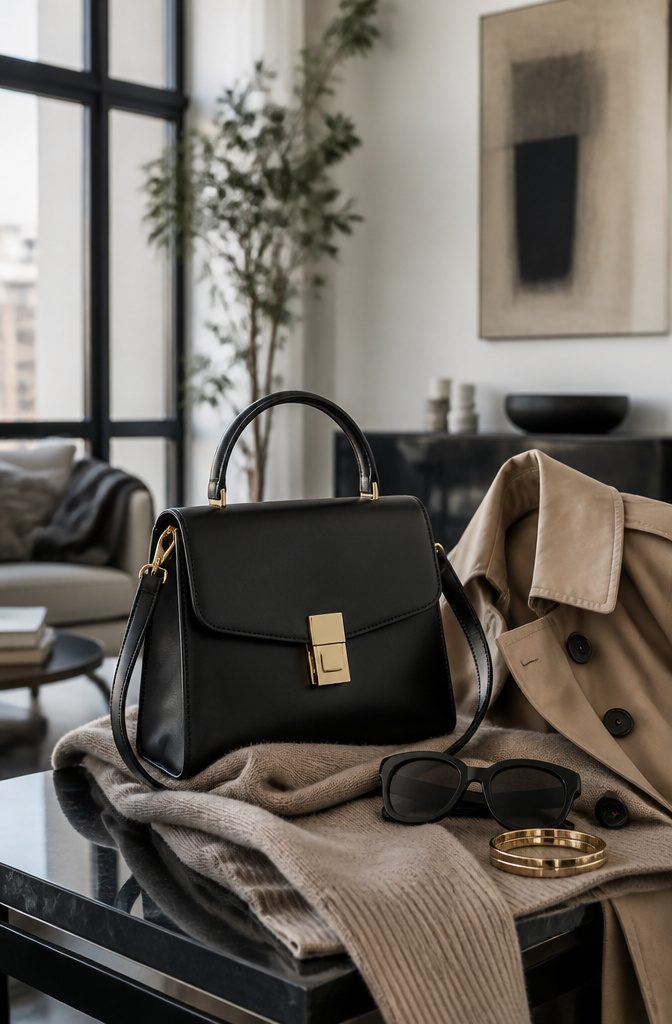
Urban chic sits in the tension between two things most wardrobes treat as opposites: clothing that reads as considered and clothing you can actually move through a day in.
The style resolves that tension by treating polish as a quality of fit and fabric rather than formality.
A well-cut trouser in a soft ponte does the work that a stiff suiting wool used to do, without demanding you plan your commute around it.
That distinction separates urban chic from both ends of the spectrum.
Pure streetwear trades consideration for comfort; formal dressing trades comfort for occasion. Urban chic assumes your schedule doesn’t split cleanly into dressed-up and dressed-down, because most city days don’t.
Building the Style’s Foundation
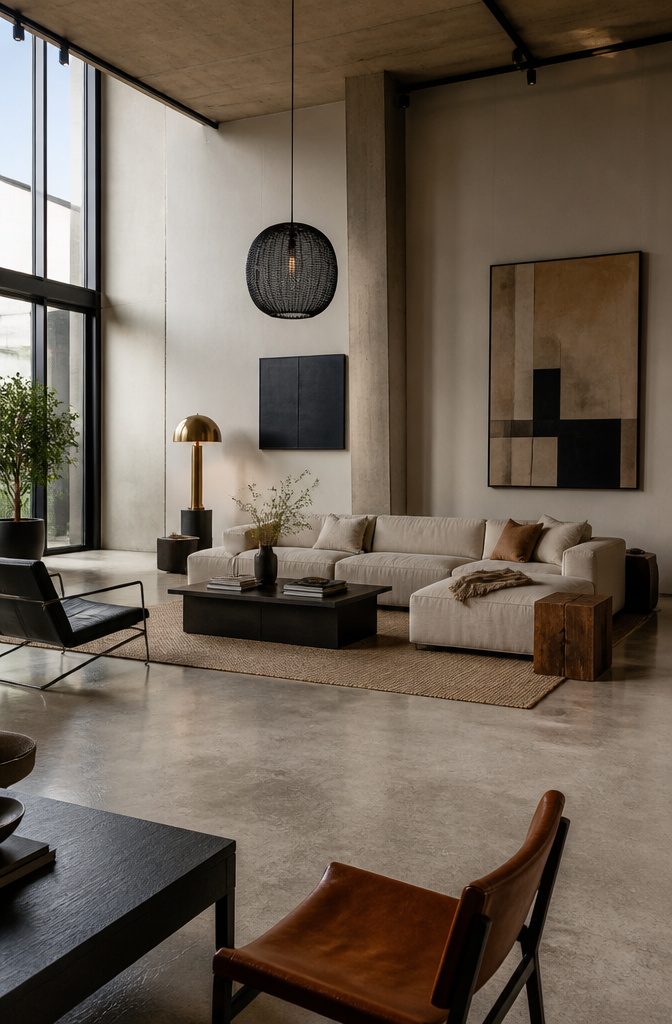
Urban chic fashion draws from 3 distinct city traditions, and understanding where it comes from makes it much easier to build deliberately rather than by accident.
Scandinavian minimalism contributes the clean lines and restrained palette; Parisian simplicity adds the commitment to fit and fabric quality over volume; New York street style brings the practicality, the layering instinct, and the willingness to mix dressed-up pieces with everyday ones.
Each tradition pulls against excess in its own way. Where they overlap is the actual foundation: clothing that reads polished at a distance and holds up to the physical demands of a city day.
Colors and Patterns
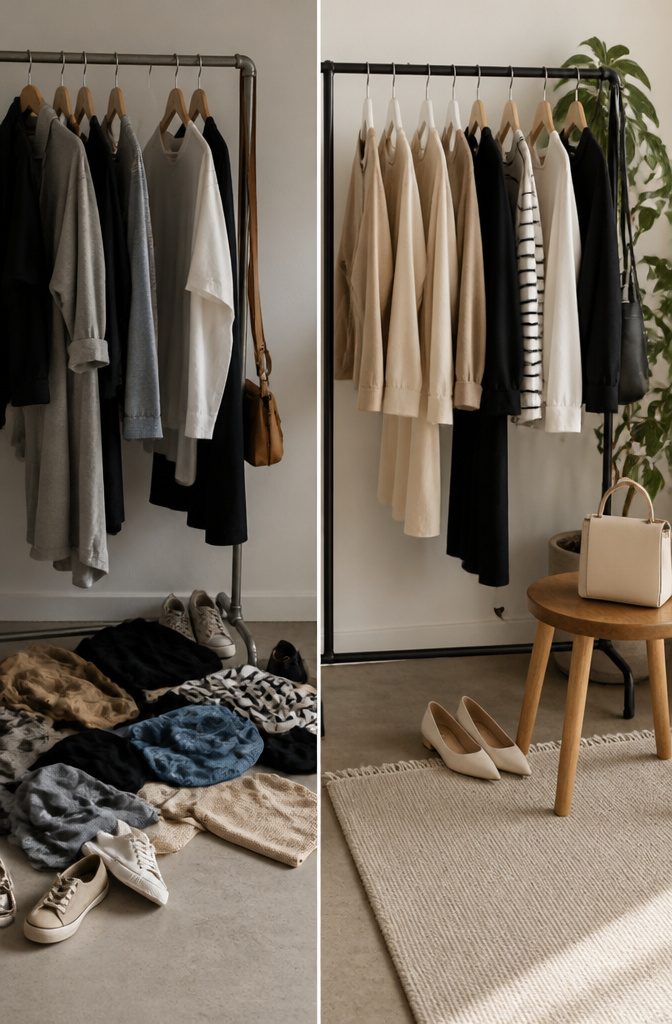
Neutrals do most of the work here. Black, white, gray, and beige are the reliable base because they layer without conflict and let one stronger piece read clearly.
Once those are in place, a rich tone like burgundy, deep navy, or emerald green gives the palette some weight without pulling it toward trendy.
Patterns stay restrained. Stripes and plaids tend to stay sharper against a neutral ground than against another pattern, and textural weaves, a basket-knit or a herringbone, add visual interest without any print at all.
Abstract or geometric prints can work occasionally, but I’d treat them as accents rather than anchors, the same way I’d treat a strong color: one at a time.
Silhouettes and Materials
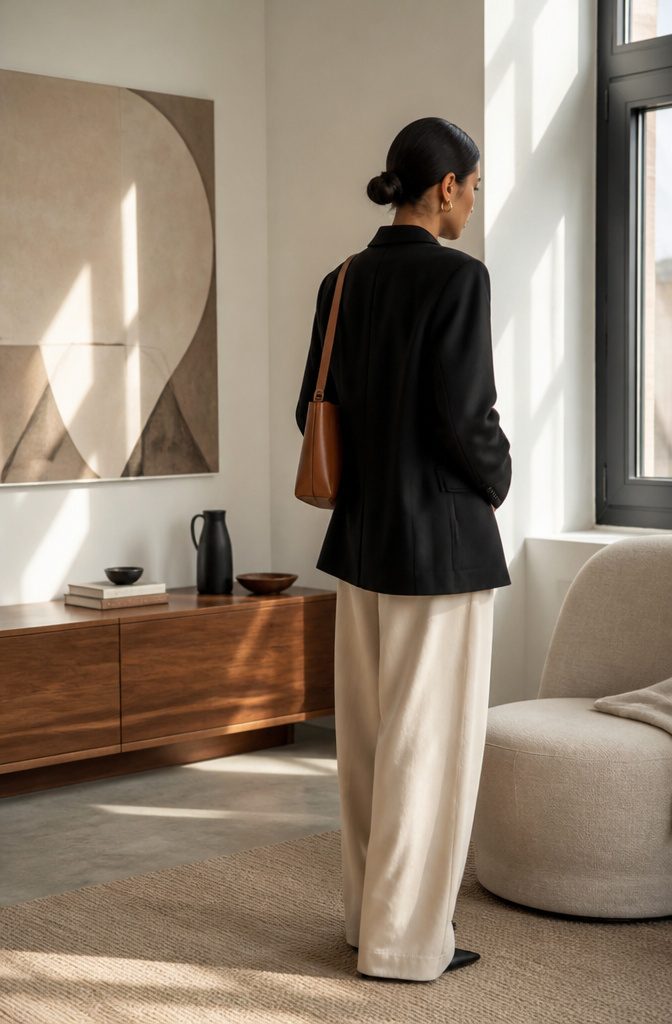
Structured silhouettes and deliberate texture contrasts carry urban chic’s visual weight.
Clean, tailored lines keep a look grounded: a straight-leg trouser, a blazer with real shoulder structure, or a coat cut close enough to read as intentional from across a sidewalk.
Where oversized pieces enter, they work because one element stays fitted.
Fabric choice is where this separates from fast fashion.
Wool, cashmere, cotton, silk, leather, suede, and tweed each bring a surface quality you can read at a distance, and mixing two of them in one outfit creates interest without any pattern at all.
A cashmere sweater tucked into a tweed skirt, or a silk blouse under a suede jacket, does more than color blocking alone.
Layering, Accessories, and Footwear
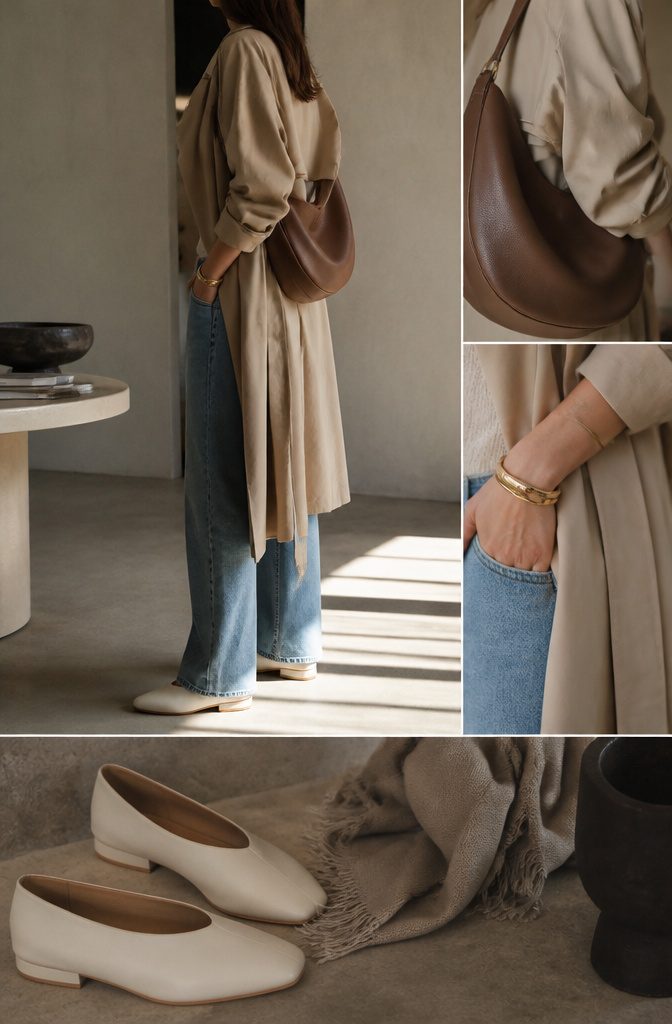
A jacket does most of the work in urban chic layering.
A sharp blazer over a T-shirt reads polished without effort; a trench over the same outfit reads ready for anything. Keep the outermost layer structured so even a casual base feels intentional.
Accessories follow the same logic.
A sculptural bag or a clean gold cuff adds the finish that casual pieces alone can’t carry. One piece does more than three competing ones.
Footwear decides the formality. Ankle boots and loafers hold the middle ground between sneakers and heels, which makes them the most useful options for a day that moves between office and evening.
Slingbacks and low pumps shift the register up without the commitment of a stiletto.
A 12-Piece Urban Chic Capsule
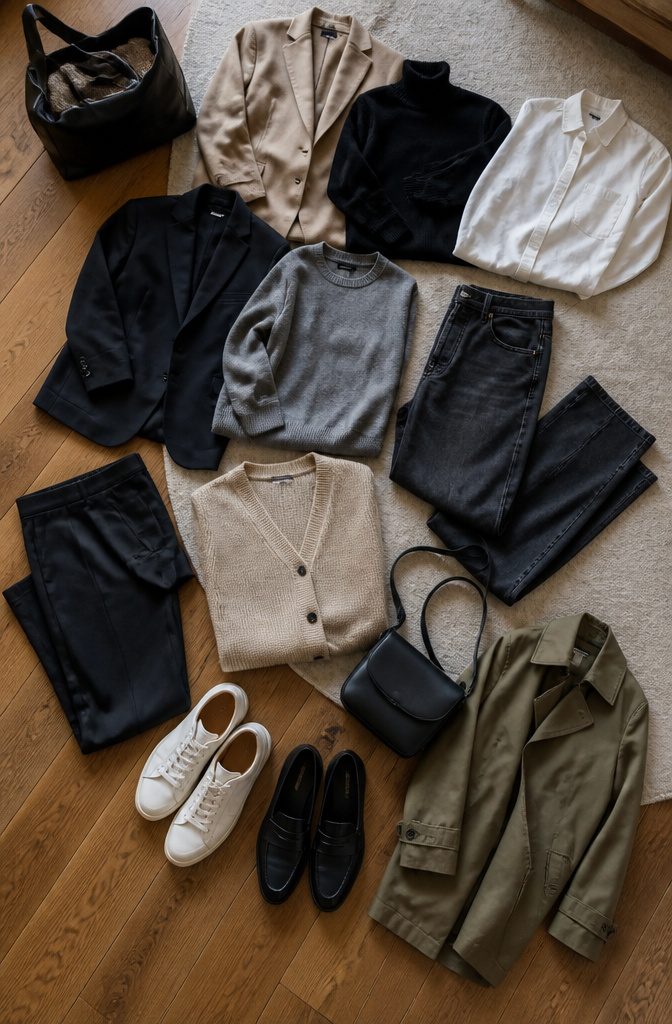
Twelve pieces cover the full range of urban chic fashion without redundancy.
- Long wrap coat: the outermost layer that reads polished over anything, jeans included
- Straight-fit jeans: the daily workhorse, dressed up with heels or down with ankle boots
- Silky camisole top: tucks under the blazer for day, stands alone for evening
- Boyfriend blazer: the piece that makes a midi skirt office-appropriate and weekend-ready
- Ankle boots: flat or low-heeled, the one shoe that moves across every season
- Structured leather bag: holds its shape so the outfit reads intentional
- Cashmere sweater: the temperature layer that never looks thrown on
- Black oversized sunglasses: one accessory that finishes a look without competing with it
- Midi skirt with an unexpected detail: a seam, a slit, a print panel
- Wide-leg trousers: the comfortable silhouette that still photographs as dressed
- Straight leather pants: season-extenders that swap in wherever denim would go
- Pointed heels: add length and close out any of the above combinations
Two Outfit Formulas by Season
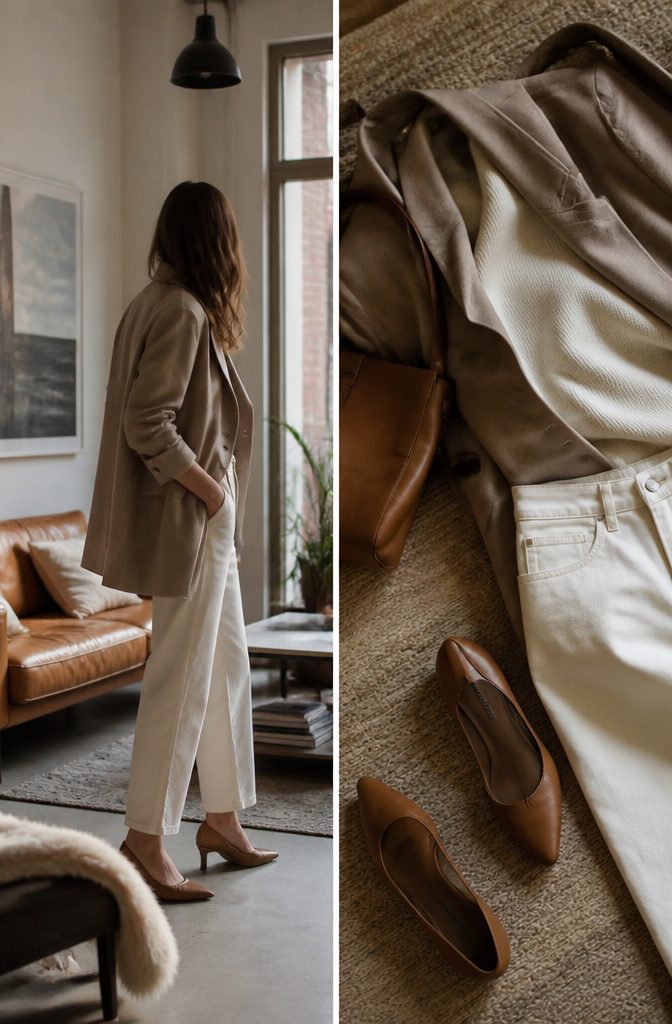
Fall and winter lean on a cashmere sweater tucked into a midi skirt, topped with a long wrap coat and grounded by ankle boots and a structured leather bag.
Every piece pulls from the same capsule: the coat is the one you already wear to work, the bag is the same one on your desk. Nothing is purchased for a single outing.
Spring and summer swap the weight without changing the logic. A silky camisole under a boyfriend blazer, straight-fit jeans, pointed heels, and sunglasses read as put-together without reading as formal.
The blazer does the same layering work the coat did; the heels carry the polish the ankle boots handled in colder months. Same formula, different fabric.
Adaptability Across Occasions
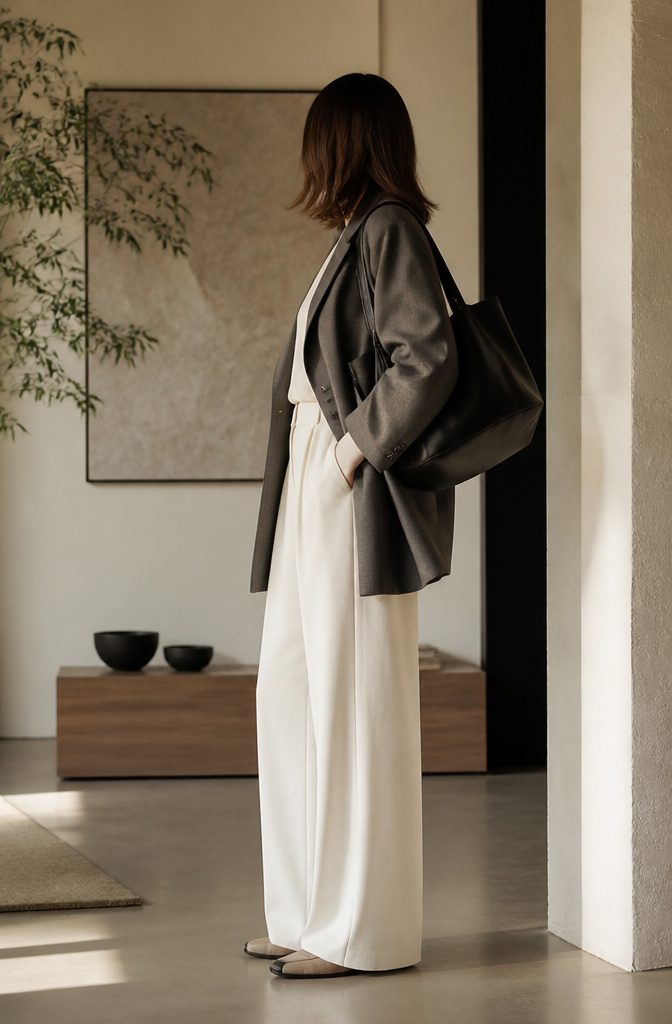
Versatile pieces hold their shape across a dynamic schedule because the same blazer that reads polished in a conference room reads intentional over jeans at dinner.
That shift happens without a full outfit change: swap the trousers for dark denim, trade the structured tote for something smaller, and the silhouette stays coherent.
Urban chic fashion earns its place in a working woman’s closet precisely because it resists being pinned to a single context.
A ponte blazer at 9am doesn’t announce itself as "office only," and that neutrality is a practical feature, not an accident of taste. The pieces that carry across occasions tend to be the ones worth spending on.
Urban Chic as Personal Style
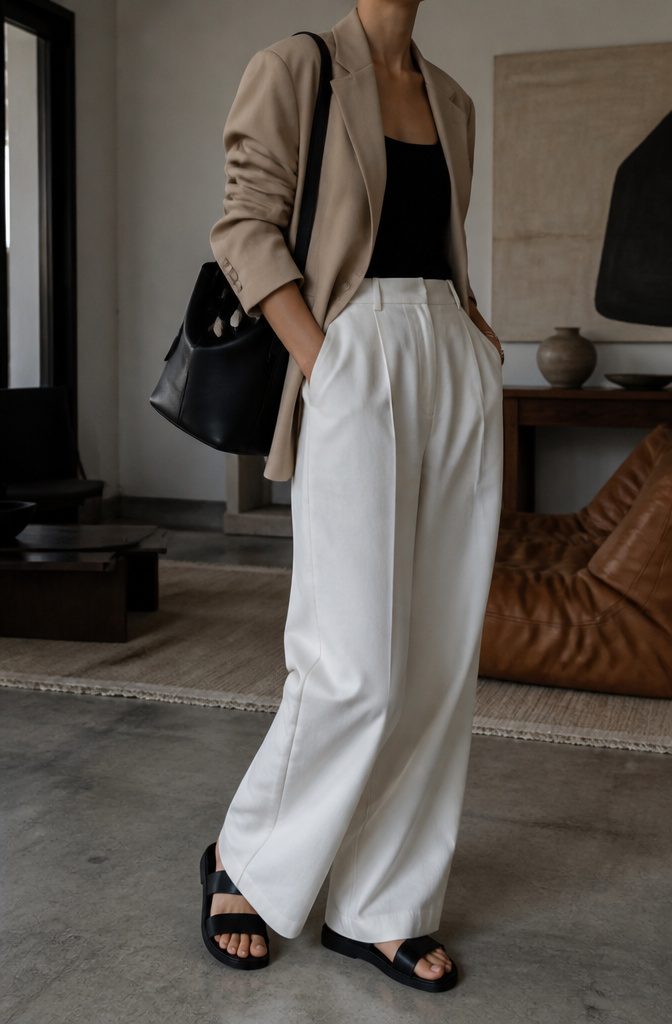
Urban chic means different things depending on who is wearing it. The framework stays flexible because personal taste and deliberate choice shape the final result more than any checklist of pieces ever could.
Someone building this style for confidence at work will lean harder on tailored lines and subdued tones, while another person drawn to the same idea might prioritize ease of movement and a slightly looser silhouette for days spent crossing the city on foot.
Both versions read as polished and intentional, and neither one is the template.
The archetype suits women who want to look put-together without spending the morning on it, but how that shows up depends on lifestyle and preference.
If you gravitate toward neutral palettes and streamlined cuts, the style becomes quietly refined. If you add texture, pattern, or an unexpected accessory, it tilts more expressive without losing its urban practicality.
The balance shifts with each person, and that adaptability is what makes the look feel less like a uniform and more like a real wardrobe.