
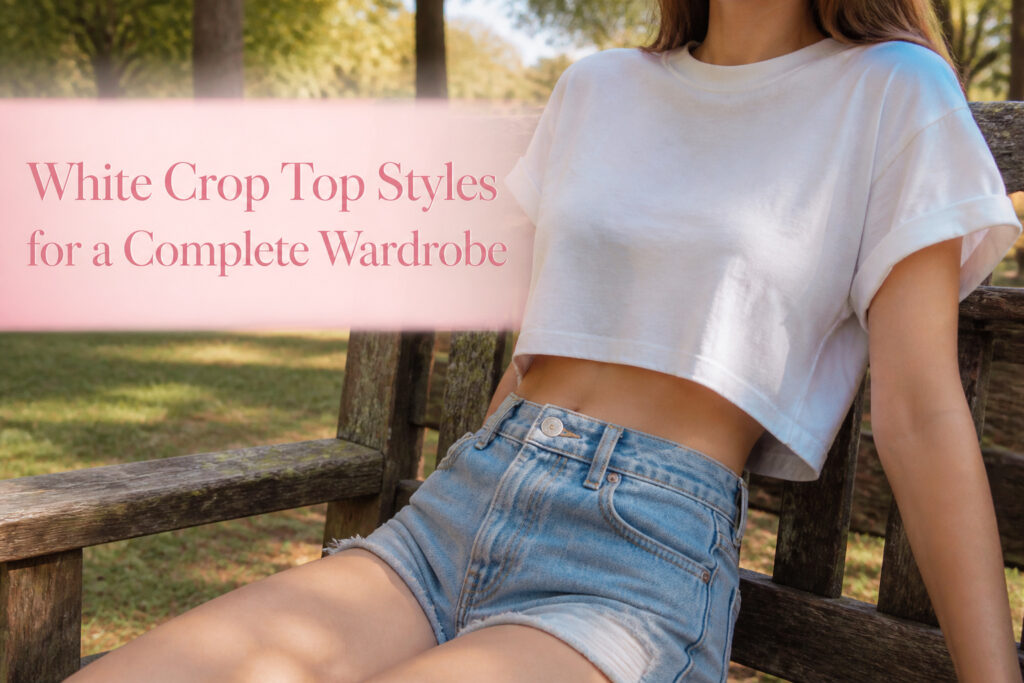
A white crop top is any upper-body garment cut to end above the waist, usually exposing a strip of midriff between hem and waistband.
The same piece reads unfinished or styled depending almost entirely on what sits below it. High-waist bottoms anchor the look; low-rise ones leave the midsection stranded and the top looks like it shrunk in the wash.
At around $23.00, the basic crew neck is where most people start, but the fabric weight decides whether it earns its keep or sits unworn, since lightweight white cotton tends toward sheer.
Scoop Neck Stud Detail Vest
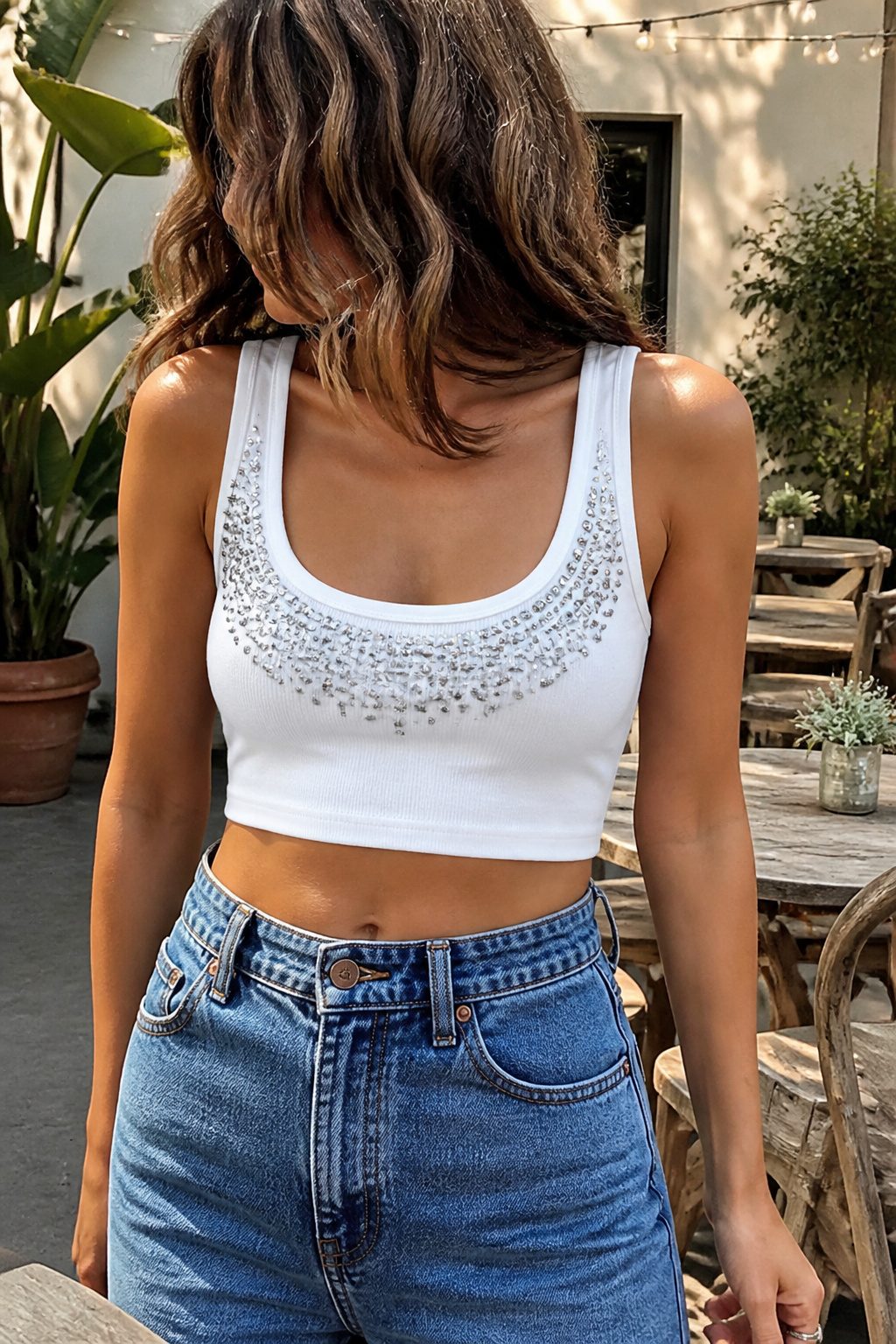
A scoop neckline sits lower and wider than a standard tank, showing a sliver of collarbone without the sharp corners of a V-neck.
The stud detail usually clusters along that front curve, where the eye already travels, so it reads as texture rather than hardware.
This cut separates from a basic tank in that the neckline itself becomes the garment’s statement.
A plain tank recedes; this one frames. The studs add weight, which means the fabric needs enough body to hang straight, otherwise the trim pulls the front off-center.
Worn against high-waist denim or a structured midi skirt, the scoop meets the waistband cleanly with maybe an inch of skin showing. That gap is deliberate and stable; the waistband anchors the visual.
The same top with low-rise bottoms leaves too much midsection exposed and the studs look stranded, so a layer underneath becomes necessary: a fitted longline tank, or a button shirt left open and tucked.
Without that layer, the look tilts from styled to unfinished.
Short Sleeve Lace Panel Trim
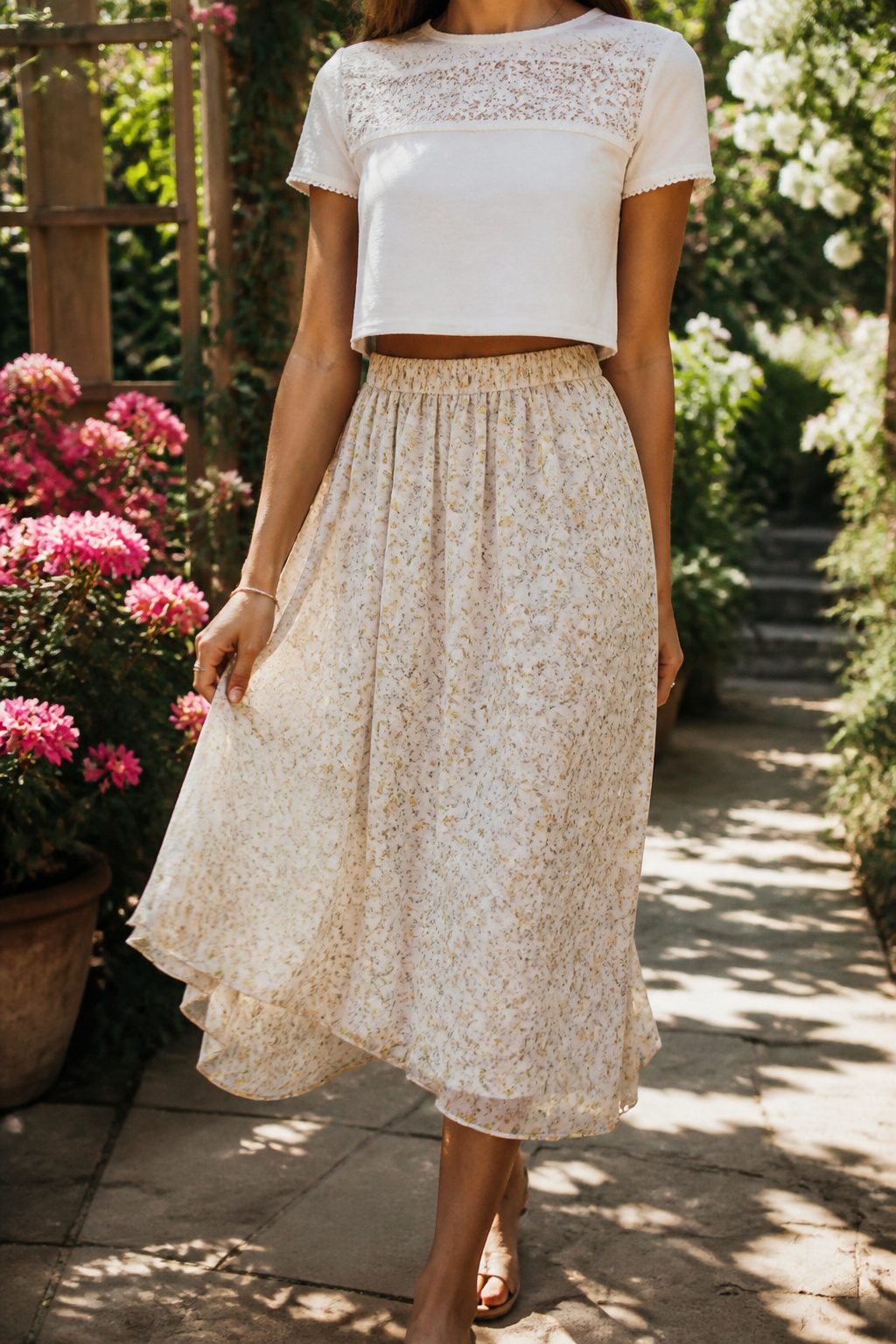
A short sleeve white crop top with lace panel trim usually inserts the sheer detail at the yoke, the sleeve edge, or along the bottom hem.
Each placement changes how much skin shows through and how the silhouette reads. Lace at the yoke keeps the chest area semi-sheer while the midsection stays opaque cotton, which reads softer than a full sheer panel.
Trim at the sleeve edge or hem adds width visually, so the piece sits a little more square on the body rather than clinging tight.
The lace itself is typically a cotton or cotton-blend mesh, sewn onto a jersey body.
That combination means two different care needs: the jersey can handle a warm wash and a dryer, but the lace will shrink more and can snag.
I wash these cold and lay them flat, or the lace pulls the whole shape shorter and tighter than it started. If the lace is synthetic, it yellows faster under heat, so the white stays truer with cooler water anyway.
For body shape, lace at the yoke draws the eye upward, which works well if you want emphasis higher on the torso.
Lace at the hem does the opposite. I generally prefer yoke placement for that reason, though hem lace can balance wider shoulders.
Strappy Frill Trim Cami
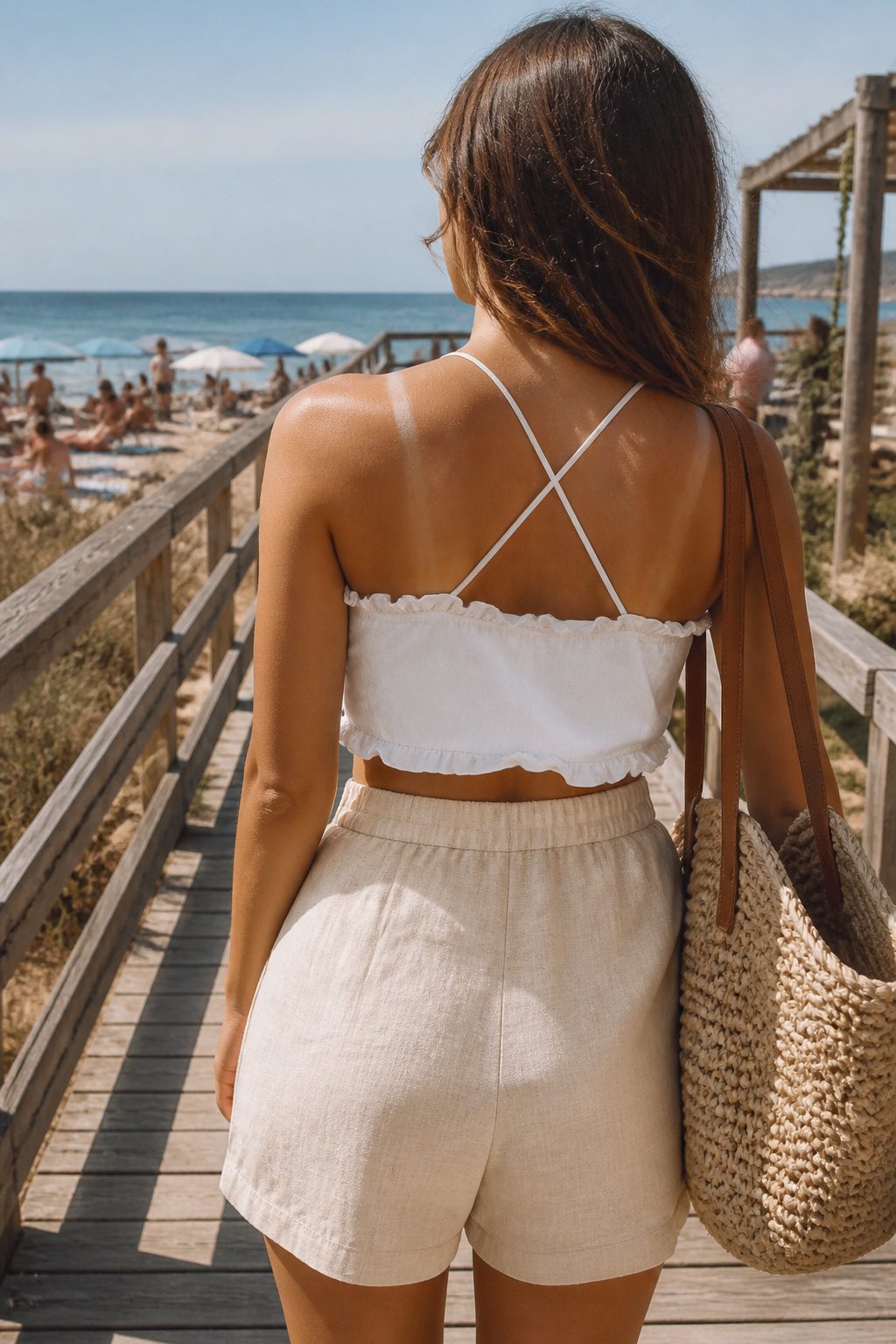
A strappy cami with frill trim carries more structure than its plainer cousin, and that difference matters for what goes underneath.
The straps sit narrower, often 1/2 inch or less, and cross or multiply across the upper back in configurations that put tension on different points of the shoulder than a standard two-strap camisole.
The frill itself, usually a ruffled edge tracing the neckline or armhole, adds a decorative layer but also creates a visual boundary that a smooth crop lacks.
That frill trim typically appears along the neckline or cascading down the front placket, occasionally at the hem, and it demands a clean foundation beneath.
Where a plain cropped camisole might hide a standard bra strap without much notice, the strappy construction and exposed back of this style leave little room for error.
A strapless bandeau or adhesive cups work better here; conventional bra straps would compete with the intentional lines of the design and break the effect entirely.
The structure also differs in weight.
The frill adds fabric bulk that a plain cami avoids, which means this style reads as more "top" than "underlayer." It needs consideration for occasion: the trim elevates it past basic loungewear, but the cropped length keeps it casual.
For support, the narrow straps mean the garment itself carries little of the work; your underlayer does the lifting, literally, while the cami handles the visual.
Halter Neck Open Back
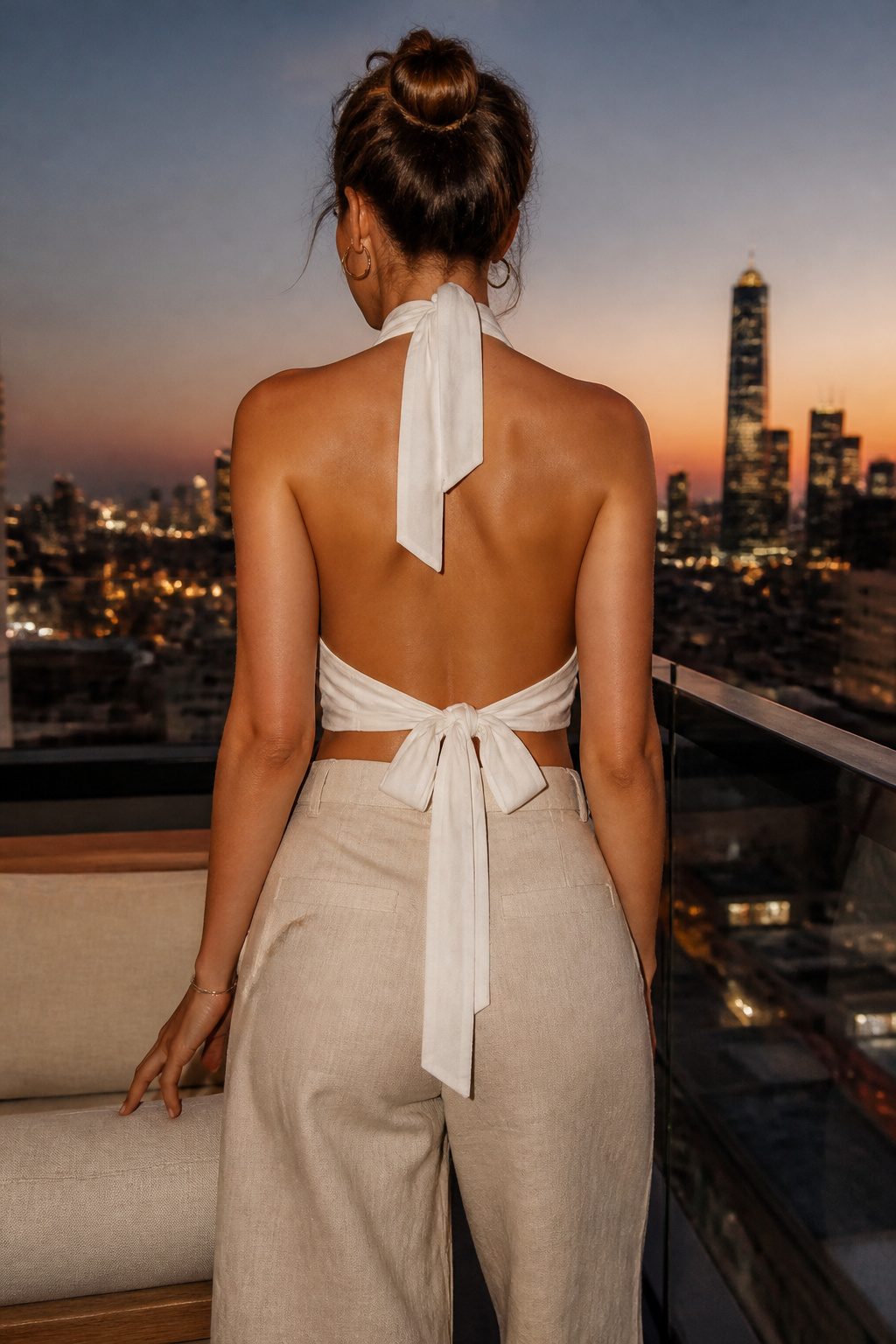
A halter neck open back white crop top channels the neck with straps that meet behind it, leaving the shoulders completely free to move.
The back opening usually drops to somewhere between the shoulder blades and the mid-back, depending on how cropped the hem sits.
That exposure makes a standard bra impossible; a stick-on cup, a halter-style bra, or a skin-tone adhesive is the practical choice, and the wrong one shows in every photo.
The cut reads dressier than a basic crew or tank because the bare back and defined neckline do the styling work for you.
I would reach for this over a plain crop for dinner out, a daytime wedding with high-waisted linen trousers, or any event where "casual" still means put-together.
You pay for it with bra math and the fact that the open back limits layering; a jacket kills the effect, so this piece lives or dies on weather and your willingness to commit to the silhouette.
Short Sleeve Tie Front
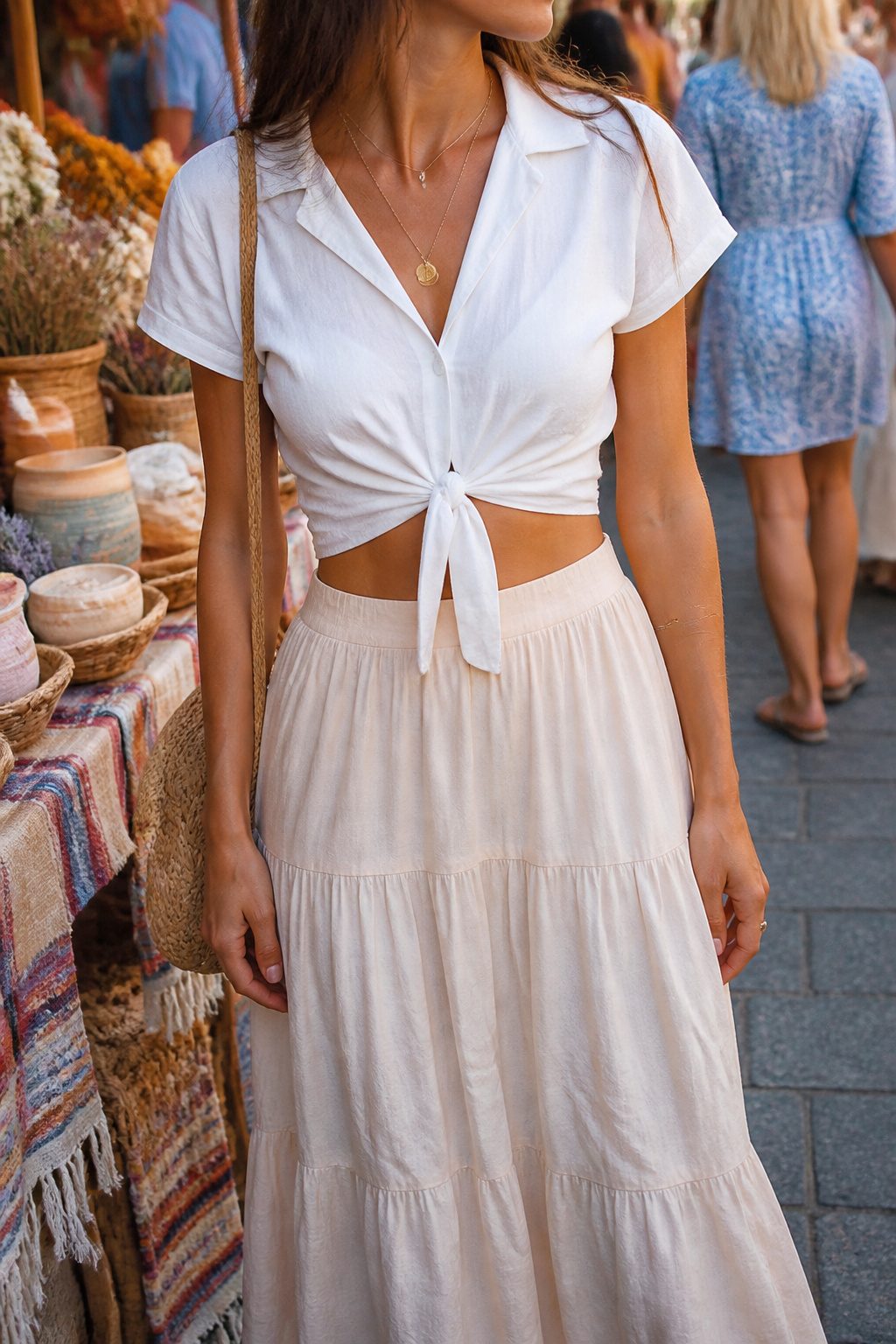
A short sleeve tie front crop top puts the knot exactly where you need it, not where a factory hem decided.
The tie can sit at your true waist, ride up to an empire line under the bust, or drop lower toward the hip, and each placement changes the whole proportion of the outfit.
I prefer the true waist placement on shorter torsos because it builds a clean break between top and bottom without extra fabric bulk.
The knot itself is the fit adjustment. Pull it snug and the fabric gathers into a ruched effect that hides a bra band or soft midsection; keep it loose and the drape falls open for more airflow and less structure.
You can also tie it off-center or in back if the front knot reads too casual for where you’re headed.
Fixed-hem crops give you one length, period.
This style lets you raise the hem an inch for high-waisted trousers or let it out over low-rise jeans without buying a second top. That flexibility matters if your wardrobe spans more than one rise, which most do after 30.
Basic Short Sleeve Crew Neck
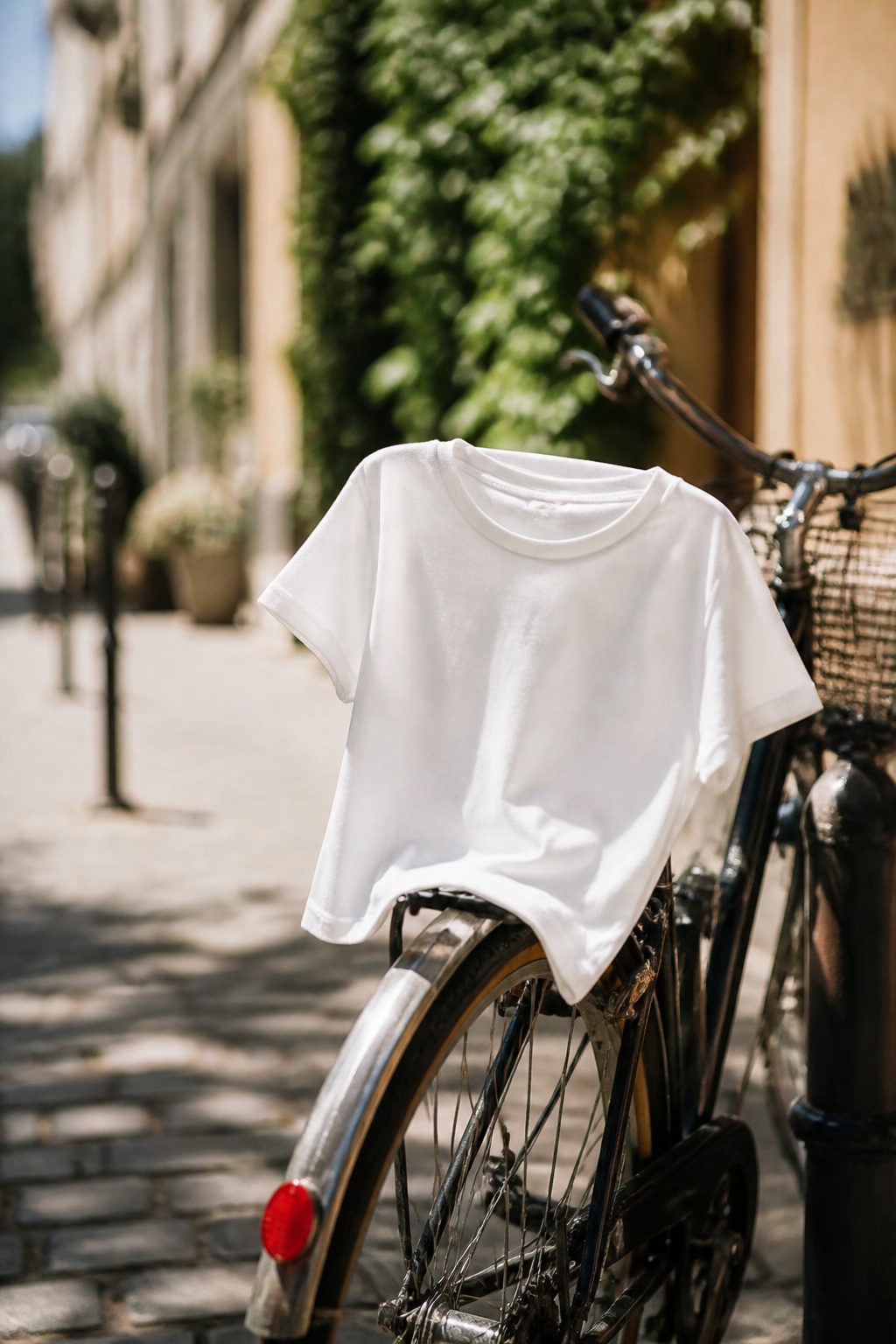
The basic short sleeve crew neck is where most people start, and for good reason. At around $23.00, it asks almost nothing of your budget while giving back a blank surface that pairs with anything already in your closet.
What you sacrifice is detail: no lace, no ribbing, no neckline variation to carry the look on its own. The fabric weight decides whether this piece earns its keep or sits unworn.
Lightweight cotton jersey in white tends toward sheer, especially under direct light or stretched across the torso, so I look for a denser knit or a cotton blend with enough body to stay opaque through a normal day of reaching and sitting.
Pure cotton breathes well but can lose shape after repeated washing; a small percentage of elastane helps the top recover instead of sagging at the hem.
This is the entry point not because it is the most exciting option, but because it answers the most questions.
It works under a blazer, with high-waisted jeans, or layered over a fitted tank. The cost is that you will need the rest of your outfit to do more.
Ribbed Crop Top
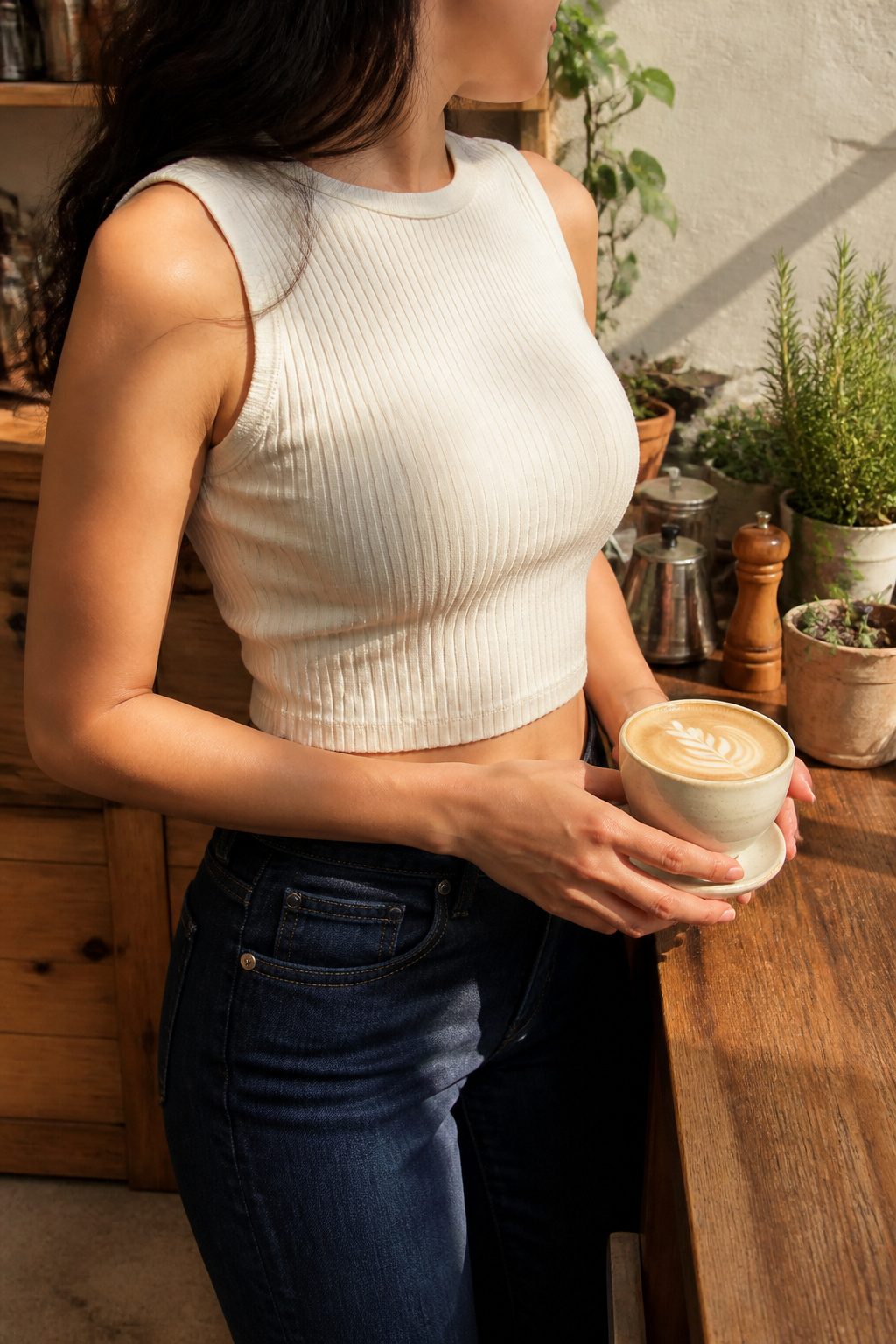
Ribbed cotton brings a vertical texture that does more than look interesting. The knit construction creates those visible lines, and in a white crop top they serve a purpose beyond pattern.
White shows shadow through any gap in the fabric, so a rib that sits flat against the body matters more here than in darker colors where light does not pass the same way.
Stretch recovery is where ribbed construction earns its place. A 1×1 rib, with its single knit and single purl alternating, tends to lie closer and return to shape with less bulk.
A 2×2 rib, doubling those repeats, gives more stretch and a slightly thicker hand but can gape between the ridges when the body moves.
In white, that gaping reads as transparency. I would reach for the 1×1 when the top needs to stay clean through a day of sitting, reaching, and walking.
Those vertical lines also interact with body shape in a way smooth jersey does not. They draw the eye up and down rather than across, which flatters some torsos and emphasizes others depending on where the hem lands.
A ribbed crop top that ends at the natural waist keeps that vertical movement going through the narrowest point, but let it ride higher and the line breaks, turning the texture into horizontal emphasis where you may not want it.
Cropped Camisole
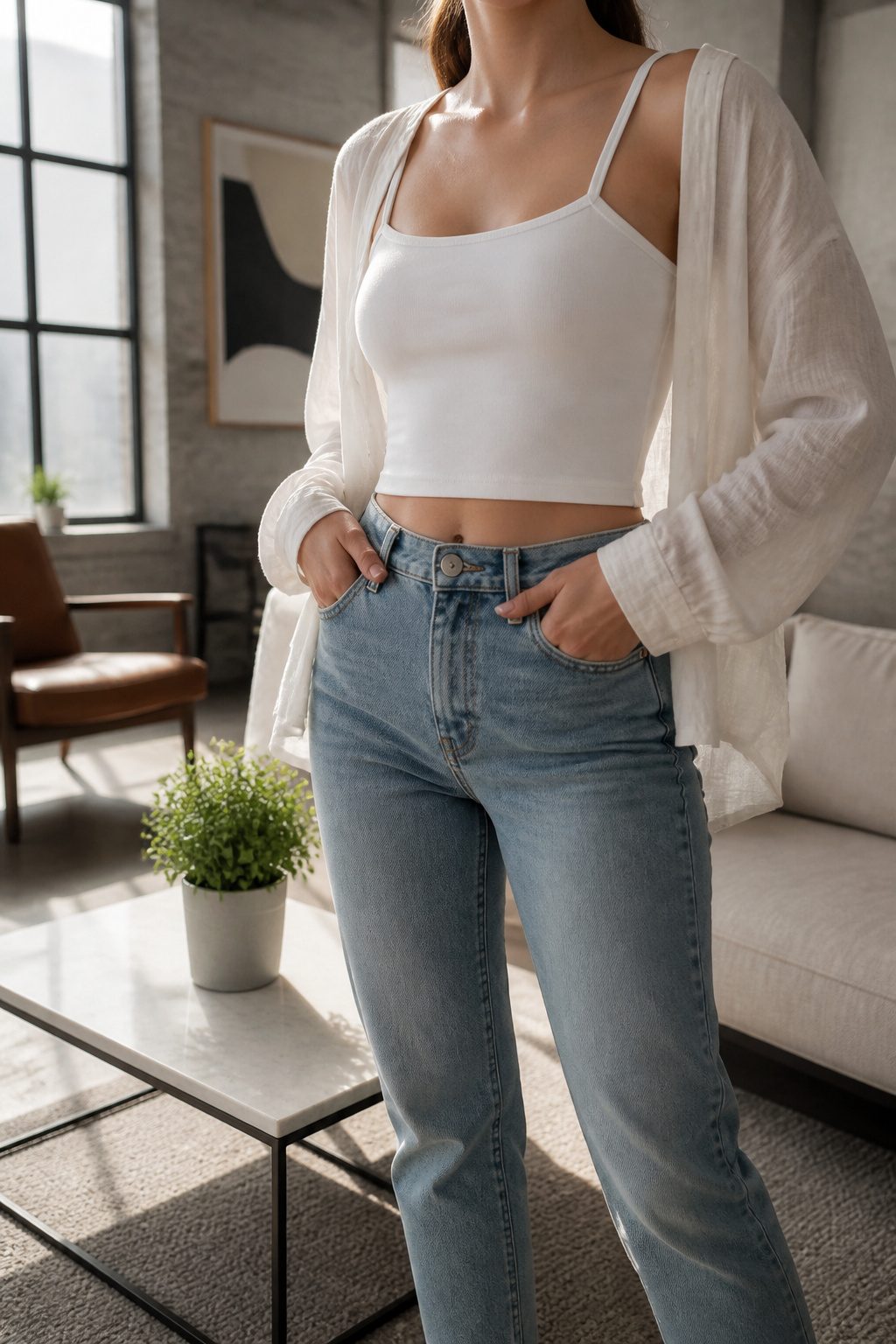
A cropped camisole sits lower on the torso than the strappy frill trim cami, with a cleaner neckline that skips the ruffled edges.
Most versions run with adjustable straps and a built-in shelf bra, which makes the difference between reaching for it twice a week and leaving it in the drawer.
Without that shelf bra, you are either layering over a bra that shows or hunting for a strapless one that stays put, and neither route is clean.
The fabric weight decides whether it works alone or strictly as a layer. A heavier cotton or modal blend, around the weight of a standard tank, holds its shape for wearing out with high-waisted trousers or a midi skirt.
The lighter jersey versions, the ones that feel almost like lingerie, read as underwear if they are not buried under a cardigan or a sheer blouse.
I keep one of each: the heavier weight in white for summer evenings, the thinner one in black for layering.
The white heavy-weight version does need a wash after every wear, especially if you are skipping a separate bra, so factor that into how many you actually want to own.
Graphic Cotton Top
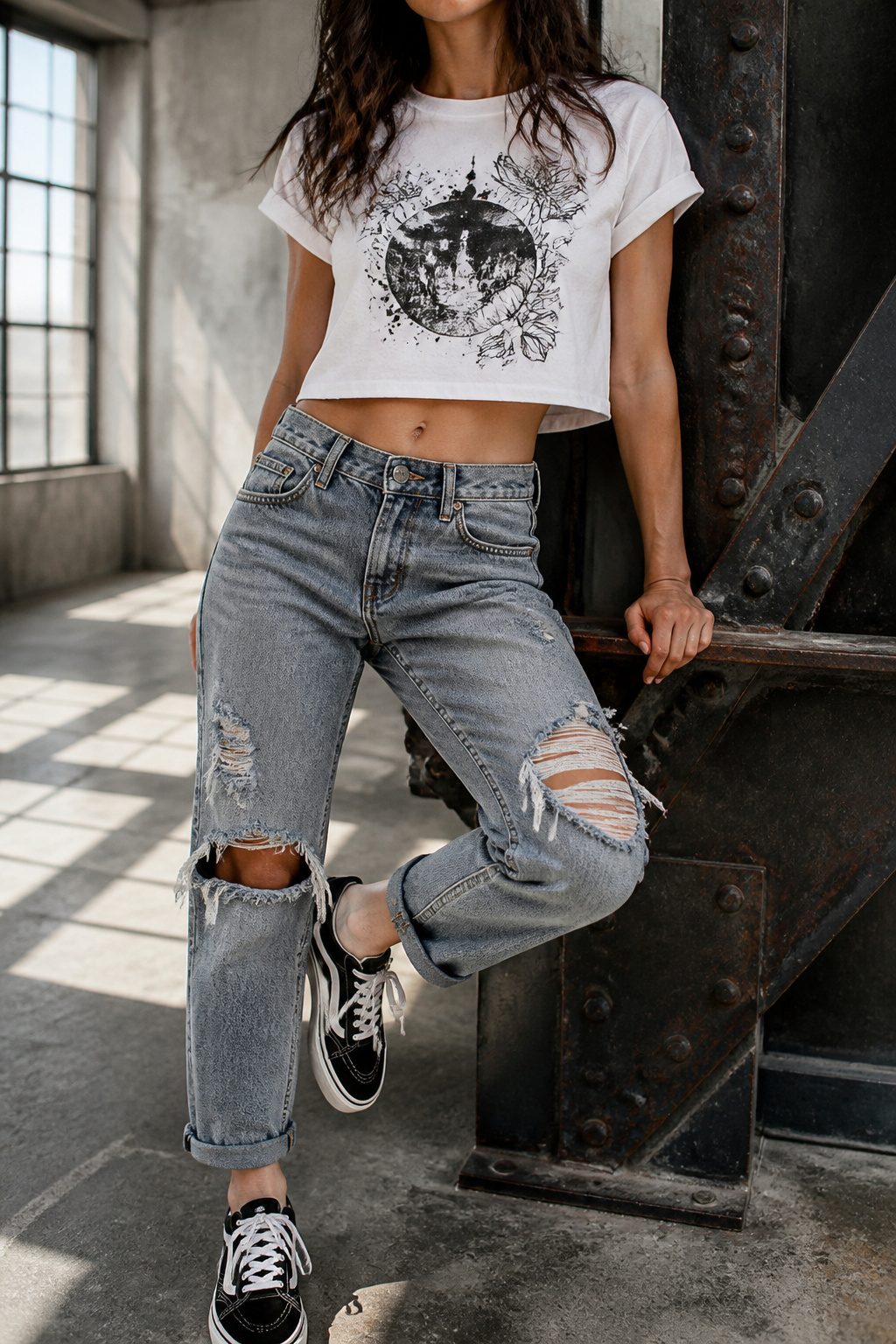
The graphic cotton crop top is where white ground plus dark ink creates a specific wear problem: the printed areas stiffen and crack long before the base fabric fails.
Water-based inks stay softer against the skin and let the cotton jersey breathe as intended, while plastisol sits on the surface like a thin rubber layer that traps heat and eventually flakes.
I would check the inside of the shirt before buying; if the graphic feels like a separate object you can catch with a fingernail, that is plastisol, and it will age faster than the shirt itself.
White cotton jersey with a large front print also yellows unevenly.
The ink blocks UV and washing abrasion on the pattern area, so after a season the exposed white around it looks slightly grayer while the covered sections stay closer to the original shade.
Small chest prints or sleeve hits minimize this, since less of the shirt is protected from the same light and laundry cycles.
Ribbed cotton with graphics behaves worse: the vertical texture already catches light unevenly, and a stiff print layer fights the stretch, so the ink cracks across the ribs first.
For a graphic crop top I would stick with smooth cotton jersey, keep the print modest in size, and accept that the graphic is essentially disposable even when the shirt still has wear left in it.
Button-Front Design
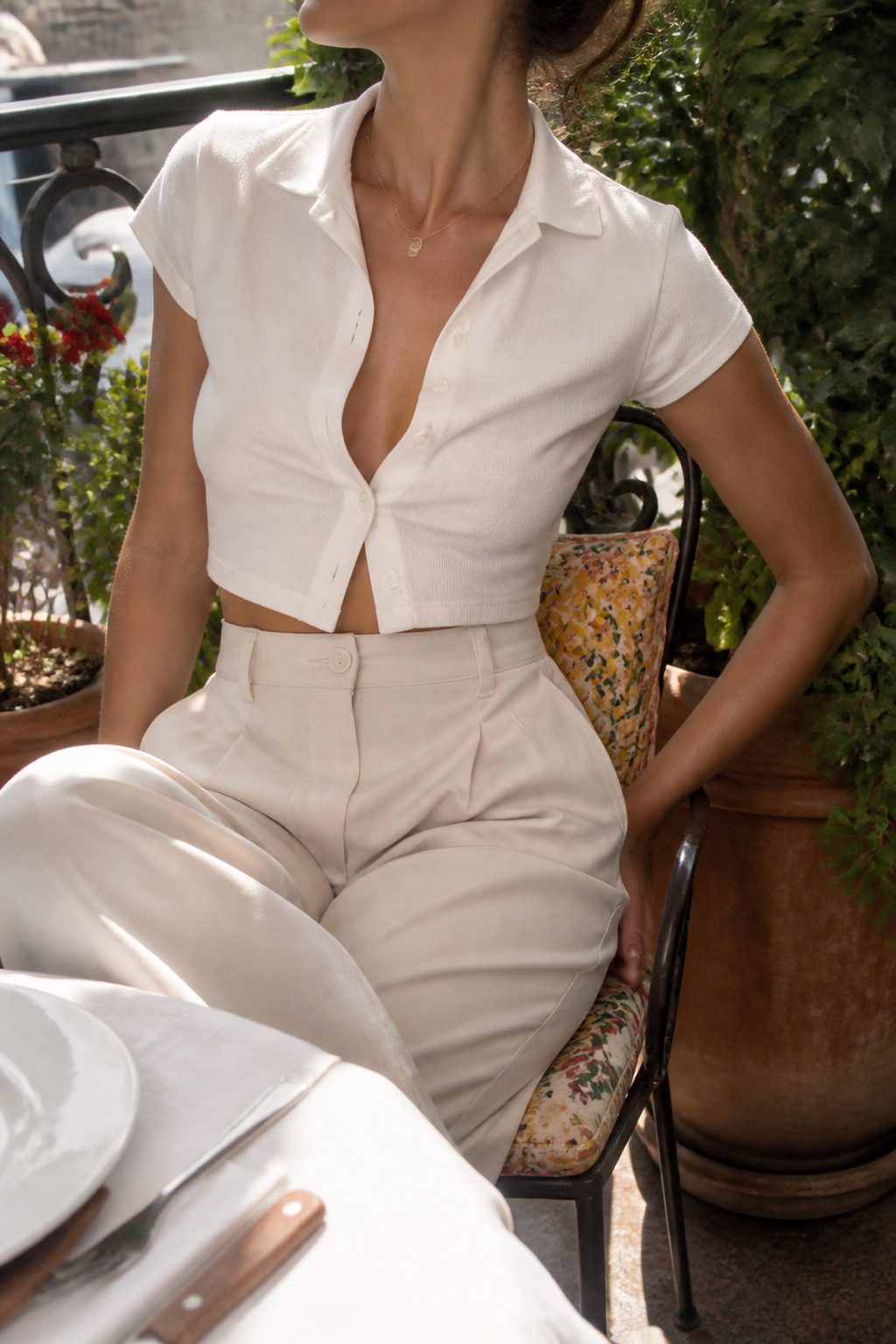
A button-front white crop top lives or dies on button spacing tighter than 1 inch apart; anything wider gaps across the bust the moment you reach for something, and the cropped length gives the fabric even less room to lie flat.
The placket width matters too.
A narrow placket with small shell or mother-of-pearl buttons reads shirt-jacket, something you might layer open over a camisole. A wider placket with larger functional buttons turns the piece into a top that stands alone.
I treat the buttons as a styling tool, not just hardware. Fastened to the third button and left open below, the top becomes a V-neckline that sits higher than most crops dare.
Worn fully closed, it needs a higher waistline on your bottom half; the hem hits at the exact point where mid-rise pants become awkward, so high-rise is the cleaner pairing.
Fully open as a layering piece, the cropped length actually works in its favor, ending where a longer shirt would bunch and fold.
The cost is care. Functional buttons on a cropped body mean more stress at the waistband, and the placket is the first place a white top shows wear.
I would rather own one with real working buttons than a decorative snap placket pretending to be a shirt.
Cropped Tees With Neckline Variations
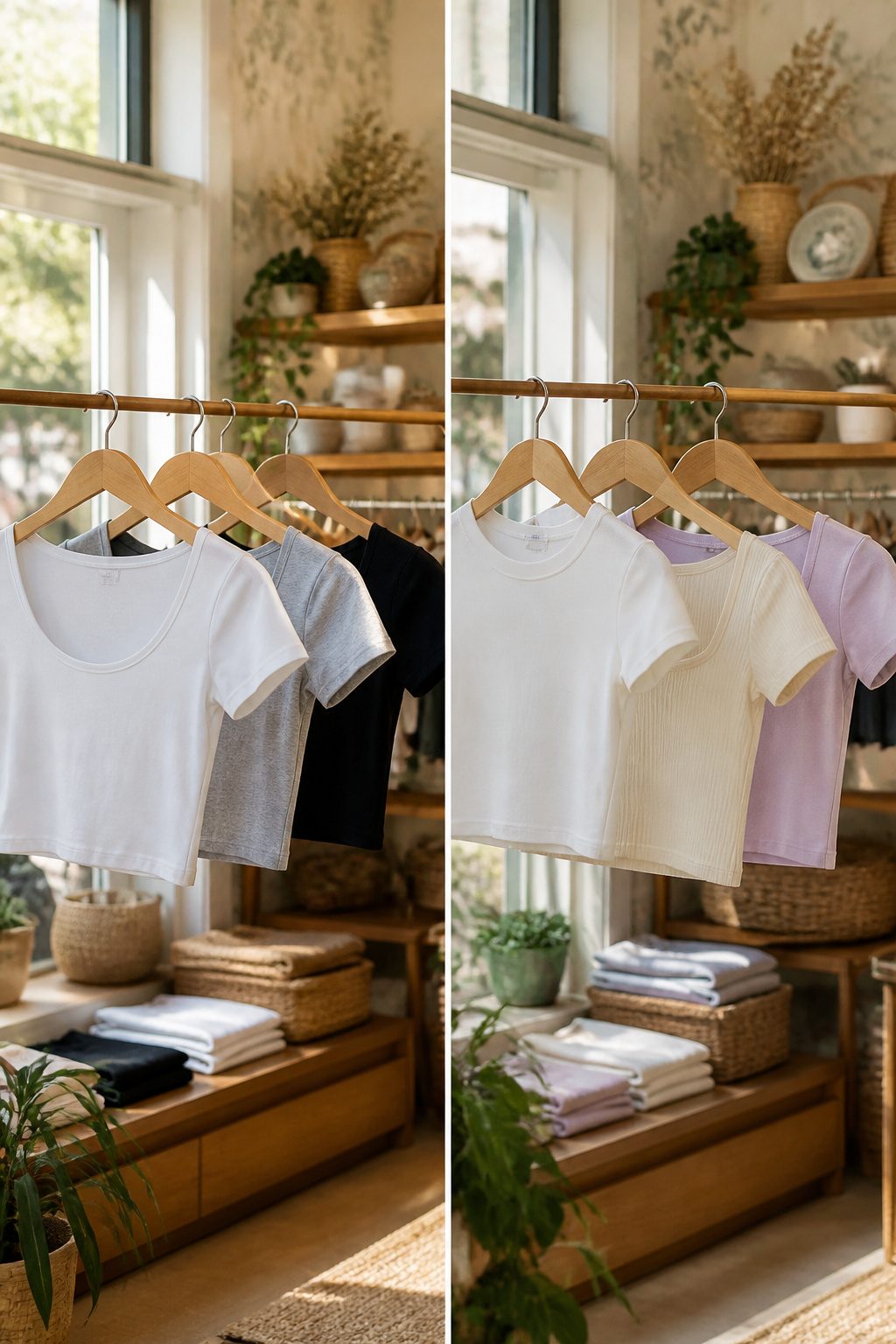
A scoop neckline drops low enough to break up a long torso but stops before it turns into a going-out top. The curve draws the eye up, so a short pendant or layered chains sit right where the fabric dips.
Crew necks do the opposite job. The higher band contains the shoulder line, which makes them the cleaner choice under a denim jacket or a boxy overshirt where a lower neckline would bunch or flash.
Square necks are built differently, not just cut.
The straight edge across the collarbone needs a binding or a facing that keeps the corners from gapping, and that structure is why the shape holds steady where a scoop might stretch out by wash three.
The line also frames the neck in a way that reads slightly dressier; I reach for small hoops or a slim collar necklace rather than anything that competes with the geometry.
Each of these three handles layering on its own terms.
A crew under an open flannel disappears into the outfit. A scoop needs the outer layer to sit lower or it steals the point.
A square neck, with its fixed edges, asks for a cardigan or blazer that follows the same line rather than overlapping it. Buy the neckline for the outerwear you already own, not the other way around.
Cropped Tanks
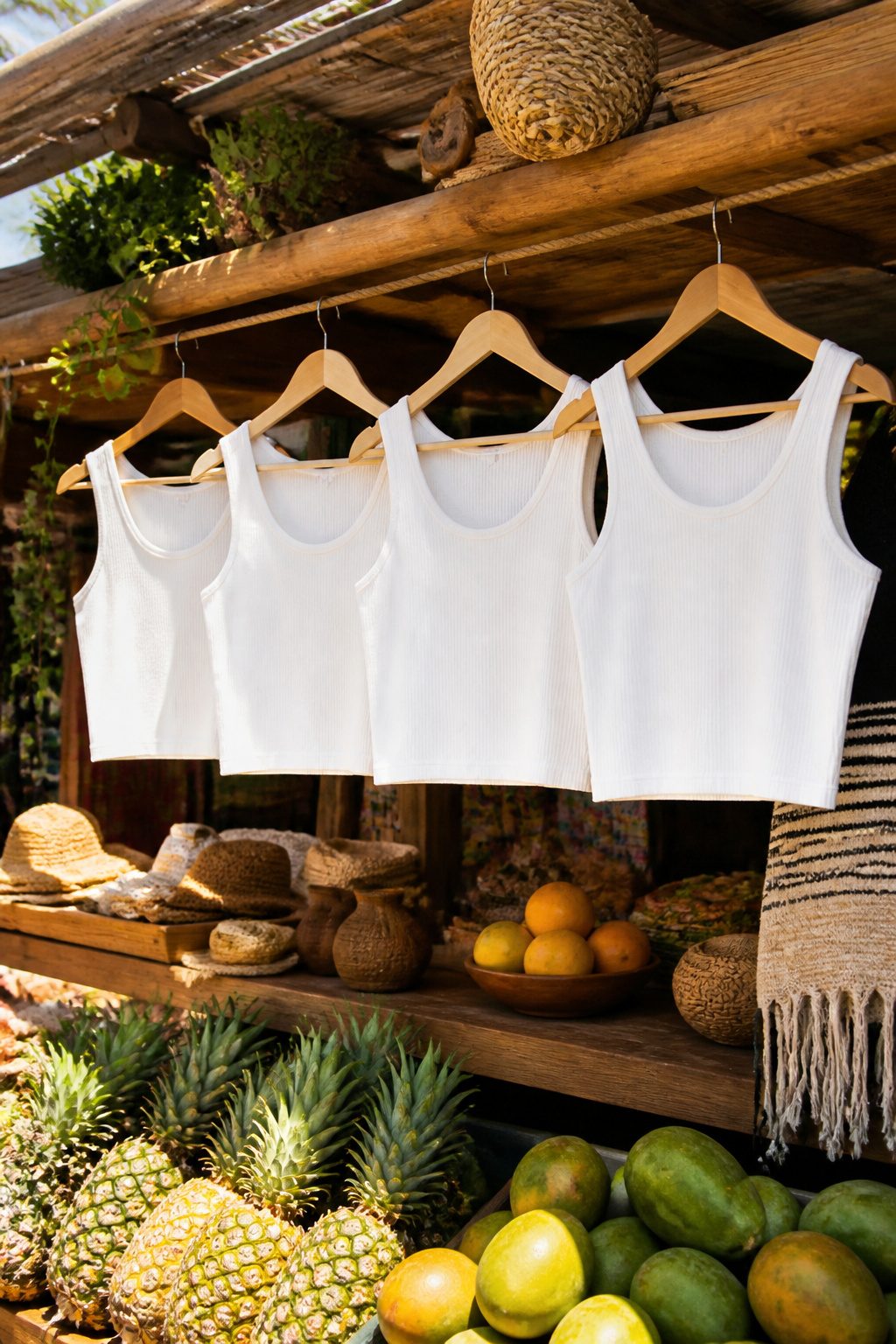
A cropped tank sits higher on the body than a camisole but lower than a vest, with straps wide enough to cover standard bra straps and an armhole that keeps side coverage intact.
That difference in armhole depth matters more than most people notice until they are reaching for a coffee or raising an arm on the subway.
A shallow curve stays put; a deep one gaps and shows the band or skin you did not plan on.
Strap width is the other deciding factor. Tanks with straps under an inch read as underwear or base layers, which works fine under a blazer but looks unfinished alone.
I look for straps at least an inch wide, closer to two if the fabric is substantial, so the top holds its own against jeans or a midi skirt without needing another layer.
There is a practical split between tanks cut for layering and those meant to stand alone. Layering versions usually run in thinner jersey with narrower bindings and a body-skimming fit that disappears under shirts.
The ones I would wear solo have a firmer rib or a double-layer front, a hem that hits true at the waist rather than riding up, and enough structure that the neckline stays level through a day of moving around.
A tank meant to layer will always look slightly apologetic by itself, like it forgot its shirt.
Styling for Casual Through Dressy
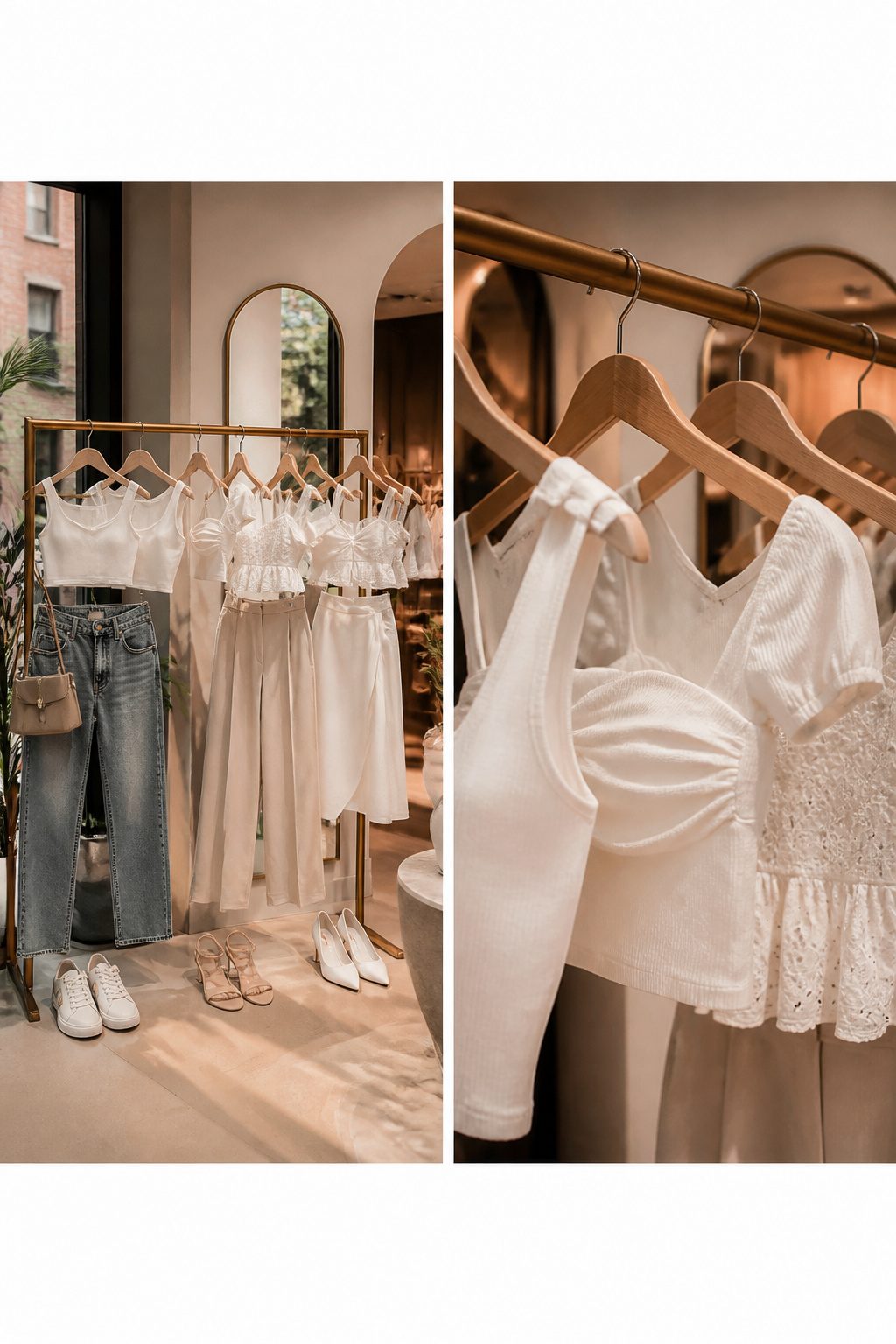
A white crop top moves between casual and dressy faster than almost any other piece I reach for, and the difference is almost always what sits below it or over it.
The same ribbed tank that reads coffee-run casual with high-rise jeans and canvas sneakers shifts to dinner-appropriate under a structured blazer with trousers and a heel.
Cotton’s clean finish helps here; it does not fight the formality you add around it.
For daytime, the looser cropped tee or boxy cut with a scoop neck pairs naturally with denim or a cotton skirt.
The fit is relaxed, the coverage lands near the natural waist or upper hip, and the whole look stays unfussy.
Swap in a square-neck fitted tank and the same skirt gains definition; the neckline does the work of making it intentional rather than thrown-on.
Evening asks for closer proportions. I take the ribbed crop top or a cropped camisole, tuck it cleanly into a high-waisted tailored piece, and add the blazer.
The cropped length stays visible but controlled, and the cotton breathes enough that I am not adjusting through a long night.
A button-front design can also handle this, though the placket needs to sit flat; any gaping reads sloppy, not relaxed.
Festival or concert settings are where I let the hem rise higher on the torso. A halter neck or strappy cut with a flowing skirt keeps the ratio interesting without tipping into costume.
The 12 styles split cleanly here: ribbed tanks, fitted camisoles, and square-neck shapes cross over most easily, while graphic prints and boxy tees stay firmly casual.
Fabric and Care
Cotton owns this category for a reason: it breathes, it sits softly against skin, and it gives a white crop top that fresh, unfussy feel that works for coffee runs or last-minute dinner plans.
White fabric shows every mark, from foundation along the neckline to the splash you didn’t notice until evening.
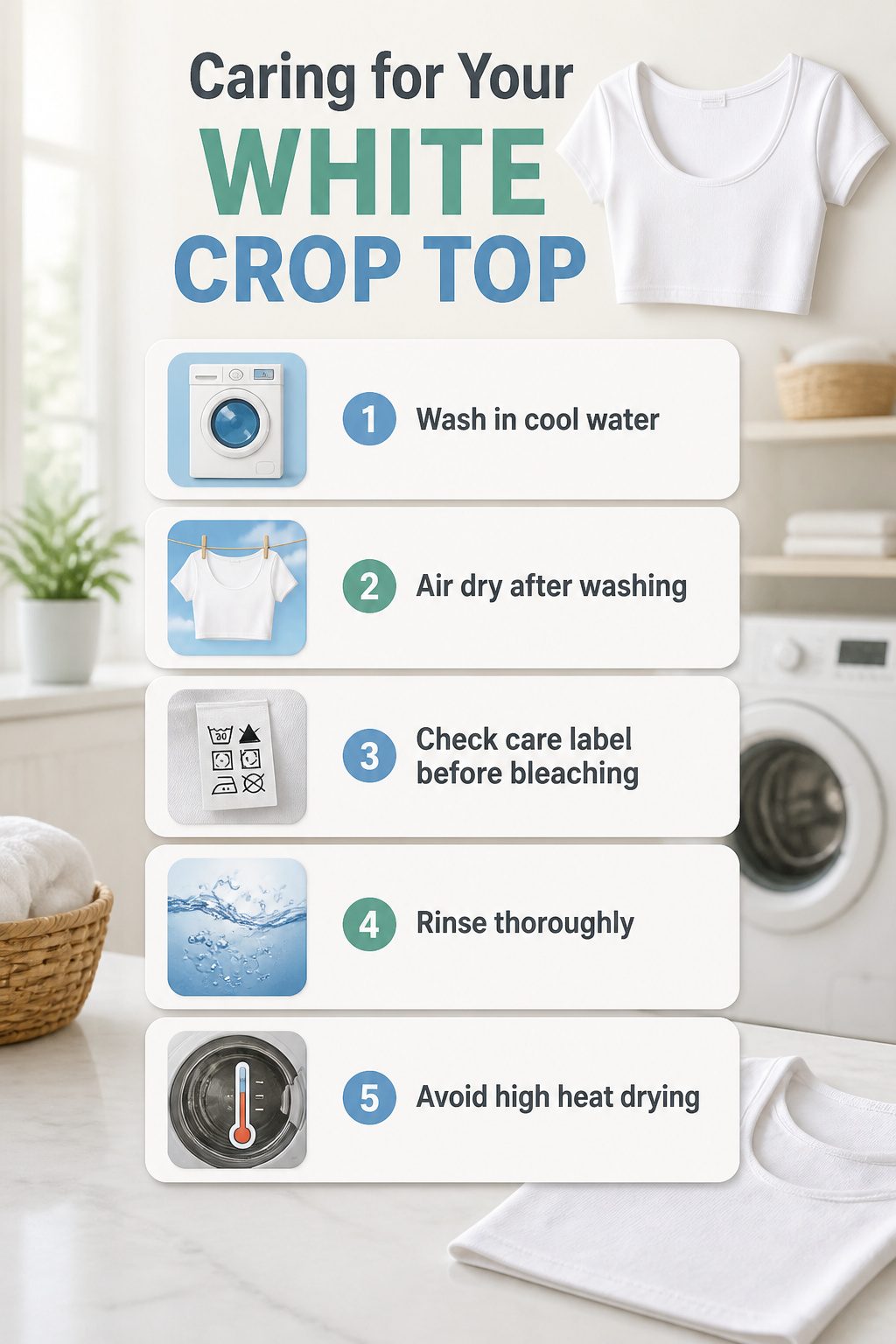
I wash mine in cool water on a gentle cycle and air-dry every time. Heat shrinks pure cotton and sets stains deeper, so skipping the dryer protects both the shape and the color.
Prompt attention to spots beats aggressive treatment later; bleach can damage stretch fibers or decorative finishes even on white garments, so I check the care label before reaching for it.
Thorough rinsing and complete drying prevent residue buildup and that faint graying that makes white look tired.
The extra care is worth the trouble. A well-kept white cotton crop top stays wearable season after season, while one thrown into hot water and a high-heat dryer will pill, shrink, or yellow inside a few months.
When to Wear Them

A white crop top reads as clean and intentional in bright light, which is why it works almost anywhere the dress code is relaxed.
Cotton or cotton-blend fabric keeps the look grounded rather than flashy, and the cropped length adds a modern edge without demanding attention.
For casual daytime plans and warm-weather outings, a fitted tank or baby tee in white cotton feels effortless with high-waisted denim or a midi skirt.
The same silhouette transitions to vacation and festival settings where breathability matters and the color reflects heat rather than trapping it.
Scoop-neck or square-neck styles suit concerts and relaxed weekend looks because they frame the collarbone without the theatricality of a halter or open-back cut.
Some polished silhouettes, like a ribbed crop top with a higher neckline or a button-front design, can stretch into casual evening occasions if the fabric holds its shape and the pairing is deliberate.
White specifically wins here because it carries a crispness that darker colors lose in low light, and it photographs cleanly against sunset or venue backdrops.
You pay with practicality: white cotton needs washing with like colors in cool water and air-drying to keep that brightness intact, so it asks slightly more of your laundry routine than a black alternative.
Frequently Asked Questions
What styles of white cotton crop tops are available?
Popular styles include ribbed crop tops, fitted tanks, baby tees, cropped camisoles with shelf bras, graphic cotton tops, button-front designs, and cropped tees with scoop, square, crew, or halter necklines.
You will also find strappy camis with frill trim, halter neck open back styles, short sleeve tie front cuts, and scoop neck vests with stud detail. Each silhouette serves a different layering need and body preference.
When can women wear white cotton crop tops?
White cotton crop tops work for casual daytime plans, warm-weather outings, vacations, festivals, concerts, and relaxed weekend looks.
Some polished silhouettes, like a ribbed crop top with a higher neckline or a button-front design, can stretch into casual evening occasions if paired with tailored pieces.
White specifically photographs cleanly and carries a crispness that darker colors lose in low light.
How should white cotton crop tops be cared for?
Wash in cool water with like colors on a gentle cycle, then air-dry every time.
Heat shrinks pure cotton and sets stains deeper, so skipping the dryer protects both shape and color. Spot-treat promptly rather than using bleach, which can damage stretch fibers or decorative finishes even on white garments.