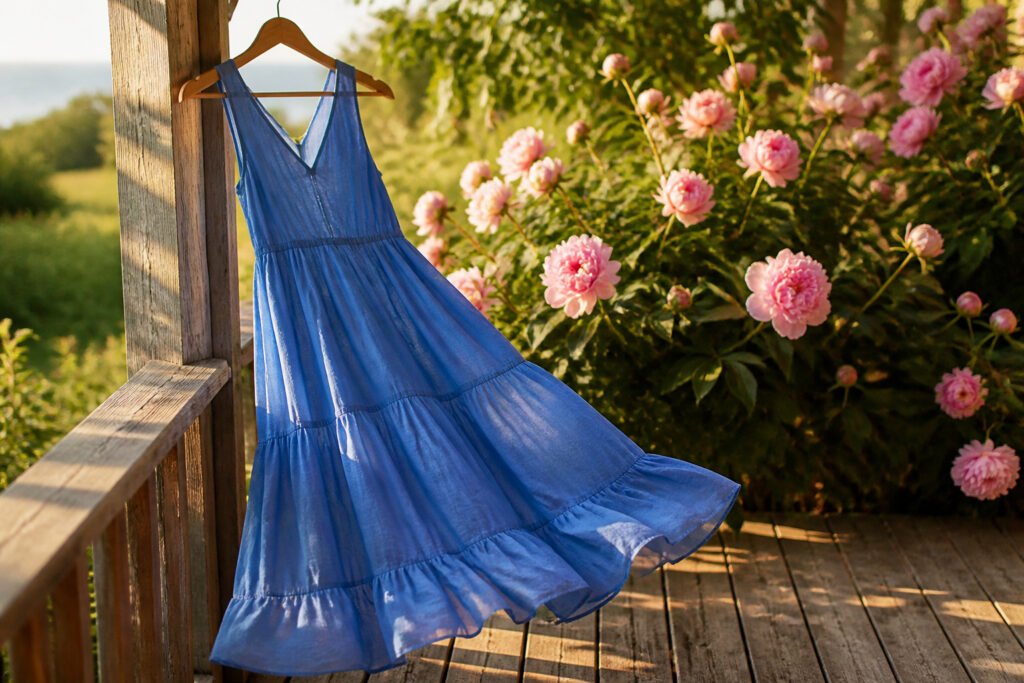
A blue summer dress works for warm weather only if the fabric lets air move through it rather than trapping heat against your skin.
The 17 styles below range from gauzy cotton tiers to seersucker midis, each chosen for how it performs once the temperature climbs past 80 degrees.
The Amira Tiered Cotton Midi, for example, floats its layers separately so you get movement without cling, while linen options like the Voluminous Belted Linen Midi accept wrinkling as part of the fabric’s character rather than a flaw to manage.
1. Amira Tiered Cotton Midi Dress
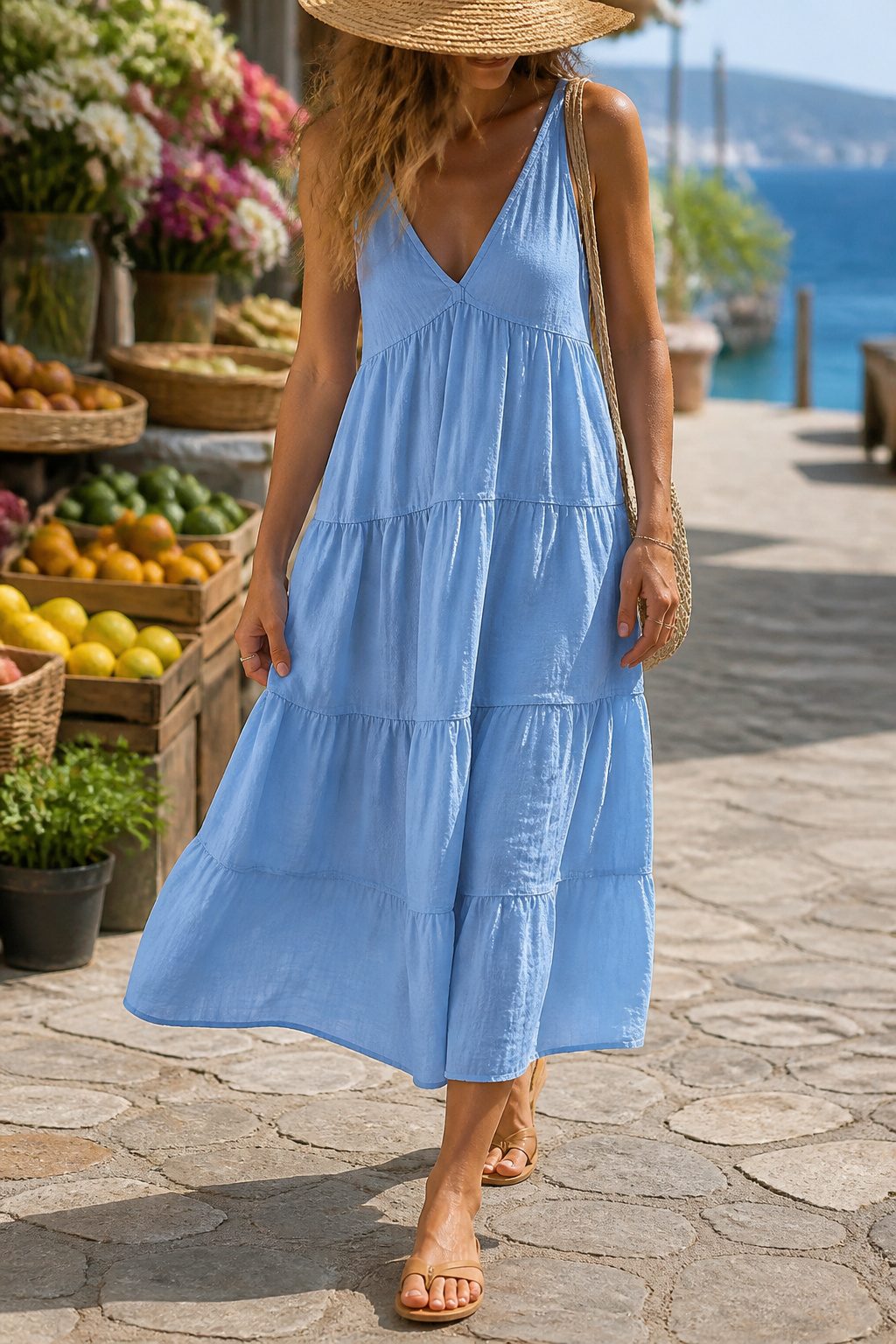
Gauzy cotton lets air move through the fabric rather than trapping it against skin, which is why the Amira Tiered Cotton Midi Dress works for real heat.
The tiered skirt adds volume without weight; each layer floats separately, so you get movement when you walk without the skirt clinging. That silhouette reads casual by default, but the midi length keeps it from looking beach-only.
I would wear this for daytime markets or a coastal lunch where you need to look put-together but will be outside for hours.
The sleeveless cut and V-neck are the right call for the fabric weight; anything more structured would fight the cotton’s natural drape.
Pair it with flat sandals and a wide-brimmed hat, and skip the belt. The tiers are the whole point, and cinching the waist breaks the line they create.
2. MEROKEETY One-Shoulder Smocked Midi
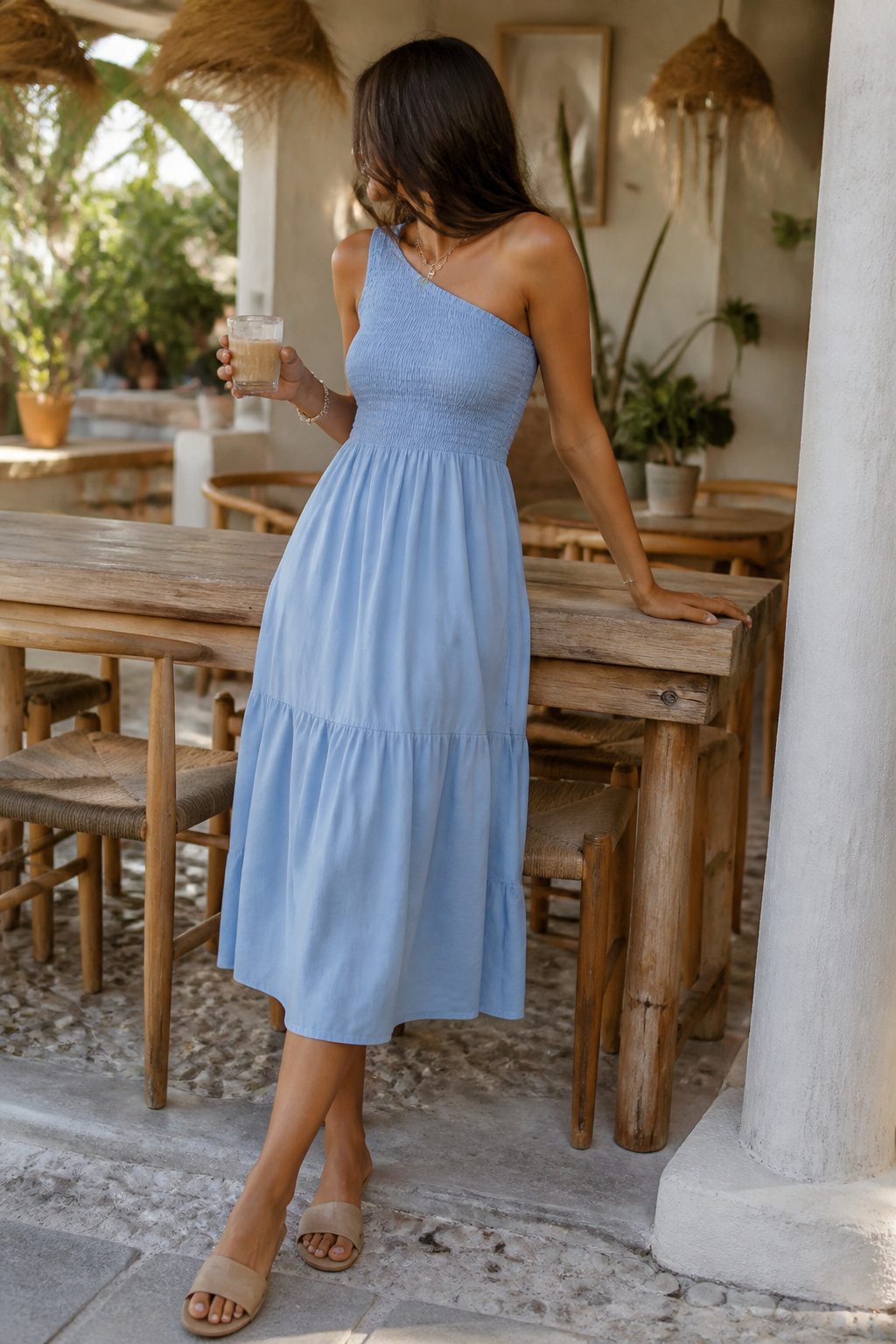
The smocked bodice on this one-shoulder style does the structural work so you do not have to think about zippers or hooks.
Elastic gathers pull the fabric close to the ribs and waist, which keeps the dress in place while you move.
The asymmetry of the neckline means one side stays open, so the smocking has to grip firmly enough that the whole bodice does not slide toward the bare shoulder across a day of wear.
I would want to test that personally: a tie knot at the shoulder adds decoration but does not adjust tension, so the fit depends entirely on the smocking’s recovery.
Cotton or a cotton-blend smock usually breathes better than synthetic, though it relaxes slightly faster.
For a beach party or an evening where you will sit, stand, and reach for a drink, the silhouette reads as relaxed rather than rigid, which is the point of the bohemian reference.
Pair it with heels if the event calls for polish, or flat sandals if the smocking has already done its job and you do not want to compete with it.
3. Voluminous Belted Linen Midi
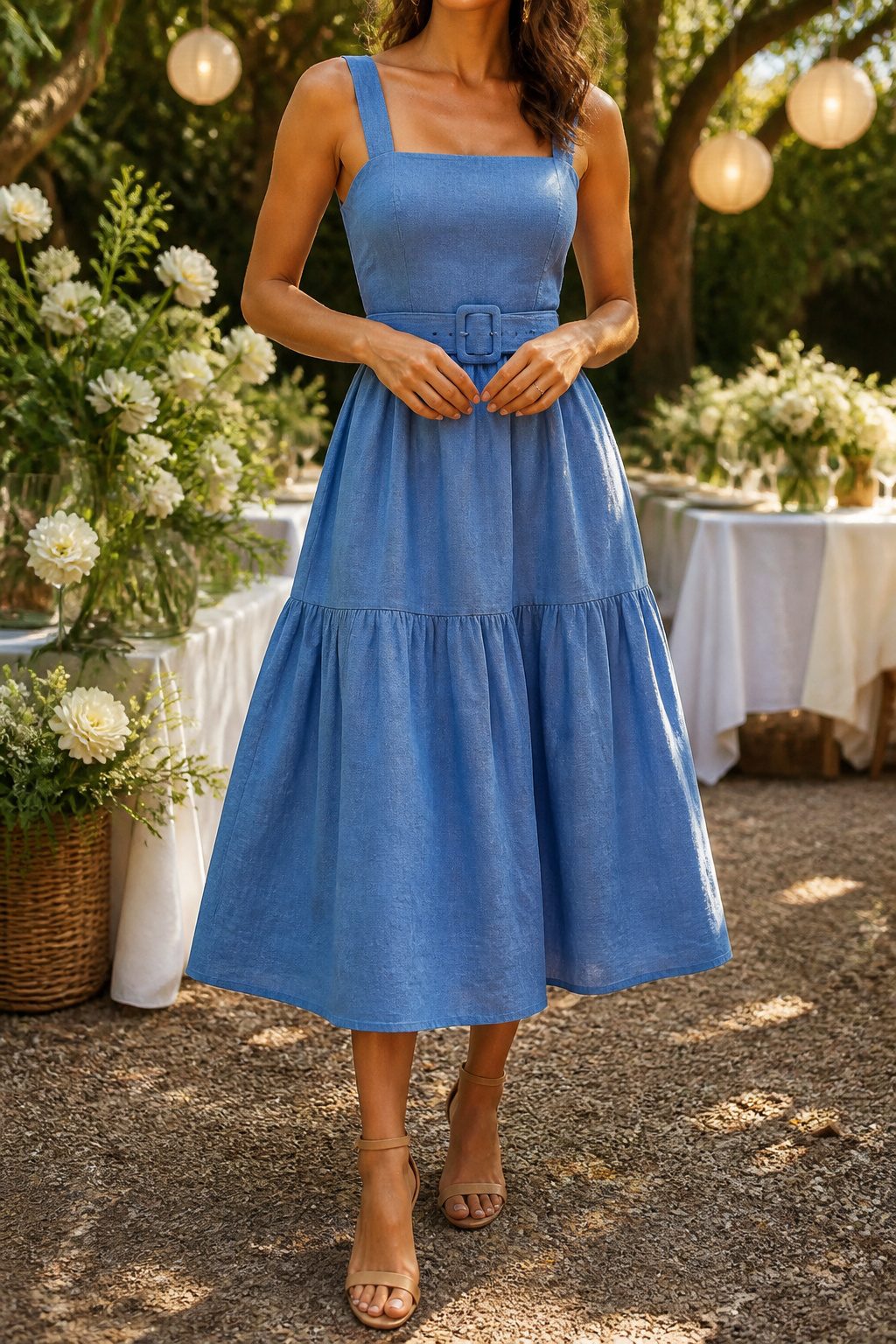
Linen with a square-cut neckline and fitted boned bodice gives this blue summer dress its architecture.
The square neck sits flat across the collarbone, framing that bone rather than the décolletage below. It is a precise line, and it reads as intentional rather than accidental.
The bodice is fitted and boned, which means the volume has to go somewhere else. It sits below the waist, in a skirt that is gathered or pleated into a square-buckled belt.
That belt is the single gesture that keeps the dress from reading as a tent; without it, the linen would simply fall. With it, the wearer gets a waist and the dress gets its shape.
Linen wrinkles.
That is not a flaw to manage but a behavior to expect. The wrinkles show at the points of compression: under the belt, at the seat, behind the knees if the midi hem hits low enough.
A fitted bodice in linen holds its structure longer than a loose one because tension resists the crumple. The skirt, being voluminous, hides its own creasing in the folds.
This is a dress for a garden party or an upscale brunch, worn with heeled sandals and very little jewelry. The linen does the talking; the accessories should not compete.
4. Striped Cotton Maxi Dress
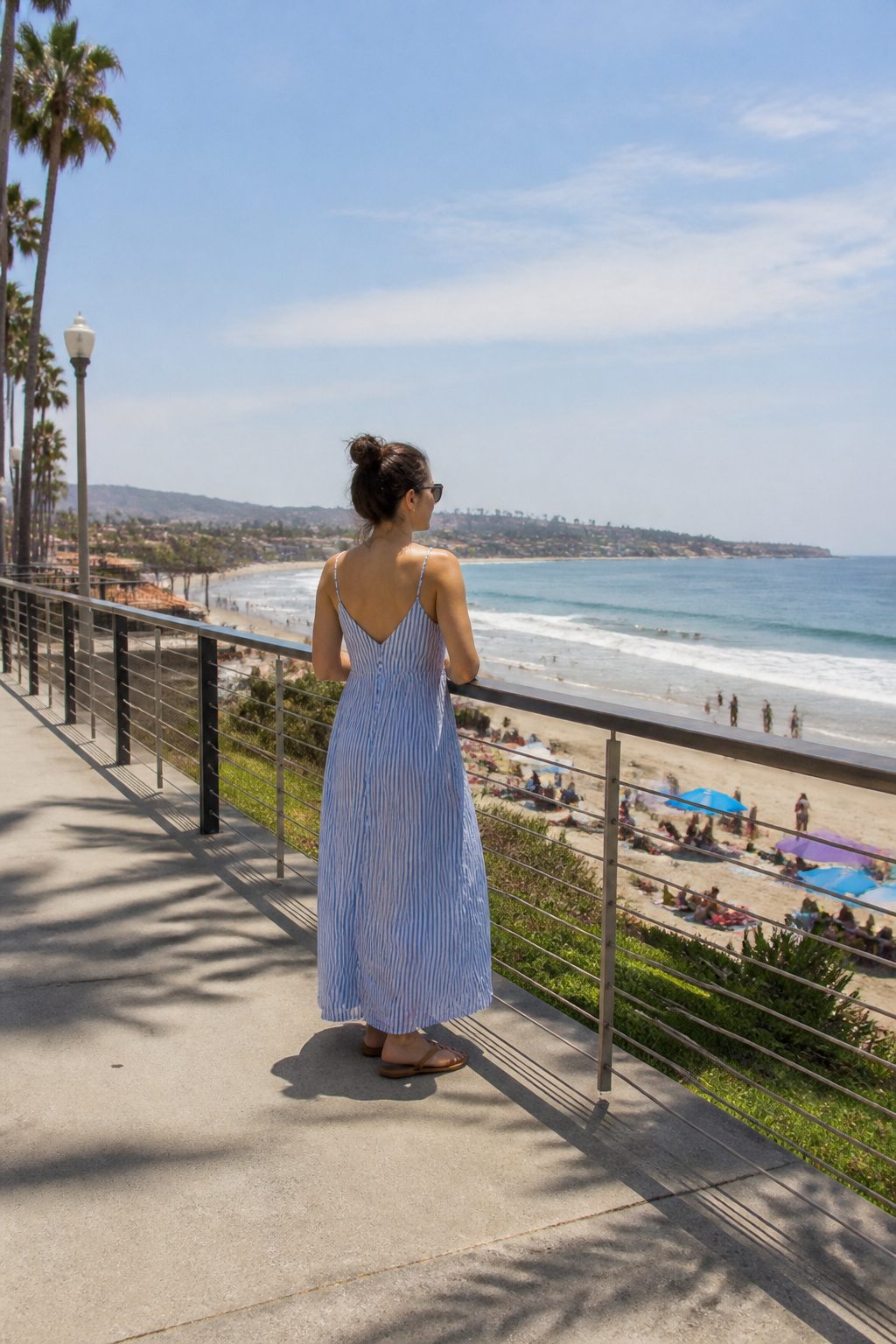
A blue summer dress in stripes lives or dies by the spacing. The Molly Bracken Striped Maxi Dress runs narrow bands across the bodice, which reads as texture up close and reads as solid color from across the room.
Wide stripes would have broken the vertical line and added width where the V-neck is already doing the work of narrowing.
That V sits at a functional depth: low enough to keep the cotton from climbing toward the collarbone in July heat, high enough that the shoestring straps actually hold the dress in place.
Shoestring width means the straps disappear into the stripe pattern rather than cutting across it, which matters if you plan to wear this from beach to dinner without a layer change.
Maxi length on a 5’3" frame pools differently than on 5’8". The stripe scale here is small enough that hemming two inches off the bottom does not throw off the rhythm; the eye keeps reading the pattern as continuous.
Taller wearers get the full elongating effect without alteration. Either way, the cotton mix has enough give to belt if the waist needs definition, though the stripes do most of the structuring for you.
I would skip the wedges the styling suggests and wear this with actual flat leather sandals. The dress is doing enough vertical work on its own.
5. Off-the-Shoulder Cotton Poplin Dress
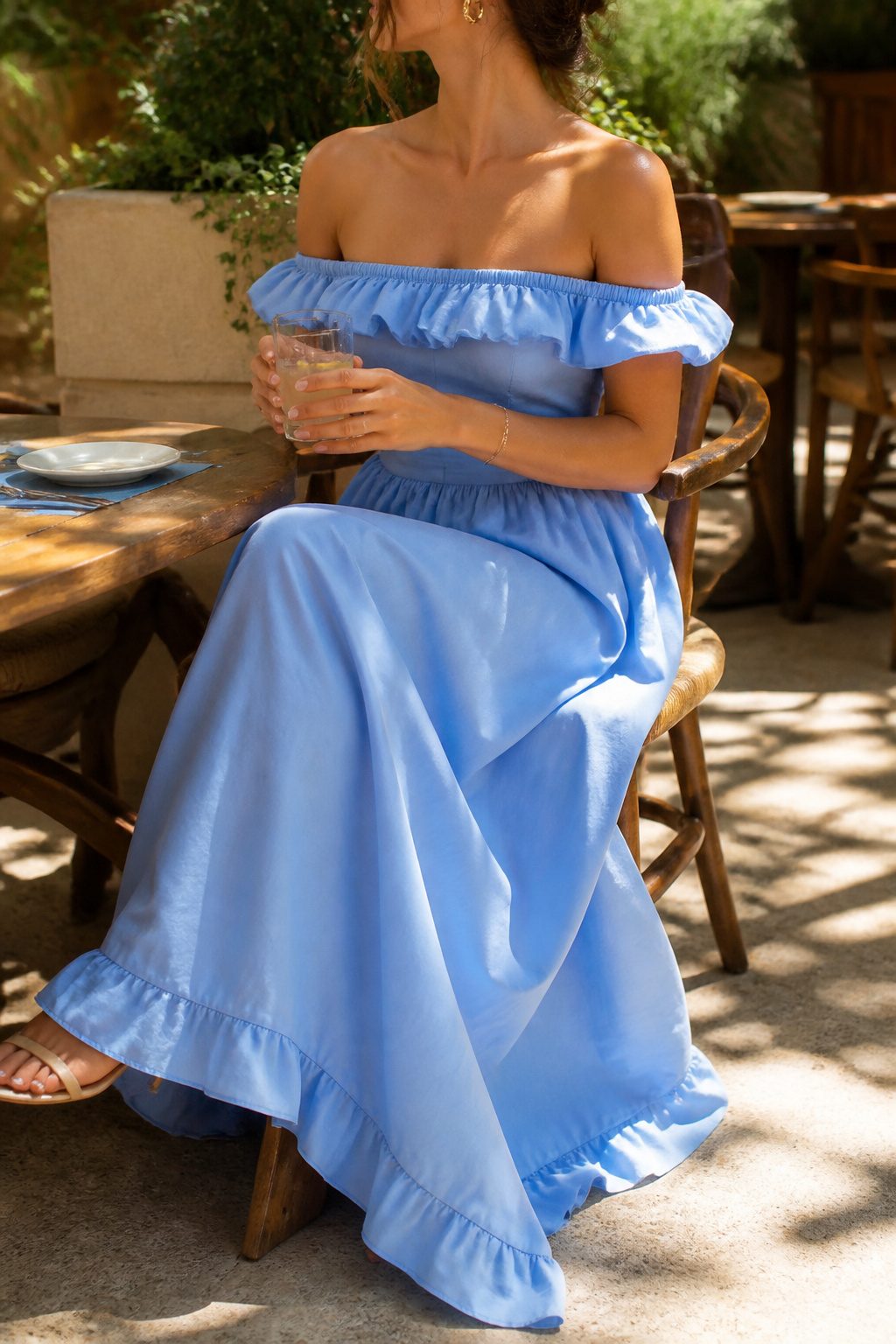
Cotton poplin makes the difference in an off-shoulder cut.
The weave is plain and tight, so the fabric springs back instead of sagging after an hour in humidity. Softer cottons like voile or lawn will drop their line by noon; poplin keeps the neckline where the elastic put it.
The engineering sits in the interior. A wide band of gripper elastic, usually silicone-lined, does the actual work of holding the dress up.
The frill trim along the top edge is decorative deadweight that works against that grip if it gets too deep. A frill under two inches reads as trim; anything deeper becomes volume that pulls the whole line downward.
I look for the narrowest ruffle the cut allows, or the dress spends the afternoon in my hands instead of on my shoulders.
The loose fit through the body is what sells it for heat, but you lose structure. Without a waist seam or belt, the dress is a column; the frill at the neckline becomes the entire silhouette.
That flatters a longer neck and narrower shoulder. On a broader frame, the same volume turns into width.
6. Sweetheart Sleeveless Stripe Midi
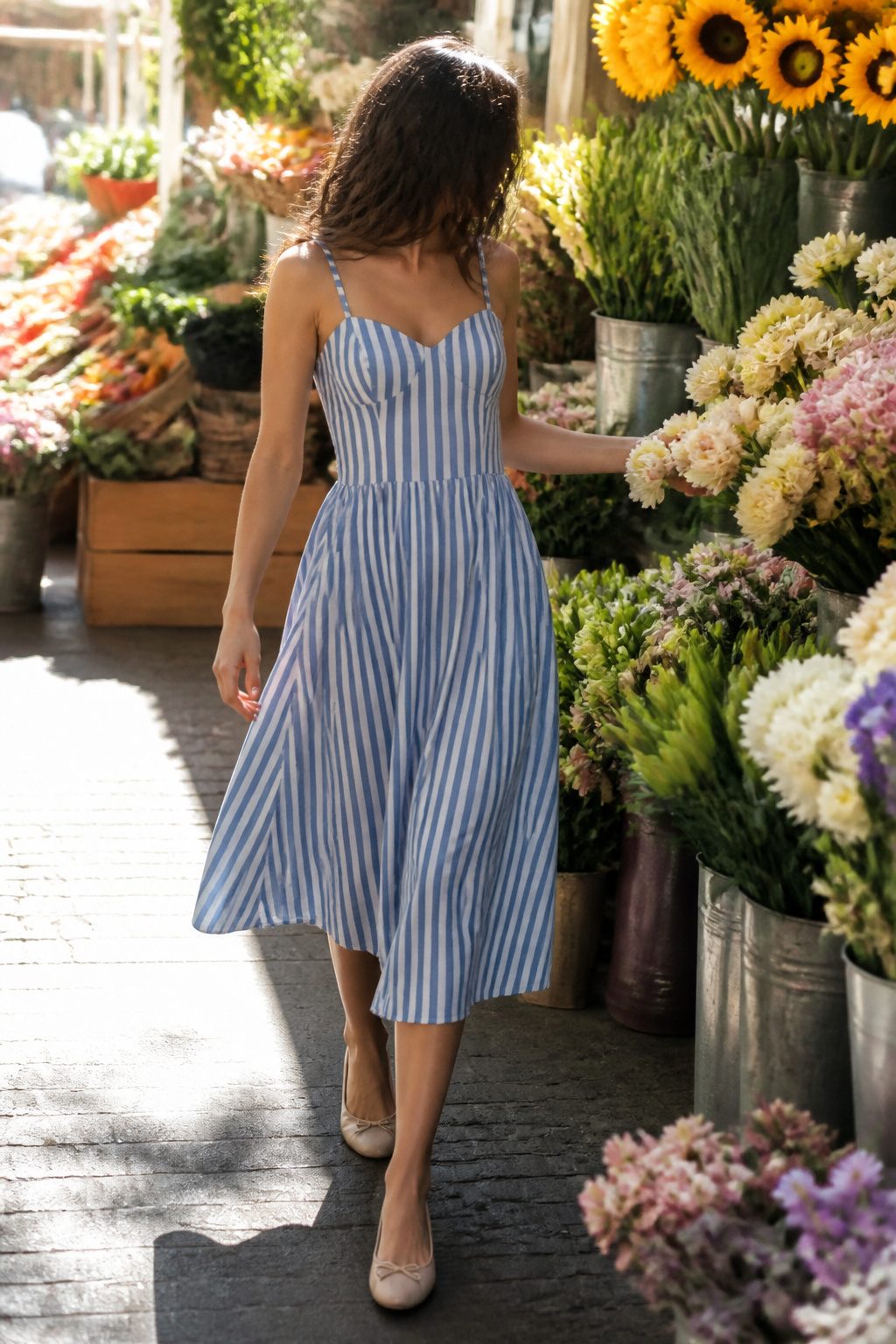
Crinkled cotton poplin earns its keep in a summer dress. The weave comes out of the wash with texture already intact, so you skip the iron on vacation mornings and the fabric still reads as intentional rather than slept-in.
The crinkle also keeps the striped pattern from looking too crisp or nautical-costume.
The sweetheart neckline here curves inward at the center rather than following a standard scoop’s softer arc.
That inward point draws the eye up and creates a natural frame for a necklace or bare collarbone. On a sleeveless cut, the contrast between the structured bodice and the bare shoulder keeps the look from tipping into too-sweet territory.
Stripe direction matters on this silhouette.
The bodice runs vertical, which lengthens the torso, while the skirt shifts to horizontal bands that catch air as you move. The flowy skirt needs that horizontal emphasis; vertical stripes down the full length would read more column, less breeze.
Ballet flats and a simple tote finish it, though the dress handles a low wedge just as easily if your day involves more walking than sitting.
7. V-Neck Lace Dress
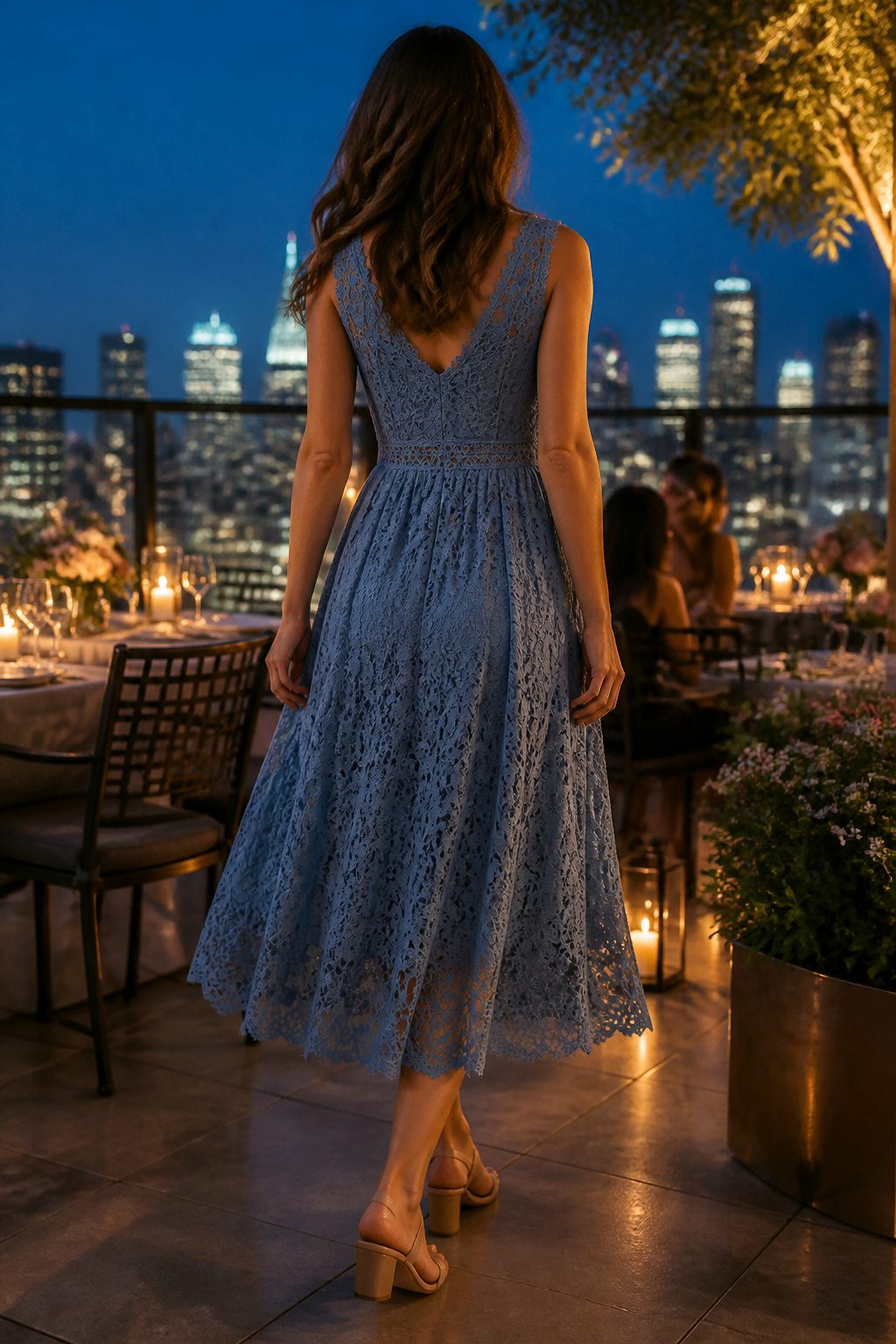
A calf-length cut with a fitted bodice and flared skirt gives this shape its balance, but the lace makes or breaks whether you wear it more than once.
Lace for summer needs to be fully lined in a separate, lighter layer, not backed with stiff poly that traps heat against your chest and back.
The fitted bodice in lace walks a narrow line: too sheer across the bust and the dress becomes a cover-up, too opaque and the lace loses its point.
I look for a bodice lining that stops just shy of the neckline so the lace pattern still reads against skin.
The flared skirt should start at or just above the natural waist, never at the hip, to keep the proportion from reading heavy.
Hitting mid-calf, the length works with a low block heel or a slim sandal without dragging. The real cost is maintenance: lace snags, and a flared skirt in motion catches on chair edges and bag hardware.
I would not buy this as a travel piece, but for a summer dinner where you will sit at a table and stand for photographs, the cut does exactly what it promises.
8. PRETTYGARDEN Halter Maxi Sun Dress
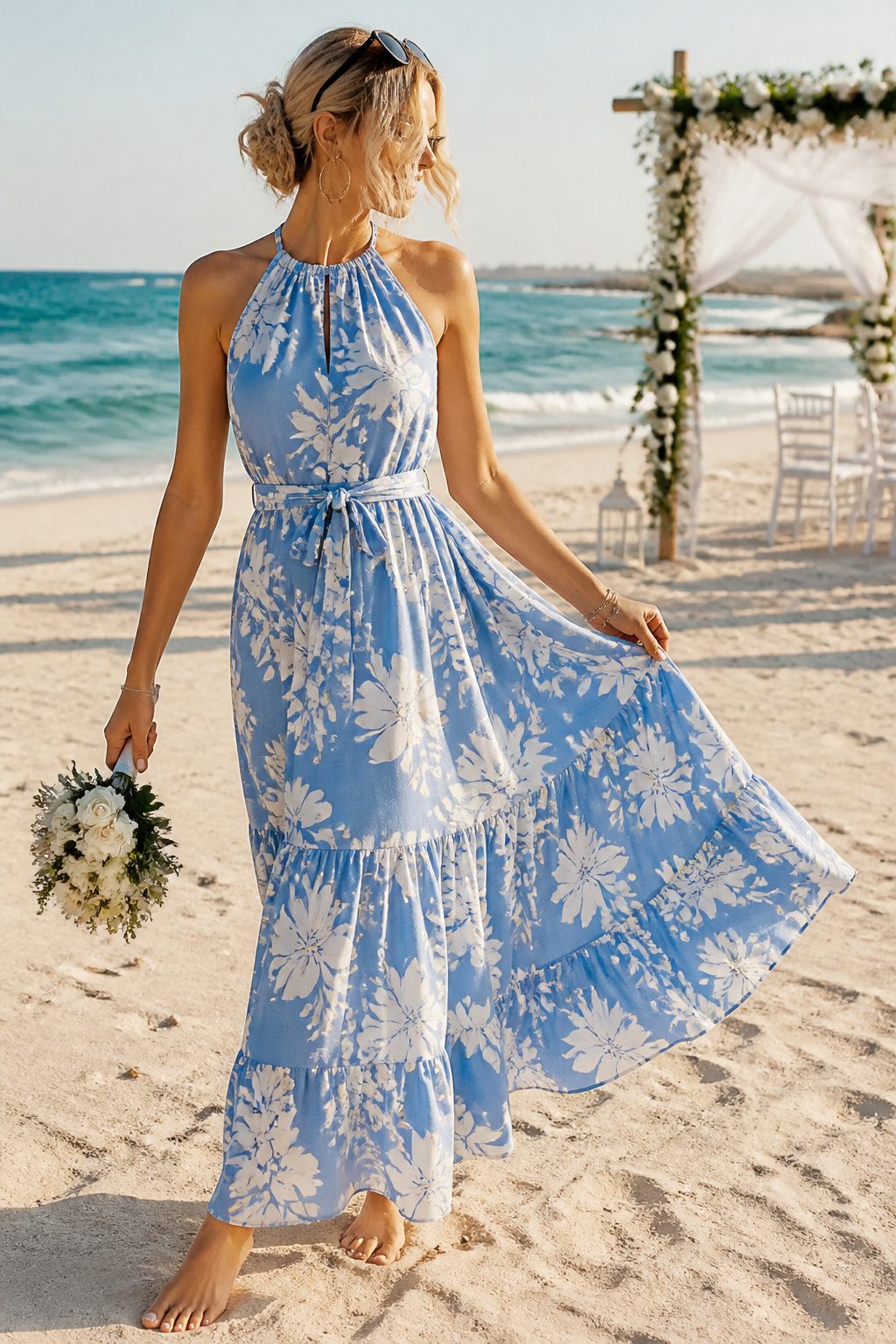
A halter neck redistributes the weight of a maxi dress away from the shoulders and onto the collarbone, which works well for smaller frames that can look overwhelmed by wide straps but may fatigue larger-chested wearers over a long day.
The PRETTYGARDEN’s floral print reads as a medium scale, large enough to avoid the busy, scattered look that drowns a taller frame yet not so oversized that it dominates a petite build.
The maxi length here functions as practical sun protection for the legs without reading as modesty coverage, since the open back and neckline keep the overall impression breezy rather than concealed.
The fabric weight matters: a lighter rayon or polyester blend will keep that full skirt from becoming a tent in humid air, while still skimming rather than clinging.
For a casual beach wedding or a farmers market morning, this is the dress that does the work of an outfit with almost no accessorizing, though a pair of wedges does help the hem clear the ground on shorter wearers.
9. Linen Midi Wrap Dress
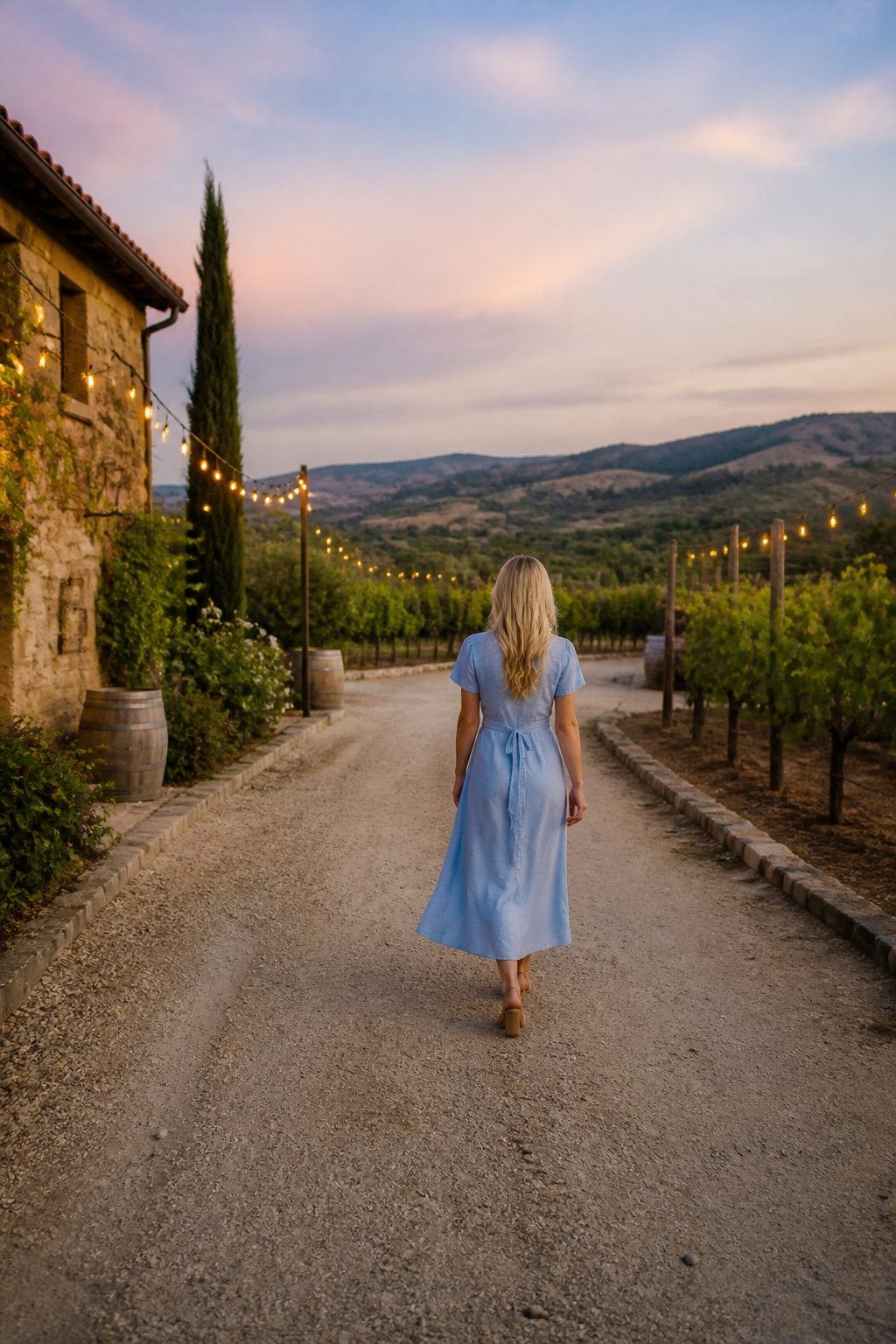
A linen midi wrap dress in blue reads vacation at first glance, but the cut matters more than the color.
The neckline drops to a V that sits secure without gaping, a detail that separates the keepers from the ones you tug at all day.
I look for a relaxed fit through the torso rather than a true wrap that cinches tight; the former skims without requiring constant adjustment and forgives the shift between a light breakfast and a heavy lunch.
The closure itself is the quiet selling point. A stitched or buttoned wrap front stays put on active days, which means you can chase a tram or a toddler without the fabric drifting open.
Linen earns its place in summer through weight and weave, though the real reward comes after a few wears.
The fibers soften and shape to the body in a way cotton rarely does, developing a personal drape that looks intentional rather than sloppy.
The tradeoff is the crease. Fresh linen wrinkles within an hour of sitting; I accept this as part of the fabric’s character, but someone needing pressed polish for client dinners should know it going in.
10. Blue Paisley Floral Halter Midi
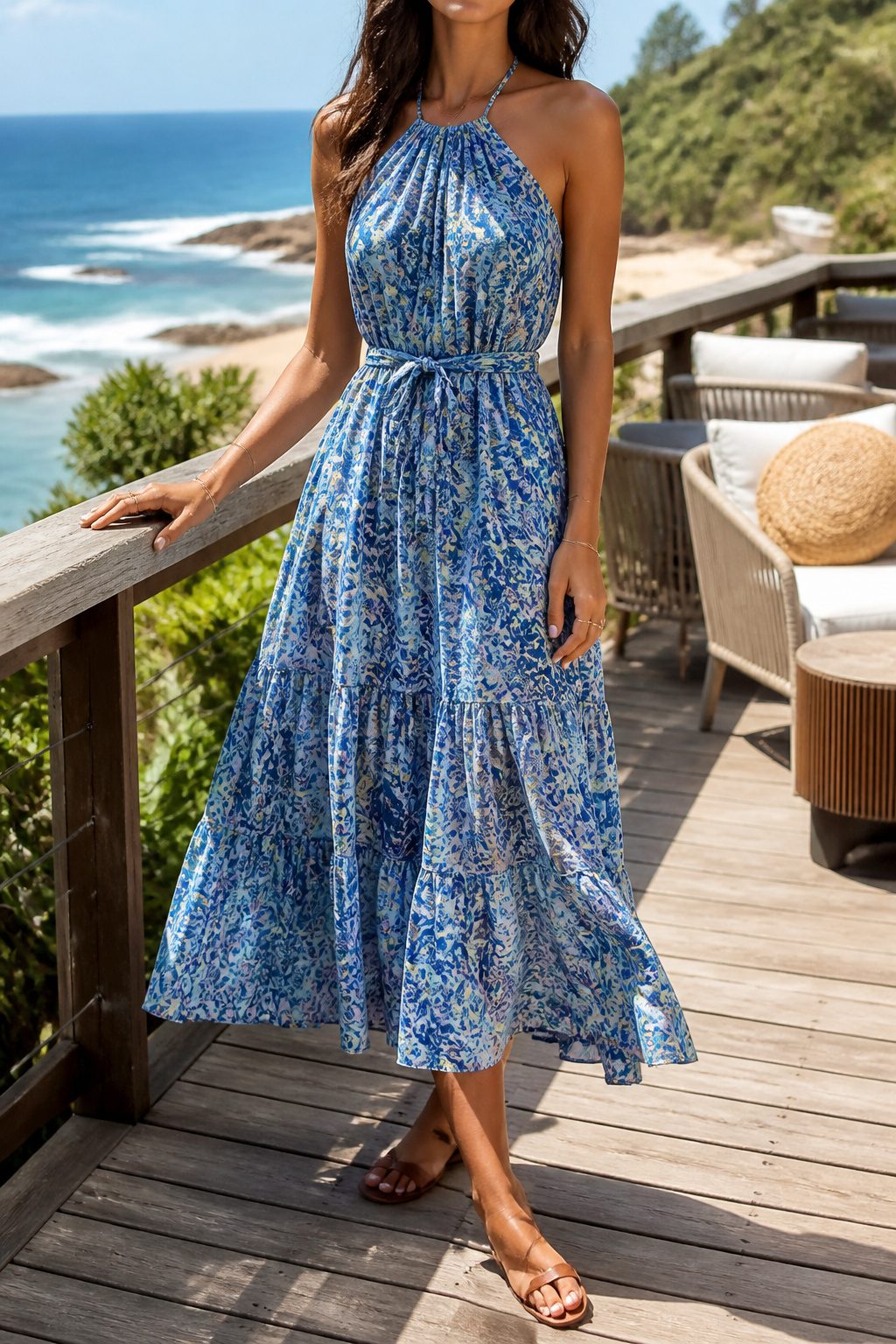
The self-tie belt sits at the natural waist and functions as an adjustable closure, which means the fit holds on days when humidity bloats the midsection or a heavy lunch shifts where the dress lands.
That adjustability separates this from fixed-waist styles that either gap or squeeze.
The paisley print runs at a medium-to-large scale, bold enough to read from across a patio without the busyness that ditsy florals bring to a halter neckline.
Small repeats compete with the straps and skin exposure; this scale lets the halter shape do its work.
The skirt starts its flow from that tied waist point, not from a seam lower on the hip.
The tiered construction gives it weight and movement rather than a flat drape, so it keeps its shape when you walk but does not cling.
For summer invites or a beachfront stroll, that combination of defined waist and moving skirt keeps the silhouette from going sack-like, which is the usual risk with halter cuts that leave the shoulders bare and the body undefined below.
11. Blue Ditsy Floral Halter Gypsy Dress
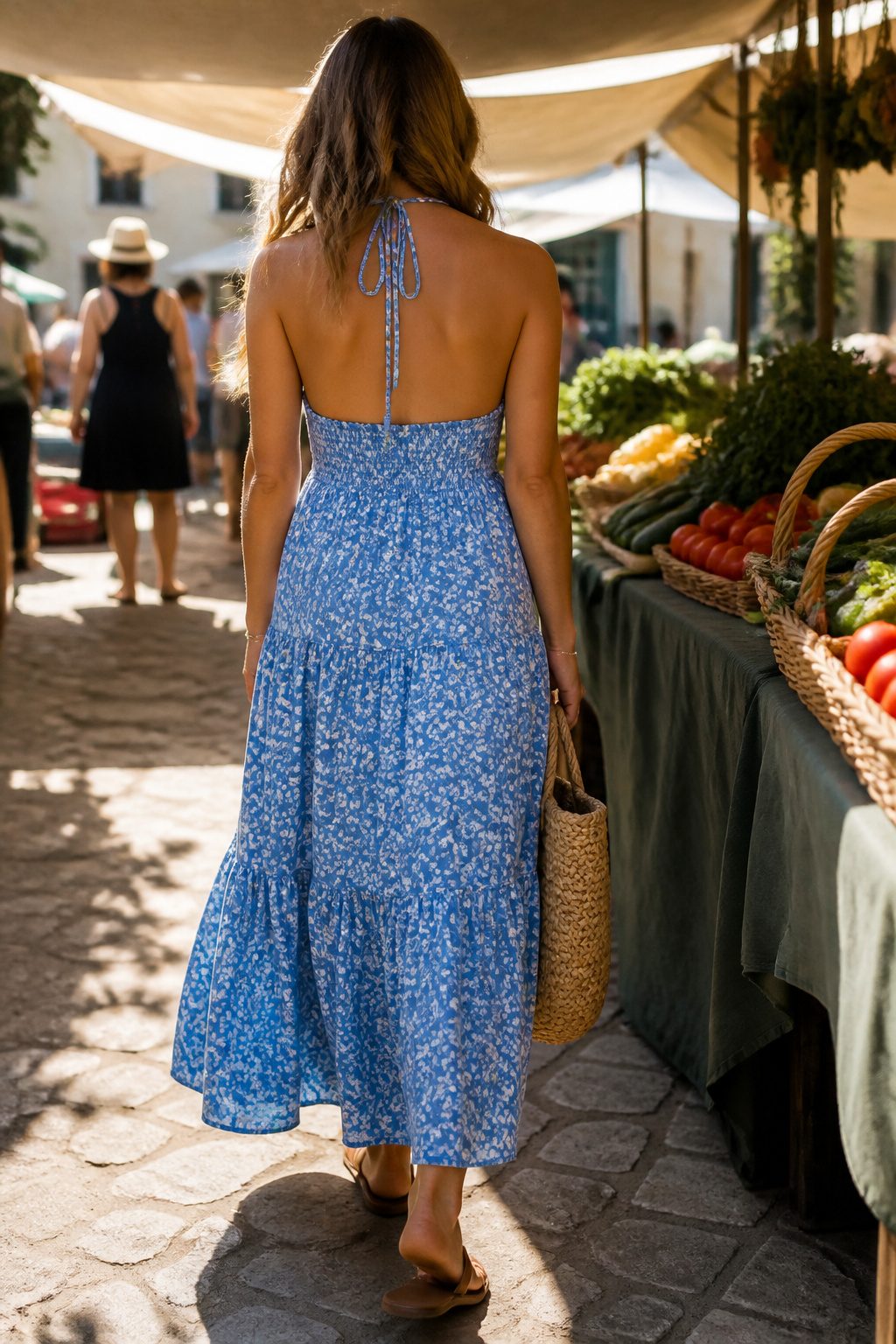
Ditsy prints and tiered skirts share a geometry problem. A ditsy pattern, with its small scattered motifs, keeps the eye moving across each horizontal seam without catching and magnifying the volume.
Larger florals break apart at every tier join, so the skirt reads as stacked bands rather than one continuous flow. On a gypsy-style halter with three or more tiers, that distinction matters more than the print color itself.
The halter neckline pulls the volume downward and leaves the shoulders bare, which helps balance the skirt’s fullness.
I would not wear this to an office meeting, but for a vacation dinner or a Saturday market, the reference translates cleanly enough.
The "gypsy" label here signals ruffled hem edges and a relaxed waist rather than costume; the modern version works because it borrows only the silhouette, not the styling.
A ditsy print keeps a tiered skirt from adding ten pounds of visual weight; that is the detail that decides whether this blue summer dress stays in rotation past one season.
Pair it with flat leather sandals and small gold hoops. The look needs no belt; the tiers provide their own structure.
12. Camille Cover-Up Dress
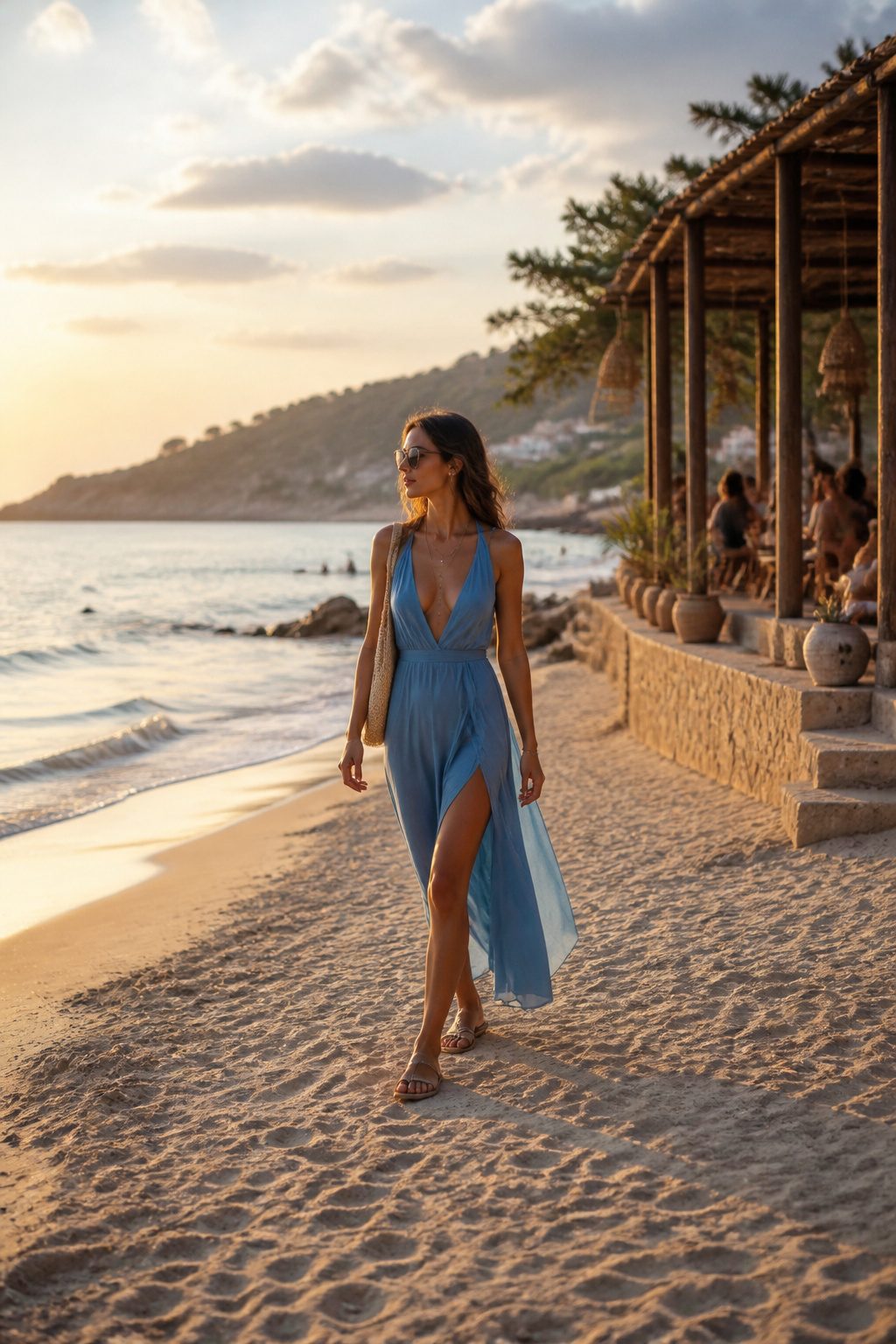
The Camille walks a line between beach cover-up and standalone dress that depends almost entirely on how the deep V sits in practice.
On most bodies it drops low enough that wearing it without a swimsuit underneath risks more exposure than a casual dinner allows, which keeps it firmly in the resort-day category for anyone who does not want to treat the neckline as a deliberate feature.
The side slit reads as structural rather than decorative.
It opens from the hem to mid-thigh, which gives actual stride room and keeps the fabric from clinging when you are walking off sand. That slit is doing work; it is not there just to break up a long seam.
If you already own a sleek sandal and a pair of statement sunglasses, those pairings make sense here.
The dress is cut to show skin, and the accessories should stay minimal so the neckline and the slit are not competing with hardware. I would skip a necklace entirely; the V is the only jewelry the outfit needs.
For women sizing up between cover-up and dinner-ready, the slit is functional enough to justify the purchase, but the V depth means this works best over a swimsuit or with a camisole layered underneath.
13. Midaxi T-Shirt Dress

A midaxi t-shirt dress lives or dies on where the hem actually lands relative to your calf.
The breakpoint sits at the narrowest part of the lower leg for most women, usually a few inches below the hollow of the knee.
Above that and the eye shortens you; below it and the fabric flares against the wider calf and the whole piece starts reading as a tunic you forgot to belt.
Jersey fabric compounds the problem.
A mid-weight cotton blend, around 180–220 grams per square meter, holds enough structure to read as intentional outerwear. Anything lighter than that collapses into an elongated tee plus belt, which is fine for errands but hits a casual ceiling fast.
You can push it slightly dressier with a cotton acadial rib or a modal blend that skims rather than clings, but the silhouette itself resists heels or structured bags.
The crew neck and short sleeves frame it as daytime almost by default.
I count this as the safest entry point for a blue summer dress, not the most exciting. It works on planes, it works for coffee, and the midaxi length keeps you from feeling underdressed at either.
Just check the fabric weight before you order, because the product photo never shows the difference between a dress and a very committed undershirt.
14. Sleeveless Corset Bodice Dress
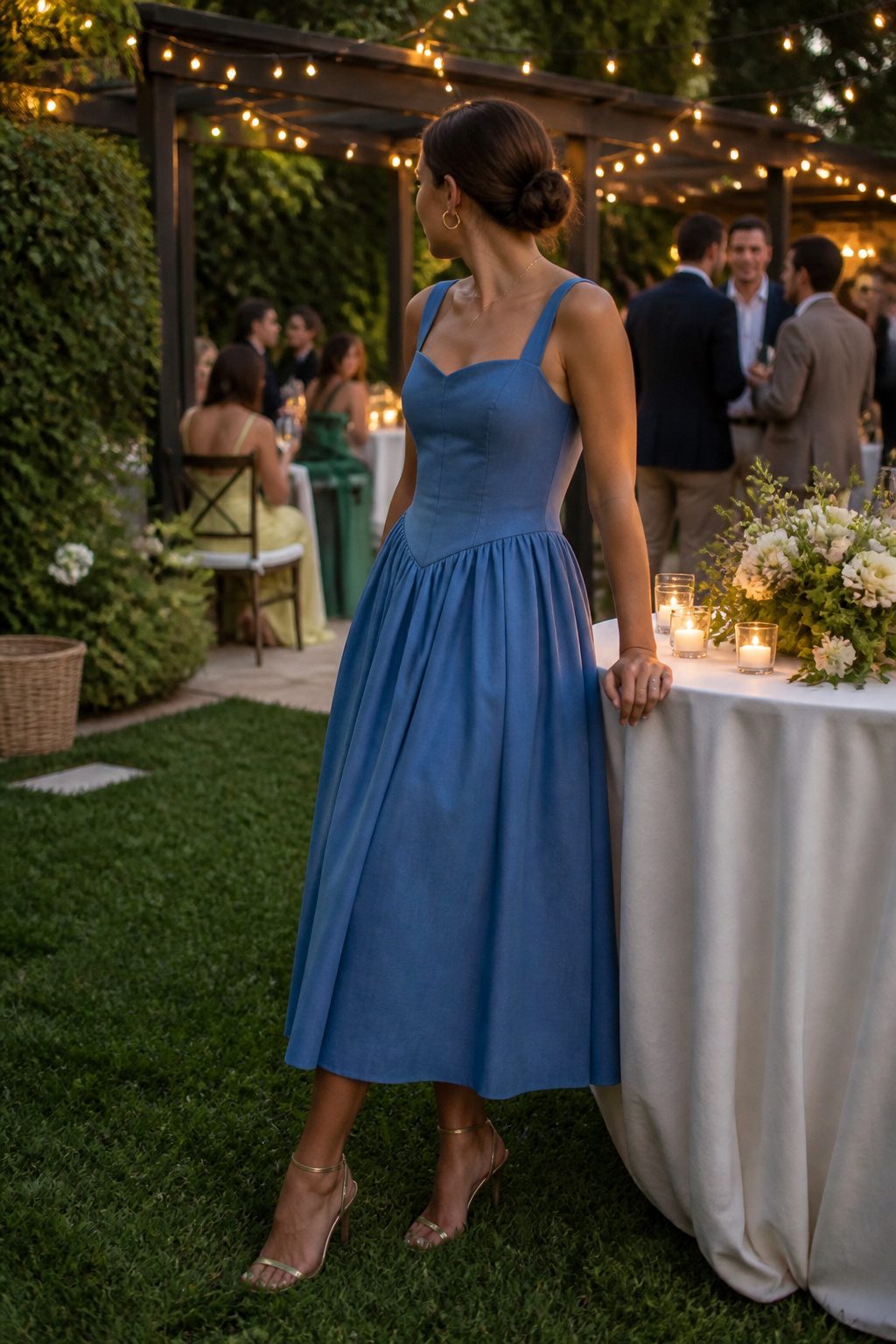
A sleeveless corset bodice dress gets its structure from dense seaming and a close cut through the torso, not from boning, so the bodice holds shape without the rigidity of formal eveningwear.
The gathered skirt releases directly from that fitted waist, which gives the silhouette its balance: the volume starts precisely where the bodice ends, rather than drifting from the hip.
In practice, this lands closer to evening weight than day dress. The construction reads dressed-up, and the pairing that makes sense is heeled sandals with minimal jewelry.
For a daytime blue summer dress, I would look toward lighter construction elsewhere in this list; this one earns its place for occasions that run past five o’clock.
15. Print Maxi Dress With Keyhole
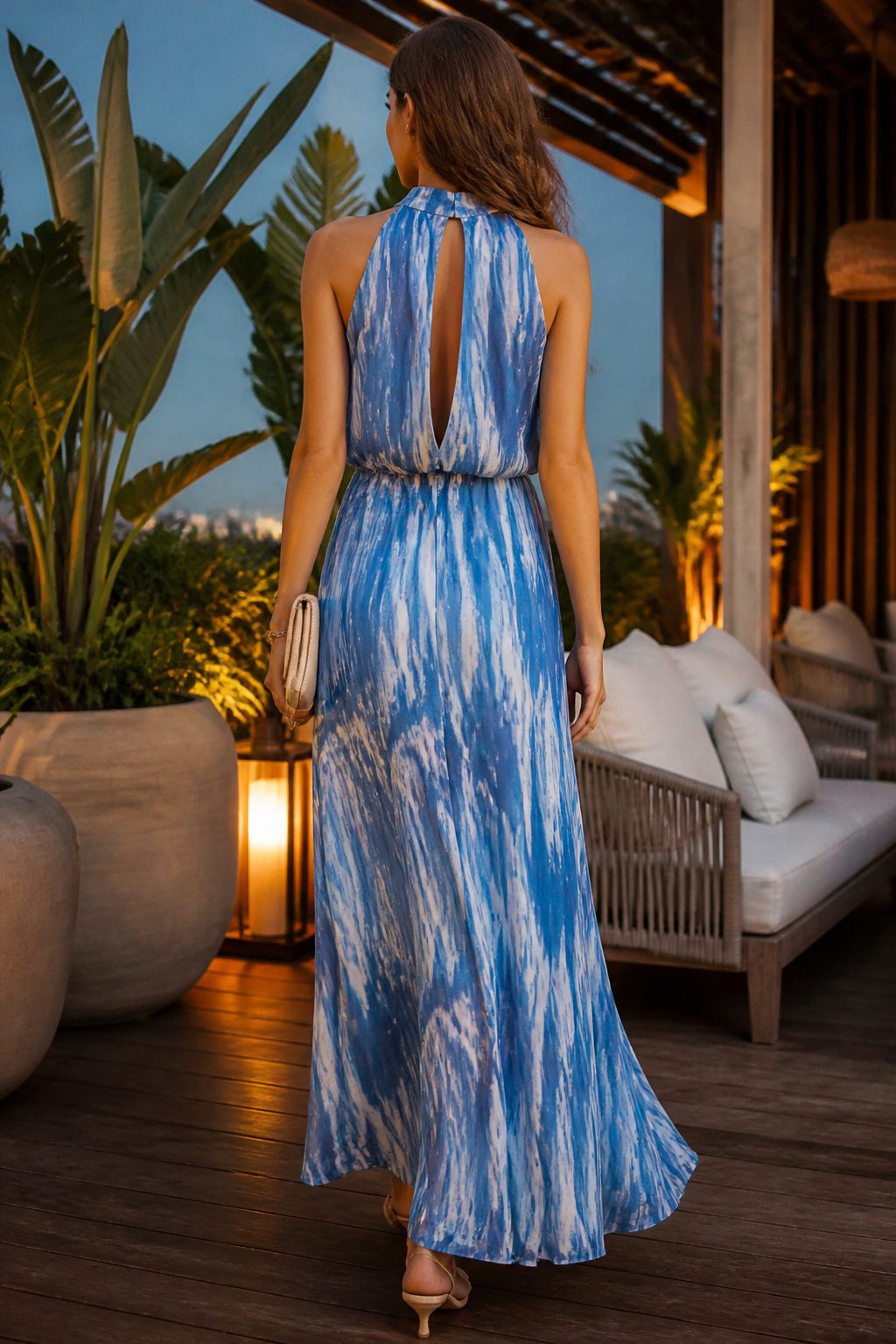
An abstract pattern on a maxi length behaves differently than a floral.
Florals usually read as a repeating motif that breaks up the silhouette, but stripes and shapes on this scale pull the eye vertically, which helps a long dress feel purposeful rather than overwhelming.
The keyhole sits at the back neckline, so from the front you get a clean, uninterrupted line that photographs well, and the cutout itself adds ventilation without exposing much skin.
Where the eye travels matters for how this reads on your body. The pattern keeps attention moving, and the keyhole gives it a stopping point at the upper back rather than letting the print blur into one mass.
I would wear this to a day-long event where I need to stay cool and still look pulled together; the source pairs it with sandals, and that tracks, since anything heavier would fight the dress’s own movement.
The trade-off is that a busy print plus a long hem can feel like a lot of fabric if you are under 5’4", so proportion matters more here than with a simpler blue summer dress.
16. ANRABESS Square Neck Ruffle Maxi
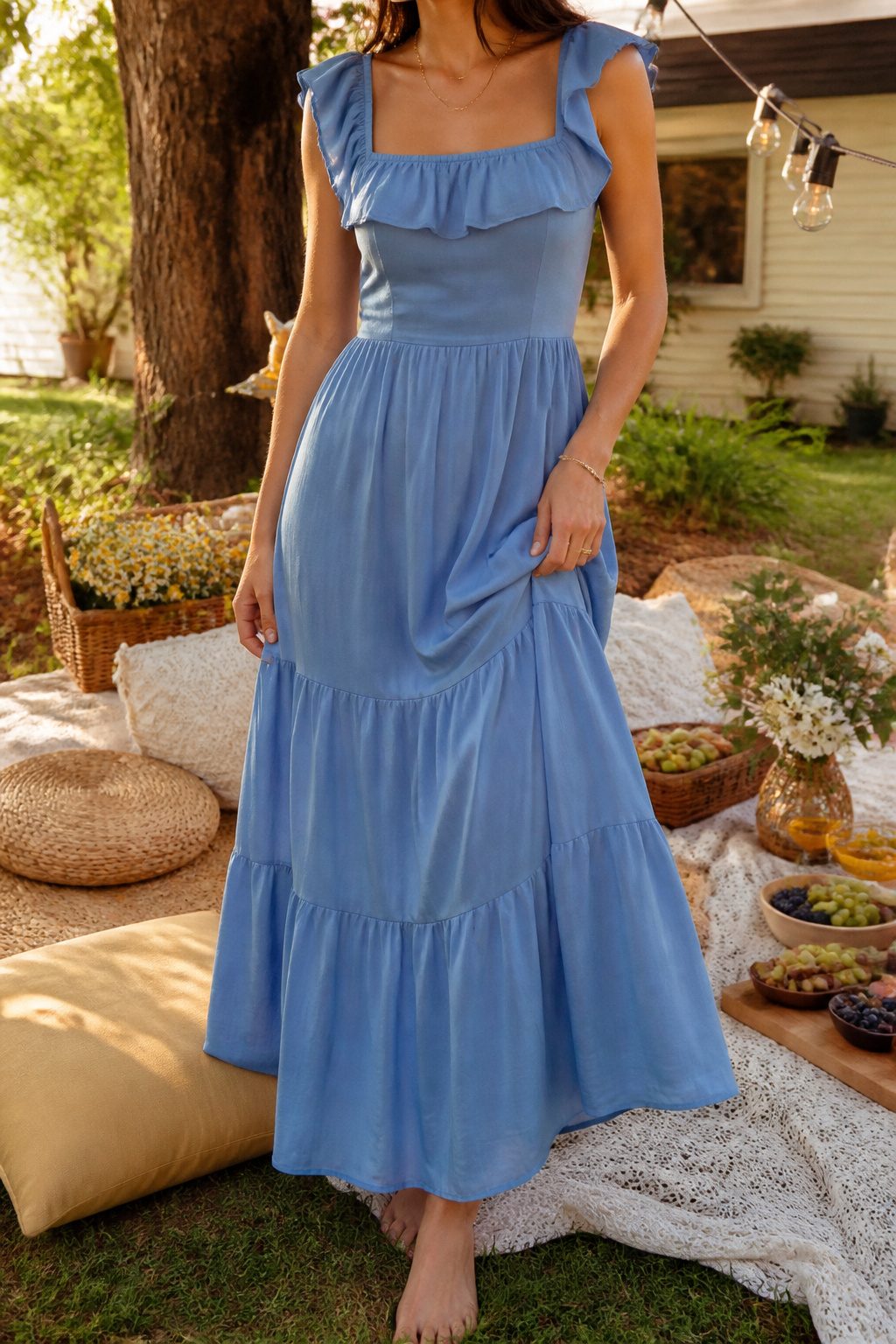
Square necklines sit at the edge of the shoulder rather than floating above it, which means the ruffle on this ANRABESS dress likely starts right at the armscye and drapes inward rather than framing the collarbone from above.
That placement keeps the neckline clean for jewelry while the sleeve volume adds width through the upper body.
Pockets in a maxi dress are worth more than they get credit for; at floor length, you are not grabbing a bag for a quick errand, and a phone or keys need somewhere to land.
The tiered skirt gives the pocket bulk somewhere to hide, unlike a sheath where contents print through.
The smocked bodice pulls the eye to the waist, so the squared-off neck and ruffle sleeves balance the horizontal line without competing for attention.
For a reader after a blue summer dress that reads bohemian without veering costume, this silhouette does the work of styling itself: add sandals and one layered necklace, and the outfit is complete.
17. Floral Seersucker Midi Dress
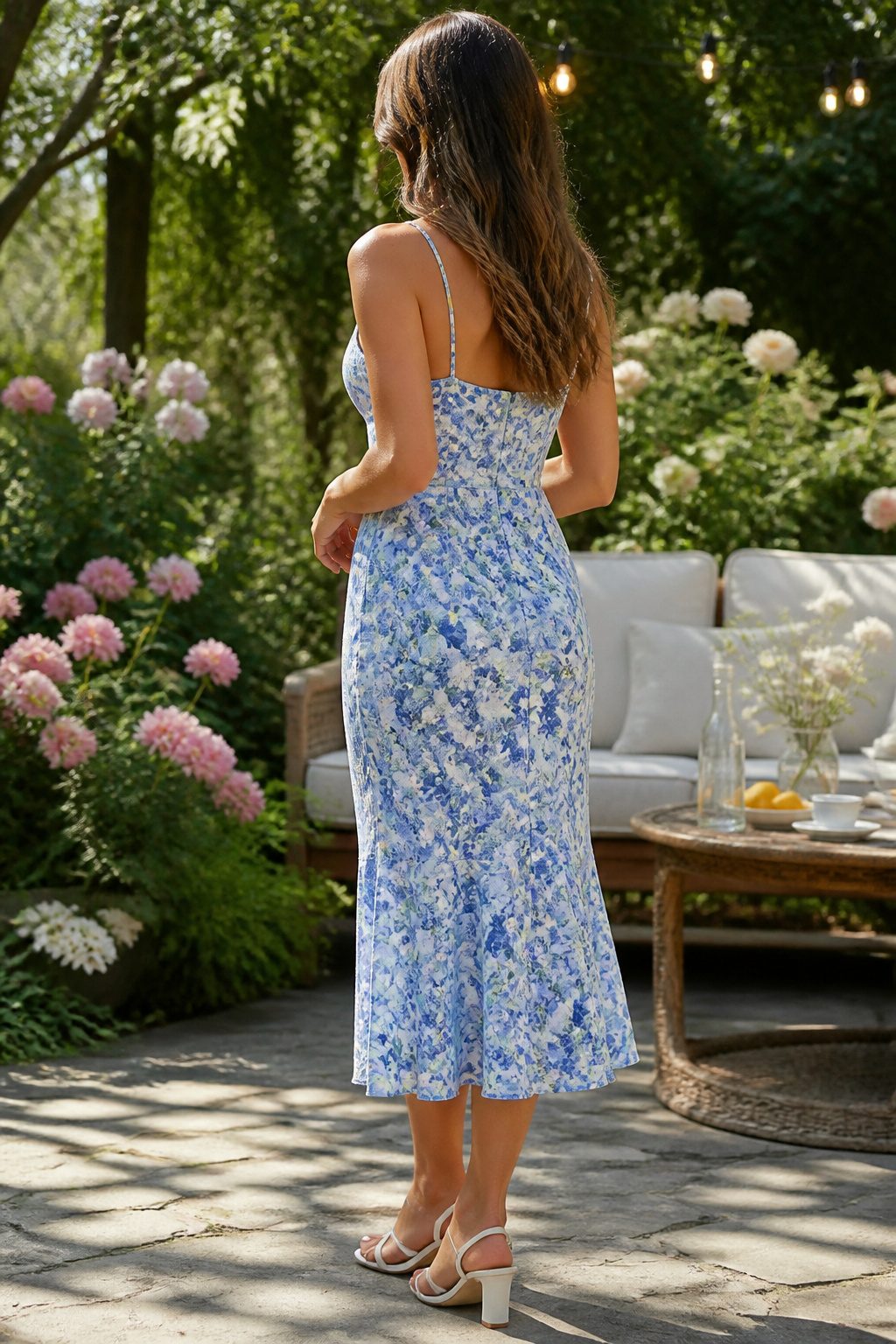
A blue summer dress in stretch-kissed seersucker forgives more than you’d expect from a fitted midi.
The fabric carries enough give, maybe three to five percent elastane woven through the puckered cotton, that the bodice settles against your frame without requiring the exact waist-to-hip ratio the pattern assumes.
That tolerance matters on days when humidity bloats you half a size, or when you’re between bodies after winter.
Adjustable straps are the quiet fix most dresses skip. They let you raise the neckline for a longer torso or drop it to keep the waist seam sitting where it should on someone shorter through the midsection.
I consider them non-negotiable on any midi that hits below the knee, since an inch of strap length changes whether the skirt reads as proportional or overwhelming.
Seersucker’s raised stripe structure holds the cloth slightly off skin, creating channels for air that cotton broadcloth simply doesn’t.
It dries faster than flat-woven cotton and rarely needs ironing, which is why the fabric has survived a century of Southern summers without looking like costume.
The floral print here reads garden wedding rather than office picnic; I’d wear it to both, but I’d add a structured sandal for the former and a flat leather slide for the latter.
Cotton and Linen Fabrics for Heat
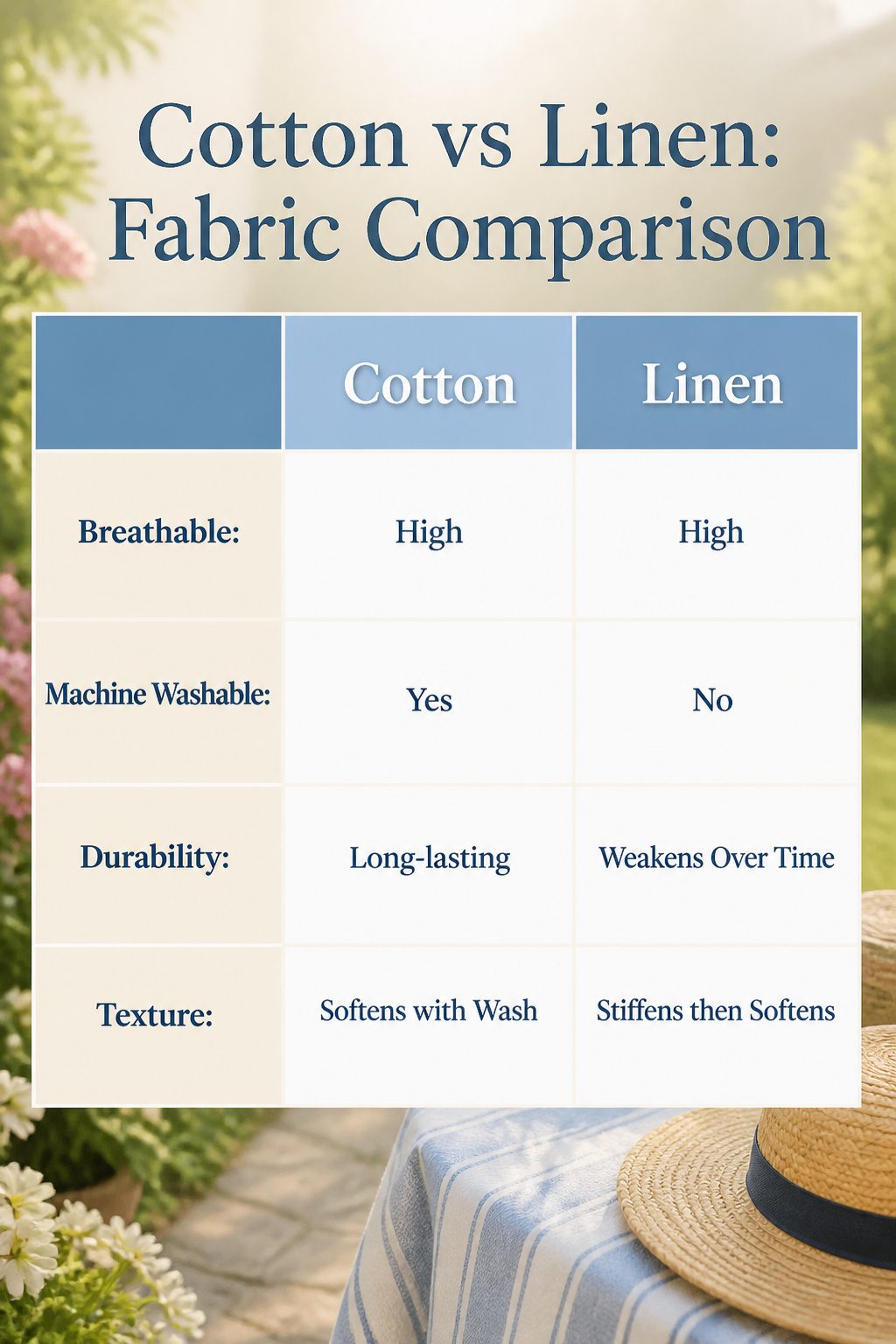
Breathable fabric is the difference between a blue summer dress you reach for all season and one that stays folded in the drawer.
Cotton and linen handle heat by letting air move through the weave, which matters more than the cut or color once the temperature climbs past 80 degrees.
Machine washable is the practical detail that makes cotton everyday-wearable. It softens with each wash rather than breaking down, so a tiered cotton midi in gauzy weave actually improves over the first few wears.
Linen wrinkles more and stiffens when line-dried, but that same rigidity relaxes into a drape that feels lived-in rather than sloppy.
I would take linen for garden parties and long lunches where the texture reads as intentional, cotton for errands and travel where wash-and-wear reliability wins.
Durability splits the choice.
Cotton holds color longer through repeated washing. Linen weakens at crease points over years but stays cool in a way cotton never quite matches.
Neither demands dry cleaning, and both age visibly, which I consider a feature: the dress that records your summer in softened fibers beats the one that looks identical in August to how it looked in May.
Why Blue Works Across Skin Tones
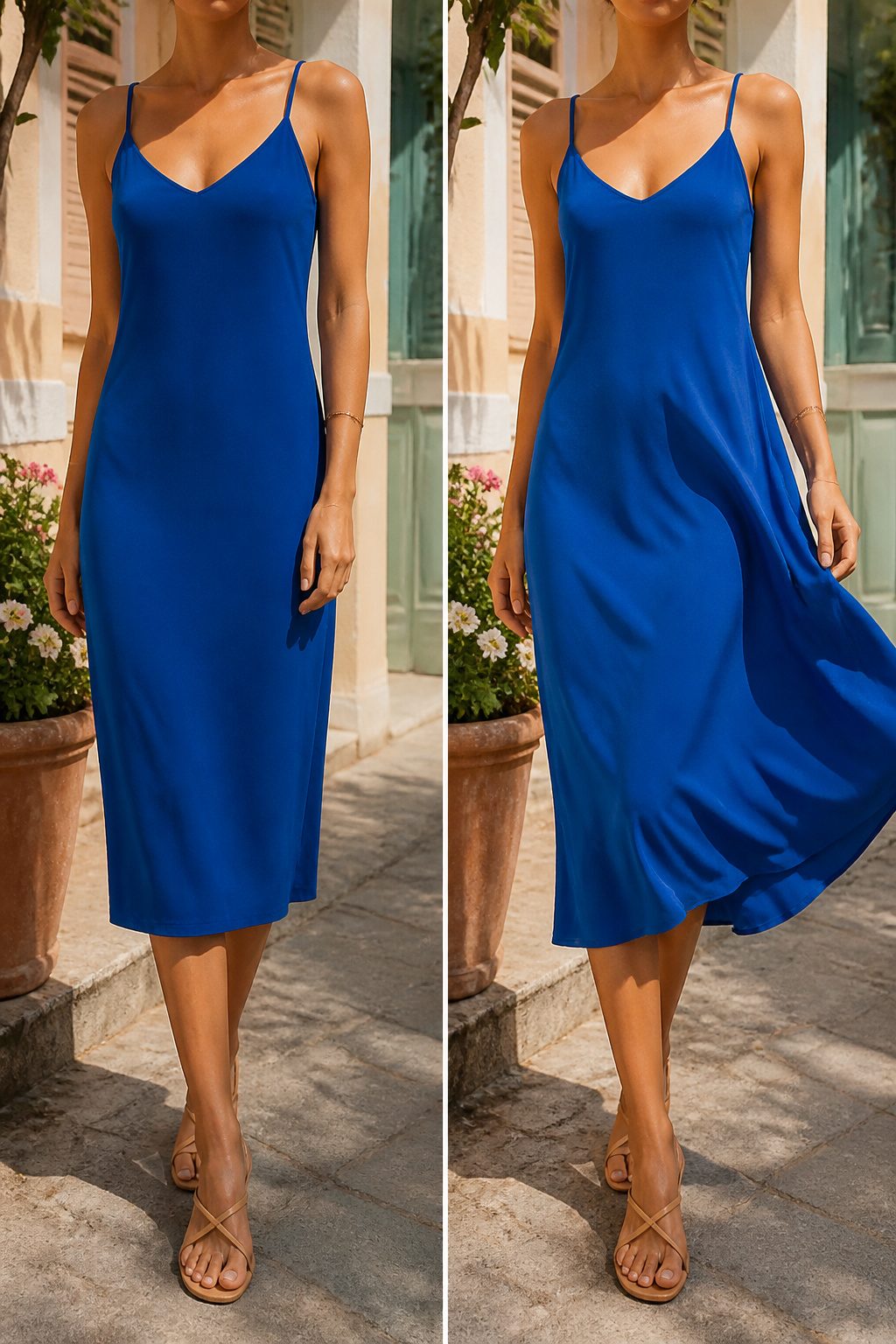
Cool tones sit opposite the warm reds and oranges in a color wheel, which is why a blue summer dress tends to settle a complexion rather than fight it.
Sky blue brings light to olive or deeper skin; navy does the same for fairer tones by adding contrast without the harshness of black.
Cobalt sits in the middle, formal enough for a dinner reservation but still bright enough for a Saturday market.
The cooling effect is not just metaphor. Blue recedes visually, so the color itself seems to drop in temperature against skin on a humid day.
That makes accessorizing simpler than with a pattern-heavy piece: tan leather or warm gold against blue reads intentional, not busy. Silver and white work, though they can push the look toward nautical costume if the shade is already maritime.
Navy shifts a dress into office territory, sky keeps it casual, and cobalt straddles the line.
The fabric matters here; a cobalt linen reads weekend, while cobalt crepe reads event. For a single purchase that has to do both, I would take navy in a breathable weave and let the shoes carry the mood.
Sandals to Heels
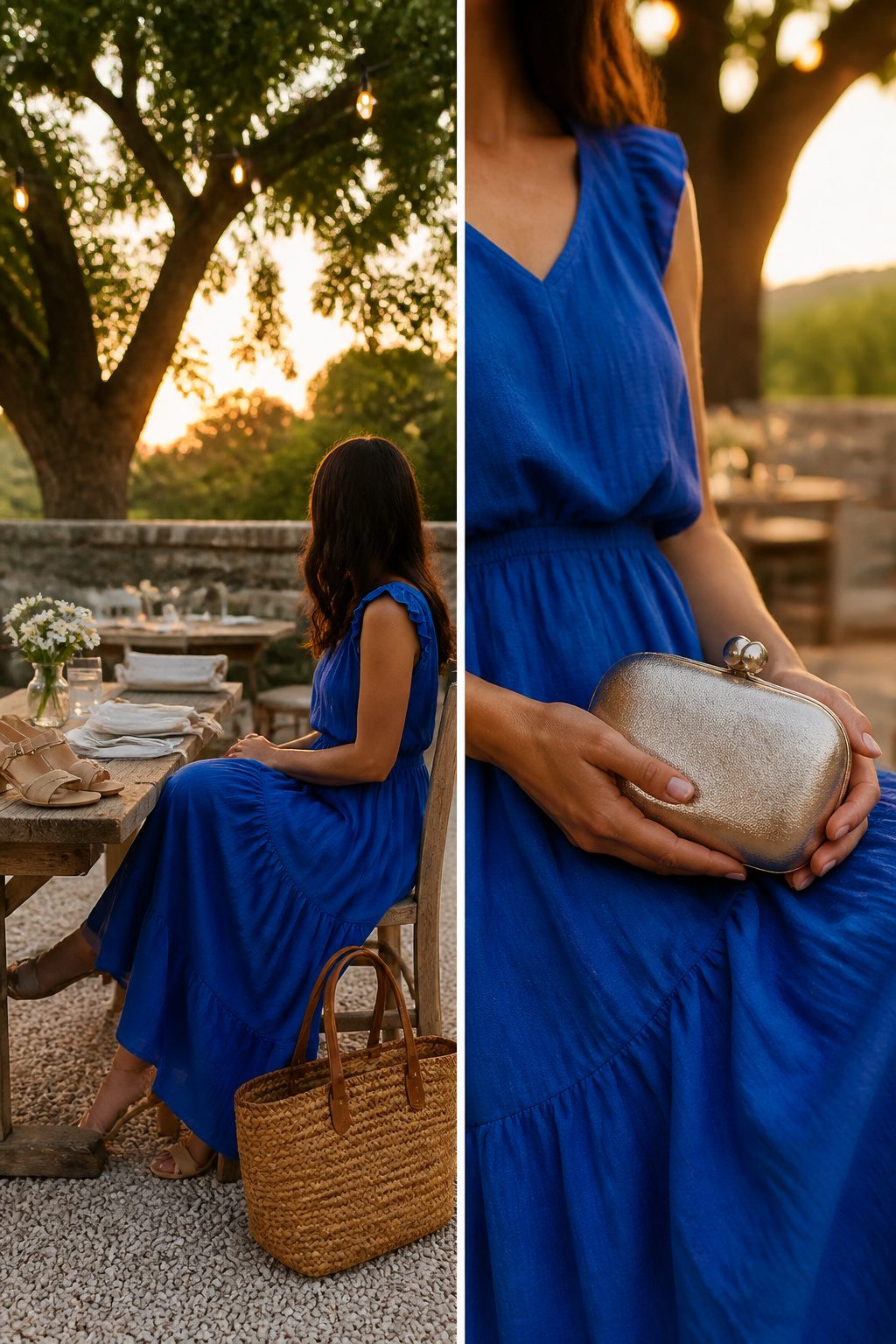
A blue summer dress shifts from daytime to evening with footwear choice and the finishing pieces around it.
Flat leather sandals keep the look grounded for errands or lunch; the same dress with a slim heeled sandal and a swap of bag turns sharp enough for a reservation.
For daytime, I like a straw hat with a brim under three inches so it does not compete with the dress line. Small gold hoops and a crossbody bag in tan or natural leather finish without shouting.
Stop at two accessories, not four. A woven tote works only if it is structured; slouchy versions look like you grabbed beach gear.
Evening asks for subtraction. Drop the hat, switch to a clutch or small chain-strap bag, and add one piece of jewelry with presence: a cuff, or a pendant that sits at the collarbone, not both.
Heels should be walkable; a block heel or modest stiletto you can stand in for two hours beats a pair you carry by eleven.
Frequently Asked Questions
Why are blue summer dresses a must-have?
Blue summer dresses work across settings because the color flatters every skin tone and carries a natural cooling effect in heat.
Cotton and linen weaves in this shade let air move through the fabric, keeping you comfortable past 80 degrees. The color also pairs cleanly with sandals, heels, or minimal accessories without clashing.
What styles of blue summer dresses are available?
The 17 styles covered include tiered cotton midis, one-shoulder smocked cuts, belted linen midis, striped cotton maxis, off-the-shoulder poplin, sweetheart sleeveless, lace calf-length, halter maxis, wrap dresses, paisley and ditsy floral halters, cover-ups, midaxi t-shirt dresses, corset bodice designs, keyhole maxis, square-neck ruffles, and seersucker midis.
Each uses fabric weight and cut to suit different occasions from beach mornings to evening events.
How can I style a blue summer dress?
Daytime heat calls for flat leather sandals and a wide-brimmed hat with tiered or gauzy cotton cuts. Evening shifts to heeled sandals and minimal jewelry on fitted or corset bodice styles.
A linen midi reads intentional enough for garden parties with almost no accessories, while a t-shirt dress stays grounded in casual territory no matter what you add.