
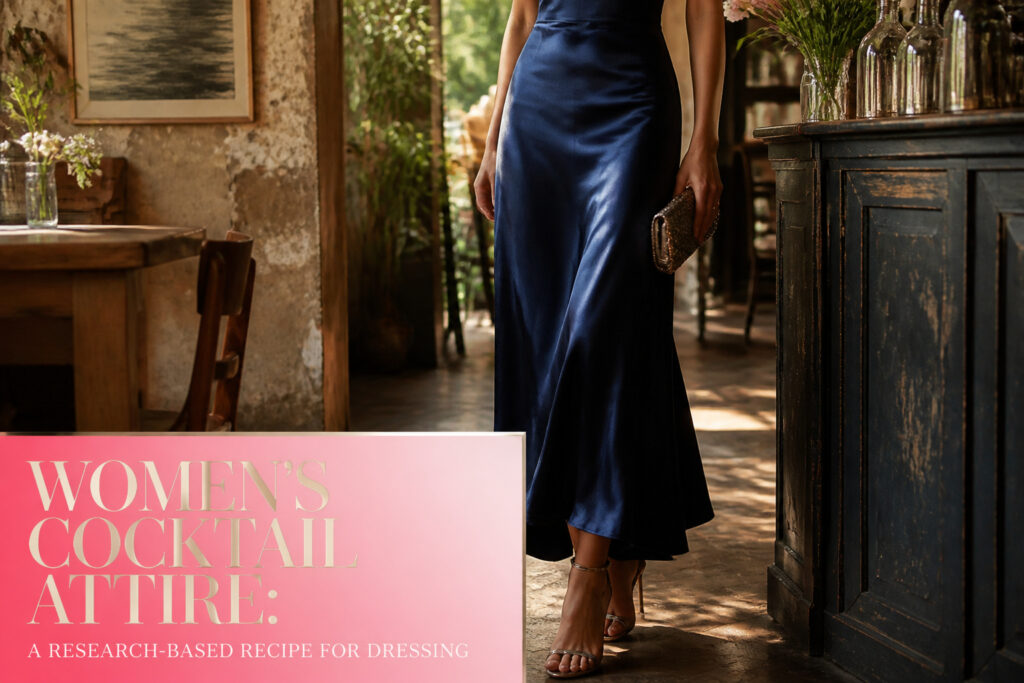
Cocktail attire lands in the narrow space between stiff and sloppy: polished enough for early evening, relaxed enough to move in. The difference between pulling it off and missing comes down to fabric weight and hemline, not label or price.
Silk, chiffon or velvet read as evening-appropriate; denim and casual cotton do not, and a midi length lands where a mini or maxi rarely will.
Ingredients
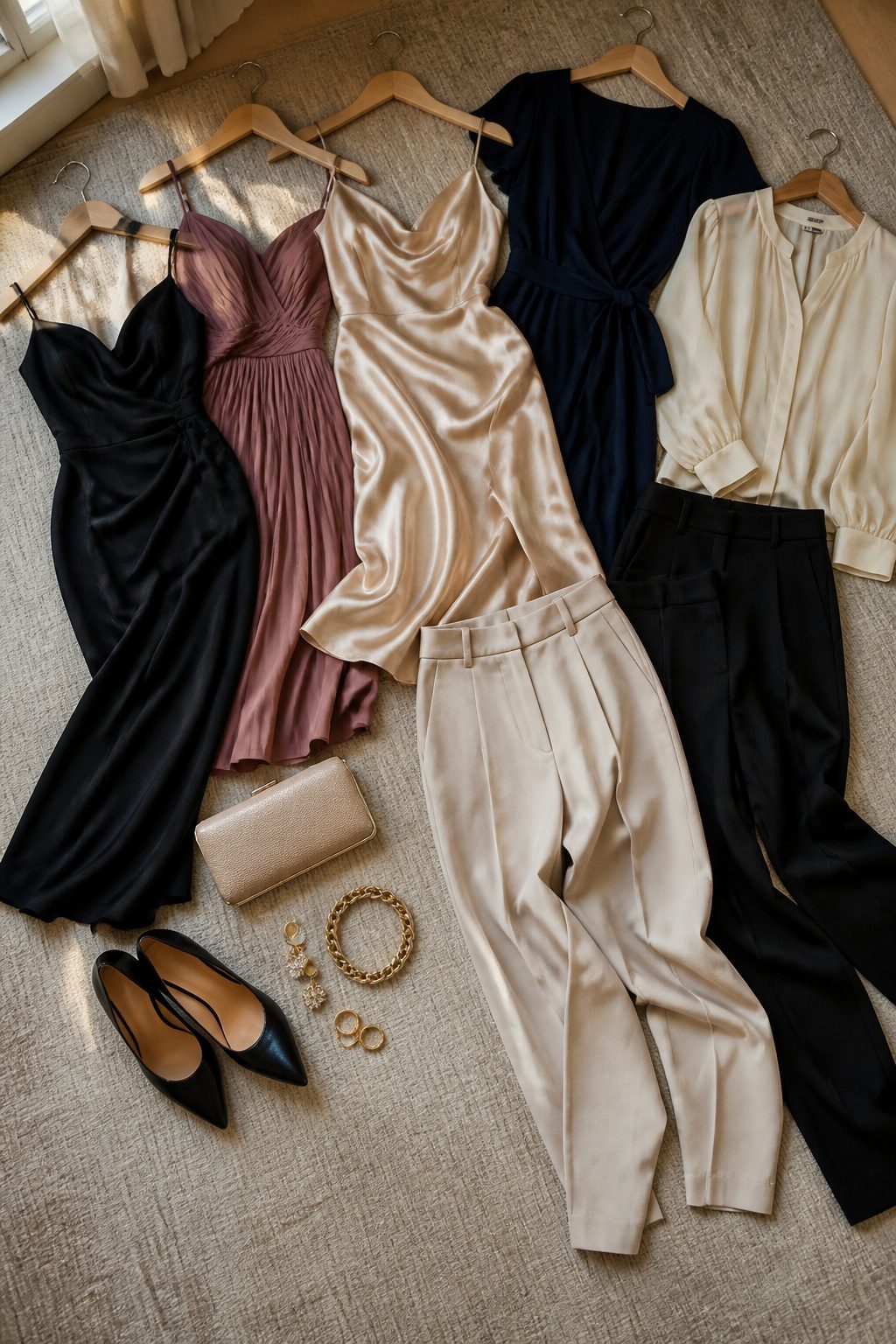
The pieces that make up women’s cocktail attire are straightforward, and the fabric matters as much as the cut. Silk, chiffon and velvet read as evening-appropriate; denim, casual cotton and overly shiny synthetics do not.
- Midi dresses with sleeker silhouettes work for nearly every cocktail event. Longer dresses are acceptable if they avoid ball-gown volume, and shorter lengths require judgment based on the occasion.
- Tailored trousers paired with an elegant blouse or silk top. Jeans and basic t-shirts belong in your closet, not at the party.
- Chic jumpsuits as an alternative to dresses, with a sophisticated silhouette throughout.
- Elegant blouses and silk tops that carry the look when trousers or a skirt form the base.
- Heeled pumps, strappy sandals or dressy flats. Heels complete the look for many, but sophisticated loafers or elegant flats keep you elevated if you prefer them. Sneakers and flip-flops are out.
- Statement jewelry, minimal belts and elegant clutches or mini bags. An oversized bag undermines the refinement you’re after.
- Appropriate undergarments that disappear under silk and chiffon.
- Elegant outerwear such as a blazer or sophisticated trench if the season demands it. Leave casual jackets, hoodies and puffer coats at home.
Avoid anything overly casual, excessively revealing, or in neon or too-bright shades unless the host specifically requests all black or another defined palette.
Method
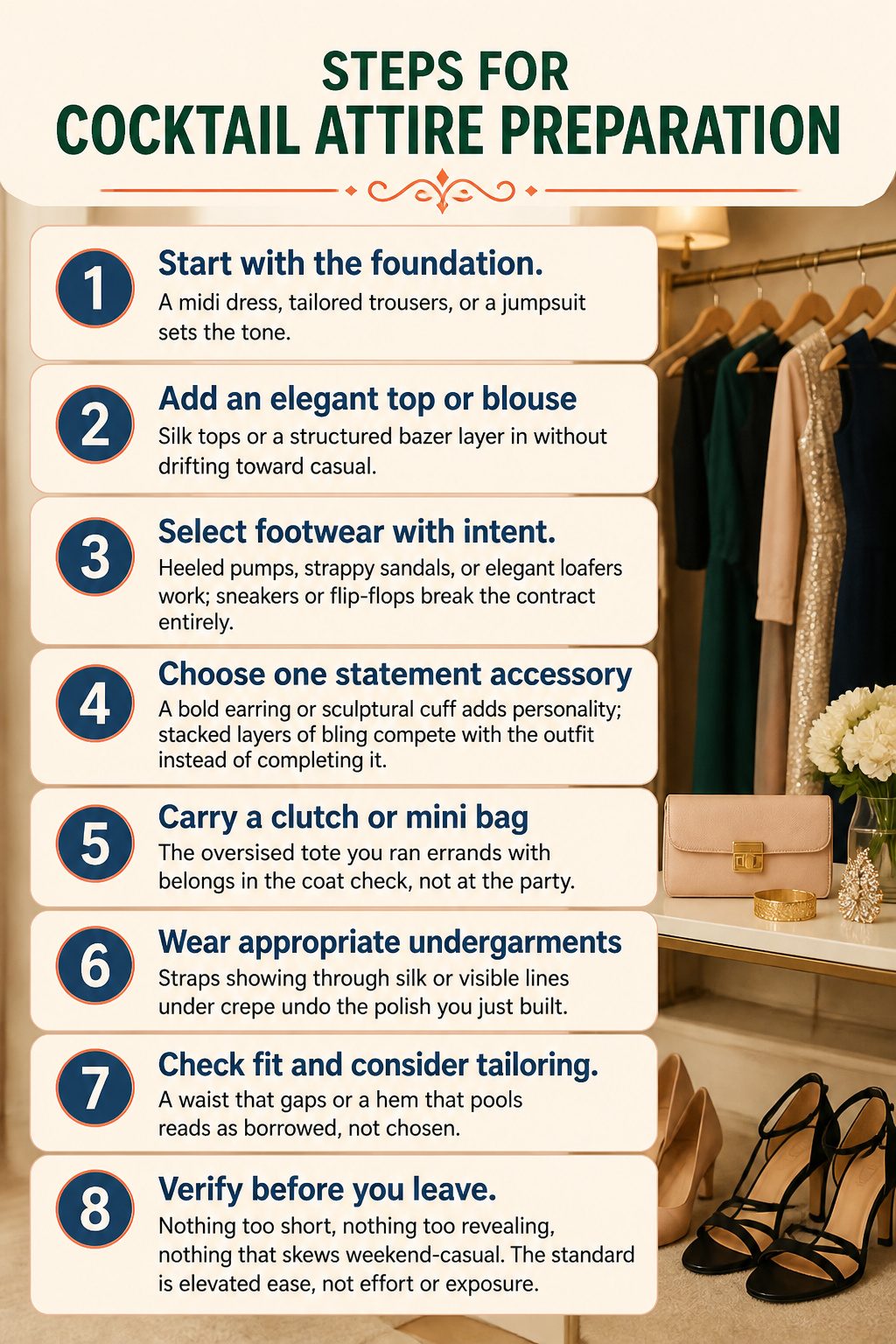
Cocktail attire sits between black tie and casual: polished enough for early evening or late afternoon, relaxed enough to move and talk in. A semi-formal standard, not a costume.
- Start with the foundation. A midi dress, tailored trousers, or a jumpsuit sets the tone. Midi length hits that middle ground; floor-sweeping gowns read too formal.
- Add an elegant top or blouse if separates are your base. Silk tops or a structured blazer layer in without drifting toward casual.
- Select footwear with intent. Heeled pumps, strappy sandals, or elegant loafers work; sneakers or flip-flops break the contract entirely.
- Choose one statement accessory and stop. A bold earring or sculptural cuff adds personality; stacked layers of bling compete with the outfit instead of completing it.
- Carry a clutch or mini bag. The oversized tote you ran errands with belongs in the coat check, not at the party.
- Wear appropriate undergarments. Straps showing through silk or visible lines under crepe undo the polish you just built.
- Check fit and consider tailoring. A waist that gaps or a hem that pools reads as borrowed, not chosen.
- Verify before you leave. Nothing too short, nothing too revealing, nothing that skews weekend-casual. The standard is elevated ease, not effort or exposure.
What Cocktail Attire Means
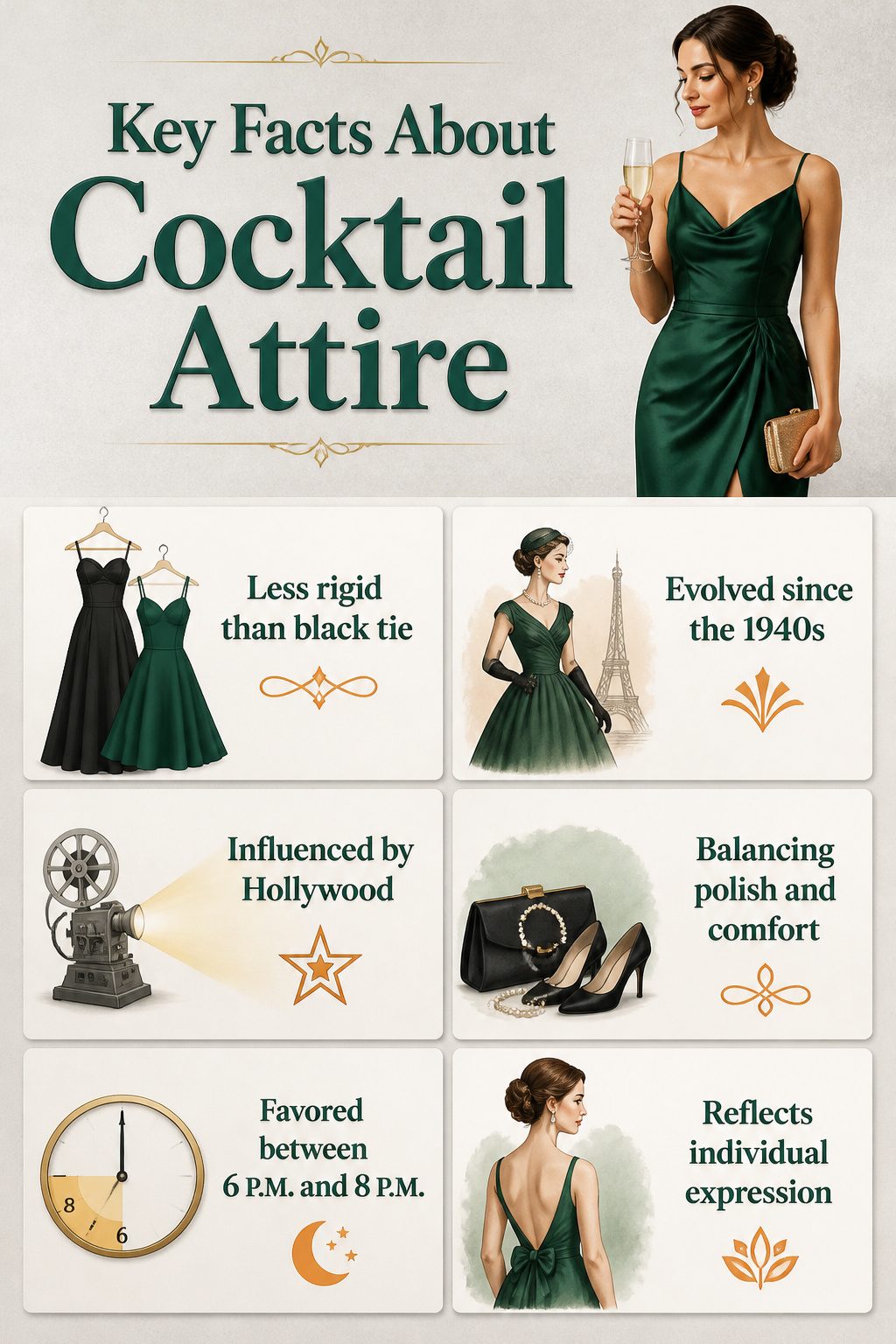
Women’s cocktail attire sits in the middle of the dress-code ladder: less rigid than black tie, more intentional than business casual.
The term itself arrived in the late 1940s, when Christian Dior named the early evening frock a "cocktail" dress and gave magazines and department stores a vocabulary to sell it.
Before that, French couturiers like Chanel and Schiaparelli had already shaped the look for American clients, trading Edwardian corsets and layers for shorter hemlines and looser silhouettes that still carried detail and adornment.
Hollywood films and international travel in the 1930s pushed it further into mainstream view.
"Cocktail attire was first popularized in the 1920s as women in the U.S. moved into the public social sphere and sought to find more individuality and shed the more confining gender stereotypes of the Edwardian era."
— Vogue
What this means for you: the dress code carries that history of movement and self-definition.
It asks for polish without stiffness, and it still favors the hours between 6 P.M. and 8 P.M. though any evening event now qualifies. I treat it as permission to look considered, not costume-like.
Dress Length and Bottom Options
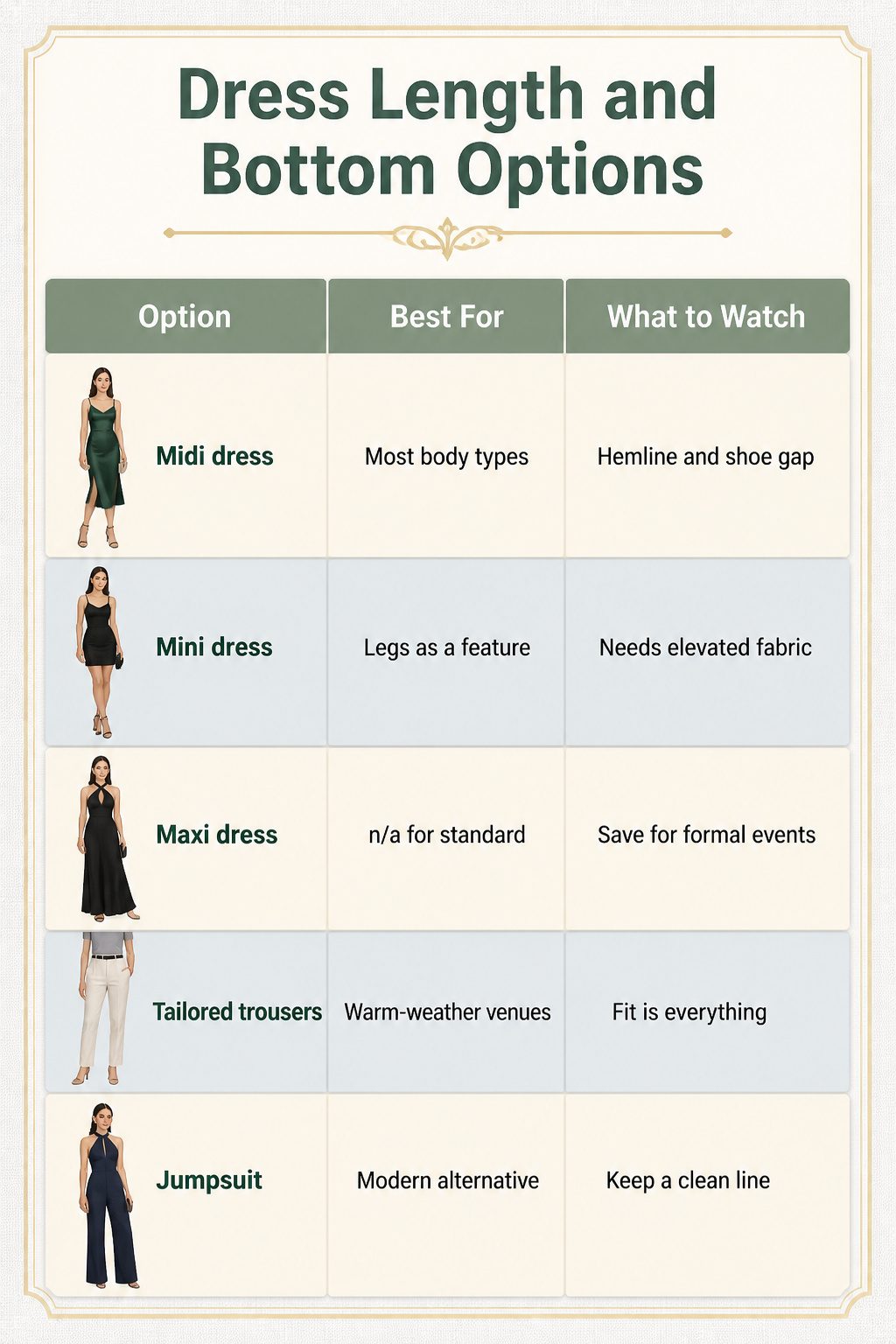
Midi lengths work best for women’s cocktail attire because they split the difference between too casual and too formal. A hem falling between knee and ankle reads as intentional without stealing the spotlight.
Minis can work, but they lean harder on the rest of the outfit to signal dressiness. Maxis, meanwhile, risk crossing into gown territory and feeling out of place unless the event specifically calls for it.
| Option | Best For | What to Watch |
|---|---|---|
| Midi dress | Most body types; default choice | Hemline and shoe gap; a slit helps movement |
| Mini dress | Legs as a feature; confident styling | Needs elevated fabric or detail to avoid looking underdressed |
| Maxi dress | n/a for standard cocktail | Save for formal or black-tie events |
| Tailored trousers | Warm-weather venues; repeat wearers | Fit is everything; pair with structured top or blazer |
| Jumpsuit | Modern alternative; long torso | Keep a clean line at waist; avoid overly casual fabric |
I would put trousers and jumpsuits firmly in the valid column, with one condition. The fit has to be precise: a straight or slightly tapered leg in wool-blend or satin-weight fabric, creased if the material takes one.
Banana Republic’s Mid-Rise Straight Wool-Blend Flannel Pant and Reformation’s Gale Satin Mid Rise Bias Pant both illustrate the weight and cut that reads as dressed-up rather than office-casual.
The jumpsuit works the same way, and I think it is the better choice for someone bored with dresses but unwilling to look like they missed the memo.
Footwear and Accessories
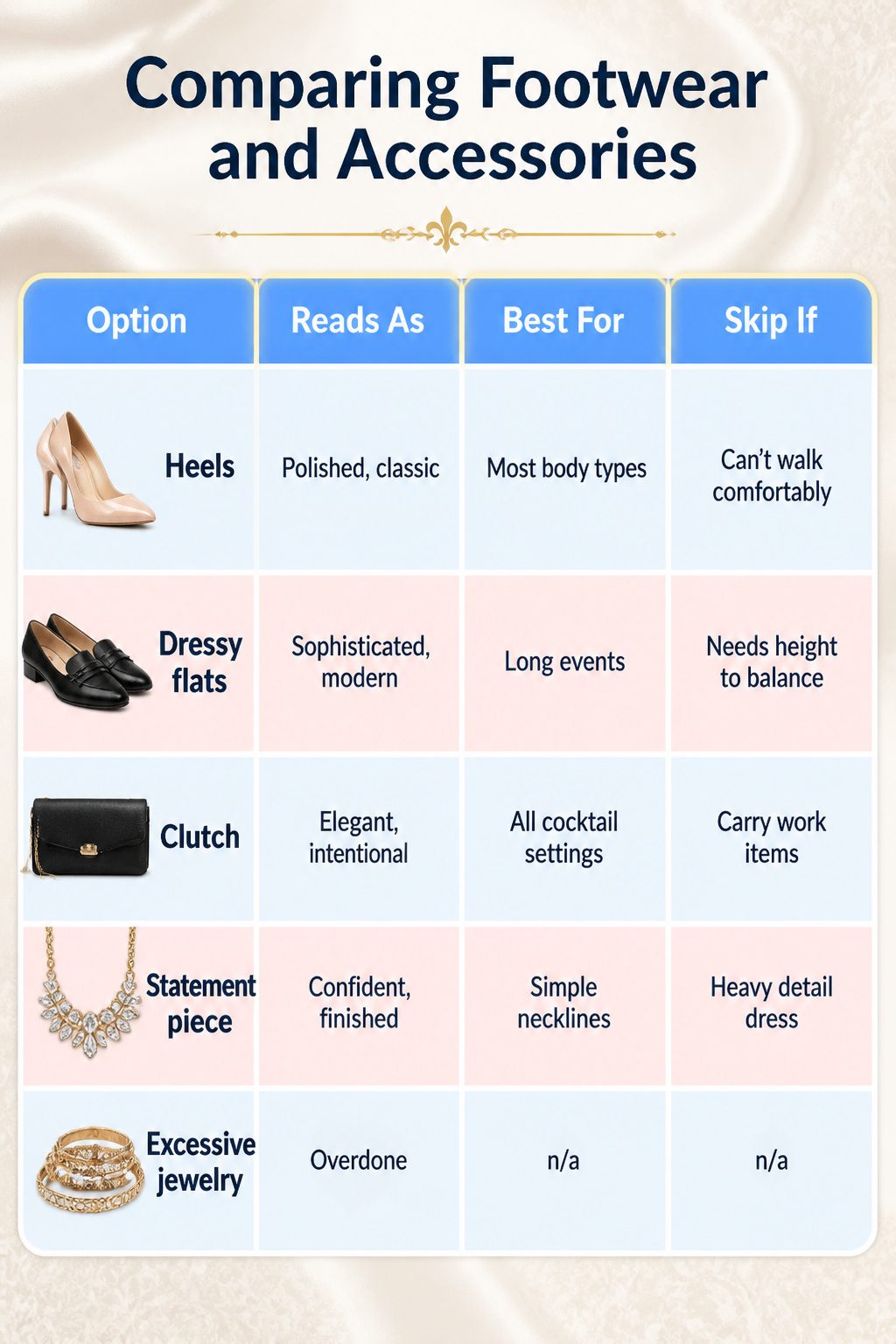
Shoes finish a cocktail outfit or wreck it. Heels remain the standard, though dressy flats and even oxfords or loafers pass if they read as deliberate rather than leftover from the office.
What fails is anything that reads daytime casual: sneakers, flip-flops, and chunky boots belong somewhere else entirely. I keep shoe cushions in my evening pairs; they make the difference between a polished entrance and a wince by the appetizer table.
For bags, a clutch or mini bag wins over anything large enough to hold a laptop. A structured leather shoulder bag works at the smaller end, but a day tote throws off the whole proportion.
Jewellery follows the same rule.
One statement piece, or a few minimal ones. Excessive bling looks like effort rather than ease; the piece should complement the outfit, not compete with it.
| Option | Reads As | Best For | Skip If |
|---|---|---|---|
| Heels | Polished, classic | Most body types and venues | You cannot walk comfortably |
| Dressy flats / oxfords / loafers | Sophisticated, modern | Long events, wider feet | The outfit needs height to balance |
| Clutch or mini bag | Elegant, intentional | All cocktail settings | You need to carry work items |
| Statement piece | Confident, finished | Simple necklines or solid colors | The dress already has heavy detail |
| Excessive jewellery | Overdone | n/a | n/a |
Fit and Grooming
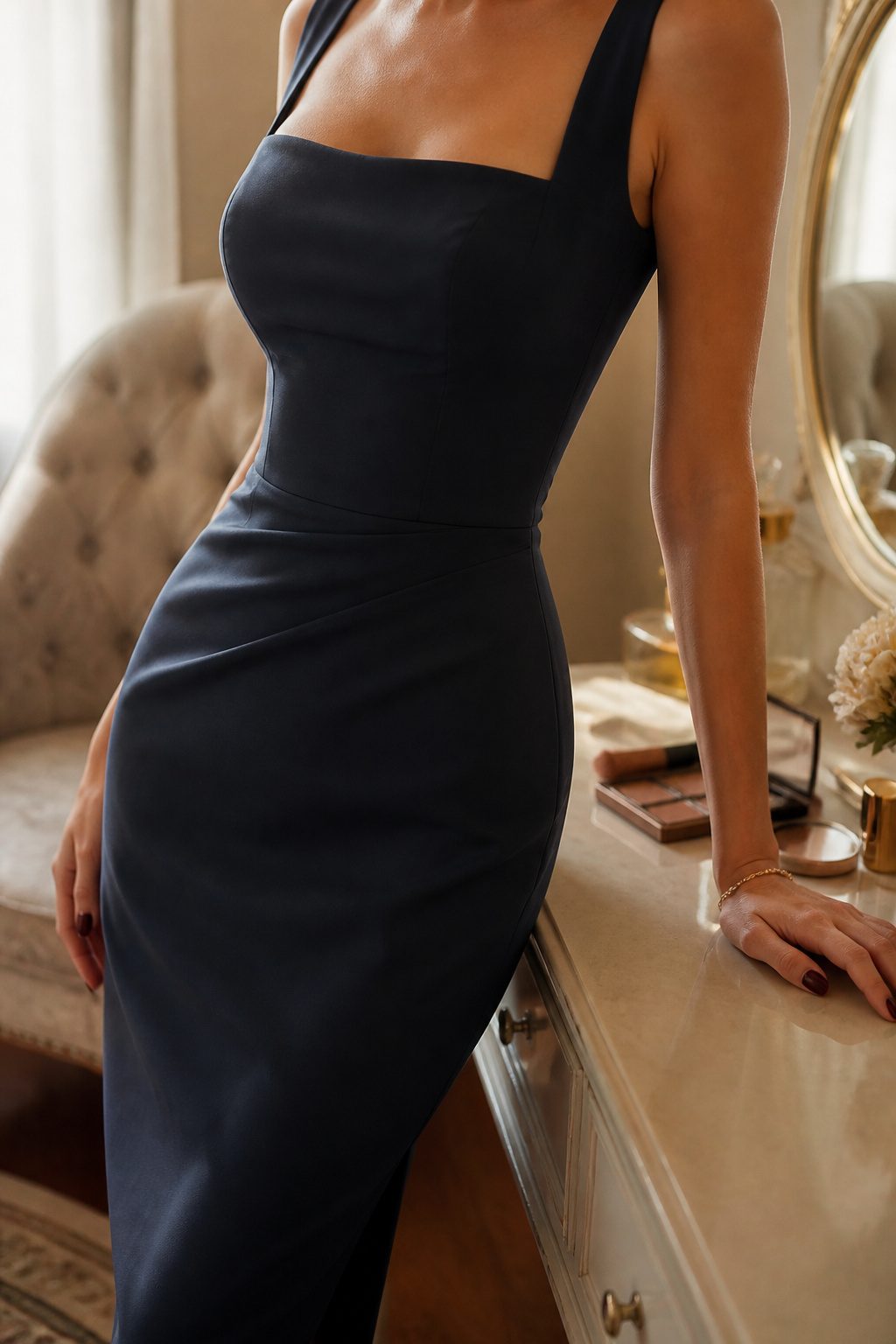
A cocktail dress that pools at the ankle or pulls across the hips wastes money no matter what the label says.
Tailoring is the move that makes a mid-range piece look expensive, and it typically runs $30–$75 for basic alterations: taking in a waist, shortening a hem, or adjusting straps so they sit flat instead of gaping.
The cost stings less when you calculate cost-per-wear against a dress you’ll actually reach for.
Hair and makeup operate the same way. Overdone reads as trying; underdone reads as not trying at all.
A polished blowout or a clean lip-and-liner situation signals that you understood the assignment. The same attention applies to nails, chipped polish undoes the tailoring in about three seconds.
Confidence in women’s cocktail attire comes from fit, not fabric content. A $180 dress that follows your shoulder line and closes without a gap beats a $600 one that gapes at the bust or bags at the seat.
The mirror test is simple: if you catch yourself adjusting the same spot twice, the dress is wearing you.
Dos and Don’ts
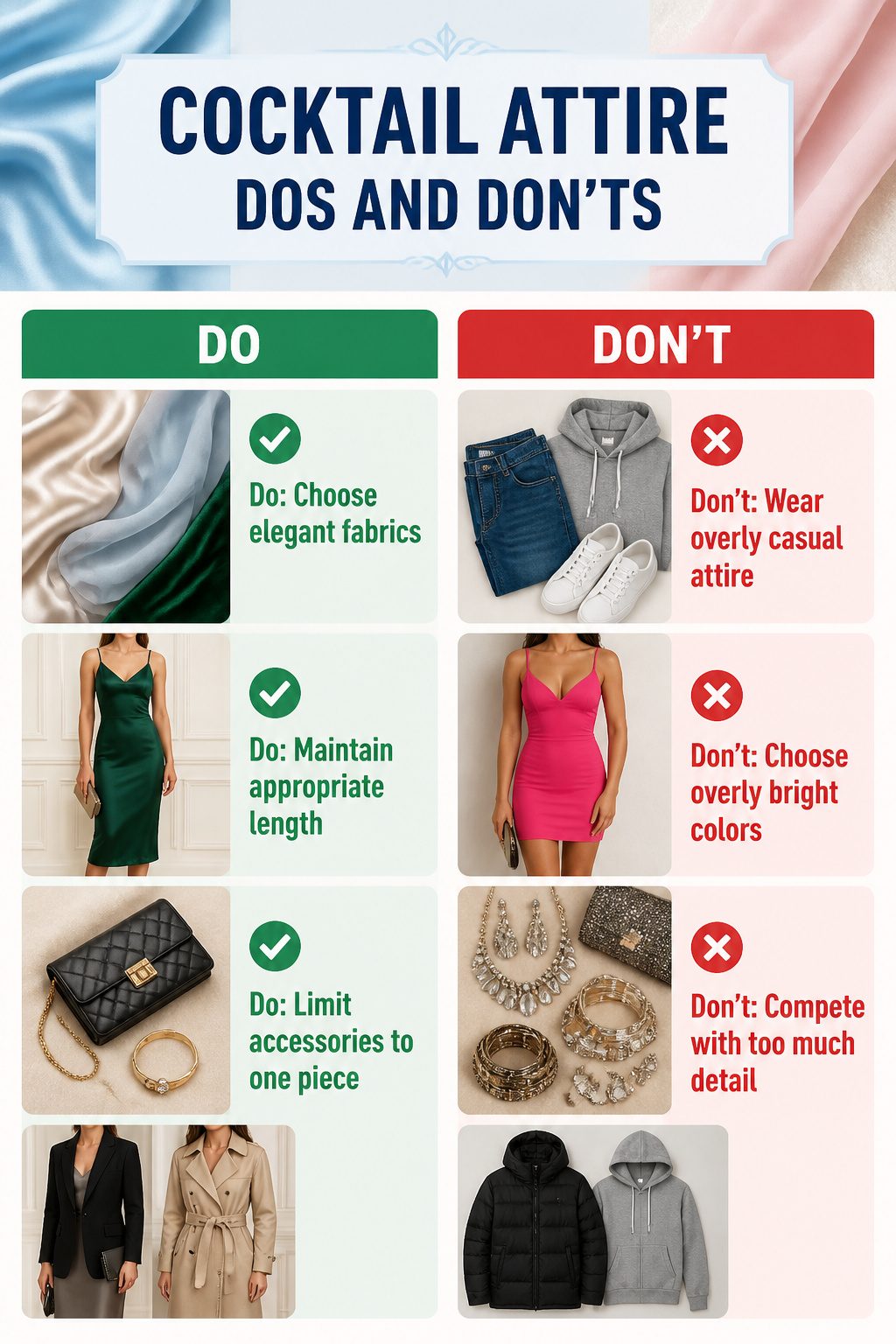
The fabric does more work than the cut when you’re dressing for silk, chiffon, or velvet rather than denim or casual cotton.
Tailored trousers in a neutral shade or subtle print will read as cocktail-ready where jeans never will, no matter how dark the wash. I pair mine with a tucked blouse and let the waistline do the elongating.
Length matters on dresses. A long or midi dress in a sleek silhouette works; a shorter one can too, but the occasion should govern the hemline.
Anything too short or too revealing shifts the tone from semi-formal to out of place, and the host notices.
Accessories need restraint. One statement piece, an elegant clutch, a minimal belt.
Sneakers, flip-flops, oversized bags, and clashing jewelry all break the code. The same goes for outerwear: a blazer or sophisticated trench finishes the look, while a hoodie or puffer coat belongs anywhere else.
Color carries its own rules. Jewel tones, pastels, and classic black fit; neon or overly bright shades usually don’t, and white is off the table at weddings unless the invitation says otherwise.
The venue shapes the final call. An outdoor or slightly creative event might welcome a floral where a city gallery would not.
Seasonal Adjustments
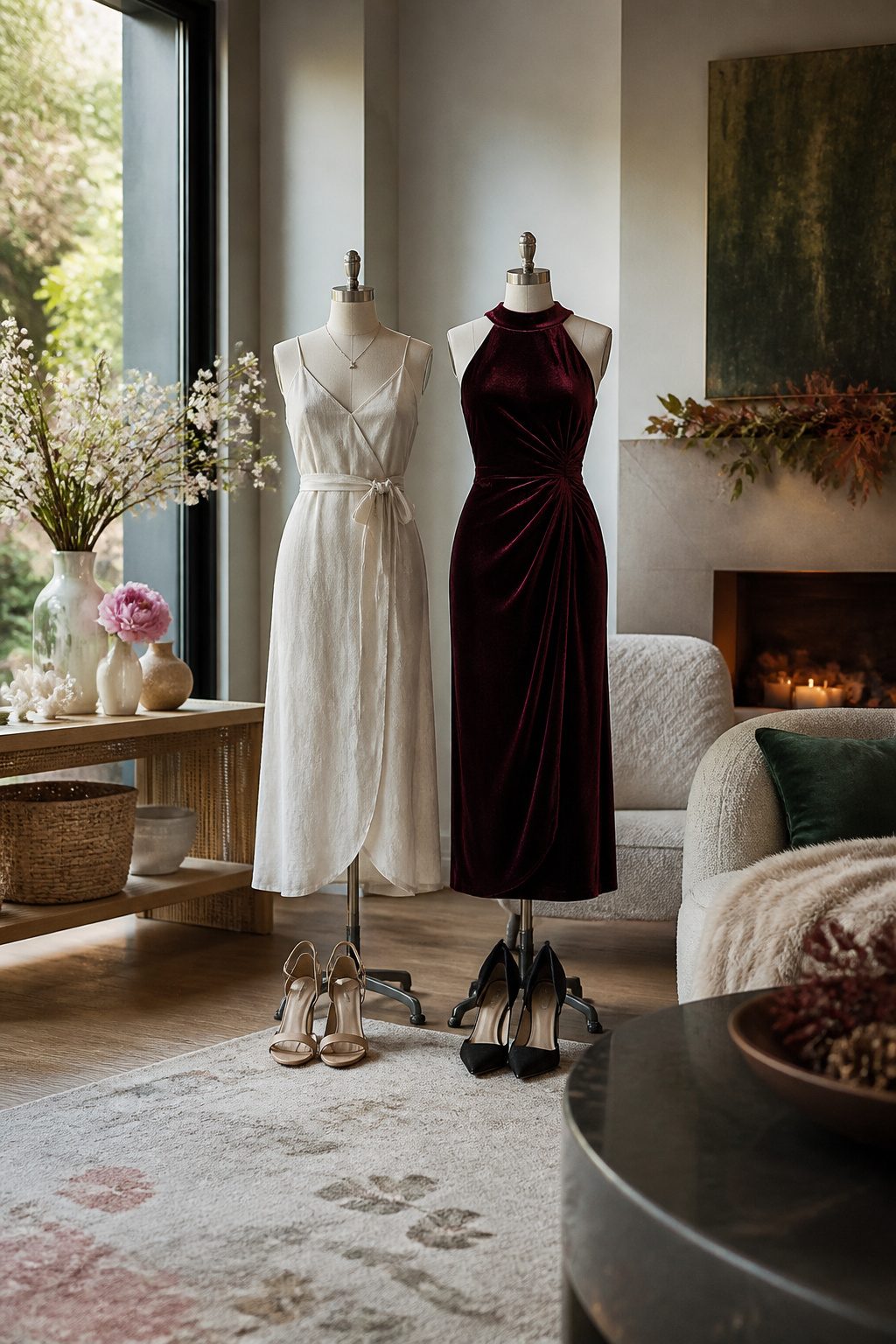
The weight of the fabric is what separates a June wedding guest from a December one, and the same silhouette in linen versus velvet reads as two entirely different dress codes.
I treat the core formula as fixed: a hem near the knee, some structure through the waist, and shoes that are not sandals or boots. Everything else shifts with the thermometer.
Spring and summer call for fabrics that breathe and move. Cotton sateen, silk georgette, and lightweight crepe all carry the same shape through a warm room without clinging.
Palettes open up too: blush, sage, and soft blue all register as intentional rather than underdressed when the sun is still up at seven.
I draw the line at white for obvious reasons, but ivory with a print passes in July where it would raise an eyebrow in January.
Fall and winter bring in wool crepe, heavy satin, and anything with a subtle nap or texture. Burgundy, forest green, and navy feel richer under artificial light, and a deeper tone forgives a heavier shoe or opaque tight.
You give up some mobility: a winter cocktail dress in bonded jersey holds its shape beautifully but will not drape the way summer silk does.
The mistake I see most often is treating season as an afterthought.
A black crepe dress worn to a July garden party looks borrowed, not chosen. The reverse, a floral chiffon in December, reads as a vacation outfit that wandered into the wrong month.
Frequently Asked Questions
What is considered cocktail attire for women?
Women’s cocktail attire is a semi-formal standard that sits between black tie and casual wear.
It calls for polished pieces like midi dresses, tailored trousers with elegant blouses, or chic jumpsuits in fabrics such as silk, chiffon, or velvet. You want intentional ease: dressy enough for evening, relaxed enough to move and talk in.
Is a cocktail dress long or short?
Midi length is the answer, falling between knee and ankle.
Longer dresses work if they avoid ball-gown volume, while shorter lengths require judgment based on the occasion. A midi splits the difference between too casual and too formal.
Can a woman wear pants to a cocktail party?
Yes.
Well-fitted, tailored trousers or an elegant jumpsuit are fully appropriate when paired with a sophisticated blouse, silk top, or blazer. The fit must be precise, and the fabric should read as evening-appropriate, such as wool-blend or satin-weight, rather than office-casual.
What should a woman wear to a casual cocktail party?
Dial down the formality slightly while keeping the chic.
An elegant blouse with stylish trousers or a skirt, a simpler dress with unique accessories, or a jumpsuit in a relaxed fabric all work. Comfortable yet classy is the goal; jeans, t-shirts, and sneakers still belong at home.
What should you not wear to cocktail attire?
Skip anything overly casual like jeans, t-shirts, sneakers, or flip-flops.
Avoid excessively revealing pieces, neon or overly bright shades, oversized bags, and casual outerwear such as hoodies or puffer coats. White is off the table at weddings unless the invitation specifies otherwise.
What is the cocktail dress code for 2026?
The standard remains consistent: semi-formal polish with room for modern interpretation.
Midi dresses, tailored separates, and jumpsuits in quality fabrics still anchor the look. The shift is in fabric weight and palette by season, not in the core formula of elevated ease.