These 8 business casual outfits run from a $40 white collared shirt with black jeans to a cream tweed skirt suit that earns its cost back in dry-cleaning cycles.
The piece that decides which one is yours is the thermostat in your office: a textured brown tweed blazer sits right in a cold building, while breathable wool blends or dense cotton matter more than silhouette when you are sitting through a full workday.
1. Blazers
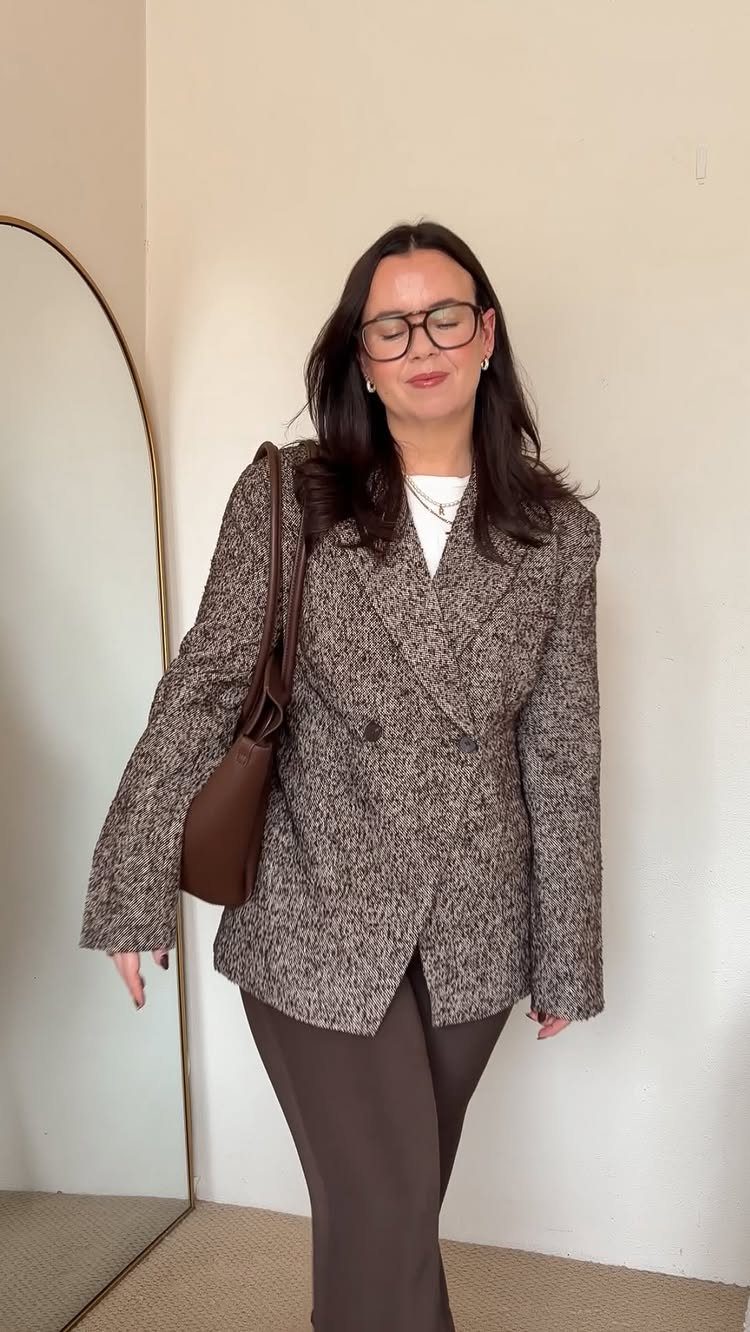
A textured blazer in brown tweed reads as intentional without trying hard. I like this weight for offices that run cold; it sits over a simple white top and picks up the same tone in the trousers without matching exactly.
The shoulder bag keeps it practical for a commute. For my money, this is the piece to buy first if you are building a business casual wardrobe from nothing.
2. Wide-leg Trousers
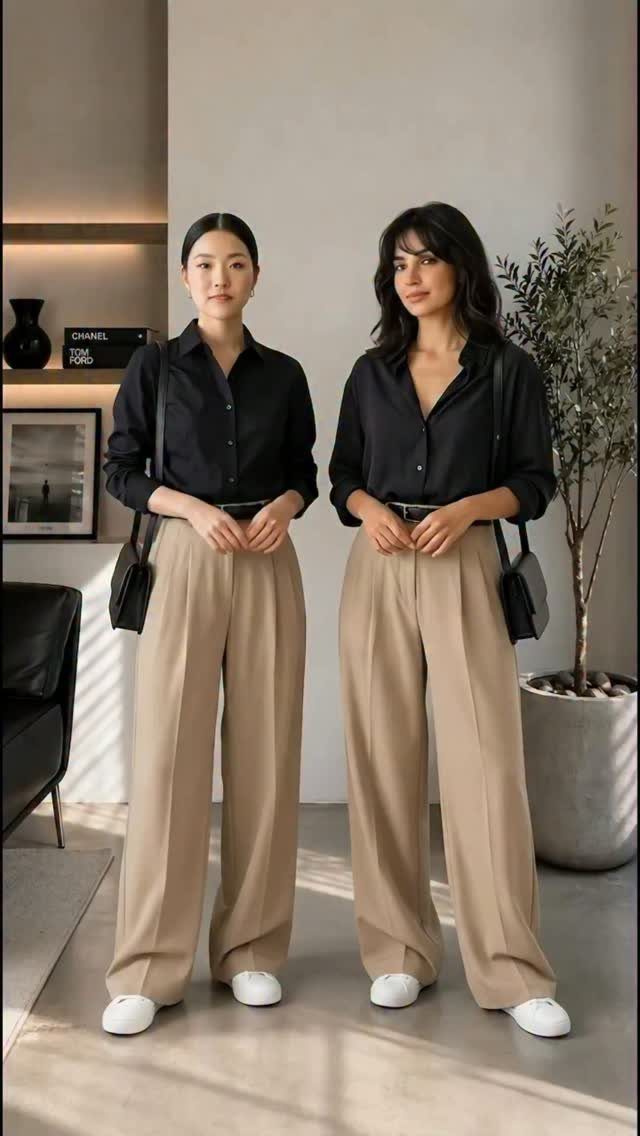
Wide-leg trousers in a warm beige give you room to move without looking sloppy.
A high waist on wide-leg trousers lets you tuck in a black button-down without bulk; white sneakers underneath keep you moving if your commute covers more than a few blocks.
I would keep the shirt untucked only if the trousers have enough structure to hold their line.
Two women dressed alike suggests this pairing is easy to agree on; it also means you will not stand out as overdressed or under.
3. Silk Blouses
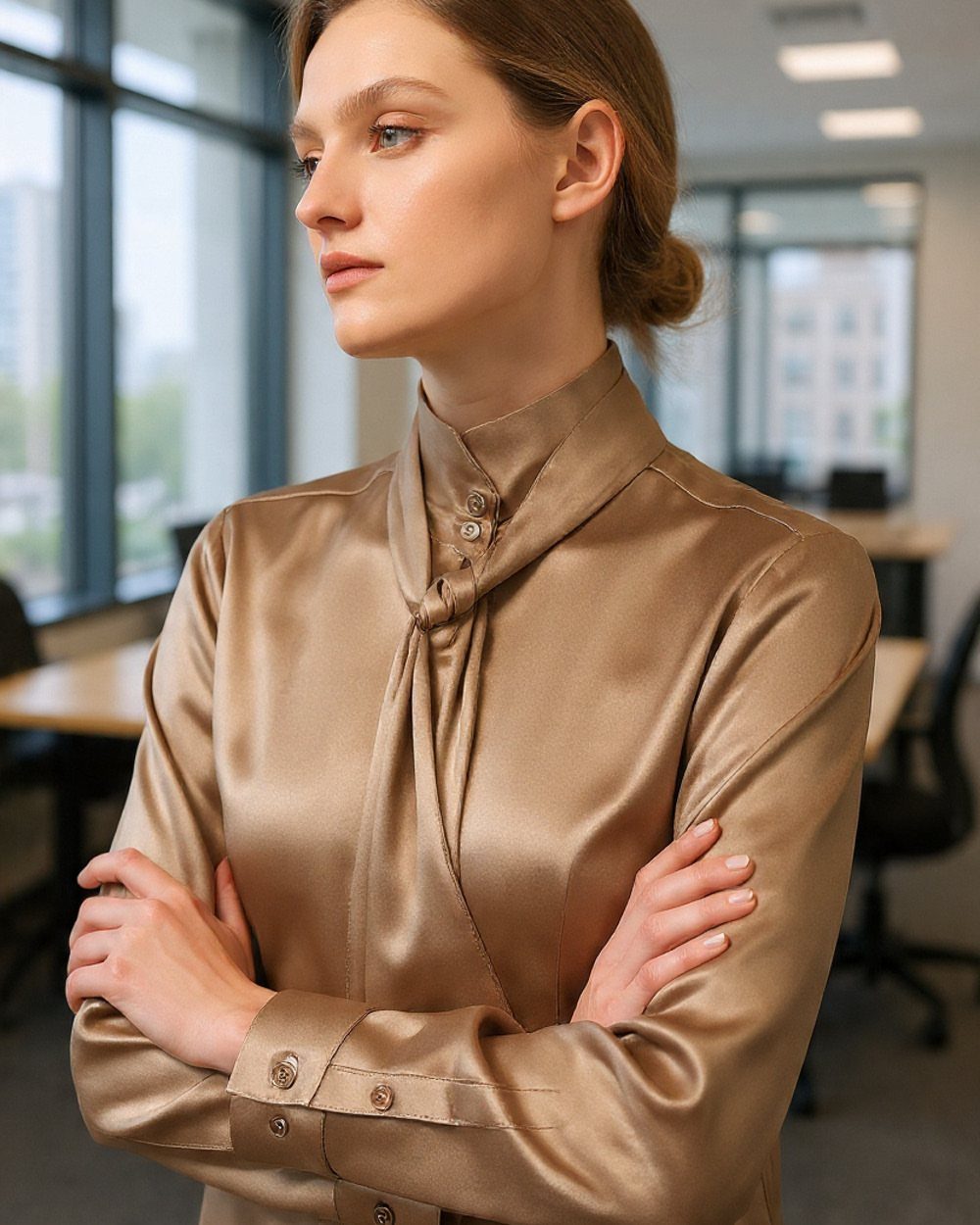
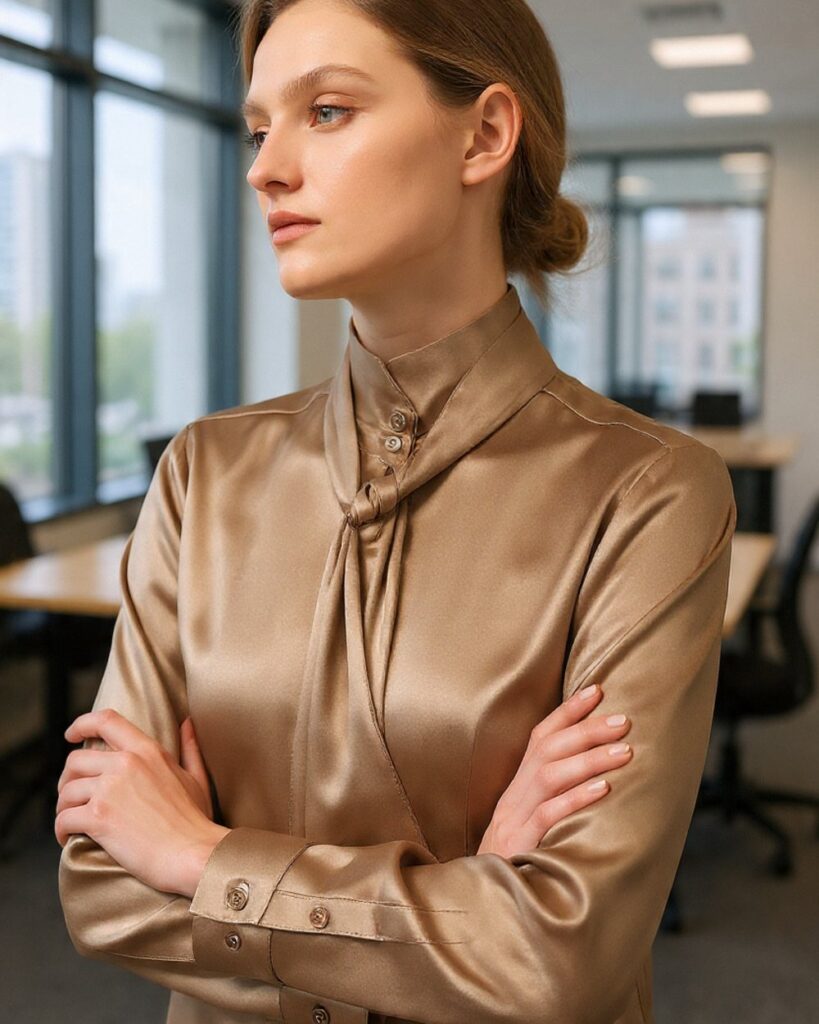
Silk in a champagne tone catches light without shouting. The high neck and buttoned cuffs here keep the blouse from reading as evening wear, which is the risk with anything this lustrous in a 9-to-5 setting.
I would wear this under a blazer for a client meeting, then lose the jacket for dinner after.
The bun helps; loose hair with silk can tip into occasion territory. Hand wash or dry clean, no exceptions, or the finish dulls fast.
4. Co-ord Sets
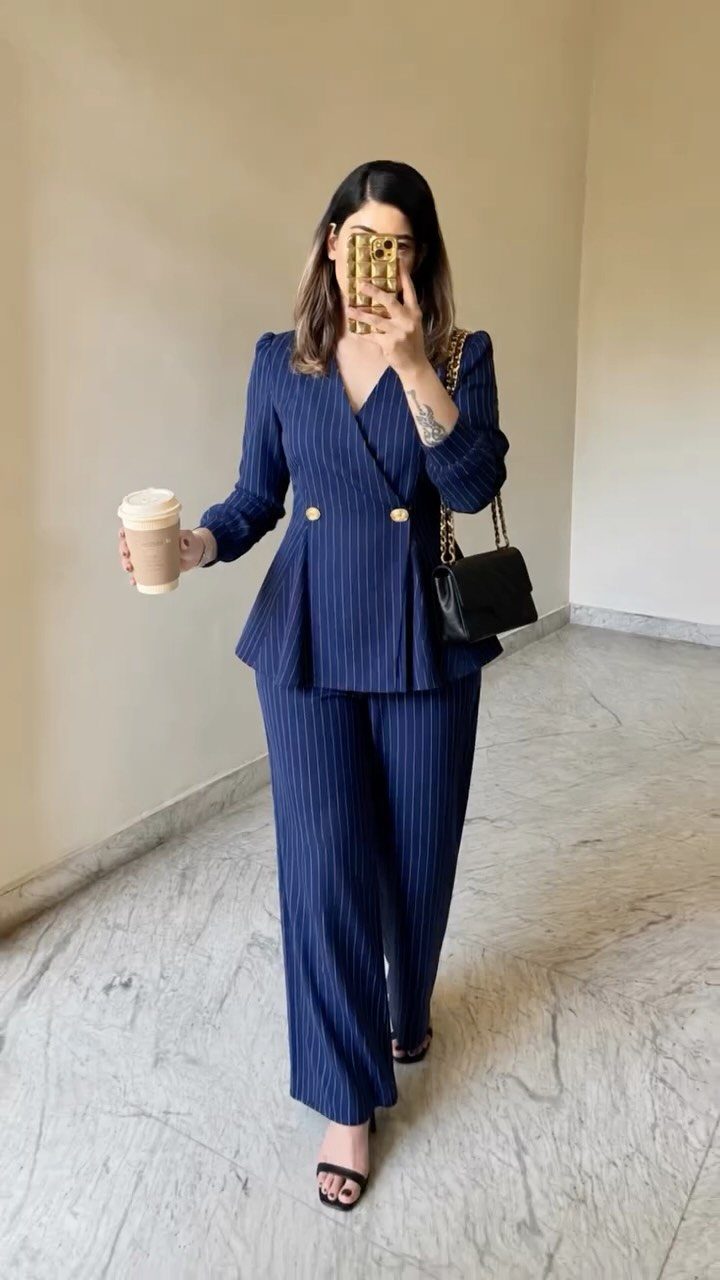
A pinstriped wrap jacket with matching wide-leg trousers is the fastest full outfit you will own.
Navy keeps it from looking like a costume; the stripes add just enough interest that you can skip the statement necklace and anything else competing.
The coffee cup in hand tells the story: this is what you grab when you are running late and still need to look assembled.
I prefer a wrap front on a blazer for anyone between sizes, since it adjusts without tailoring.
5. Casual Friday Looks
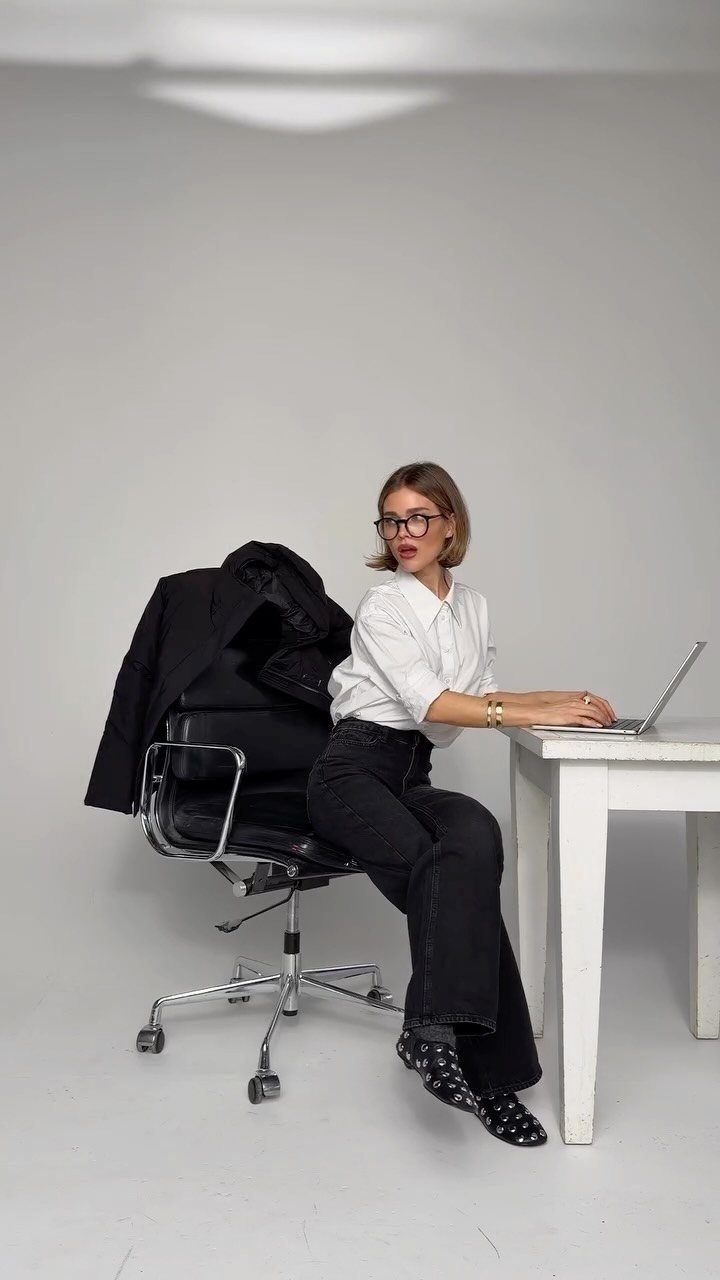
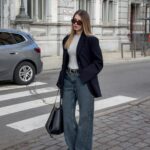
A white collared shirt with black jeans is the Casual Friday move for offices that relax the code but still expect polish.
The shirt stays pressed and tucked; the jeans are dark, clean, and slim enough to not look like weekend wear.
I would add a belt and real shoes, not sneakers, unless your floor is genuinely that casual. The laptop and plain backdrop say this is work, not a social post; that is the balance you are aiming for.
6. Button-down Shirt with Trousers
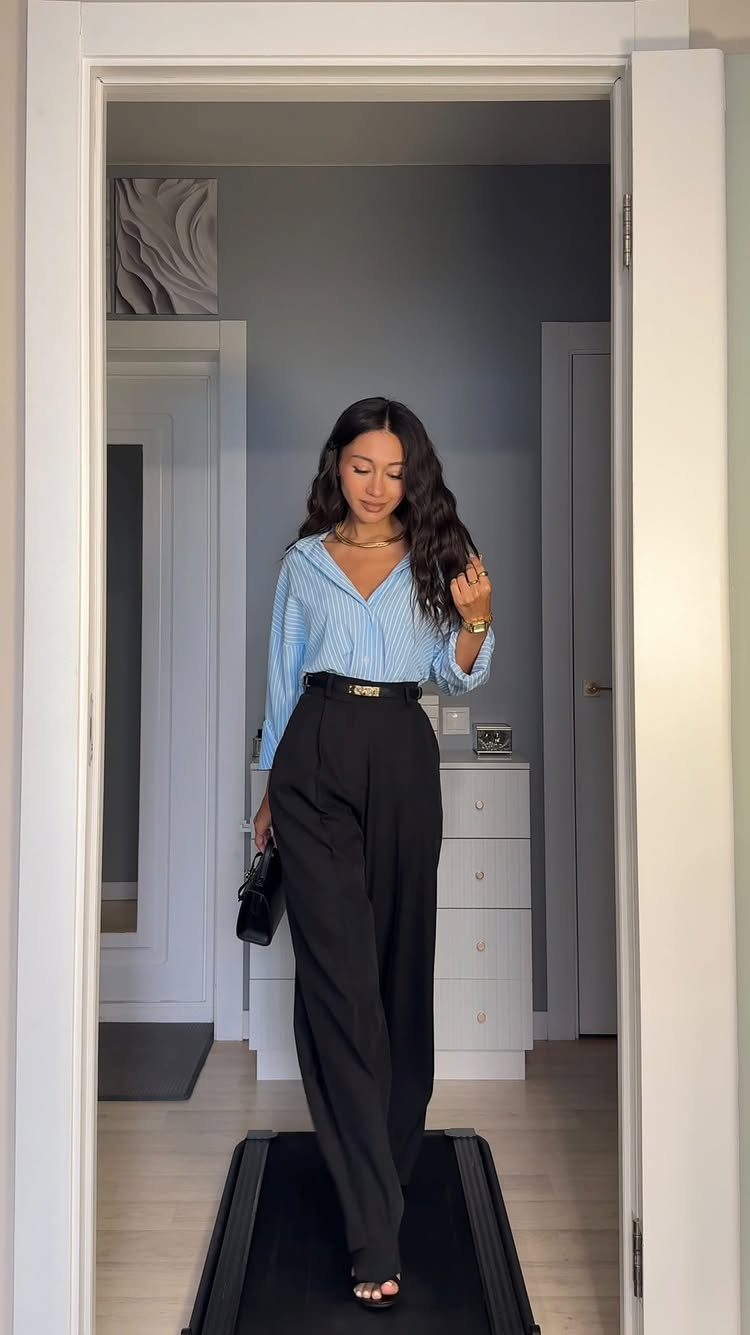
A blue striped button-down with high-waisted black trousers and a slim belt is the backbone outfit I return to most often. The stripes read as more deliberate than plain blue; the wide legs balance the volume on top.
Gold jewelry and a structured bag lift it from uniform to choice.
I would walk a lot in this; the trousers look like they move, and the shirt is cotton that breathes. If your office is formal, swap the walking pad for heels and the look still holds.
7. Midi Skirt with a Button-down
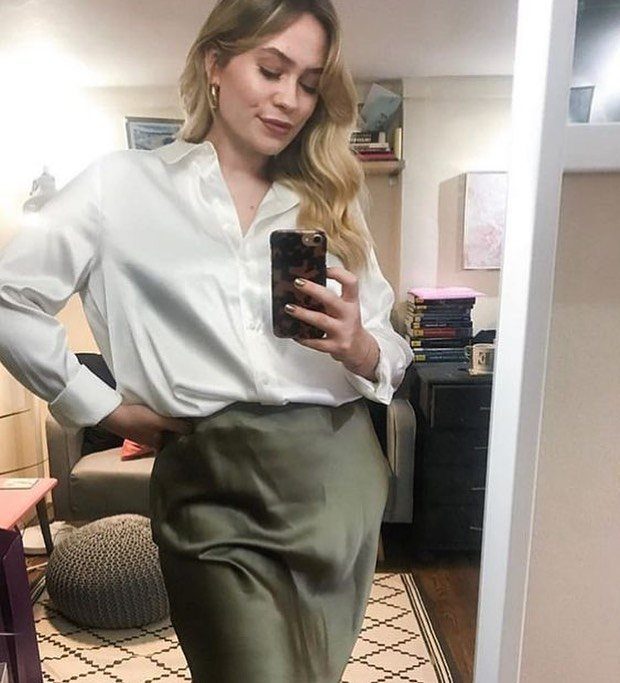
A white cotton button-down tucked into a satin midi skirt gives you 2 textures that both read as polished.
The olive here is soft enough for daylight; I would keep the skirt matte or low-sheen, since high-gloss satin under office fluorescents can look like evening wear.
The shirt collar stays open one button for breathing room; sleeves rolled to the forearm keep the proportion from feeling too covered.
This is the outfit for a day that moves from desk to dinner without a change, and the skirt length works on every height I have tried it with.
8. Skirt Suit Set
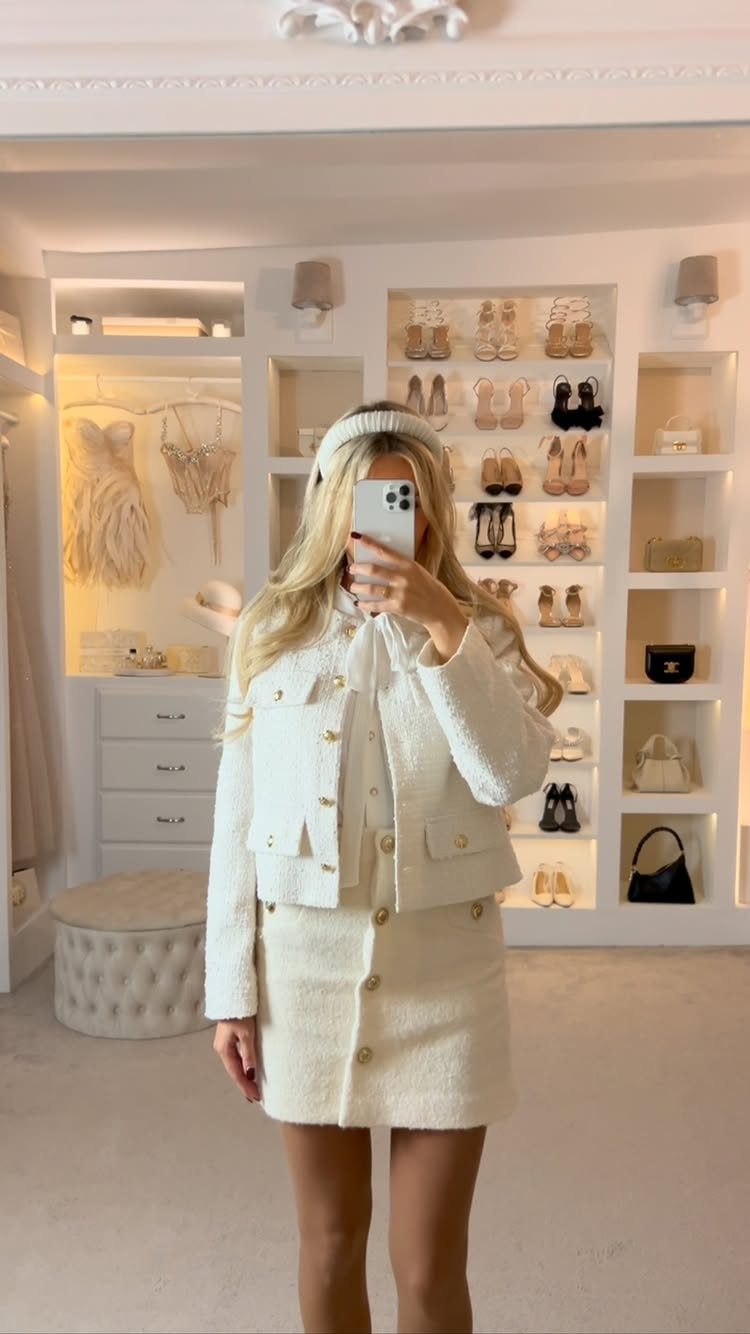
Cream tweed with gold buttons is the suit that reads as money without trying for it. The texture does the work; you keep the blouse beneath it simple and let the hardware show.
I like this for interviews, client pitches, or any morning when you need the clothes to announce that you are prepared. The matching skirt removes the decision of what pairs with what, which is half the point of a suit.
Real tweed holds its shape through years of dry cleaning; cheaper bouclé pills at the friction points by month three. If your budget allows the investment, this is where I would spend it.
Comfort in Business Casual
Breathable fabric matters more than silhouette when you are sitting through a full workday. I reach for wool blends, silk, or dense cotton over thin synthetics; the drape is heavier and the skin stays cooler.
A structured jacket with a relaxed pant is the balance that works for movement without looking sloppy. The shoulders must sit right and the sleeves should end at the wrist bone, which is where an affordable piece starts reading expensive.
If your office runs cold, a textured layer you can remove beats one stiff blazer you keep on all day. I would rather have two weights to rotate than one that never quite fits the thermostat.
Professional Appearance
The line between polished and overdressed is in the shoe and the hem. Trousers should break at the length of the shoe you actually wear that day, flat or heeled, not at some ideal in between.
A soft neutral knit with tailored trousers reads as quiet luxury; a crisp button-down with black boots reads as sharp. Both work because the fit is intentional, not because the pieces themselves are formal.
I would keep one structured item per outfit and let the rest relax. 2 structured pieces and you are in suit territory; none and you are in weekend territory.
Color Choices
Neutral dressing fails when everything is the same texture. A knit sweater with structured trousers works because the surfaces read differently even in the same tone.
Chocolate, cream, and taupe mix cleanly if you break them at the waist with a leather belt. Without that break, the shape disappears.
Dark accessories ground a light neutral outfit; light creams keep all-brown from sitting too heavy on the face. I find one pop of contrast, a bag or a shoe, keeps the eye moving so the palette does not flatten out.
Frequently Asked Questions
What dress code is business casual?
Business casual sits between formal suiting and weekend wear. The goal is looking put-together without ever reading as overdressed.
Can I wear jeans for business casual?
Dark wash, no distressing, and a close fit through the leg keep them from looking like Saturday afternoon.
I would add a crisp white shirt with a collar, a leather belt, and loafers or ankle boots; sneakers only if your office has explicitly gone that far.
What is the 3-3-3 rule for business casual fashion?
I do not use or reference a 3-3-3 rule in my approach to business casual dressing.
My method centers on balancing structure and ease: one structured item per outfit with the rest relaxed, breathable fabrics over thin synthetics, and fit that is intentional to the shoe and hem you actually wear that day.
What not to wear for business casual?
Avoid anything that reads as weekend or evening wear.
Rubber sandals, cutoff hems, and printed slogans are obvious outs; so is anything too shiny or too flowing, like a floor-length satin skirt or a slip dress that reads cocktail rather than desk.
One structured piece, such as a blazer or tailored trousers, usually hits the mark; a matched jacket and pants pushes into formal territory, while all soft knits and elastic waists land somewhere else entirely.