These summer work outfits run from a striped button-down with white trousers to a full three-piece suit in tropical-weight wool, with most falling in the middle: a belted midi dress, a sleeveless blazer with wide-leg pants, or a shirtdress in cotton poplin that you can roll at the cuffs.
1. Sleeveless Blazers
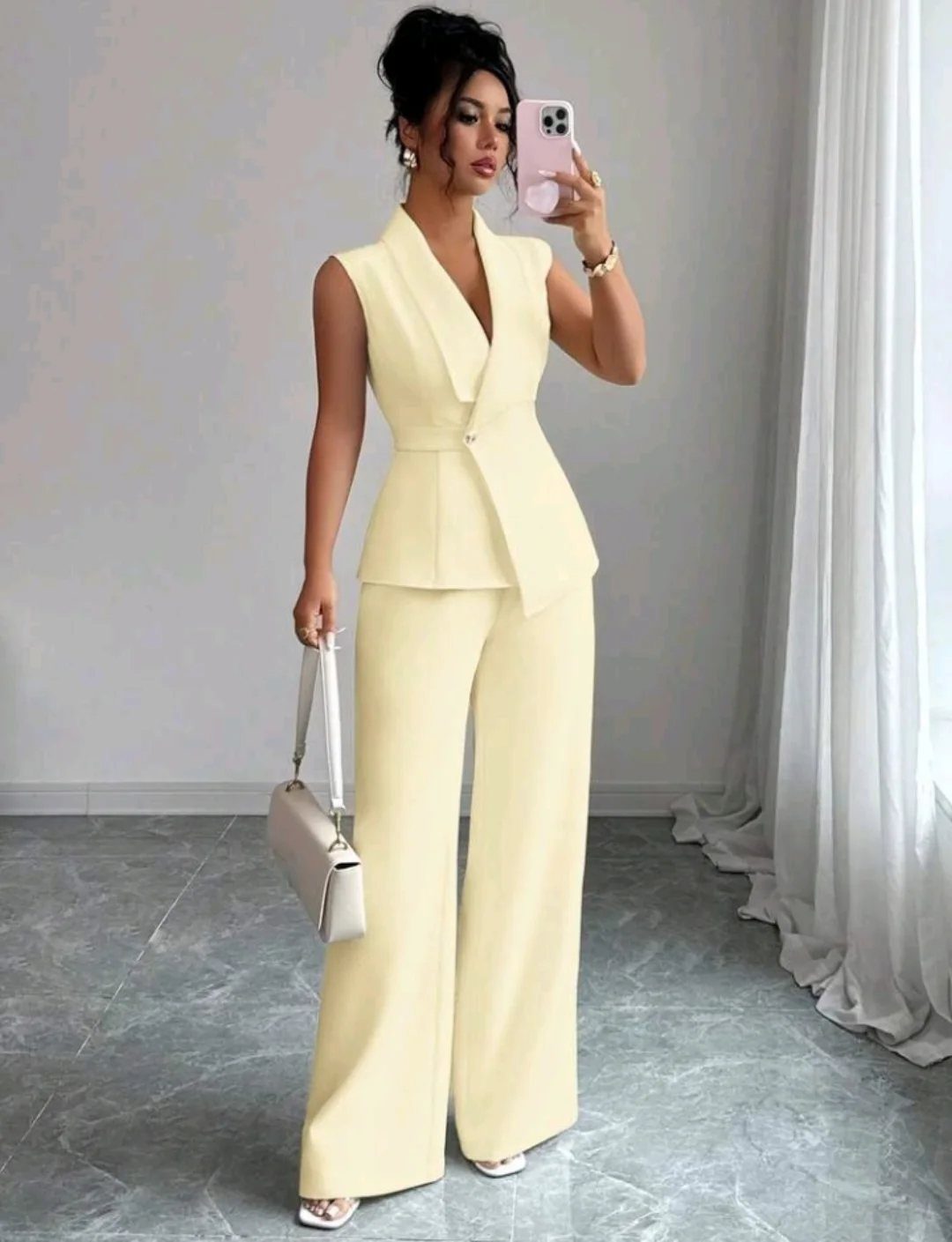
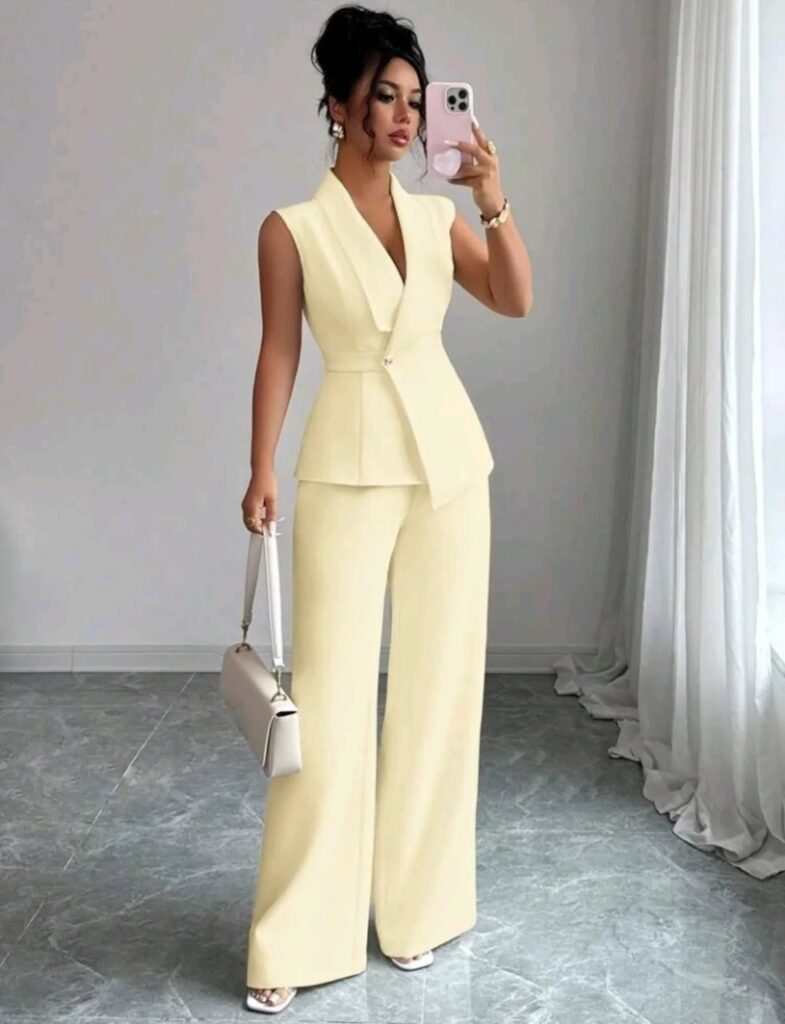
A sleeveless blazer in summer-weight wool or a linen blend gives you the structure of tailoring without the heat of full sleeves.
I would look for one slightly longer than a standard vest, hitting mid-hip, so it reads as outerwear rather than layering piece.
Wide-leg trousers in the same tone elongate the line, though a contrast pant in navy or charcoal is more forgiving if you buy the pieces separately.
I have had better luck with single-breasted cuts; double-breasted without sleeves can throw the proportions off.
2. Shirtdresses
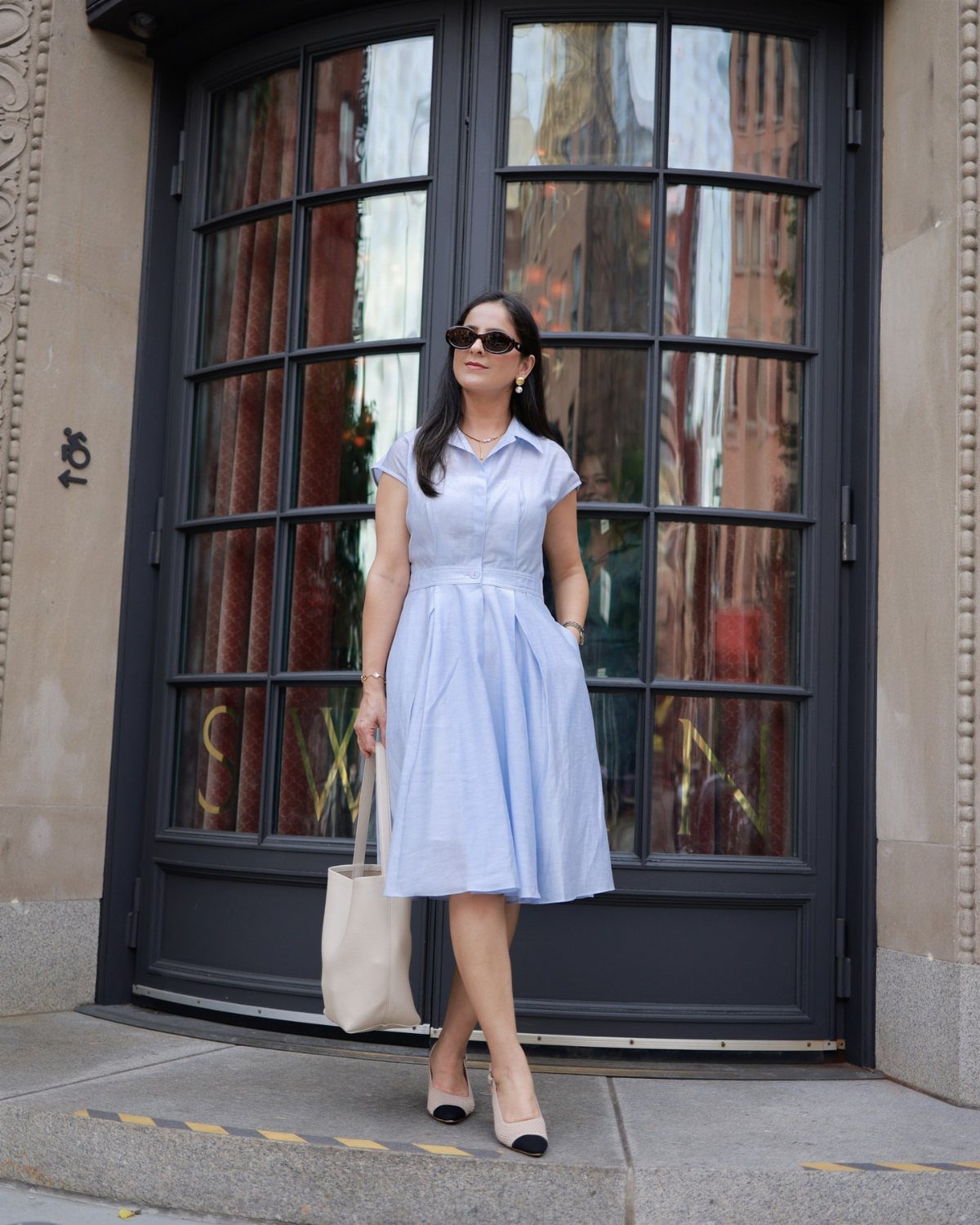
The shirtdress solves a specific summer problem: you need to look assembled in the morning when humidity has already done its worst.
A cotton poplin or lightweight chambray in a true midi length keeps the office temperature in mind without looking like you forgot where you were going.
I prefer a defined waist, either built in or added with a narrow belt, because the sack-shaped versions tend to photograph better than they wear.
Short sleeves rather than sleeveless give you coverage for aggressive AC; roll them once if they feel too prim.
The light blue here is versatile enough for client meetings, though I would avoid anything paler than a robin’s egg if your morning commute involves public transit.
3. Wide-leg Pants with Fitted Tops
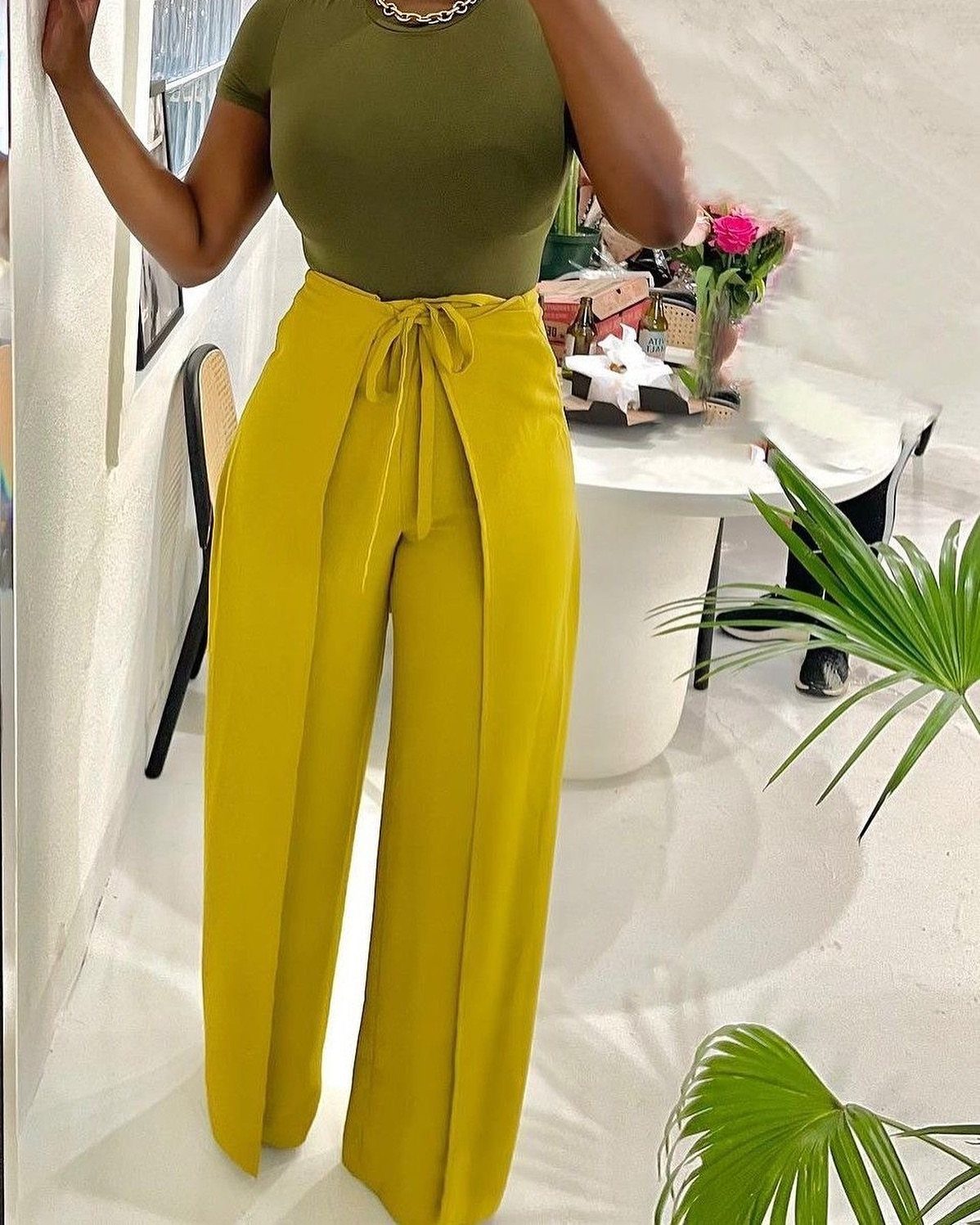
Wide-leg pants in summer need weight to hang right; a fluid crepe or heavy silk works, whereas lightweight rayon can cling in the wrong places once you start moving.
The high waist with a tie, visible here, matters more than the color: it lets you adjust through a day of sitting and standing without the gap that ruins a line.
The olive fitted top is doing more than balancing volume. A close-fitting short sleeve in a matte jersey or ribbed knit tucks cleanly and stays put, which a looser woven would not.
I would avoid cap sleeves; they cut the arm at its widest point, and a true short sleeve or sleeveless crew is more flattering on most frames.
Yellow and olive is a combination I would not have assembled myself, but the warmth in both keeps it intentional rather than accidental.
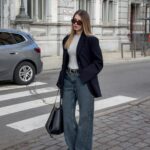
4. A Suit Set
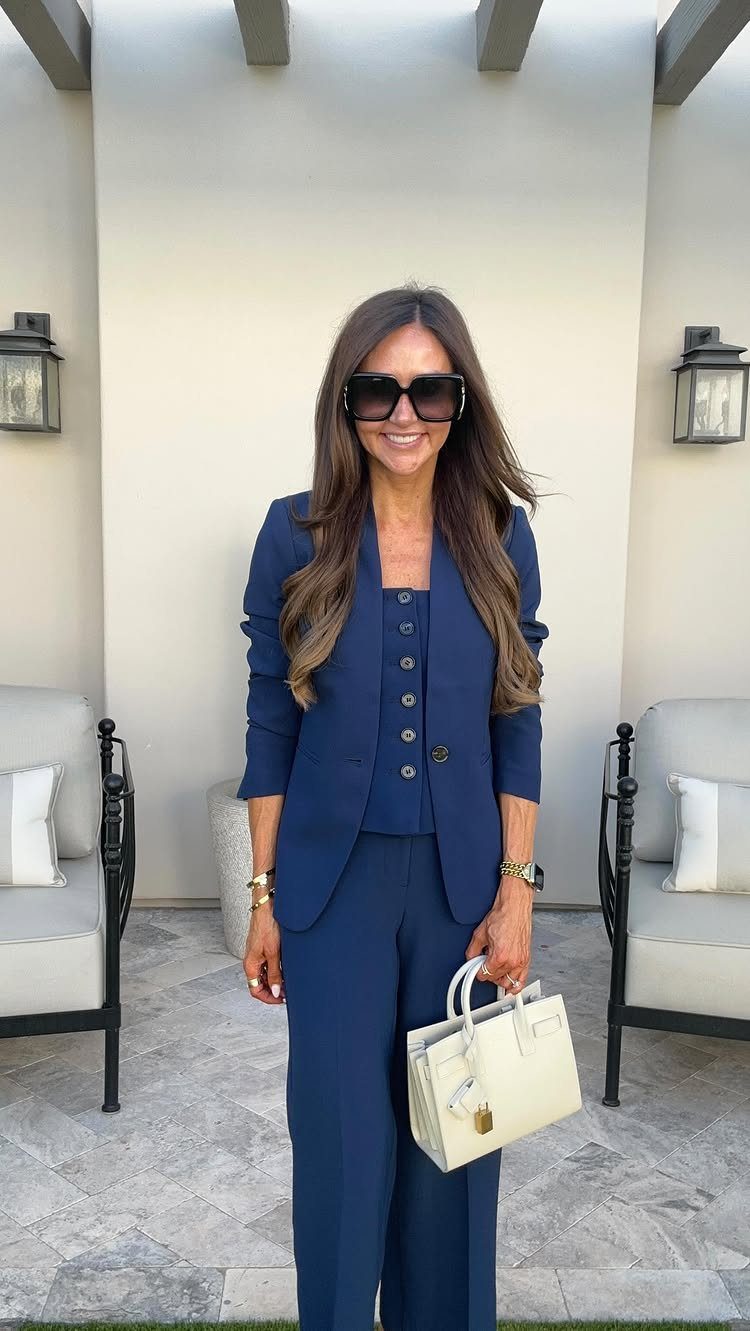
A three-piece suit in summer-weight wool or a tropical-weight blend gives you options: waistcoat and trousers alone for the hottest days, full jacket when the conference room demands it.
Oversized sunglasses and an open blazer read as deliberate relaxation of the code, not ignorance of it.
I would pay attention to the waistcoat fit; too loose and it resembles a vest you found in a costume bin, too tight and you cannot sit through a full presentation.
The off-white bag is a smart choice, breaking up the navy without introducing a competing color.
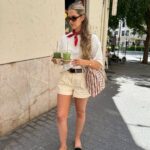
5. Striped Button-down with White Trousers
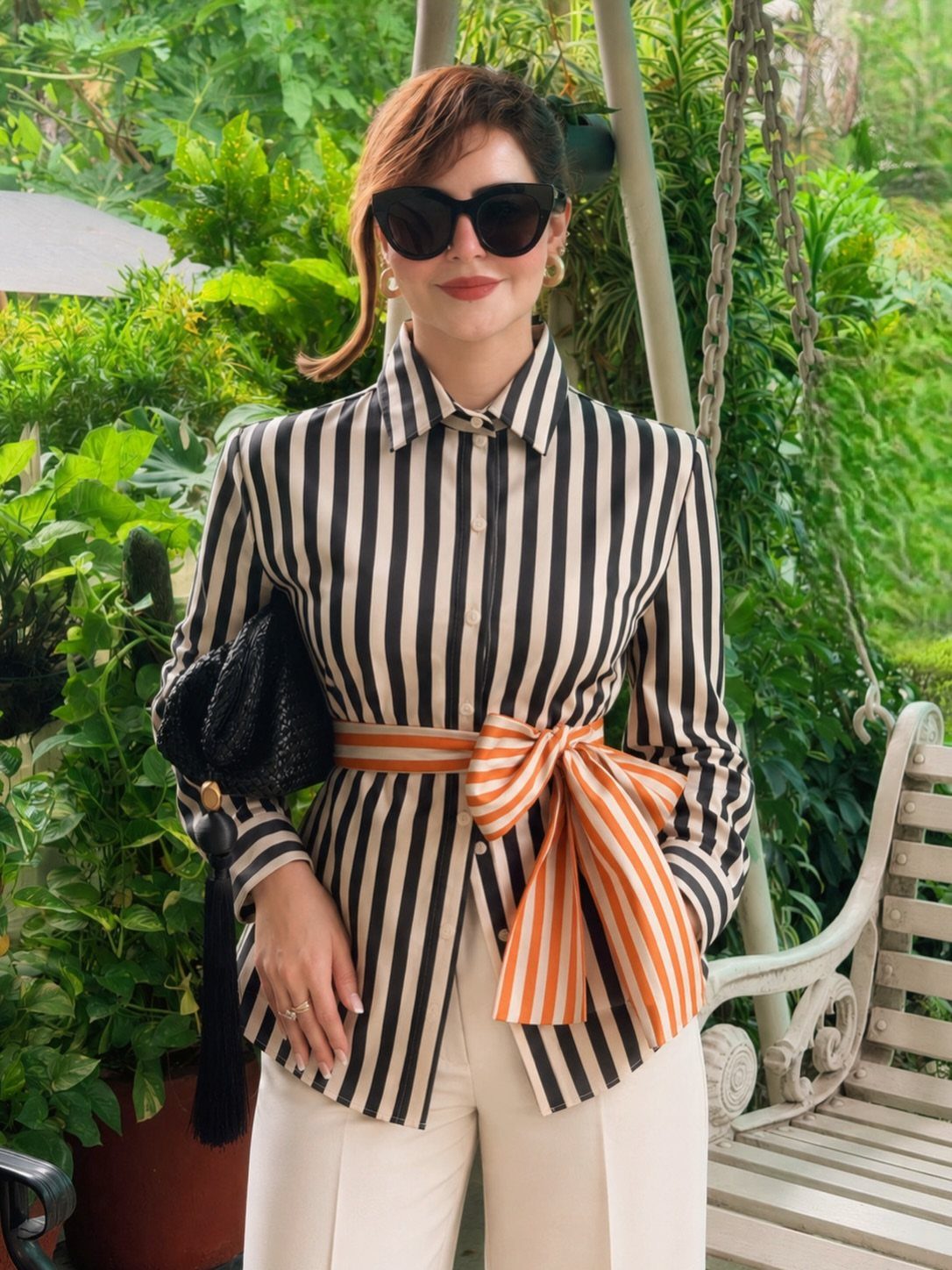
Vertical or horizontal, the stripe on a summer shirt needs scale: too narrow and it vibrates on screen, too wide and it becomes casual in a way that is hard to reverse.
White trousers for the office require opacity; I hold them up to a window before buying, and I replace them more often than navy because they show wear at the inner thigh first.
A cropped or full length both work, though I find a slight flare cleaner than a taper with this much volume up top.
The bow belt is a commitment. A standard leather belt in cognac or tan would be my everyday choice, but I keep one striped silk scarf for days when I need the same effect with less fuss.
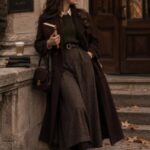
6. Belted Sleeveless Midi Dress
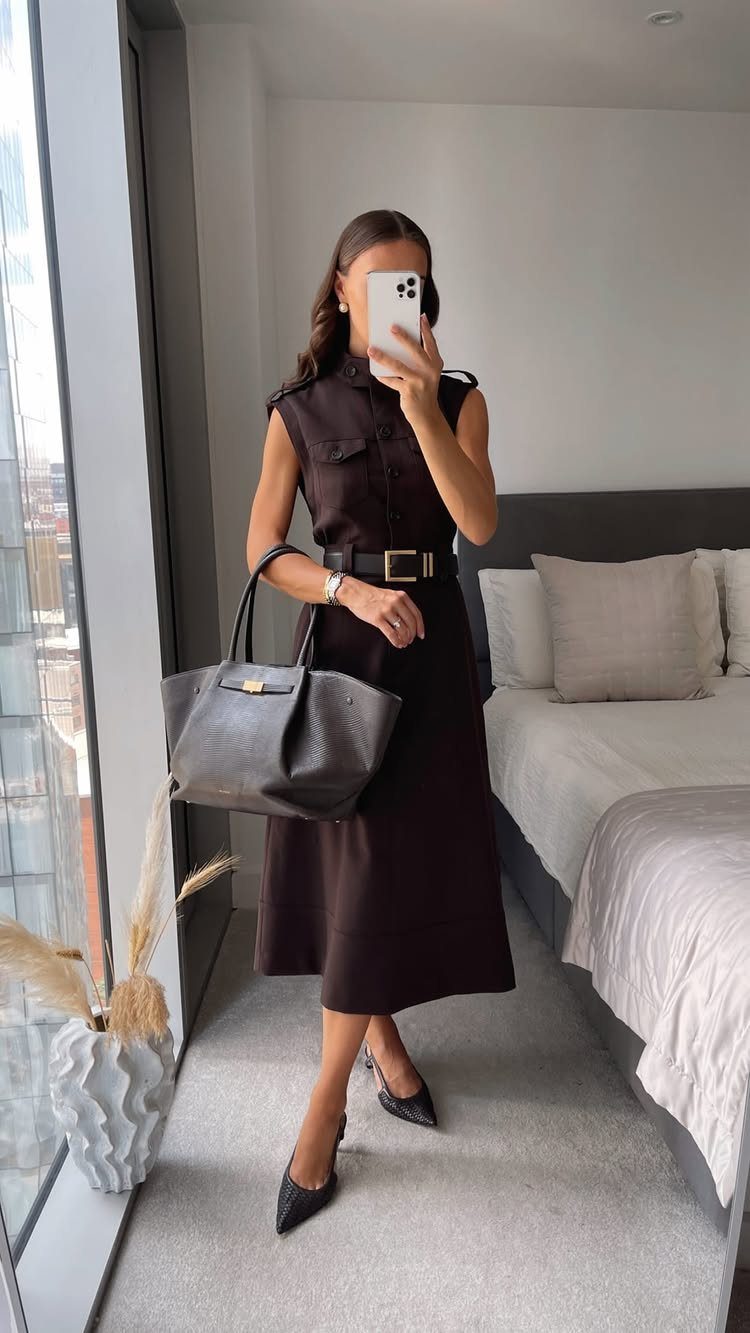
A sleeveless midi in a substantial fabric, here a dark brown that reads almost as chocolate, avoids the common summer mistake of too much exposure above and too much coverage below.
The black belt is narrow, which defines without cutting; a wider belt would compete with the clean line of the dress itself.
Pointed-toe heels extend the leg, though I would wear a block heel or kitten height for any day with serious walking.
I prefer this length, hitting between mid-calf and ankle, on bodies with a longer torso; if you are short-waisted, a slightly shorter hem or a higher belt placement keeps the proportions from feeling dowdy.
7. Short-sleeve Denim Shirt and Maxi Skirt
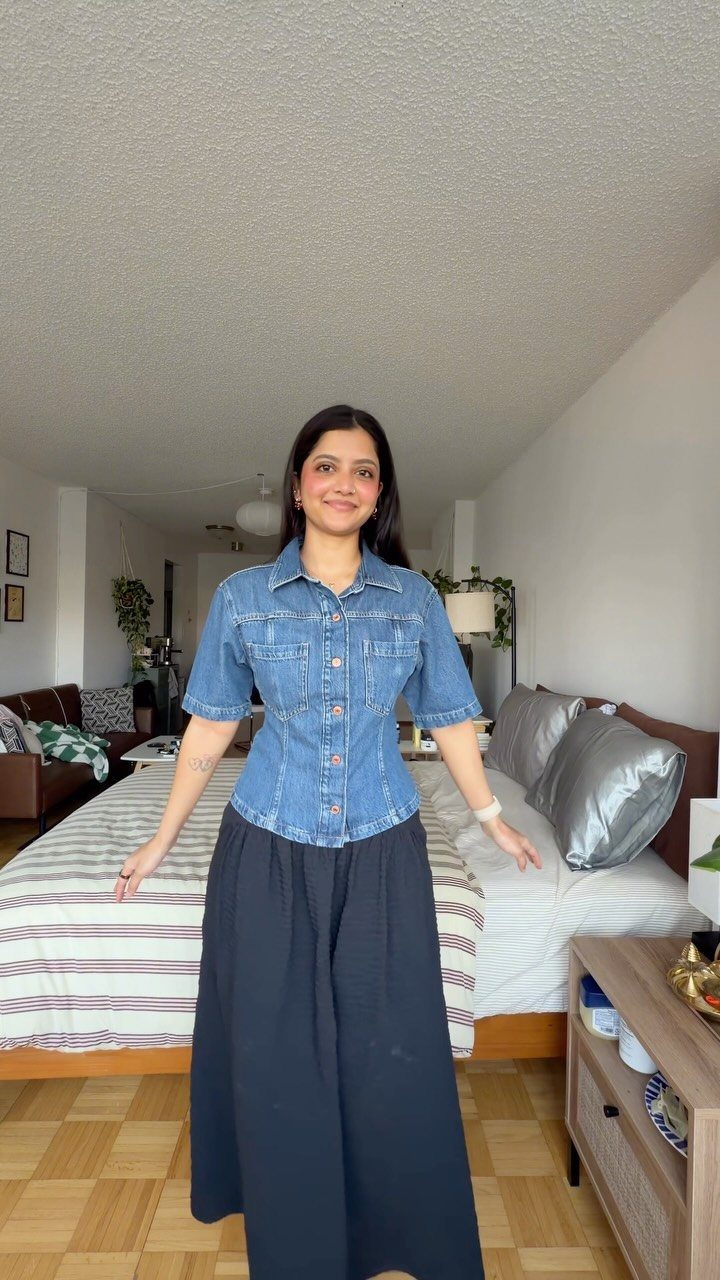
A short-sleeve denim shirt in a deep indigo wash, fitted through the body, reads as structured rather than weekend casual when the buttons stop at the collarbone and the hem is tucked clean.
The maxi skirt needs weight to balance the shirt; a matte crepe or soft cotton sateen hangs straight without clinging, and the black here keeps the line long.
I would look for a waistband that sits at the natural waist, not the hip, so the proportion feels intentional.
This pairing trades the polish of suiting for comfort that still looks considered. It suits offices where "no jeans" is the rule but chambray passes, and days when the commute is hot and the AC is brutal.
Dress Code Considerations
A cardigan or blazer kept at your desk is the practical layer most offices need, not an afterthought.
Summer AC often runs cold enough that a sleeveless dress or short-sleeve shirt leaves you uncomfortable through a long meeting, and the extra layer reads as preparedness rather than costume change.
White dresses can work in structured silhouettes, though lace or broderie anglaise details need judgment: the embroidery should read as texture from across a room, not as weekend garden-party trim.
Hold the fabric up and step back. What looks delicate up close can scan as busy or too informal in a conference room.
Dress codes vary enough that no single outfit clears every office.
The same sleeveless midi that passes at a creative firm may need the added layer at a law office, and the denim-chambray distinction that matters in one building means nothing in another.
When in doubt, I would rather see someone slightly overdressed and remove a layer than underdressed with nothing to add.
There’s a little something here for everyone, but remember that work dress codes are different in every office setting.
Color Choices
Light colors reflect heat, which matters on a subway platform at 8:30 AM, but the shade needs enough depth to survive a commute.
The color still reads as light without the maintenance burden of true white.
Neutrals do not have to mean beige. Chocolate brown, deep olive, and navy all stay professional while absorbing less heat than black.
The effect is cooler without the risk of a full pale look.
Fit for Petite Women
A defined waist matters more on a petite frame than height alone would suggest. The sack-shaped shirtdress that photographs well on a model tends to wear as shapeless when the wearer’s vertical line is already shorter.
A short-waisted frame needs the waistline to sit where your actual waist is, not where a standard pattern places it; I look for petite sizing or a seam I can move up an inch.
The same rule applies to the fitted top under wide-leg pants: close through the body, no excess volume that competes with the leg line.
Frequently Asked Questions
What is the 3-3-3 rule for clothes?
I do not use the 3-3-3 rule in my own planning, so I will leave it to the minimalists who do.
What to wear to office summer 2026?
Tailored pieces in lightweight, breathable fabrics work best: sleeveless blazers in summer-weight wool or linen blends, shirtdresses in cotton poplin or chambray, and wide-leg pants in fluid crepe or heavy silk.
What is the best dress for work in the summer?
A shirtdress in cotton poplin or lightweight chambray, in a true midi length with a defined waist, solves the problem of looking assembled when humidity is already high.
Short sleeves rather than sleeveless give coverage for aggressive air conditioning, and a color no paler than robin’s egg holds up through a commute on public transit.