Business casual runs the range from a ribbed knit cardigan for a freezing desk to a leather-look pencil skirt that looks sharp without the full suit commitment.
A cotton A-line dress with a belted waist handles an uncertain dress code better than most pieces I own; when the office runs cold, I fasten every button on a placket-front cardigan and keep it on through meetings.
1. Midi Skirt
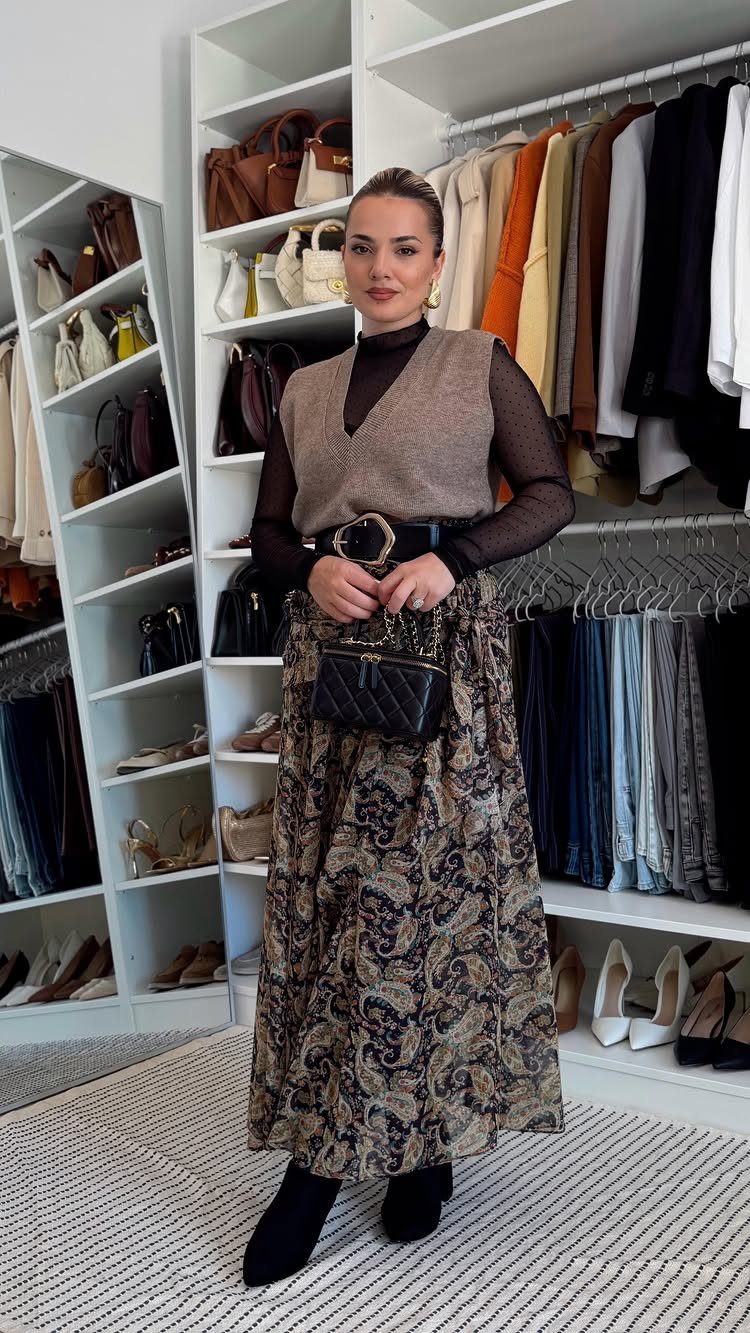
A midi skirt hits that sweet spot between coverage and movement, falling somewhere below the knee to mid-calf.
A midi length handles pattern without overwhelming a frame, since the extra fabric below the knee balances a busy print or sheer layer.
I would pair it with a fitted top or cropped vest to keep the silhouette defined, since the volume sits low.
For all-day desk-to-dinner wear, this is the skirt shape I point women toward first.
2. Classic Button-Down
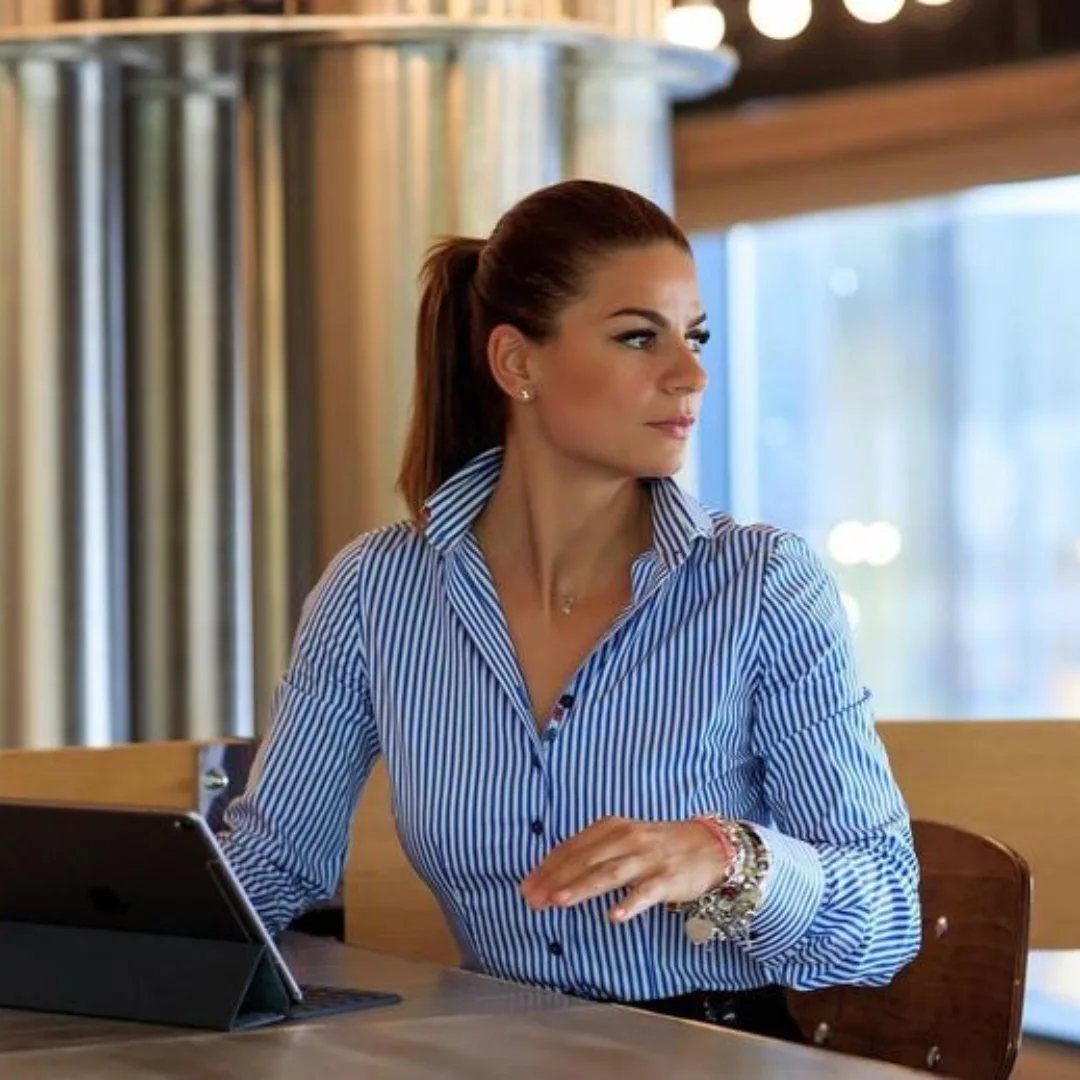
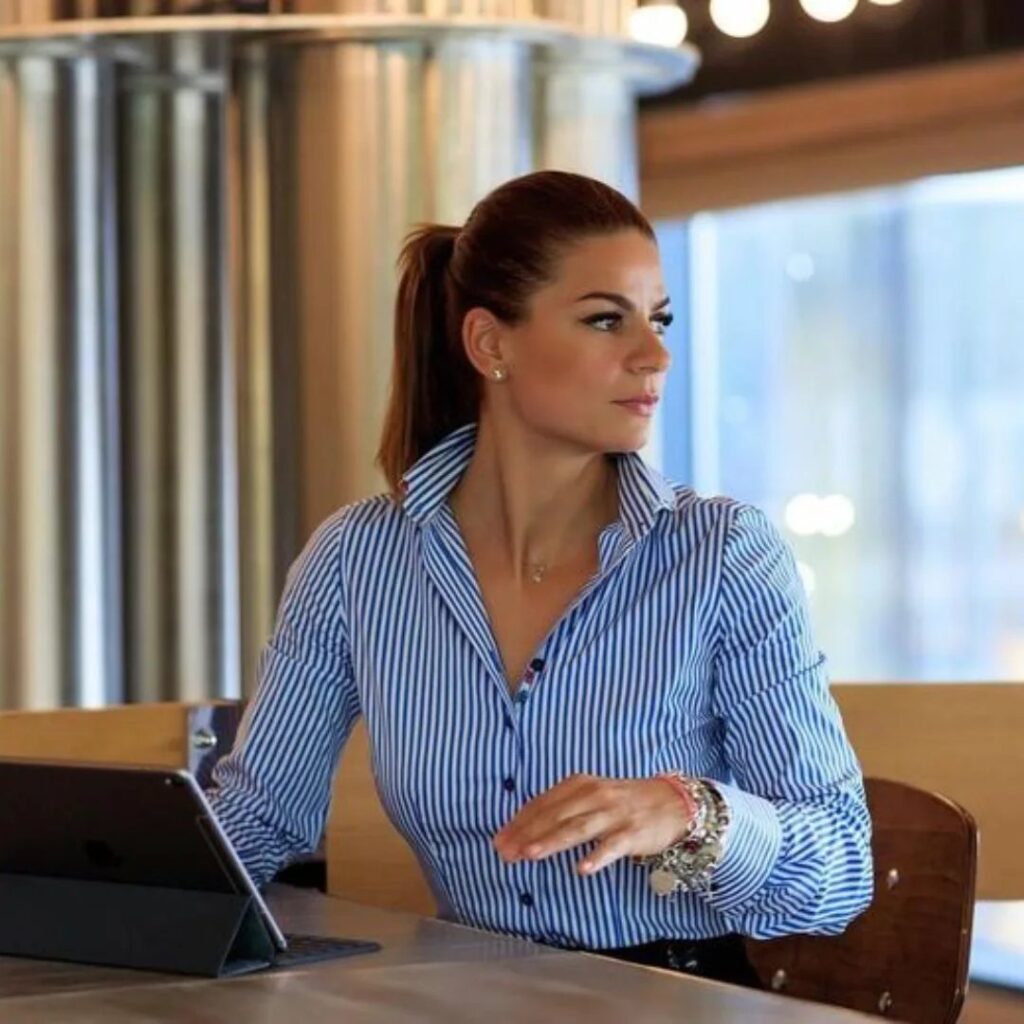
Vertical stripes on a button-down do more than read nautical. They draw the eye up, which matters when you are seated at a screen for hours and your torso does the talking.
The blue-and-white here is crisp without being stark; I would wear it tucked into trousers or left out over slim pants, depending on office temperature.
A shirt like this needs no layering to look finished, which saves money and decision fatigue both.
3. Pencil Skirt
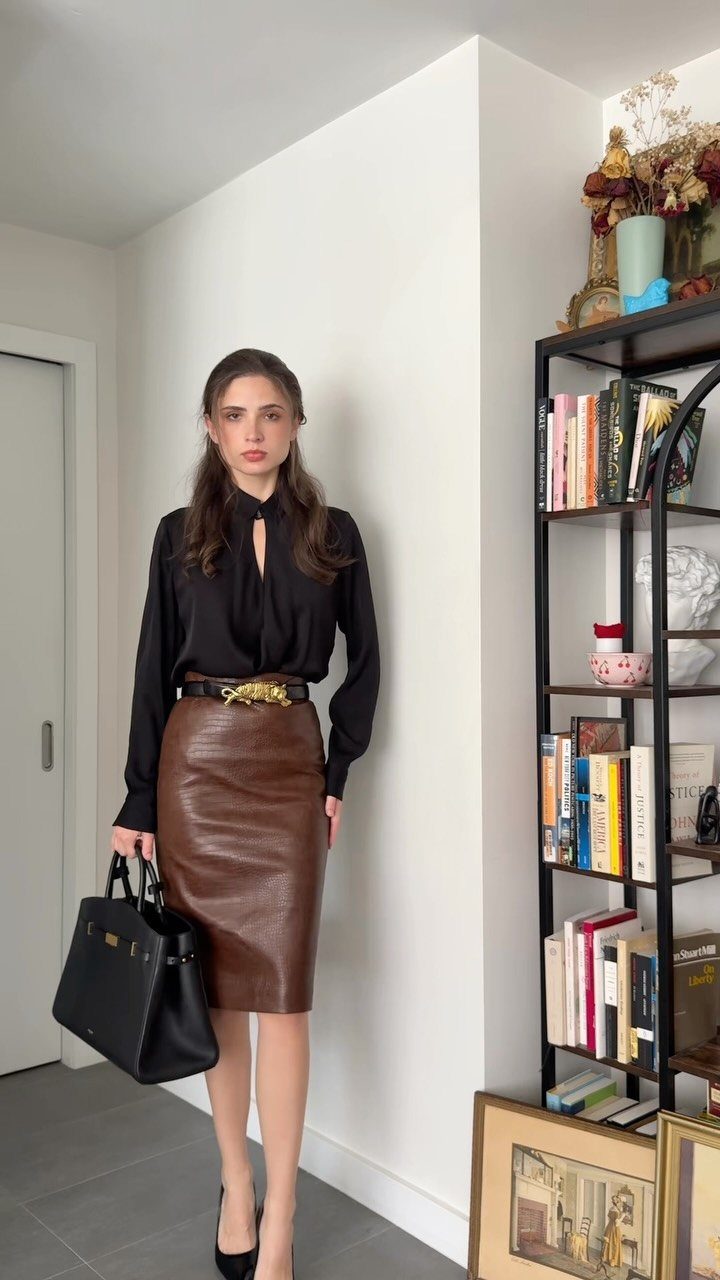
The pencil skirt narrows toward the knee, so it reads sharper than an A-line without requiring a full suit.
Leather or a leather-look finish softens the formality just enough for business casual; a matte wool version would push it toward interview territory.
The tiger buckle belt adds a focal point at the waist, which I would keep in mind if the skirt itself is plain.
This is the shape for women who want to look put-together fast.
4. Dress Pants
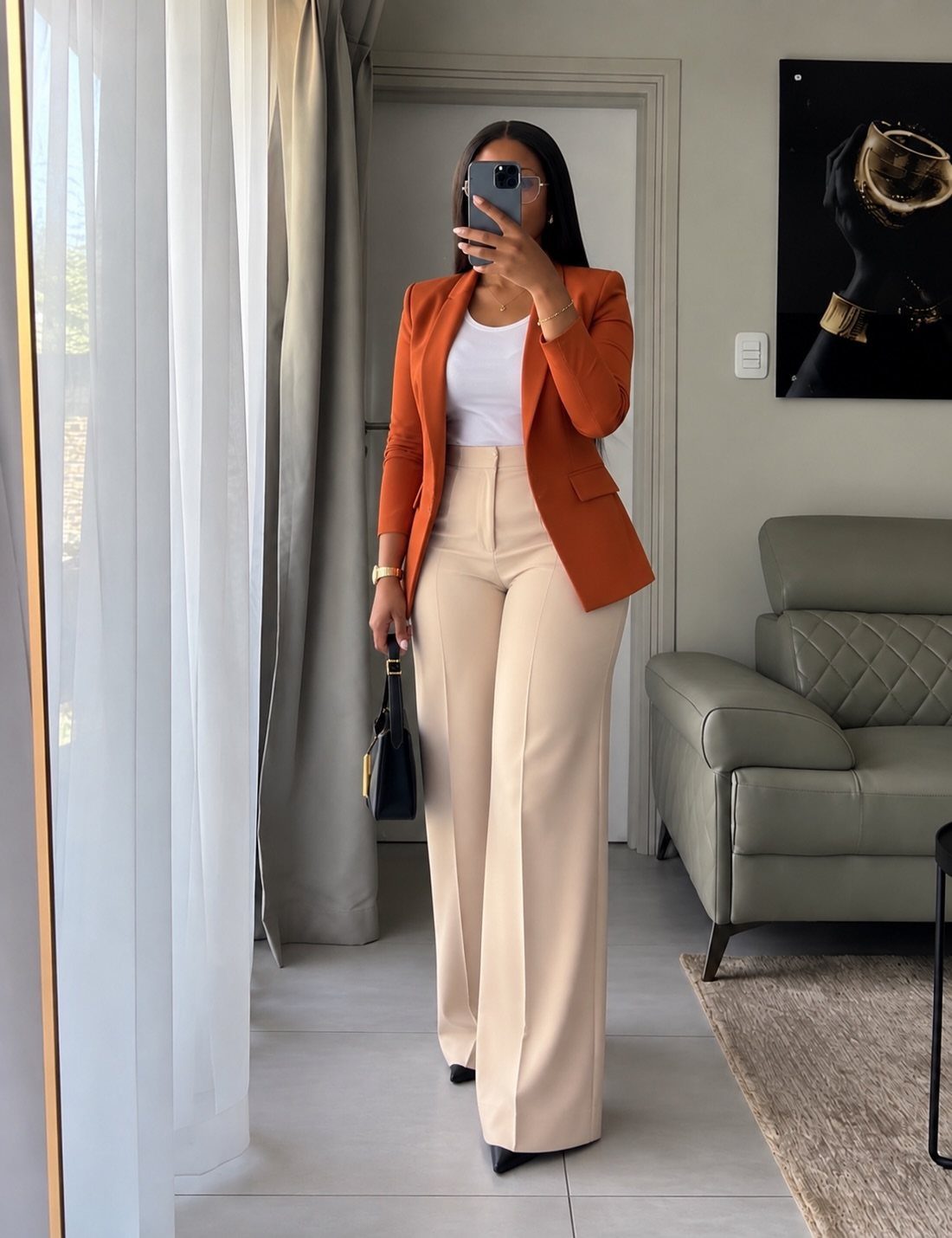
Wide-leg dress pants in a neutral like beige give you the ease of trousers with the presence of a skirt.
A high waist works with a tucked or cropped top to lengthen the leg line; I would add a heel or substantial flat, since the hem needs clearance.
A rust blazer is a bolder pairing than I would usually choose, but it proves these pants can handle color.
For offices that run cold, this cut layers over tights more gracefully than a slim leg.
5. A-Line Dress
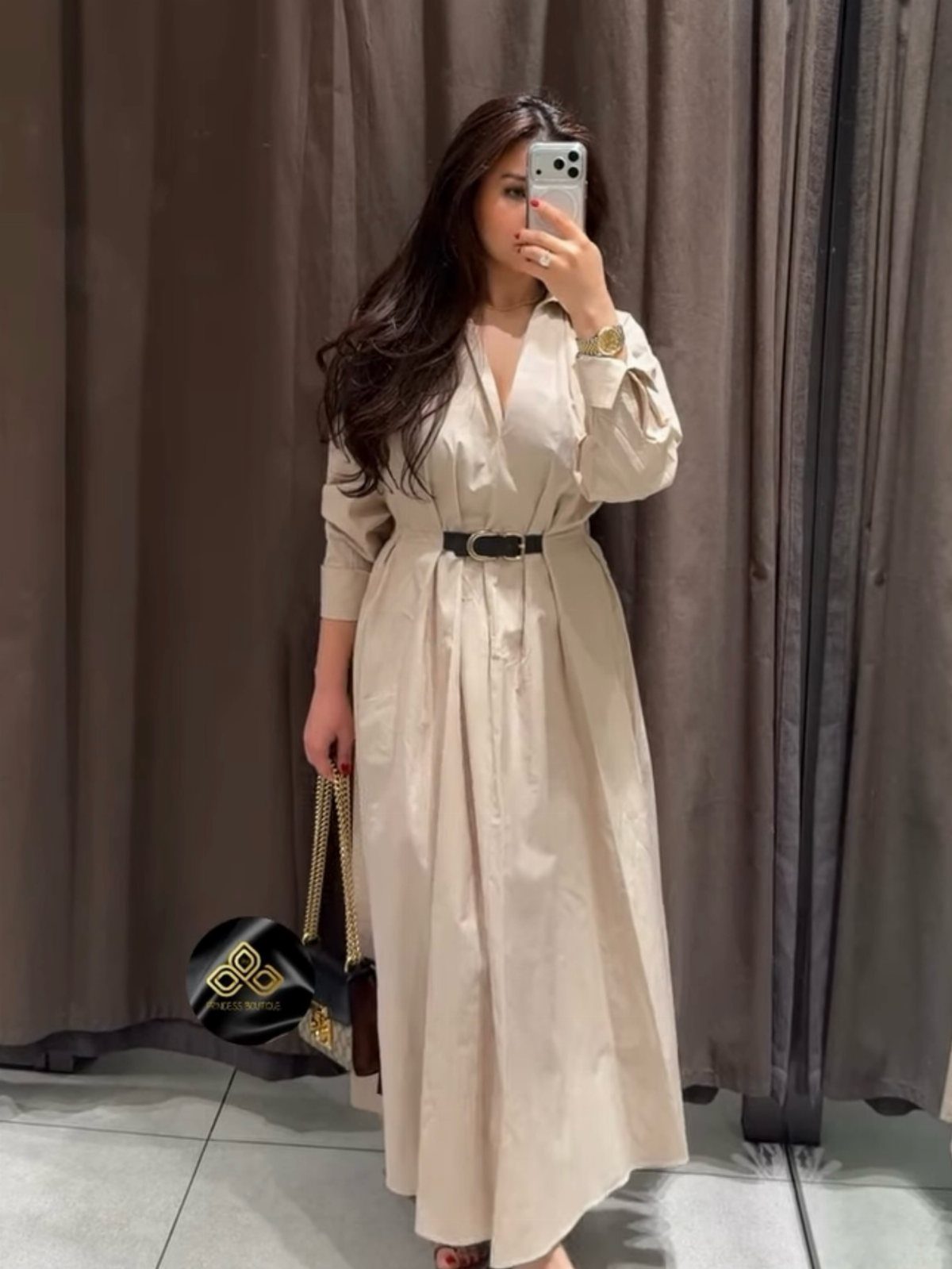
An A-line dress flares from the waist, which means it does not cling and it does not require constant adjustment.
I would look for a V-neck and belted waist: the neckline opens up the face for video calls, and the belt keeps the shape from reading sack-like.
This is the dress I would pack for a conference with an uncertain dress code.
Cotton or a cotton blend handles travel and a full day of sitting without looking defeated by evening.
6. Closed-Toe Pumps
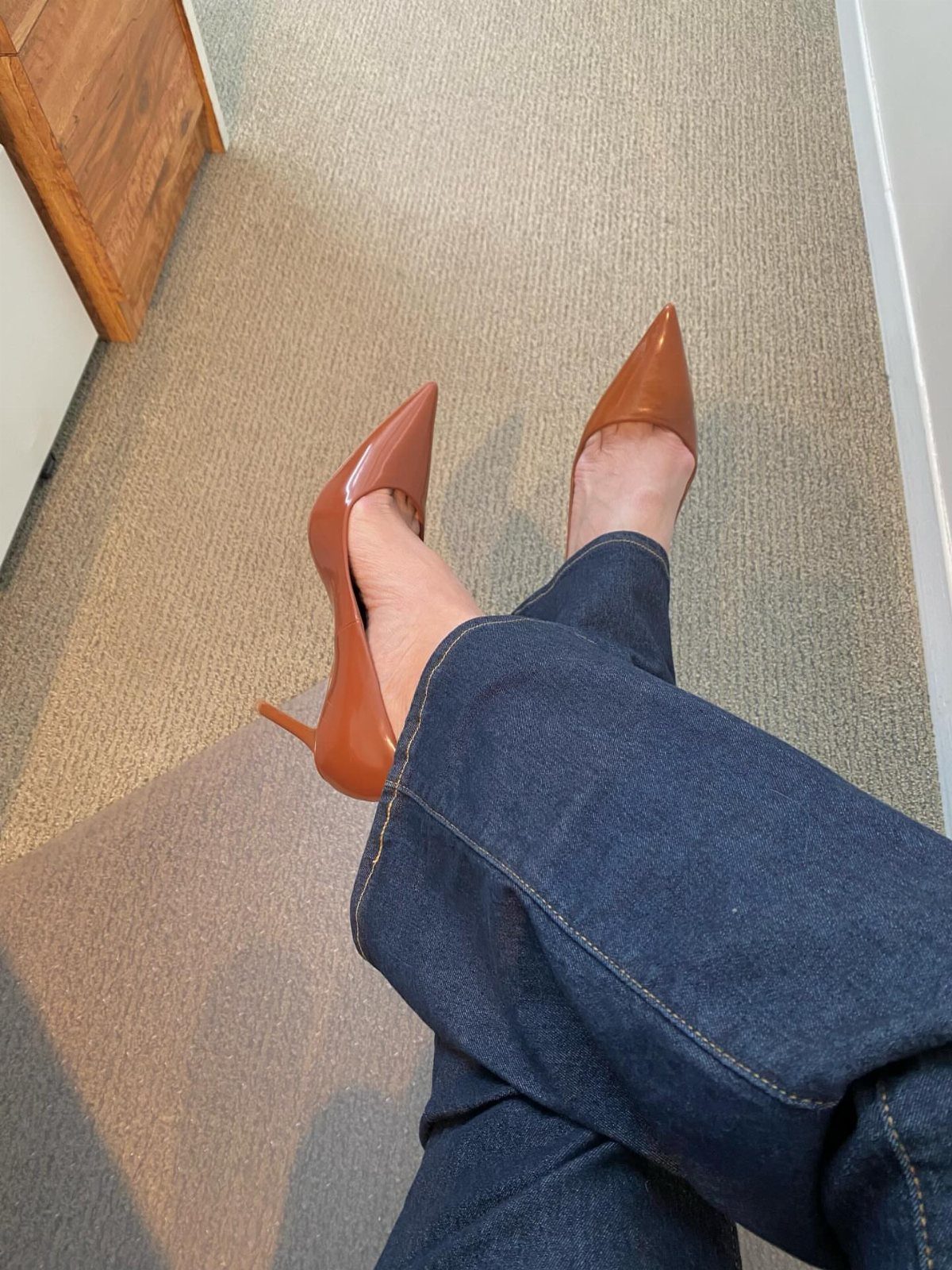
Closed-toe pumps are the default for a reason. A pointed toe extends the foot visually, which helps when wide-leg pants or long hems threaten to shorten the leg.
Glossy leather or patent reads more formal than matte; for daily wear, I would choose a mid-heel height I can actually walk in, since the closed toe already signals professionalism.
Tan or a skin-tone match lengthens further, but navy or black handles any outfit you throw at it.
7. Cozy Cardigan
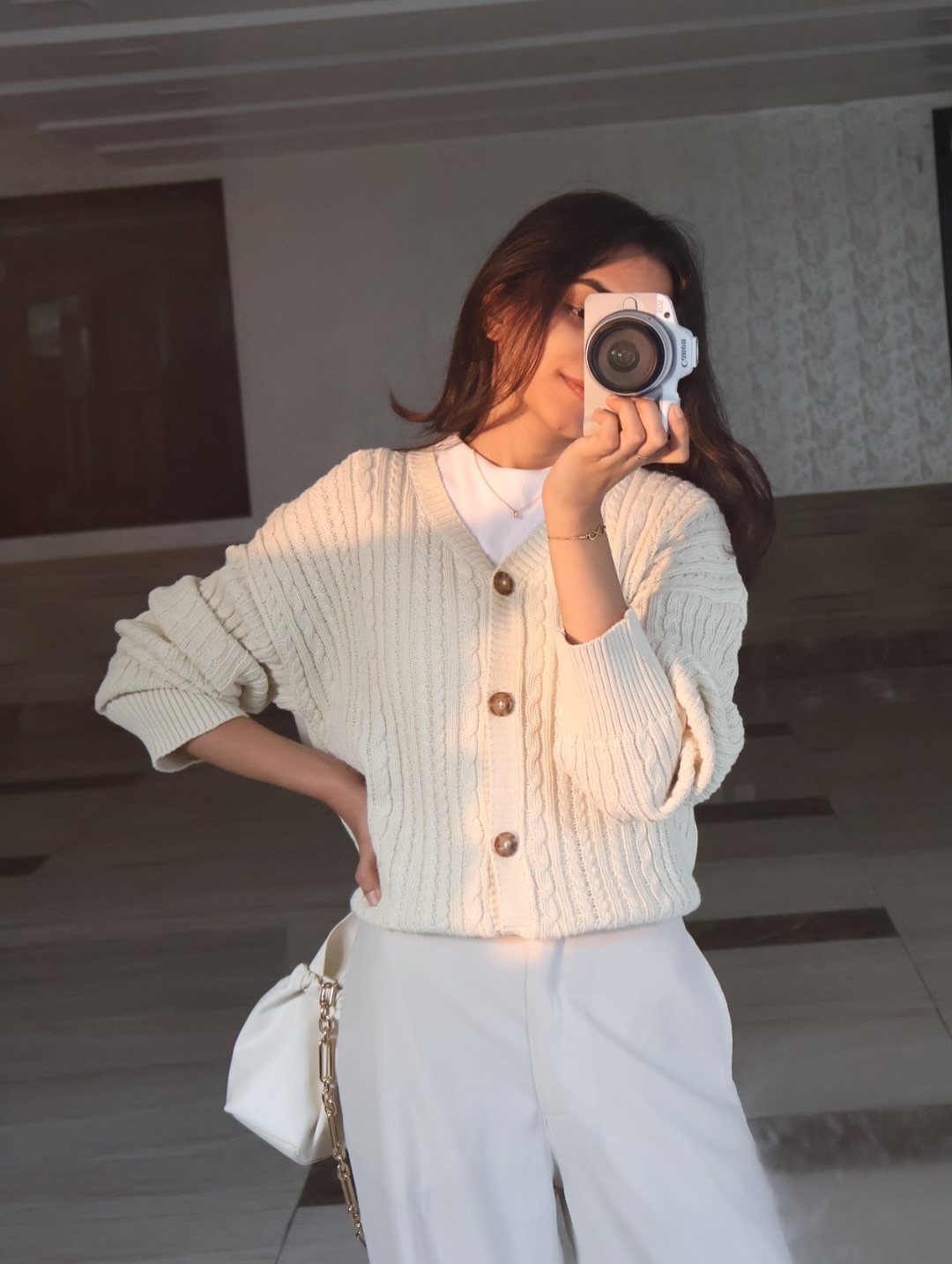
A button-front cardigan in a ribbed knit reads more intentional than the open-front styles that have dominated the last few years.
Cream knits with a hint of yellow warm up underneath white without the clash you’d get from a cooler ivory.
I would keep the buttons fasted to the top or leave the bottom two undone for movement; either way, the vertical line of the placket does what a button-down shirt does, but softer.
This is the piece for offices that run cold and colleagues who run colder.
8. Tailored Blazer Outfit
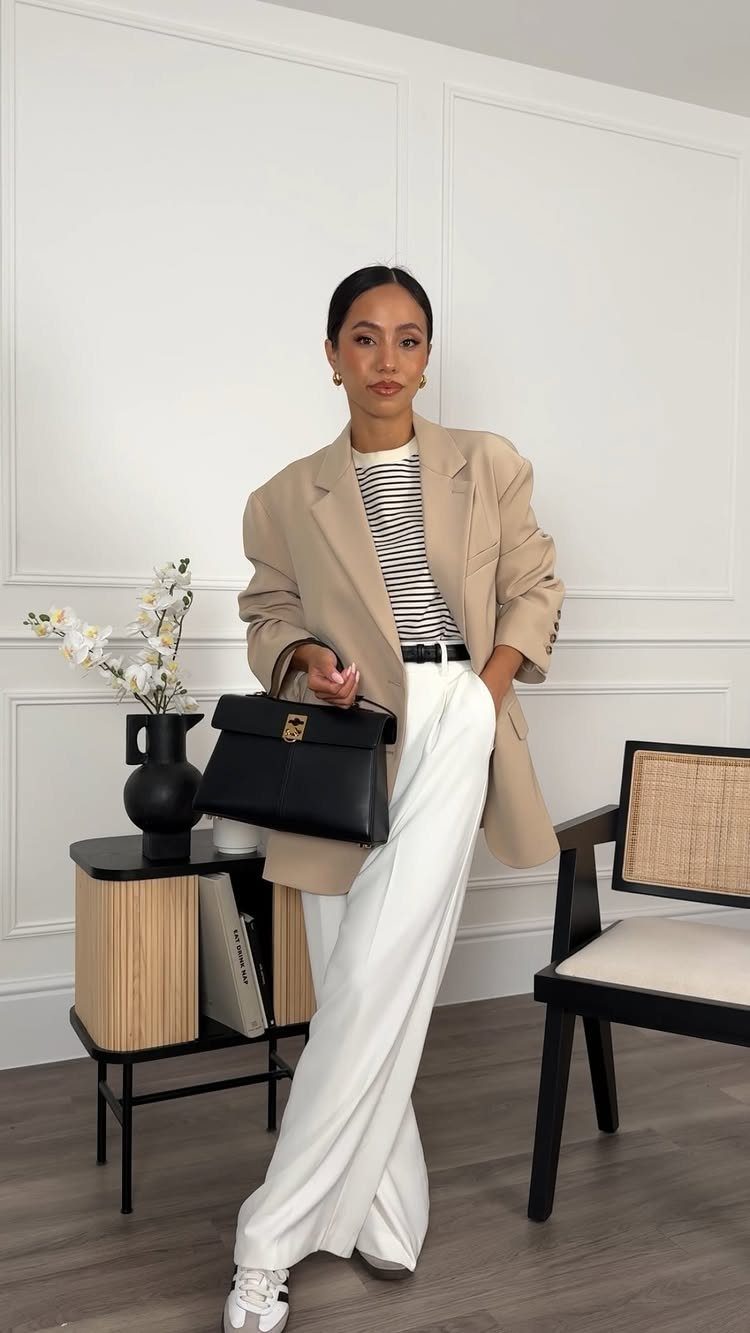
An oversized blazer in tan softens the severity of tailoring without losing the structure that makes an outfit look considered. The stripe underneath adds rhythm; wide-leg trousers balance the volume on top so the shape reads relaxed, not sloppy.
Sneakers underneath are a choice I would make only on days with no external meetings, though they prove the blazer can handle them.
For my own closet, I would swap in a loafer or low block heel and keep the bag structured to match the jacket’s shoulders.
9. Collared Shirt Dress
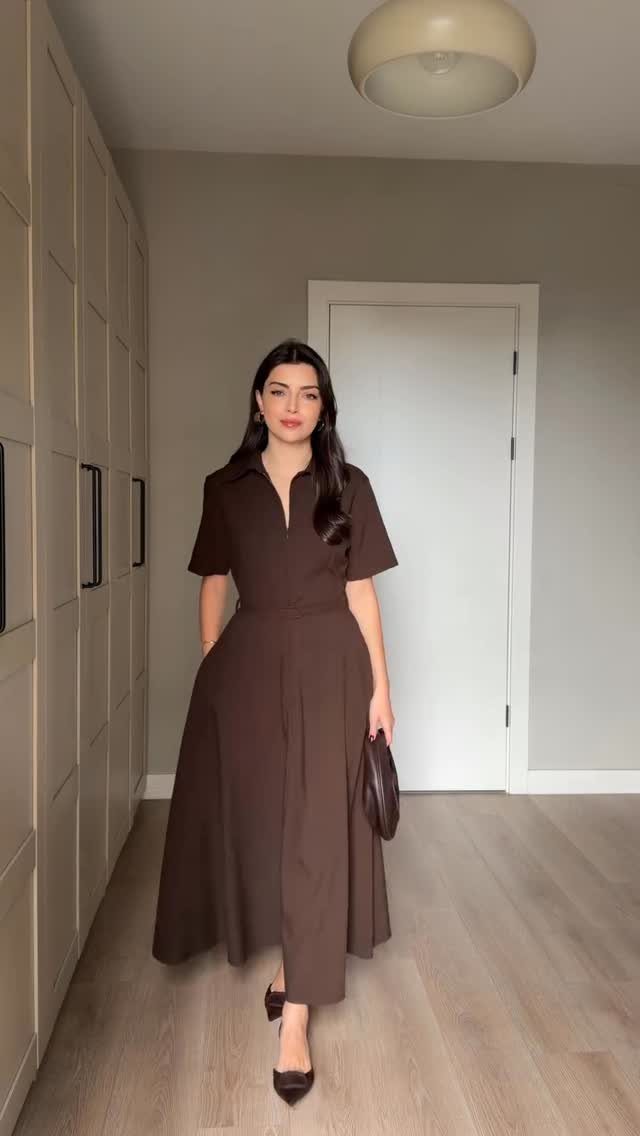
A shirt dress with a proper collar gives you the polish of separates in one piece that does not require tucking or layering decisions first thing in the morning.
The short sleeve here hits mid-arm, which works in offices that overheat; I would add a cropped cardigan or light blazer for the conference room.
Dark brown reads richer than black in daylight and hides coffee better than beige.
A midi length with a defined waist, whether from cut or a thin belt, keeps the shape from sliding into tent territory. This is the easiest one-and-done in the list.
10. Sweater and Maxi Skirt
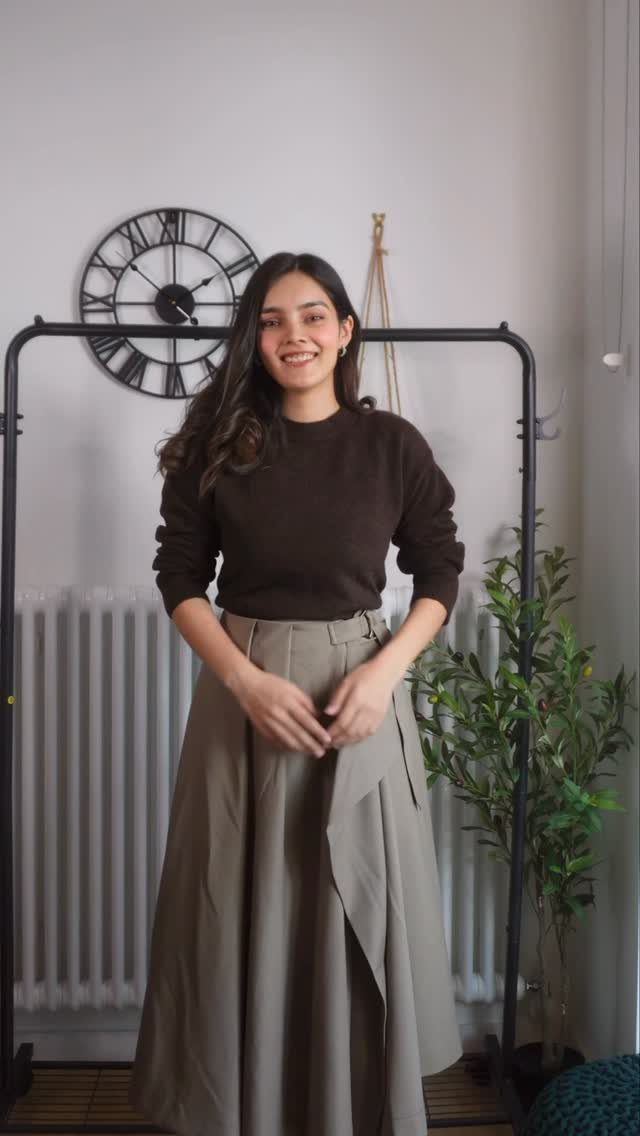
A fitted crewneck tucked into a high-waisted maxi skirt gives you coverage without the formality of a full-length dress.
The brown and beige pairing here is tonal; I would add a third shade, maybe burgundy or olive, in shoes or a bag so the look does not flatten into one note.
The skirt length demands a heel or substantial platform to keep the hem from dragging, even on taller frames.
Cotton or a cotton-linen blend in the skirt keeps the volume from feeling heavy through a full day of sitting and standing.
Understanding Business Casual
Business casual sits below a full suit but above jeans and a T-shirt.
Melissa Garcia, a Marshalls styling expert, defines it as work-appropriate clothing that lets you dress more comfortably while staying professional. The gap is wide enough that one office’s casual Friday looks like another’s Monday.
In practice, this means dress pants, skirts, button-downs, and sweaters form the backbone.
Each piece can move up or down depending on what you pair it with. A blazer sharpens a knit top; swapping it for a cardigan softens the same trousers.
The real risk is buying for a dress code you have not seen in person. I would rather wear a slightly elevated outfit on day one and adjust downward than guess wrong the other direction.
"Business casual attire is work appropriate clothing that isn’t as formal as your traditional suit," says Melissa Garcia, Marshalls styling expert.
Dressing for Different Work Environments
The same "business casual" label covers different ground by industry.
Creative and start-up companies usually lean more casual, while technical fields tend stricter, according to a 2019 Forbes breakdown Garcia cites. A stripe-neckline outfit that reads polished in one building might feel overdressed in another.
I would handle this by watching what people wear at my level, not the C-suite. The senior staff may have earned leeway I have not, or they may be client-facing in ways I am not yet.
Temperature matters too: offices that overheat call for short sleeves or layers you can shed, while cold buildings need the cardigan or blazer you can keep on through meetings.
The core pieces in a business casual wardrobe stay the same across settings. What changes is how finished they look: tucked versus untucked, belted versus not, heels versus flats.
Importance of Personal Style
Garcia notes that business casual lets you incorporate personal style within work-appropriate limits. I take this to mean the cut, color, and detail you choose, not a wholesale substitution of your weekend wardrobe.
The confidence comes from knowing why a piece works.
Choosing the jewelry, the heel height, or the sleeve length that feels right for you is a small act, but it is yours, and these choices add up to a version of professional that you can stand in all day.
I would start with the shape that feels right on my body, then adjust the formality. The personal part is knowing which version your day demands.