These work outfits for women start with pieces you can break apart and wear 3 ways: a bow-neck blouse with a midi skirt, full tailored separates, and most sitting in the middle where mixing matters.
The one that wins for you depends on whether your office runs formal, business casual, or smart casual, since the same black tailored trousers read as boardroom in a satin shirt and as relaxed Friday in a tucked tee.
I keep coming back to the sage green blazer set for that exact reason; the jacket works with jeans, the pants with a tucked tee, and together they pass for a full suit without the stiffness.
1. Blazer Sets
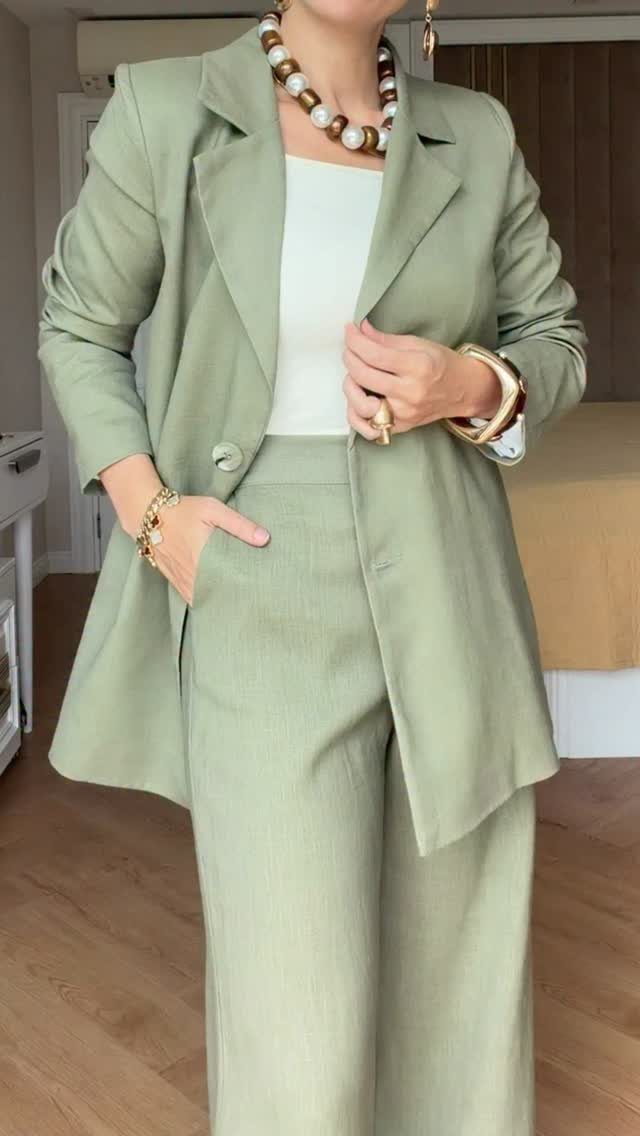
A matching blazer and trousers in sage green takes the guesswork out of morning decisions.
The set reads as a full suit without the stiffness, and you can break it apart later; the jacket works with jeans, the pants with a tucked tee.
I like a slightly oversized blazer here, one that skims rather than hugs, with the sleeves pushed to the forearm.
A white undershirt underneath keeps a blazer set from looking too done-up for a casual office, and a single beaded statement necklace saves you from overthinking jewelry.
Gold bracelets stacked at the wrist repeat the warmth of the beads without competing.
2. Work Dresses
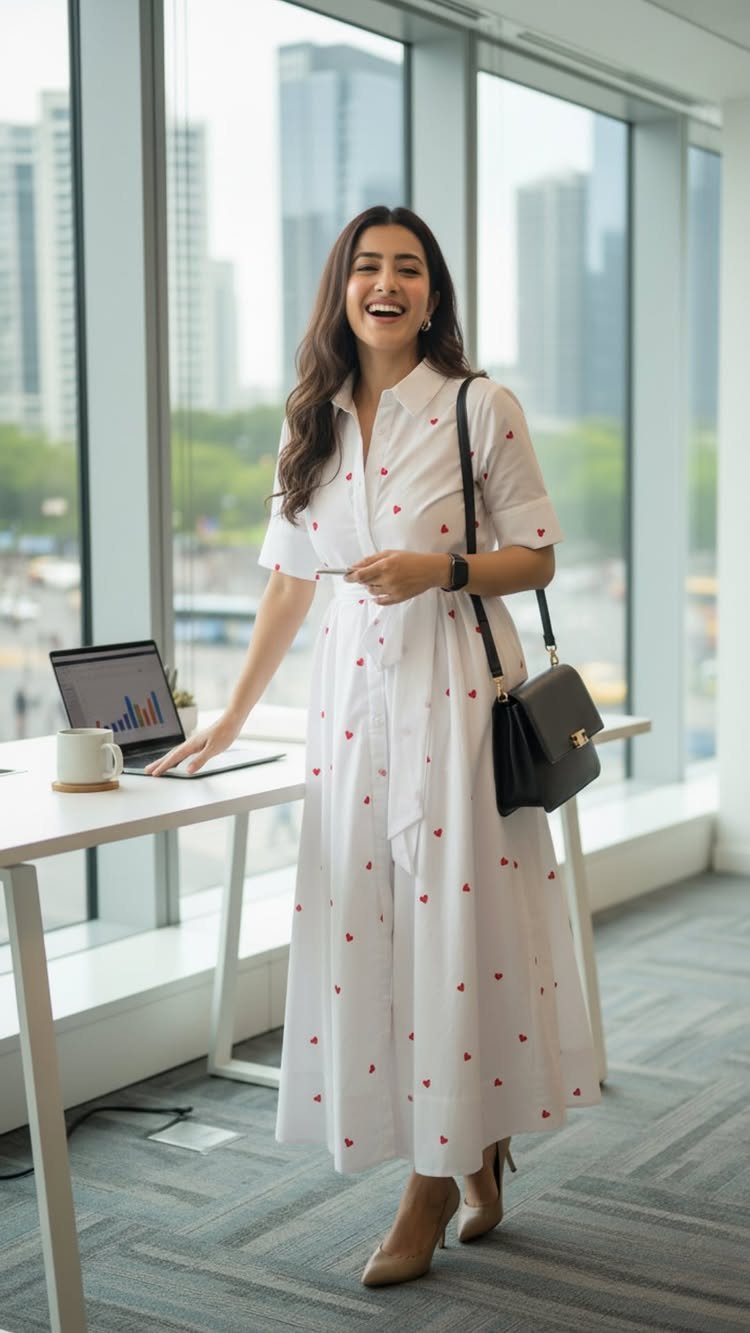
One piece, no separates to balance, and you still look dressed for the meeting. A midi shirt dress with a self-belt gives you waist definition without tightness, and the length hits where tights are optional in most offices.
Pattern, not just color, can carry a whole outfit; if your office leans conservative, a pinstripe or small geometric does the same job quietly.
Heels and a structured bag finish it, but the dress itself did the heavy lifting. I would keep a navy or black version on hand for days when I have no time and a full calendar.
3. Tailored Trousers
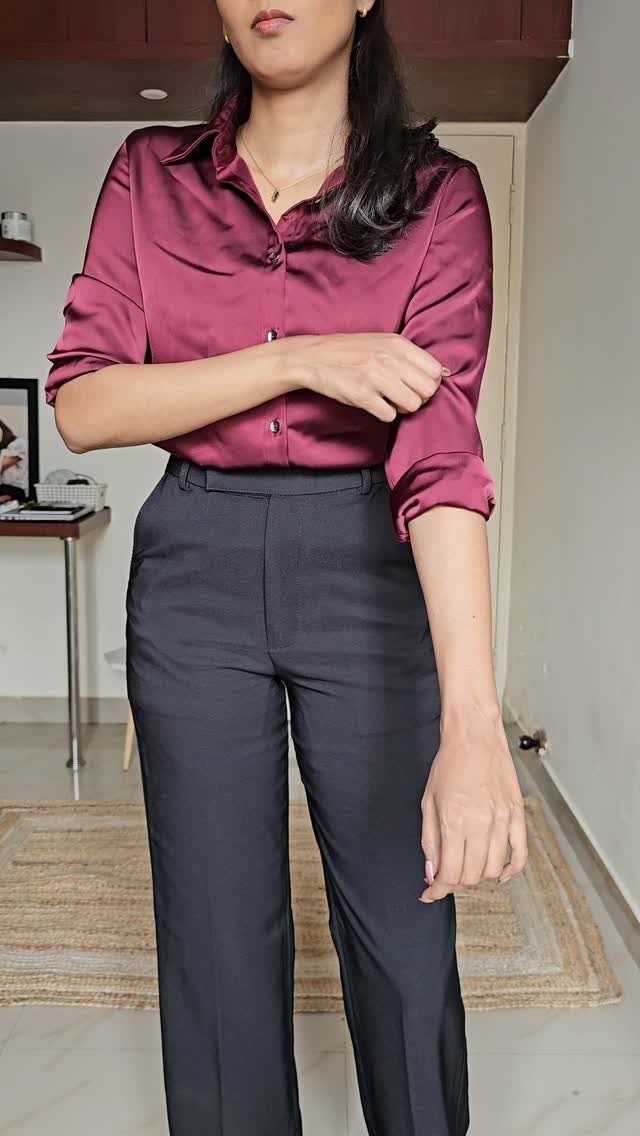
High-waisted tailored trousers in black or charcoal are the piece I reach for when I need to look sharp without wearing a suit.
The satin shirt tucked in here adds polish that a cotton button-down would not; the contrast of matte wool or crepe against shine is what makes this feel intentional rather than default.
Tuck fully, add a slim belt if the waistband allows, and choose a heel height that lets the hem break just above the shoe.
These pants move from presentation days to dinner without a change, which is where their real value sits.
4. Two-Piece Knit Sets
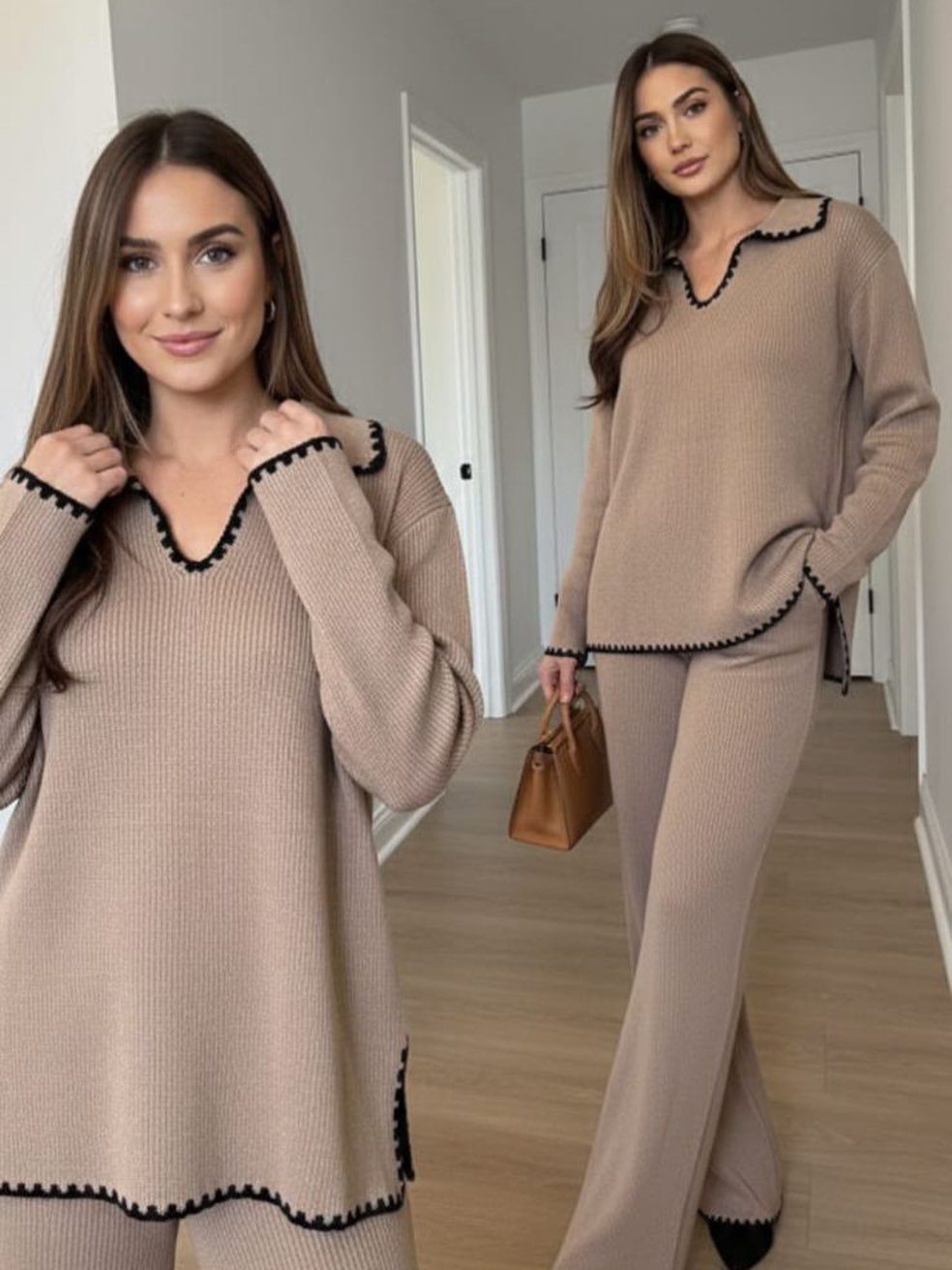
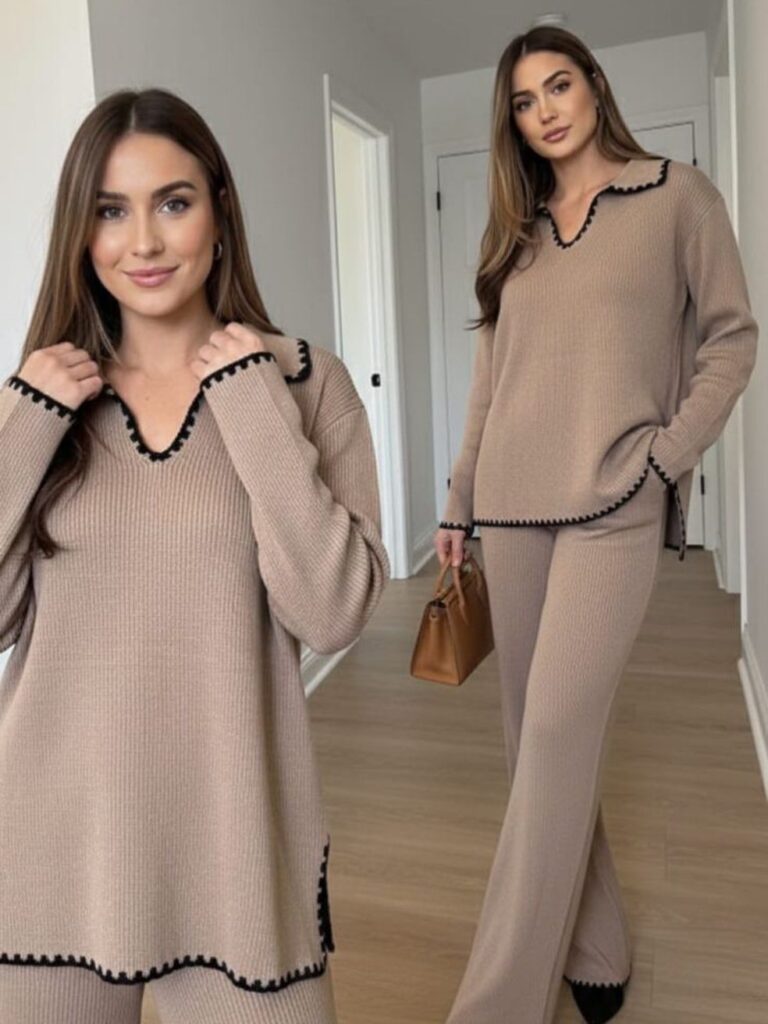
Ribbed knit in a matching set reads as intentional, not loungewear, when the trim is crisp and the pants are wide-leg rather than fitted.
A black scalloped edge on beige gives the eye a border to follow, which is what separates this from something you would wear at home.
I would add a structured bag and a pointed flat or low heel; soft fabric needs a hard accessory to keep it office-appropriate.
The comfort is genuine, though, and for long days at a desk or on your feet, that matters more than most people admit.
5. Pencil Skirts
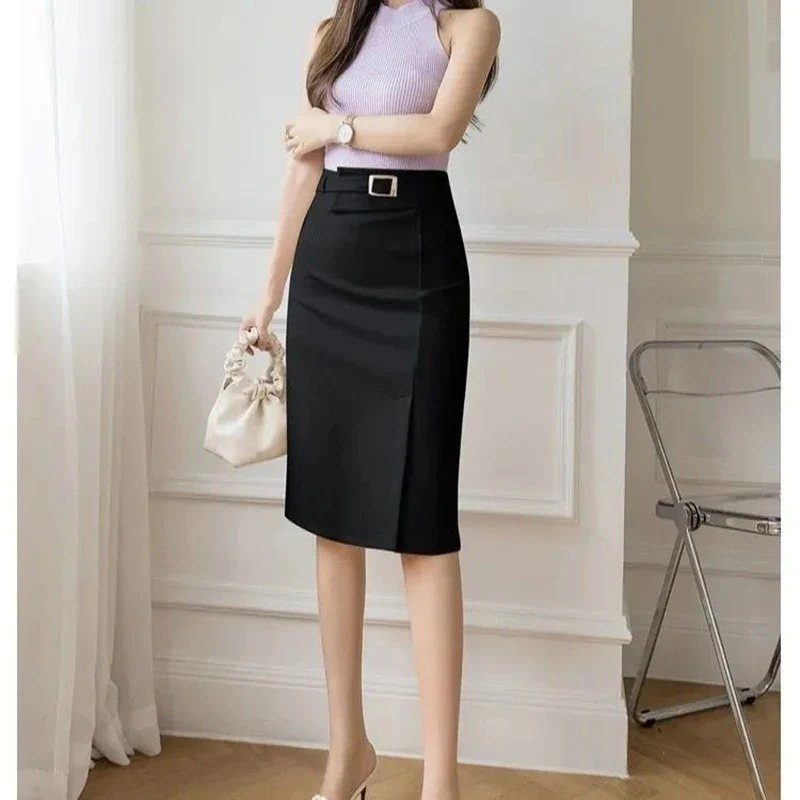
A pencil skirt sits differently than an A-line: it follows the leg, which is why the belt and the heel matter so much here.
A black high-waisted pencil skirt with a tucked sleeveless knit is the proportion that works on most bodies, the waistband at the natural waist and the hem near the knee.
I prefer a knit top with some weight to it; anything too thin reads as underwear against the structure of the skirt. The small bag and minimal jewelry keep the line clean, which is the point of this silhouette.
It is not the most comfortable choice for a desk job, but for days when you need authority without a full suit, it delivers.
6. Wide-Leg Pants
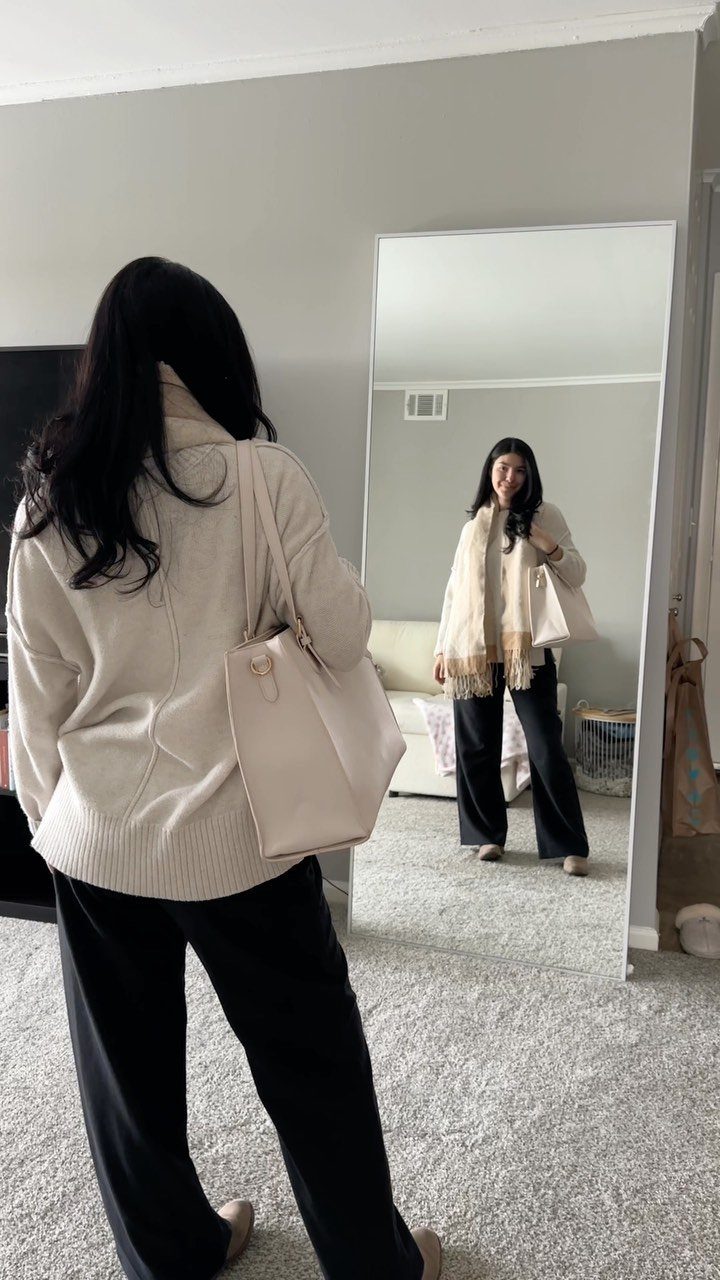
Wide-leg pants in black with a cream sweater give you movement and coverage without the constriction of a slim cut.
The volume needs balance: the sweater here is fitted or tucked, never bulky, and the hem should clear the floor by a half-inch in flat shoes or skim it in a heel.
I would add a scarf as the photo does, or a long pendant, to draw the eye vertically; otherwise the silhouette can swallow a smaller frame.
These pants travel well, resist wrinkling in most weaves, and let you sit through long meetings without adjusting.
7. Bow-Neck Blouse and Midi Skirt
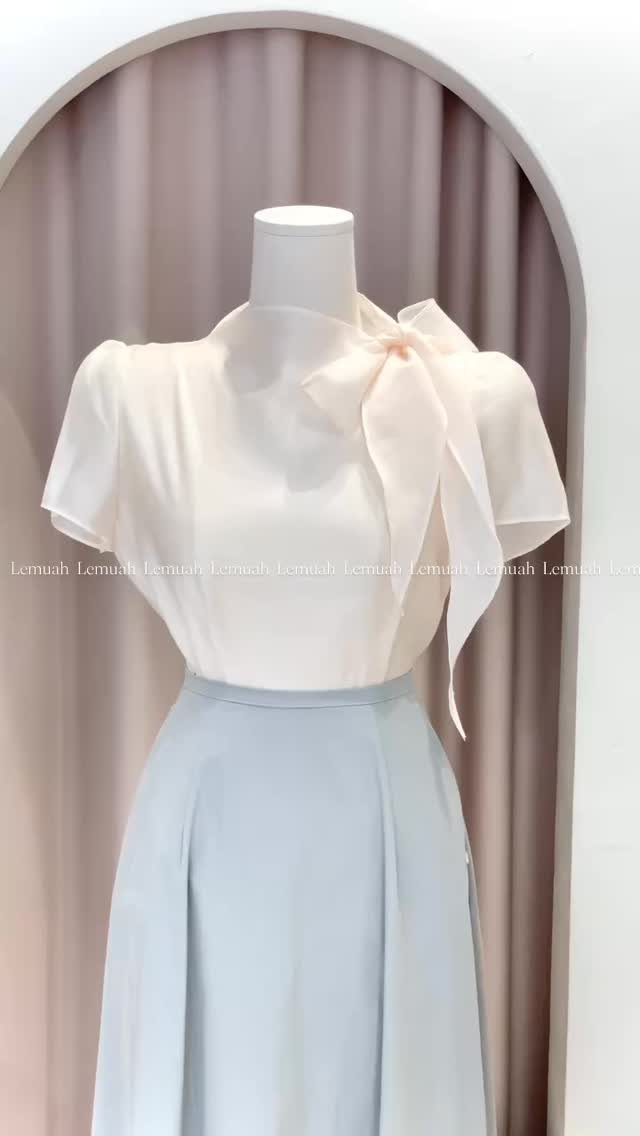
The bow-neck blouse softens a work outfit without drifting into weekend territory; tied neatly, it reads as a collar with intent rather than a costume extra.
Tucked into a high-waisted midi skirt, the waistline sits where it flatters most bodies and the hem falls to a length that works with flats or a low heel.
I would choose crepe or a matte silk for the blouse so the bow holds its shape through the day; a cotton version collapses by lunch.
A light blue midi skirt against a cream bow-neck blouse carries from spring into early fall without feeling tied to one season.
A small stud earring and a thin belt in leather or matching fabric finish this without competing with the neck detail. The blouse alone, untucked with jeans, is the piece that earns its keep on off-duty days.
Tips for Office Style
Fit is the detail that separates a work outfit from something you just put on.
A blazer that gaps at the chest or trousers that pool at the ankle reads as careless no matter what you paid for it. I would rather own three pieces that sit right than ten that need constant adjusting.
Neutral colors earn their place because they mix without argument. Black, navy, gray, cream, and olive handle each other in almost any combination, which means fewer single-use items in your closet.
A neutral base also lets one piece carry a look; the outfit does not depend on a print or a color statement to hold together.
Comfort through a full day is not the same as loungewear.
Seams that do not dig, waistbands that stay put, and fabrics that breathe under office air conditioning are worth testing before you buy. Sit down in the fitting room.
Raise your arms. If something shifts enough to need fixing, it will need fixing all day.
Flashy design is a distraction you pay for.
A large logo, an oversized hardware detail, or a print that enters the room before you do competes with whatever you are actually there to say. Understatement reads as confidence in most offices.
Dressing for Different Environments
The dress code you actually face matters more than the one in the handbook. Most modern offices have landed somewhere between business casual and smart casual, which means structure without stiffness.
A formal office still exists in law, finance, and some corporate headquarters. There, cleaner tailoring is expected: pressed creases, closed-toe shoes, and jackets that stay on for meetings.
The two-piece suit set works across these levels because you can sharpen it with a heel or soften it with a loafer depending on the day.
Business casual gives you more room in the cut of the piece and the shoe you choose. Business-casual offices are the zone most women work in now, and this middle-ground dress code rewards pieces that travel between polished and practical.
Creative offices vary the most. Some still want you to look like you tried; others treat effort as suspect.
I would watch what the person you report to wears for the first month and match that energy rather than the most relaxed person in the room.
Smart casual, when a workplace names it explicitly, usually means the jacket can go but the trousers stay. The knit top and tailored pants combination is the safest read of this code.
Accessorizing Work Outfits
Minimal accessories work because they let the cut and fabric do the talking. A single strand of small beads, a thin chain, or small studs finish an outfit without becoming the outfit.
I would apply this rule most strictly on days when the clothing itself is simple; a plain dress or a solid suit needs even less help than something with detail already built in.
A belt is the one accessory that changes proportion, not just decoration.
Threaded through the loops of high-waisted trousers or cinched over a tucked blouse, it defines where the waist sits and breaks a long line into sections that read as intentional.
I prefer leather in a width that matches the scale of the loops; a skinny belt on wide loops looks stranded, and a wide belt on narrow loops overwhelms.
The belt also lets you repeat a color without adding another garment.
A navy belt with navy trousers and a cream top ties the lower half together without a third piece. This is the kind of small choice that reads as styling rather than shopping.